

The heart-wrenching loss of the 5 nursing students killed on I-16 remains a defining moment that deeply impacted our community and highlighted critical vulnerabilities in regional infrastructure. As we look back, it is essential that we translate the grief of this tragedy into actionable insights that prioritize public safety. By examining the circumstances surrounding the 5 nursing students killed on I-16, we can identify gaps in highway design, emergency response times, and the unique risks faced by those commuting for educational or professional development.
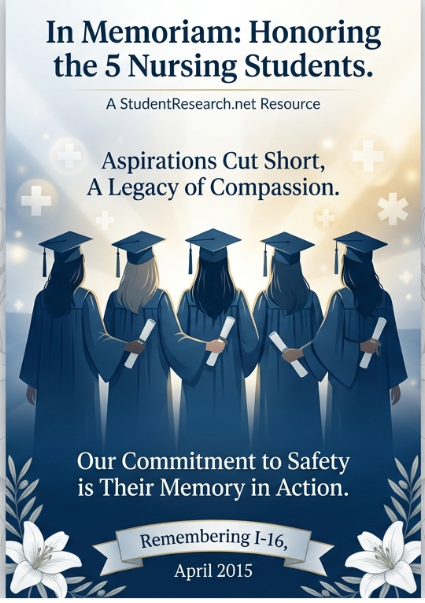
This blog aims to honor the lives lost by transforming their memory into a roadmap for prevention. Through careful analysis and student research, we can better understand how to navigate high-risk corridors. While the pain of this event is everlasting, our commitment to ensuring such a tragedy never recurs must be equally enduring, fostering a safer environment for every driver on the road today.
Understanding the Tragedy of the 5 Nursing Students Killed on I-16
This section delves into the profound impact of the incident and the factual timeline of events. It is a necessary foundation to understand the scale of the loss and the specific context of the accident.
Remembering the Lost Lives and Their Nursing Legacy
- These individuals were dedicated scholars whose professional aspirations were tragically cut short.
- Their commitment to healthcare continues to inspire current student research projects focused on trauma care and emergency preparedness.
- The nursing community lost not just future professionals, but compassionate individuals who embodied the spirit of service.
Chronology of the I-16 Highway Accident
- The event occurred on a stretch of interstate known for heavy transport and variable traffic conditions.
- Reports indicate that visibility and road layout played significant roles in the collision.
- Investigation into the event has served as a catalyst for ongoing student research regarding interstate logistics and safety.
Why 5 Nursing Students Killed on I-16 Highlights Infrastructure Risks
The physical design of our highways often fails to keep pace with increased traffic density. Addressing these infrastructure risks is the second major step toward meaningful reform
.Infrastructure Vulnerabilities and Traffic Patterns
Reducing your exposure to dangerous commute times begins with selecting professional opportunities that fit your lifestyle—explore these 30 Best Opportunities for Nursing Students to optimize your schedule.
The physical environment of high-speed interstates, such as the I-16, presents unique challenges that often remain overlooked until a tragedy occurs. Vulnerabilities stem from a combination of aging infrastructure, design limitations, and the high-speed interaction between different classes of vehicles. To truly advocate for safety, one must move beyond general concern and perform a granular analysis of why specific road sections become hotspots for fatalities.
Common Hazards on Rural Interstates: A Case Study Approach
Rural interstates are often erroneously perceived as “safer” due to lower overall traffic volume compared to urban centers. However, this assumption fails to account for the specific risk factors that characterize these roads.
- Limited Emergency Infrastructure: Unlike urban corridors, rural stretches often suffer from greater distances between trauma centers and emergency response stations. The “golden hour” for medical intervention is frequently compromised by geography.
- Wildlife and Obstacle Incursions: Rural routes are more prone to wildlife crossings, which can cause sudden, high-speed evasive maneuvers that are fatal at interstate speeds.
- Variable Illumination: In many rural zones, the lack of continuous overhead lighting creates a “black hole” effect, severely reducing the visual horizon for a driver navigating at 110-120 km/h.
Comparative Analysis: Day vs. Night Traffic Density
Traffic patterns shift dramatically between day and night, altering the risk profile of these roads:
- Day Shift (6:00 AM – 6:00 PM): Characterized by high density and mix-use traffic. While visibility is high, the “stop-and-go” nature of peak commute times leads to high-frequency, low-impact fender benders.
- Night Shift (6:00 PM – 6:00 AM): Traffic volume decreases, but the speed and vehicle mass increase. This shift is dominated by long-haul freight transport. The lower density creates a false sense of security, leading drivers to maintain higher speeds despite the significant degradation in visual perception and depth of field.
Technical Deep-Dive: The Physics of Stopping Distances
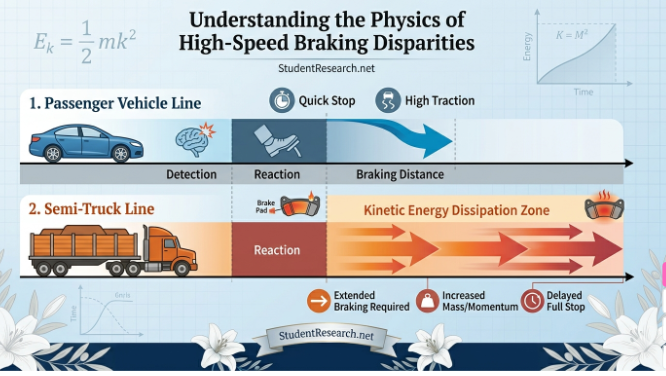
The safety of our highways is fundamentally tied to the physics of momentum. When a standard passenger vehicle interacts with a fully loaded semi-truck on an interstate, the disparity in kinetic energy—defined by $KE = \frac{1}{2}mv^2$—is staggering.
- Mass-Momentum Discrepancy: A fully loaded tractor-trailer can weigh upwards of 36,000 kg, compared to a 1,500 kg passenger sedan. Even at identical speeds, the braking distance required for the truck is significantly longer because the braking system must dissipate vastly more kinetic energy.
- Braking Latency: Passenger vehicles typically have a faster deceleration ramp. A major hazard occurs when a passenger vehicle cuts into the “buffer zone” in front of a truck, then brakes sharply. The truck driver, even with instantaneous reaction, cannot physically stop the rig in the space provided.
- Surface Friction: Friction coefficient ($\mu$) fluctuates with weather. On rural interstates, uneven pavement patches or debris can reduce available traction, turning a standard braking maneuver into a uncontrollable slide for a heavy vehicle.
Understanding these physical realities is essential for student research and policy advocacy. By documenting these technical variables, we can push for mandatory “truck-only” lane restrictions or improved signage that warns commuters of the physical limits of the heavy vehicles sharing their road.
Improving Safety Protocols After 5 Nursing Students Killed on I-16
Legislative and state-led actions are the primary defense against future tragedies. This section reviews the progress made in infrastructure upgrades.
State-Led Highway Upgrades and Safety Initiatives
- #5: Increased installation of high-visibility signage along high-risk corridors.
- #6: Implementation of “Smart Highway” technology to provide real-time traffic warnings.
Essential Highway Safety Tips for Students and Commuters
Beyond infrastructure improvements, personal accountability remains the most effective immediate measure for enhancing road safety. For students balancing long clinical commutes with academic demands, applying a structured decision-making framework can turn a dangerous, high-stress environment into a manageable one. By utilizing professional safety methods, commuters can cultivate the awareness necessary to navigate high-traffic corridors like I-16 safely.
The STAR Method for Roadway Risk Assessment
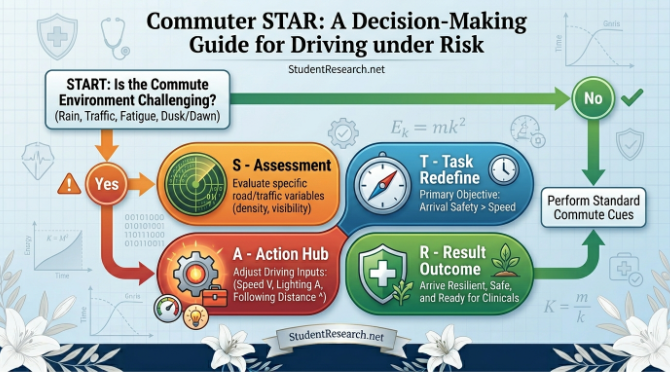
The STAR (Situation, Task, Action, Result) method, often used in nursing clinical evaluations, is an ideal tool for preemptive defensive driving. It forces the driver to mentally prepare for variable road conditions before they become a hazard.
- Situation: You are driving on I-16 during heavy rain. The road surface is slick, visibility is reduced by spray from heavy trucks, and your travel time to your clinical rotation is tight.
- Task: The primary objective is to arrive at your clinical destination safely, not necessarily on time, while managing the risk of hydroplaning and low-visibility collisions.
- Action:
- Speed Adjustment: Reduce speed by at least 15-20% below the posted limit to increase tire-to-road friction.
- Lighting: Turn on low-beam headlights—not high beams, which reflect off the rain—to ensure you are visible to others.
- Following Distance: Increase your following distance to a minimum of six seconds to accommodate the increased stopping distance required on wet pavement.
- Result: By proactively adjusting your driving to match the environmental variables, you maintain vehicle control, reduce stress, and minimize the likelihood of an emergency braking situation.
Just as you use structured goal-setting to master clinical procedures, you can apply similar frameworks to manage your daily commute—learn more in our guide on Smart Goals for Nursing Students
Defensive Driving: A Before vs. After Scenario
Comparing the habits of two different drivers illustrates exactly how minor behavioral adjustments drastically change the outcome of a commute.
Scenario: Navigating a Congested Construction Zone
| Feature | The “Before” Driver (Risk-Prone) | The “After” Driver (Safety-Focused) |
| Mental State | Impatient, focused only on ETA. | Alert, focused on environmental scanning. |
| Vehicle Positioning | Tailgating the vehicle ahead to prevent “cutting in.” | Maintaining a 4-second gap to allow for reaction time. |
| Response to Heavy Trucks | Passes aggressively in blind spots. | Waits for clear sightlines; avoids lingering beside large rigs. |
| Technology Use | Adjusting music or checking messages. | Hands-free and focused entirely on road cues. |
The Outcome:
- The “Before” Driver: When a truck ahead brakes unexpectedly due to debris, the driver is forced into a “panic stop.” They experience an adrenaline spike, potential loss of traction, and a near-miss collision. The remainder of the commute is marked by physiological stress, which degrades their ability to perform clinical duties upon arrival.
- The “After” Driver: By maintaining a sufficient gap, this driver sees the brake lights of the truck two vehicles ahead. They ease off the accelerator and begin a smooth, controlled deceleration. They arrive at their destination calm and composed, ready for the demands of their nursing rotation.
This transition from reactive to proactive safety behavior is a critical component of professional development. Just as in nursing, where clinical protocols protect patients, these defensive driving protocols protect you. Integrating this mindset into your daily commute is an essential form of student research—applying evidence-based safety habits to the reality of the road.
Building Resilience and Community Support
Grief requires a communal response to ensure that those affected are not left to manage their trauma in isolation. Building resilience is about more than just managing time; it is about cultivating the confidence to prioritize your well-being. Gain further insights into professional resilience in this video on 4 Tips for Being a Confident Nursing Student.
How Communities Unite in the Face of Grief
- #10: Creating local memorial foundations to support students pursuing nursing degrees.
- #11: Organizing public forums to keep the issue of highway safety at the forefront of local government discussions.
Ensuring a Safer Future on Our Roads
Advocacy is the final component of change, requiring sustained pressure on policymakers to enact lasting improvements.
Taking Advocacy to the Next Level
Meaningful change is rarely the result of isolated actions; it requires the structured, sustained effort of a collective voice. For nursing students and healthcare professionals, the transition from victims of circumstances to advocates for progress is a powerful shift. By leveraging your unique status as future healthcare leaders—who witness the physical and emotional trauma caused by preventable accidents—you hold a distinct moral authority that can sway policy makers and community leaders toward safer infrastructure.
The Power of Collective Voice: Organizing for Change
Creating a student-led safety committee is the first step in centralizing your efforts and ensuring your concerns reach the appropriate decision-making bodies. Follow these steps to organize effectively:
- Step 1: Identify Key Stakeholders: Reach out to fellow nursing students, faculty members, and local clinical partners who frequently traverse dangerous routes like I-16. Diversity in representation strengthens your mandate.
- Step 2: Collect Empirical Data: Gather logs of near-misses, traffic bottlenecks, and environmental hazards. In the realm of student research, data is your strongest asset; a collection of personal accounts combined with traffic incident reports creates an undeniable case for reform.
- Step 3: Define Clear Objectives: Avoid vague complaints. Instead, propose specific, actionable requests, such as increased lighting in specific high-risk zones, improved lane markings, or the installation of emergency call boxes.
- Step 4: Formalize Your Committee: Elect a spokesperson and draft a formal charter that outlines your goals. A formal committee is more likely to be granted a meeting with municipal or regional transit authorities than an individual commuter.
Policy Breakdown: Navigating Transportation Boards
To demand safer roads, you must first understand how infrastructure decisions are made. Local transportation boards and state departments of transportation (DOT) generally operate through public budget cycles and long-term planning frameworks.
- Understanding Governance: Local transportation decisions are often decentralized. Familiarize yourself with the hierarchy, starting from your local county board of commissioners up to the state-level Department of Transportation.
- Leveraging Healthcare Advocacy: As nursing students, you bring a perspective that engineers and civil planners often lack: the reality of trauma. When you present your concerns, frame them through the lens of public health and patient outcomes. Emphasize how road safety directly correlates to the well-being of the healthcare workforce and the communities they serve.
- Participating in Public Comment Periods: Most transportation boards hold scheduled public forums to review future projects. By attending these meetings as a unified student-led committee, you force these issues onto the official agenda.
- Strategic Partnerships: Reach out to local NGOs and nursing professional associations. Aligning your cause with established organizations can provide you with the legal and administrative support needed to navigate the complexities of long-term policy change.
Conclusion: Honoring the Memory Through Action
We conclude by reaffirming our commitment to the safety of all commuters, ensuring the legacy of the fallen is built into the very pavement of our highways. Learn the 12 critical safety lessons following the 5 nursing students killed on 1-16; discover how we can honor their legacy through improved road safety. By remaining vigilant and advocating for the changes discussed, we ensure that the tragedy involving the 5 nursing students killed on I-16 serves as a permanent, effective warning that drives systemic progress for generations to come.

