

The Importance of Professional Clinical Footwear
Selecting the right white shoes for nursing students is often the most critical decision a novice clinician makes before stepping onto the hospital floor. Whether you are conducting student research on the best ergonomic gear or preparing for your first day of clinical rotations, your footwear dictates your energy levels and overall physical well-being. Nursing is an incredibly demanding profession that requires standing for twelve hours or more, making the search for supportive white shoes for nursing students a top priority for academic success. Beyond just meeting uniform standards, these shoes must provide the stability needed to prevent long-term musculoskeletal strain. By utilizing student research regarding footwear technology, you can identify models that balance professional aesthetics with superior performance.
This guide explores everything you need to know to ensure your white shoes for nursing students remain a reliable partner throughout your challenging academic journey, helping you maintain focus on patient care rather than foot fatigue. As you prepare for your upcoming clinical rotations, remember that selecting the right footwear is just one part of your Nursing Student Preceptorship preparation.
#1: Choose Fluid-Repellent Vegan Leather or Easy-Clean Materials
Stain Resistance and Quick-Wipe Maintenance
- Prioritize synthetic, non-porous materials that allow you to wipe away spills instantly.
- Avoid fabric-based white shoes for nursing students which act like sponges for clinical fluids.
- Look for “liquid-repellent” coatings that maintain the crisp, white look required by strict dress codes.

Before vs. After: The Reality of Clinical Spills
To understand why material selection is a non-negotiable factor when buying white shoes for nursing students, consider a typical “Before vs. After” scenario in a high-acuity unit.
The Before: You are wearing a pair of budget-friendly, white mesh-knit sneakers. They feel like slippers and are undeniably comfortable. However, during a morning medication round, a saline flush or a more hazardous liquid accidentally spills near your feet. Because the fabric is porous, the liquid is absorbed instantly into the fibers, leaving a dark, permanent stain. By the end of your shift, your shoes look unprofessional, carry a lingering clinical odor, and have become a potential vector for pathogens.
The After: You pivot to a pair of professional-grade, fluid-repellent vegan leather shoes. When that same spill occurs, the liquid beads up on the surface of the non-porous material. Instead of soaking in, it sits there, allowing you to wipe it away with a single disinfectant wipe. Your shoes remain pristine, dry, and sanitized. By choosing leather-like, easy-clean materials, you protect your professional image and adhere to the strict hygiene standards required of all white shoes for nursing students. This small material upgrade saves you from having to replace your footwear prematurely, ensuring you spend less time cleaning and more time focusing on your patients.
Meeting Strict Hospital Sanitation Standards
- Ensure your footwear can withstand rigorous disinfecting wipes without degrading.
- Choose materials that do not trap bacteria, as many clinical facilities mandate strict infection control standards for student uniforms.
#2: Maximize Shock Absorption for Long 12-Hour Shifts
When evaluating white shoes for nursing students, prioritize high-density foam or gel-based cushioning systems. These technologies are not merely for comfort; they are mechanical tools that absorb the intense vertical impact of hard hospital floors, effectively protecting your joints and spinal alignment during extended shifts.
Understanding the Impact: A Mini-Case Study
To fully appreciate the necessity of superior shock absorption in white shoes for nursing students, consider the experience of Sarah, a third-year nursing student during her clinical rotation in a bustling surgical unit.
The Situation: Sarah entered her clinicals wearing standard, thin-soled white shoes for nursing students that she had purchased on a budget. Within the first two weeks, she began experiencing sharp, stabbing pain in her heels during the final hours of her twelve-hour shift. This pain eventually worsened, making even the short walk to her car feel unbearable. After a visit to the campus clinic, she was diagnosed with early-stage plantar fasciitis, a common condition caused by repetitive strain and lack of adequate support.
The Intervention: Sarah performed student research and consulted with a podiatrist who recommended moving away from flat-soled sneakers. She invested in a pair of professional-grade white shoes for nursing students specifically engineered with a high-rebound gel-cushioning midsole designed to distribute weight evenly across the footbed.
The Result: By switching to a shoe with superior shock absorption, Sarah noticed a significant reduction in discomfort within the first week. The gel-cushioning acted as a shock absorber, neutralizing the harsh impact of the linoleum hospital floors. By the end of her rotation, her heel pain had subsided completely. Her experience highlights a critical lesson for any student: neglecting your footwear’s cushioning isn’t just about temporary comfort; it is about preventing chronic injuries that could jeopardize your career before it even begins.
If you are currently performing student research on orthopedic health, you will find that proper shock absorption is the primary defense against the chronic heel and arch pain that plagues many novice nurses. When selecting your next pair of white shoes for nursing students, do not compromise on the quality of the midsole; your long-term mobility and clinical endurance depend on it.
#3: Ensure Slip-Resistant Outsoles for Hospital Floors
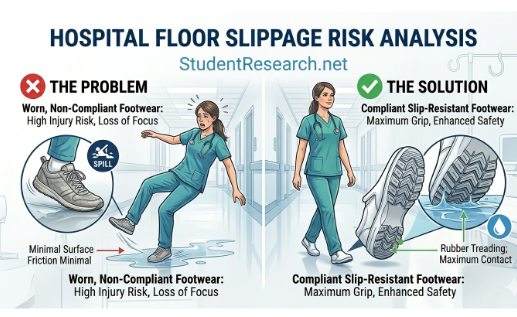
Clinical environments are prone to spills and slick tiles. High-quality white shoes for nursing students must feature rubber outsoles with a specialized tread pattern designed for maximum grip. Safety is non-negotiable; verify that your selected footwear meets industry standards for slip resistance to prevent accidents during high-pressure emergency situations.
#4: Select Lightweight Shoes to Reduce Foot Fatigue
Comparing Foam vs. Rubber Weight Ratios
- Look for EVA (Ethylene-Vinyl Acetate) midsoles which provide a superior strength-to-weight ratio compared to standard heavy-duty rubber soles.
- Heavy white shoes for nursing students can add cumulative weight to your legs, making you feel sluggish by the end of a long shift.
- Test the weight of your shoes; lighter models significantly improve agility in fast-paced units.
Lightweight vs. Heavy Footwear: A STAR Case Study
To understand the tangible impact of mass on your endurance, consider the experience of David, a student nurse during an intensive care unit (ICU) rotation, through the lens of the STAR method.
Situation: During his clinicals, David was assigned to an extremely high-volume unit that required constant movement between patient rooms, supply closets, and nursing stations. He initially wore a pair of traditional, thick-soled leather white shoes for nursing students that were durable but noticeably heavy.
Task: David’s goal was to maintain consistent energy levels throughout his 12-hour shift while keeping up with the rapid pace of the senior nursing staff.
Action: By the midpoint of his rotation, David experienced significant lower leg and ankle fatigue that began to affect his focus. After conducting student research into ergonomic equipment, he decided to switch to a pair of ultra-lightweight, performance-grade white shoes for nursing students constructed with advanced, weight-reducing foam technologies.
Result: The difference was immediate. Because he wasn’t lifting an extra pound or two with every step, his “leg fatigue” was slashed significantly by the end of his shift. David found that he could navigate the unit with greater agility and, more importantly, he arrived home with enough energy to review his notes—something he struggled to do when wearing his previous, heavier footwear.
Ultimately, every ounce counts when you are walking miles across hospital floors. By prioritizing lightweight white shoes for nursing students, you are choosing to conserve your physical energy for what truly matters: providing focused, high-quality care to your patients. Remember, the best white shoes for nursing students should feel like an extension of your body, not an extra weight you are dragging through the halls.
#5: Prioritize Optimal Arch Support for Plantar Fasciitis

Investing in white shoes for nursing students that provide structured arch support is essential. Without proper alignment, you risk developing plantar fasciitis or recurring calf strain. Many top-tier brands now include anatomically shaped insoles specifically engineered to support the natural curve of the foot, which is vital for long-term comfort.
#6: Look for Breathable Antimicrobial Linings to Control Odor
Long shifts lead to perspiration, making breathability a key factor in choosing white shoes for nursing students. Seek out models with moisture-wicking, antimicrobial linings. This feature not only manages odor effectively but also prevents the environment inside the shoe from becoming a breeding ground for bacteria or fungi.
#7: Check Your Nursing Program’s Strict Uniform Policies
Understanding Logo, Color, and Material Restrictions
- Review your clinical handbook carefully; some programs mandate entirely “all-white” white shoes for nursing students, including the soles.
- Check if discreet logos are permitted or if the aesthetic must be completely unbranded.
- Ensure the material doesn’t have reflective strips if your program forbids them for clinical settings.
Institutional Policy Checklist: What to Look For
Uniform policies vary significantly between academic settings. While a small private clinic might be lenient, a major university-affiliated hospital often has rigid, non-negotiable standards. Use the following guide to perform your own student research before purchasing your footwear to ensure you remain fully compliant throughout your clinical rotations.
| Feature to Inspect | Hospital-Based Program (Rigid) | University-Based Program (Moderate) |
| Color Palette | Pure, optical white (no grey/off-white) | Off-white or light grey accents allowed |
| Logo/Branding | Must be tonal (white-on-white) | Small, discreet brand logos accepted |
| Sole Color | Must be white | Non-marking grey/black soles allowed |
| Material Finish | Matte, wipeable, non-textured | Mesh or fabric-mix allowed |
| Safety Features | No dangling toggles/laces | Standard lacing systems permitted |
Navigating the “Compliance Gap”
Many students make the mistake of buying white shoes for nursing students based purely on online reviews without checking their program’s specific handbook. If your program is hospital-based, they are often training you to meet internal infection control and safety standards that are as strict as those for full-time staff. Always prioritize the “Uniform Policy” section of your student handbook over general fashion trends.
If you are unsure about a specific pair, do not guess. Bring a picture of the shoes to your clinical instructor or the nursing office. Wearing non-compliant white shoes for nursing students can lead to being sent home from a shift, which negatively impacts your clinical hours. By verifying these details early, you ensure your footwear is an asset to your professional journey rather than a cause for academic reprimand. Taking this extra step in your student research shows diligence and professional maturity—traits highly valued in the nursing profession.
#8: Select the Correct Size and Width for Swollen Feet
Feet tend to swell significantly after several hours of standing. When shopping for white shoes for nursing students, always consider trying them on in the late afternoon. Ensure there is enough toe-box width to prevent cramping, as a tight fit will quickly lead to painful blisters and reduced circulation during your rounds.
#9: Invest in Premium Brands Built Specifically for Nurses
While budget is often a primary concern for students, your feet are your most important professional asset. When you are standing for twelve hours, the difference between “budget” footwear and professional-grade gear is not just price—it is the difference between pain-free mobility and chronic injury. Many students make the mistake of opting for cheaper alternatives, but the “Cost-Per-Wear” model reveals why this is a false economy.Your footwear is a critical investment, but it’s only one of many tools you’ll need. Explore our comprehensive guide to essential nursing student supplies to ensure you are fully prepared for every challenge your clinical program brings.
The Cost-Per-Wear (CPW) Analysis
To illustrate, let’s compare a $50 “budget” sneaker against a $150 premium pair of white shoes for nursing students.
- The Budget Cycle: A $50 shoe typically features lower-grade EVA foam that loses its “rebound” memory after about 300 miles of use—or roughly three months of intense clinical rotations. Over a 12-month academic year, you will need to replace these four times, totaling $200 per year.
- The Premium Cycle: A $150 professional shoe is constructed with industrial-grade polymers and specialized orthotic support. These are designed to maintain their structural integrity for at least 1,200 miles—or roughly 12 to 18 months of clinical use. Even if you replace them every year, you are only spending $150 annually.
Beyond the direct savings of $50 per year, consider the hidden costs: the physical therapy required to treat recurring foot pain, the loss of focus during clinicals because your feet ache, and the frustration of constant shopping. By investing in premium white shoes for nursing students upfront, you are securing a product that protects your health.
Ultimately, choosing a reputable brand ensures that your white shoes for nursing students continue to provide the necessary support throughout your entire clinical program. High-quality stitching, reinforced heel counters, and medically-graded cushioning are features that budget shoes simply cannot replicate. Treat your footwear as an investment in your career longevity; when you perform your student research into brands that cater specifically to the nursing profession, you are making a decision that supports your physical health, your academic performance, and your financial peace of mind.
Conclusion: Step Confidently Into Your Clinical Rotations
Choosing the perfect footwear is a fundamental step in your nursing career. By following these tips, you ensure that your white shoes for nursing students serve as a reliable, comfortable, and compliant tool. Remember, finding the best white shoes for nursing students is essential for maintaining stamina and focus. Find the best white shoes for nursing students. Discover our Top 9 expert tips to balance comfort, safety, and clinical dress code compliance. Taking the time to invest in high-quality white shoes for nursing students now will pay dividends throughout your education and beyond, keeping your focus where it belongs—on providing exceptional patient care.

