

Being a nursing student is demanding, requiring a balance of textbook knowledge, clinical skills, and critical thinking. The sheer volume of information can be overwhelming, but with the right study tools for nursing students, you can transform your study process from exhausting to highly effective. This comprehensive guide breaks down the essential resources and techniques you need to master challenging concepts and ultimately, conquer the NCLEX.
How to Identify Your Learning Style for Highly Effective Study Tools
- Determine if you are a Visual Learner: You retain information best through images, diagrams, charts, and spatial relationships. Tools like mind maps, color-coded notes, and video tutorials will be your primary assets.
- Determine if you are an Auditory Learner: You prefer to hear information spoken aloud. Incorporate lectures, podcasts, reading notes out loud, and discussing concepts in study groups.
- Determine if you are a Kinesthetic Learner (Hands-On): You learn by doing, moving, or experiencing. Utilize lab simulations, role-playing clinical scenarios, writing and rewriting notes, and using flashcards that require physical interaction.
- Assessment Tools: Take a free online V.A.R.K. questionnaire to formally identify your dominant style, but remember that most students are a blend of multiple styles.
- Adaptation is Key: Don’t limit yourself to one style; use your primary style as a foundation and selectively incorporate other methods for challenging topics.
Essential Time Management Tools for Nursing Students
- The Pomodoro Technique: Use a timer to break study sessions into 25-minute focused bursts, followed by 5-minute breaks, minimizing burnout and maximizing concentration.
- Digital Planners (Notion, Google Calendar): Block out specific times for classes, clinicals, self-care, and dedicated study slots to create a realistic and visual schedule.
- Tracking Apps (Toggl, RescueTime): Monitor where your time is actually spent to identify time-wasting activities and optimize your efficiency.
- “Eat the Frog” Method: Tackle the most difficult or least appealing study task (the “frog”) first thing in your study day to ensure it gets done when your willpower is highest.
- Prioritization Matrices (Eisenhower Box): Categorize tasks by Urgency and Importance to clearly define what needs immediate attention versus what can be scheduled later.
Steps to Setting Up Digital Note-Taking Platforms
- Select the Right Software (OneNote, Evernote, GoodNotes): Choose a platform that allows for cross-device synchronization, easy organization by class, and the ability to integrate multimedia.
- Standardize Your Templates: Create consistent templates for lecture notes, textbook summaries, and pharmacology drug cards to reduce cognitive load during the actual note-taking process.
- Utilize Hyperlinking and Tagging: Use internal links to connect concepts across different classes (e.g., linking a fluid imbalance note to a related cardiac pathophysiology note) and use tags for easy search and review.
- Integrate Handwriting (Stylus/Tablet): For kinesthetic and visual learners, using a tablet/stylus within a digital platform can replicate the retention benefits of handwriting while maintaining the organizational benefits of digital files.
- Cloud Backup Strategy: Ensure notes are immediately backed up to a cloud service to prevent catastrophic loss of study materials right before an exam.
Types of NCLEX Prep Tools and Question Banks (Q-Banks)
Once you’ve established your personalized toolkit, the next critical step is to face the NCLEX head-on by integrating high-quality practice tools. This section dives into the specialized resources designed to simulate the actual licensure exam and build your critical thinking stamina.
Benefits of Using NCLEX Practice Questions and Detailed Rationales
- Active Recall Training: Unlike passive reading, practice questions force your brain to retrieve information, which is the most effective way to solidify memory pathways.
- Simulating Exam Pressure: High-volume Q-banks help you build endurance and test-taking speed, reducing anxiety on exam day.
- Identifying Content Gaps: Detailed performance reports immediately flag areas (e.g., Maternity, Management of Care) where your knowledge is weak, allowing you to prioritize review.
- Understanding the “Why”: The rationales explain why an answer is correct and why the distractors are wrong, training you in the critical thinking required by the NCLEX, not just rote memorization.
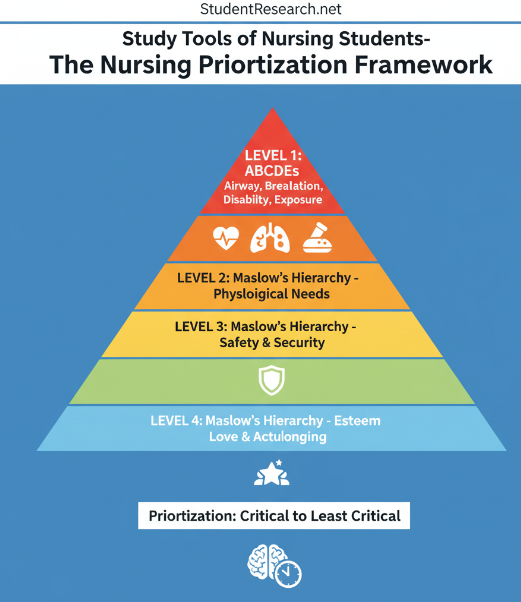
- Mastering Priority: NCLEX questions often test prioritization (e.g., which patient to see first). Q-banks provide repeated exposure to these complex, judgment-based questions.
Understanding How Computer Adaptive Testing (CAT) Simulators Work
- The Adaptive Algorithm: CAT means the test difficulty adjusts in real-time based on your performance; if you answer correctly, the next question is harder; if you answer incorrectly, it gets easier.
- Passing Standard: The goal of the CAT is to determine with 95% certainty if your performance is consistently above the minimum passing standard set by the board of nursing.
- Practice with Realism: Utilizing a CAT simulator allows you to experience the emotional and mental stress of having the test potentially shut off after 75, 85, or 150 questions.
- Interpreting Results: Simulators give you a detailed breakdown of your performance across the Client Needs Categories, which is more valuable than just a simple pass/fail score.
- Pacing Strategy: Practicing with CAT helps you develop a pacing strategy, ensuring you don’t rush the initial questions, which hold the most weight in determining your competence level.
Which NCLEX Prep Course is Better: UWorld vs. Kaplan vs. SimpleNursing
- UWorld: Known for its highly visual interface, excellent mobile app, and exceptionally detailed, medically accurate rationales often featuring high-quality images. It is universally praised for its question quality and deep explanations.
- Kaplan: Offers a strong strategic approach, focusing on specific test-taking strategies like “Decision Tree” and prioritizing certain safety concepts. It is ideal for students who struggle with test anxiety and needing a structured approach to analyzing questions.
- SimpleNursing: Primarily video-based, offering entertaining and concise content review focused on complex subjects like pharmacology and electrolyte imbalances. It serves best as a supplemental content reviewer, especially for visual or auditory learners.
- Cost and Access: Consider the subscription length and cost, often offered as 30, 60, or 90-day packages. Always factor in the total price relative to the features offered.
- Trial Periods: Take advantage of free trials offered by all major providers to evaluate the user interface, question format, and rationale style before committing to a purchase.
Leveraging Visual and Auditory Study Tools for Core Concepts
Building upon your practice strategy, the key to handling high-volume subjects like pharmacology and pathophysiology is to engage your senses using dynamic visual and auditory aids. These tools simplify complex systems and make memorization stickier by associating information with images and sound.
Examples of Video-Based Study Tools for Nursing Content Review
- Osmosis & Picmonic: These platforms use animated videos and visual mnemonics to explain complex concepts in an engaging and memorable way, reducing the need for rote memorization.
- YouTube Educators (RegisteredNurseRN, Level Up RN): Free, accessible content review for specific topics, offering visual demonstrations and simplified explanations of complicated procedures and disease processes.
- Lecture Capture (Panopto, Zoom Recordings): Re-watching your own classroom lectures allows you to absorb missed details and review difficult concepts at your own pace, especially if you are an auditory learner.
- Whiteboard Animations: Videos that illustrate complex physiological processes by drawing them out step-by-step help visual learners map out multi-step processes like the Renin-Angiotensin-Aldosterone System (RAAS).
How to Create and Use Visual Mnemonics for Nursing Pharmacology
- The Power of Association: Mnemonics link new, abstract information (a drug name) to an image or story that is easier to remember (e.g., picturing a furry animal for a drug ending in ‘-pril’ associated with an ACE inhibitor).
- The Loci Method (Memory Palace): Visualize a familiar physical location (like your childhood home) and mentally place different drug classes or vital signs within specific rooms or furniture pieces.
- Color-Coding by Drug Class: Use a consistent color for every drug in a specific class (e.g., blue for Beta Blockers, red for Anticoagulants) in your notes and flashcards.
- Acrostics for Side Effects: Create short, memorable sentences where the first letter of each word corresponds to a side effect or nursing intervention.
- Keep it Silly and Personal: The more outlandish, funny, or personal the visual mnemonic is to you, the stronger the memory connection will be.
The Benefits of Nursing-Specific Podcasts and Audio Lectures
- Maximize “Downtime” Learning: Use podcasts while commuting, exercising, or doing chores to passively review content and reinforce what you’ve actively studied.
- Expert Insight: Many podcasts feature experienced nurses or practitioners who share clinical pearls and real-world context that enhances textbook knowledge.
- Reinforcement Loop: Listening to the material strengthens auditory memory pathways, complementing the visual work done in the classroom.
- Focus on Storytelling: Audio formats often present case studies or clinical stories, which helps you contextualize information and remember how concepts apply to actual patients.
- Variety of Voices and Perspectives: Different podcast hosts often explain the same concept in slightly different ways, which can provide the “aha!” moment when your original method didn’t quite click.
Tired of generic writing? Elevate your grades. Your complex nursing paper is crafted by verified subject-matter experts holding Masters and Ph.D. degrees in your discipline. Ensure quality control and academic integrity. Start your success story at StudentResearch.net.
Mastering Classic Study Tools in the Digital Era
While modern technology offers advanced solutions, the most effective studying still relies on fundamental techniques. This section focuses on integrating proven “classic” methods—like flashcards and textbooks—into your digital workflow to ensure rock-solid knowledge retention.
Learn Spaced Repetition: The Science Behind Digital Flashcards (Anki, Quizlet)
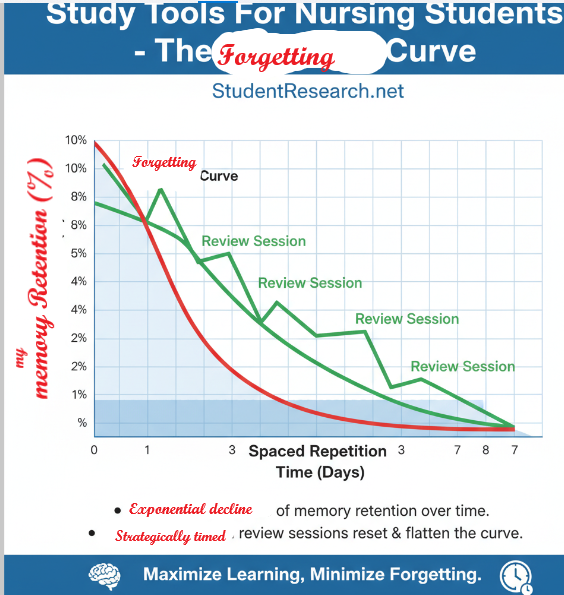
- The Forgetting Curve: Spaced Repetition Systems (SRS) are algorithms that calculate the optimal time to re-test you on a piece of information just before you are likely to forget it, efficiently fighting the forgetting curve.
- Confidence Scoring: Apps like Anki require you to rate your confidence level (e.g., “Again,” “Hard,” “Good,” “Easy”) which dictates the delay before you see the card next.
- Creating Custom Decks: While pre-made decks exist, the act of personally creating your flashcards is a powerful study method itself, cementing the information in your short-term memory.
- Beyond Terminology: Use flashcards for clinical steps, contraindications, normal lab values, and management priorities, not just simple definitions.
- Mobile Accessibility: Digital flashcards allow you to study anywhere, maximizing short bursts of available time throughout the day.
How to Master Your Nursing Textbooks and Review Modules (ATI)
- The Preview-Read-Recite-Review (P.R.R.R.) Method: Preview the chapter headings and summaries, actively read while taking minimal notes, recite the main points aloud, and then review your notes shortly after.
- ATI/HESI Focused Reading: Treat your review modules (like ATI) as priority guides; focus your textbook reading only on the specific topics and concepts highlighted by these systems.
- Annotation Strategy: Use an active annotation system (underlining, marginal notes) in your physical or digital textbook to quickly locate the most critical information during review.
- Creating Concept Maps: After reading a chapter, translate the linear text into a non-linear concept map, visually connecting the causes, symptoms, interventions, and nursing considerations for a disease.
- Reviewing End-of-Chapter Questions: These questions are often designed by the publisher to reflect high-yield exam material; use them as a pre-test to gauge knowledge before reading and a post-test for retention.
Steps to Forming Highly Effective Nursing Study Groups
- Set Clear Goals and Roles: Define whether the group is for teaching, review, or question practice, and assign roles (e.g., question master, concept summarizer) for each session.
- Keep the Group Small (3-5 people): Larger groups often result in distraction and reduced individual participation; small groups ensure accountability and focused discussion.
- Use the “Teach-Back” Method: The most powerful use of a study group is having each member teach a complex topic to the others, forcing them to synthesize and explain the material clearly.
- Establish a Code of Conduct: Agree on rules regarding phones, punctuality, and preparedness (e.g., everyone must bring three practice questions or one concept map).
- Diverse Strengths: Form a group with members who excel in different areas (e.g., one person strong in Med-Surg, another in Pharmacology) so you can teach and learn from each other’s expertise.
Essential Clinical Study Tools for Practical Application
Moving beyond the classroom, nursing success hinges on applying knowledge in a clinical setting. This section covers the hands-on tools and resources that bridge the gap between theory and the realities of patient care.
How to Use Dosage Calculation Practice Tools and Safety Apps
- Dedicated Calculation Apps: Use apps that provide hundreds of practice problems for unit conversions, drip rates, and weight-based pediatric dosing, often with built-in calculators and step-by-step guides.
- Medication Reference Apps (Epocrates, Micromedex): These essential safety tools provide immediate, reliable information on drug dosages, administration routes, side effects, and contraindications right at the bedside.
- The “Three Checks” Digital Checklist: Use a mental or digital checklist to reinforce the mandatory three checks of medication administration (pulling, preparing, and giving) and the five (or six, or seven) rights of administration.
- Simulated Testing Environment: Practice dosage calculations using only a basic four-function calculator, replicating the limited tools allowed during the actual drug administration tests.
The Benefits of Quick-Reference Pocket Guides for Clinical Rotations
- Bedside Confidence: Having a quick-reference guide (physical or digital) reduces the need to constantly ask a preceptor simple questions, boosting your confidence and allowing you to focus on critical thinking.
- Lab Value Normal Ranges: Instant access to adult and pediatric normal lab values is vital for interpreting patient data during shift reports and charting.
- Common Procedures and Skills: Pocket guides offer step-by-step reminders for procedures like Foley catheter insertion, NG tube placement, or sterile dressing changes.
- EHR and Charting Shortcuts: Many preceptors or facilities provide guides on charting abbreviations, common documentation phrases, and Electronic Health Record (EHR) navigation tips, which are invaluable during a rotation.
Understanding Simulation-Based Learning and Virtual Patient Scenarios
- Safe Practice Environment: Simulations allow you to make critical errors, practice advanced procedures (like code scenarios), and manage deteriorating patients without risking harm to a real person.
- Debriefing is Key: The most valuable part of simulation is the debriefing session afterward, where you analyze your decisions, identify missed cues, and articulate your thought process.
- High-Fidelity vs. Low-Fidelity: High-fidelity scenarios use advanced mannequins that mimic human responses, while low-fidelity may involve simple task trainers; both are crucial for different types of skill acquisition.
- Virtual Patient Scenarios (Shadow Health): Online platforms provide complex, branching narratives where you interview, assess, and intervene on a virtual patient, honing your communication and diagnostic skills.
Mindset and Wellness: Ways to Prevent Nursing School Burnout
You can have the best study tools available, but without a healthy mind, academic performance will suffer. This final section provides actionable wellness strategies and tools, emphasizing that self-care is a non-negotiable part of your study plan.
How to Manage Stress: Actionable Stress Management Tools
- Mindfulness Apps (Calm, Headspace): Use guided meditations and breathing exercises to recenter yourself during intense study periods or before high-stakes exams.
- Physical Activity Trackers (Wearables): Ensure you are meeting minimal activity goals to release endorphins, which are proven mood boosters and stress relievers.
- Journaling/Thought Dumping: Use a digital journal to write down and externalize overwhelming thoughts or anxieties before study sessions, clearing mental space for focused learning.
- The “No” Tool: Learn to politely decline non-essential commitments that distract from your study schedule or necessary rest, protecting your time.
Tracking Your Performance Analytics to Optimize Your Study Plan
- Q-Bank Data Analysis: Beyond the pass/fail result, deeply analyze your Q-bank performance by category, time-spent-per-question, and trend over weeks.
- The Pareto Principle (80/20 Rule): Focus your study time on the 20% of topics that are responsible for 80% of your incorrect answers, ensuring your efforts are high-yield.
- Spreadsheet Tracking: Maintain a simple spreadsheet to track your exam scores, clinical hours, and sleep quantity to identify patterns between your habits and academic results.
- S.M.A.R.T. Goal Setting: Use analytics to set Specific, Measurable, Achievable, Relevant, and Time-bound study goals (e.g., “I will improve my Fundamentals score from 65% to 75% in the next two weeks by completing 50 focused practice questions per day”).
Top Digital Mental Health Tools for Nursing Students
- Teletherapy and EAP Access: Identify whether your university offers a free Employee Assistance Program (EAP) or low-cost teletherapy options for immediate access to licensed counselors.
- Mood Tracking Apps: Monitor your emotional state and sleep quality over time, helping you and your support network identify early warning signs of excessive stress or burnout.
- Digital Peer Support Groups: Join verified, moderated online communities for nursing students to share experiences, vent frustrations, and gain perspective from peers facing similar challenges.
- Boundaries and Device-Free Zones: Utilize device settings to enforce time limits on distracting apps and designate specific times/areas (like the bedroom) as completely screen-free to promote restorative rest.
: It’s 3 AM—do you need an update now? Our human support team is online 24/7/365 via chat, phone, and email to assist you, no matter your timezone or deadline panic. Get instant, reliable service for your tightest submissions at StudentResearch.net.
Conclusion: Success Beyond the Classroom
The journey through nursing school is rigorous, but equipping yourself with the right resources is the key to minimizing stress and maximizing your potential. By actively managing your study schedule, using high-yield NCLEX resources, embracing digital aids, and prioritizing your mental health, you set yourself up for long-term success. Remember this core truth: Learn the best study tools for nursing students: master NCLEX prep, clinical skills, and wellness to conquer burnout and pass your exams. You have the tools; now go crush your goals!

