

Stepping into the world of campus medicine is more than just a career move; it is a commitment to fostering the next generation’s well-being while securing a high-impact professional future. As universities expand their wellness programs, student health nurse practitioner jobs have emerged as some of the most sought-after roles in the 2026 healthcare market. This guide provides a comprehensive roadmap for those ready to blend clinical excellence with the vibrant energy of academic environments.
Understanding the Landscape of Student Health Nurse Practitioner Jobs
The demand for healthcare professionals within academic institutions has reached an all-time high as schools prioritize holistic student wellness. These student health nurse practitioner jobs offer a unique intersection of primary care, mental health support, and community health advocacy. In this section, we explore the evolving role of NPs in educational settings and why this niche is becoming a top choice for advanced practice nurses.
The Evolution of Campus Healthcare
Modern campus clinics have transitioned from simple first-aid stations to comprehensive medical hubs. Practitioners now handle everything from acute infections to chronic disease management for a diverse student body.
- Integrated Care Models: Modern clinics utilize multi-disciplinary teams.
- Technology Adoption: Increased use of telehealth and digital health records.
- Preventative Focus: Emphasis on vaccinations and wellness screenings.
Why Choose This Career Path?
Choosing a career in student health provides a distinct work-life balance that is often missing in traditional hospital settings. Many practitioners enjoy academic calendars, competitive benefits, and the ability to build long-term relationships with their patients.
- Consistent Scheduling: Often follows the university’s Monday-Friday calendar.
- Professional Autonomy: High levels of independent decision-making.
- Diverse Patient Base: Working with a global population of young adults.
Core Responsibilities and Daily Impact
Working in student health nurse practitioner jobs requires a versatile skill set that spans across multiple medical disciplines. You are often the first point of contact for students navigating their health independently for the first time. This section outlines the day-to-day duties that define the excellence of a campus-based NP.
Clinical Assessment and Diagnosis
The primary duty involves conducting thorough physical examinations and accurately diagnosing a wide range of conditions common in young adults. This requires sharp clinical intuition and the ability to communicate findings effectively to a younger demographic.
- Acute Care: Treating sports injuries, respiratory infections, and minor trauma.
- Diagnostic Testing: Ordering and interpreting lab work or imaging.
- Prescriptive Authority: Managing medications and furnishing licenses where applicable.
Health Education and Counseling
Beyond physical treatment, these roles involve a significant amount of “student research” into behavioral health trends to provide relevant counseling. Education is a cornerstone of student health, ensuring that patients understand their diagnoses and preventive measures.
- Sexual Health: Providing contraceptive counseling and STI screenings.
- Lifestyle Guidance: Educating on nutrition, sleep hygiene, and stress management.
- Mental Health Support: Conducting initial screenings for anxiety and depression.
## 3. Top 28 Rewarding Career Paths and Job Settings
Finding the right fit within the broad category of student health nurse practitioner jobs depends on your specialization and preferred environment. Below is a sequential list of 28 distinct settings and roles where your expertise can thrive.
Struggling with your DNP capstone or nursing thesis? Let StudentResearch.net handle the heavy lifting! Our expert academic writers deliver 100% original, high-quality papers tailored to your specific clinical requirements. Succeed without the stress—order your custom nursing paper today!
| # | Job Setting / Role | Key Focus Area | Primary Patient Demographic |
| #1 | University Health Centers | General Primary Care | Undergraduate/Graduate Students |
| #2 | Community College Clinics | Accessible Acute Care | Local Commuter Students |
| #3 | Private Boarding Schools | Residential Wellness | Adolescents (Ages 14-18) |
| #4 | Sports Medicine Departments | Orthopedics & Recovery | Collegiate Athletes |
| #5 | Campus Mental Health Units | Psychiatric Support | Students with High Stress |
| #6 | Study Abroad Health Liaison | International Travel Med | Traveling Scholars |
| #7 | Medical School Clinics | Specialized Care | Future Medical Professionals |
| #8 | Vocational School Health | Occupational Wellness | Technical Trade Students |
| #9 | Campus Wellness Coordinator | Preventive Programming | Entire Campus Community |
| #10 | LGBTQ+ Resource Centers | Inclusive Healthcare | Gender Diverse Populations |
| #11 | On-Campus Urgent Care | Rapid Response Med | Walk-in Emergencies |
| #12 | University Faculty Clinics | Staff & Faculty Care | Academic Employees |
| #13 | Research University Labs | Clinical Trial Oversight | Student Research Participants |
| #14 | Specialized Art Colleges | Ergonomics & Wellbeing | Creative Arts Students |
| #15 | Graduate Housing Clinics | Family-Centered Care | Grad Students & Dependents |
| #16 | Rural College Extension | Remote Community Care | Rural Student Populations |
| #17 | Military Academy Health | Physical Readiness | Cadets & Midshipmen |
| #18 | University Infusion Centers | Chronic Illness Mgmt | Students with Complex Needs |
| #19 | Distance Learning Health | Telehealth Consultations | Online/Remote Learners |
| #20 | Health Sciences Education | Clinical Precepting | NP and Nursing Students |
| #21 | Campus Nutrition Centers | Disordered Eating Support | Vulnerable Student Groups |
| #22 | University Insurance Liaison | Managed Care Oversight | Insured Student Body |
| #23 | Campus Immunization Hubs | Infectious Disease Control | All Students & Faculty |
| #24 | Disability Service Centers | Accessibility Support | Students with Disabilities |
| #25 | Religious University Health | Faith-Based Holistic Care | Diverse Student Backgrounds |
| #26 | International Student Office | Culturally Competent Care | Non-Resident Scholars |
| #27 | Campus Epidemiology | Outbreak Management | Public Health Safety |
| #28 | Career Center Consultant | Health Career Advising | Pre-Health Students |
Salary Expectations and Market Trends for 2026
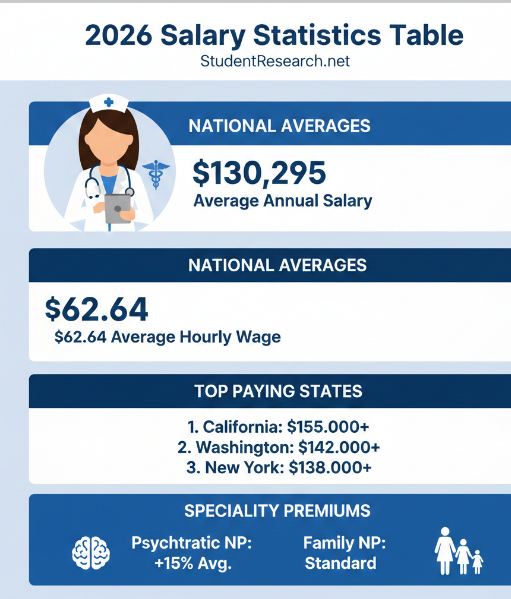
Financial compensation for student health nurse practitioner jobs has seen a steady rise as institutions compete for top-tier medical talent. In 2026, the average annual pay reflects the high level of responsibility and specialized knowledge required for these roles.
National and Regional Salary Data
Salaries vary significantly based on geographic location, cost of living, and the type of institution (public vs. private). For instance, California and Alaska currently lead the nation in compensation for school-based NPs.
Factors Influencing Your Earning Potential
Beyond base pay, many student health nurse practitioner jobs offer robust benefits packages that increase the total compensation value. Understanding these variables can help you negotiate a better contract.
- Education Level: DNP-prepared NPs often command higher starting salaries than MSN-prepared peers.
- Specialized Certifications: Holding a PMHNP (Psychiatric) or FNP (Family) certification can lead to bonuses.
- Years of Experience: Most high-paying university roles require 2–5 years of clinical RN or NP experience.
Required Qualifications and Educational Pathways
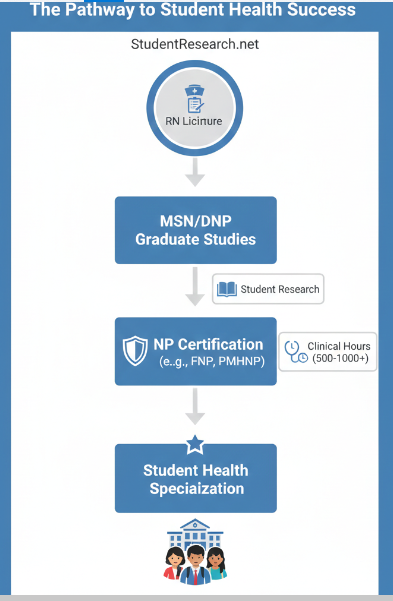
Entering the field of student health nurse practitioner jobs requires a structured educational journey and specific licensing. You must transition from a foundational nursing background to an advanced practice role.
Core Academic Requirements
Aspiring practitioners must first obtain a Bachelor of Science in Nursing (BSN) and pass the NCLEX-RN. Following this, a graduate-level degree (MSN or DNP) with a specific population focus is mandatory.
- Accredited Programs: Ensure your graduate program is CCNE or ACEN accredited.
- Clinical Hours: Completion of 500 to 1,000 supervised clinical hours is standard.
- Advanced Coursework: Focus on pharmacology, pathophysiology, and physical assessment.
Certification and State Licensure
Once the degree is earned, you must pass a national board certification exam from bodies like the AANP or ANCC. This certification is a prerequisite for state licensure as an APRN.
- National Boards: Choose a focus like Family (FNP) or Adult-Gerontology (AGNP).
- State Boards: Apply for NP licensure through your specific State Board of Nursing.
- Prescriptive Authority: Obtain a DEA number and state-specific furnishing licenses.
Essential Skills for Success in Campus Medicine
To excel in student health nurse practitioner jobs, one must possess a blend of high-level clinical skills and soft skills tailored for a younger population. The ability to build trust quickly is vital when dealing with sensitive health issues.
Advanced Clinical Competencies
Practitioners need to be proficient in diagnostic reasoning and the latest evidence-based treatments. This involves constant student research into emerging health trends to ensure the best patient outcomes.
- Diagnostic Reasoning: Identifying complex conditions with limited history.
- Procedural Skills: Suturing, wound care, and minor surgical interventions.
- Data Interpretation: Analyzing lab results and imaging within a fast-paced clinic.
Communication and Empathy
Soft skills are just as important as clinical knowledge when working with students. You must be able to break down medical jargon and provide a safe space for patients to share their concerns.
- Cultural Sensitivity: Working with a diverse, international student body.
- Active Listening: Essential for identifying underlying mental health or social issues.
- Patient Advocacy: Helping students navigate the wider healthcare system.
Comparing Public vs. Private Institution Roles
When searching for student health nurse practitioner jobs, you will find distinct differences between working for a state-funded public university and a private college. Each environment offers unique advantages regarding funding and patient volume.
Structural and Cultural Differences
Public universities often serve larger, more diverse populations, whereas private colleges may offer more specialized, concierge-style health services. Understanding these differences is key to finding your ideal workplace.
| Feature | Public University Roles | Private College Roles |
| Patient Volume | High volume, fast-paced environment | Lower volume, longer appointment times |
| Budget/Resources | State-funded, often subject to policy shifts | Endowment-funded, potentially more flexible |
| Benefits | Strong state pensions and public service perks | Competitive 401k matching and tuition waivers |
| Patient Diversity | Extremely high; broad socioeconomic range | Often more specialized or niche demographics |
Navigating the Job Application Process
Securing one of the many student health nurse practitioner jobs available requires a strategic approach to your resume and interview. Highlighting your experience with the young adult population is crucial.
Crafting a Standout Resume
Your resume should emphasize your advanced practice clinical skills and any experience in educational or community health settings. Be sure to mention your involvement in student research projects if applicable.
- Highlight Certifications: List all APRN and specialty certifications clearly.
- Clinical Rotations: Include details of rotations in student health or pediatrics.
- Technology Proficiency: Mention experience with EHR systems like Epic or Point and Click.
Mastering the Interview
Interviews for university roles often involve a panel of both medical and administrative staff. Be prepared to discuss how you handle high-stress situations and your philosophy on student-centered care.
- Behavioral Questions: Prepare stories about managing difficult patient encounters.
- Clinical Scenarios: Expect questions on common campus health issues (e.g., meningitis, mental health crises).
- Cultural Fit: Demonstrate your understanding of the university’s mission and values.
Future Outlook and Career Growth
The job market for student health nurse practitioner jobs is projected to grow significantly over the next decade. As the provider shortage continues, NPs are being recognized as the primary solution for accessible campus care.
Projected Growth and Stability
According to the Bureau of Labor Statistics, the NP field is expected to grow by nearly 46% by 2033. This growth is mirrored in the academic sector as schools expand their health infrastructure.
- Fastest Growing Occupation: NPs remain at the top of healthcare growth charts.
- Retirement Openings: A significant portion of the current workforce is reaching retirement age.
- New Roles: Creation of specialized positions in campus wellness and informatics.
Advancement Opportunities
Working in student health doesn’t mean you are limited to clinical work. Many NPs move into leadership or educational roles within the university system.
- Clinical Management: Transitioning to Clinic Director or Lead NP roles.
- Academic Faculty: Teaching in the university’s nursing or NP programs.
- Public Health Policy: Influencing campus-wide or statewide health initiatives.
Conclusion and Next Steps
Finding the perfect fit among the available student health nurse practitioner jobs is a journey of matching your clinical passions with the right institutional culture. Whether you are drawn to the fast-paced nature of a large public university or the intimate setting of a small private college, your impact on student success will be profound. By following the pathways outlined in this guide, you can confidently navigate the competitive landscape of 2026.
As you finalize your career strategy, remember that your role is the backbone of campus wellness. To help you get started, keep this summary in mind:
Explore student health nurse practitioner jobs to find rewarding career paths in campus medicine, offering great pay, balance, and growth.
Need a perfectly formatted literature review or case study? StudentResearch.net provides professional academic writing assistance for busy nursing students. Save time and boost your grades with our 24/7 expert support and plagiarism-free guarantees. Start your success story today!

