

Stepping onto the hospital floor as a nursing student feels like a high-stakes balancing act between academic theory and the raw reality of patient care. For clinical instructors, the challenge lies in translating a student’s performance into words that are both encouraging and professionally rigorous. Whether you are an educator looking for the right phrasing or a learner seeking to understand your progress, these sample nursing student clinical evaluation comments serve as a roadmap for professional growth.
I. The Role of Clinical Evaluations in Nursing Education
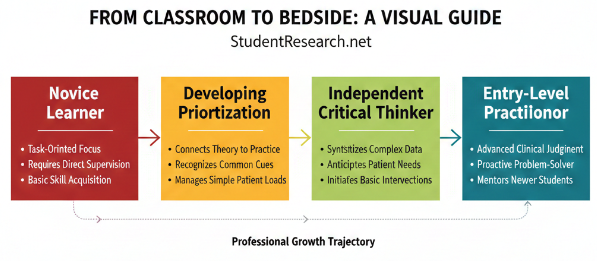
The clinical evaluation is more than just a grade; it is a vital communication tool that bridges the gap between the classroom and the bedside. These assessments provide a structured reflection of a student’s ability to apply theoretical knowledge in a fast-paced, unpredictable environment. By using standardized sample nursing student clinical evaluation comments, instructors ensure that feedback remains objective, actionable, and aligned with nursing competencies.
Importance of Objective Feedback
- Identifies Skill Gaps: Highlights specific areas where a student needs more practice, such as IV insertion or sterile technique.
- Encourages Professionalism: Addresses non-clinical skills like punctuality, attire, and communication styles.
- Facilitates Goal Setting: Provides a clear baseline for what the student should aim to achieve by the next clinical rotation.
Impact on Student Confidence
- Validation of Growth: Positive comments reinforce correct behaviors, boosting the student’s morale.
- Constructive Correction: Direct feedback prevents the internalization of “bad habits” early in a nursing career.
- Clarity of Expectations: Students perform better when they understand exactly how they are being measured against peers.
II. Evaluating Clinical Skill Acquisition and Competency
At the heart of every rotation is the mastery of psychomotor skills. Instructors must evaluate how safely and efficiently a student performs tasks, from basic hygiene to complex wound care. Utilizing sample nursing student clinical evaluation comments helps categorize these skills into tiers of proficiency. During this phase, student research into hospital-specific protocols is often reflected in how confidently a student approaches a new procedure.
Technical Proficiency and Safety
- Medication Administration: Focuses on the “rights” of medication and the student’s ability to explain the drug’s mechanism.
- Infection Control: Observes the consistency of hand hygiene and the proper use of Personal Protective Equipment (PPE).
- Equipment Mastery: Evaluates the student’s comfort level with pumps, monitors, and electronic health records (EHR).
Specific Skill Milestones
- IV Start Success:
- Demonstrates proper site selection based on vein integrity.
- Maintains a sterile field throughout the duration of the procedure.
- Wound Care Management:
- Correctly identifies different stages of pressure ulcers.
- Selects appropriate dressing materials as per the physician’s order.
Struggling to turn clinical rotations into top-tier papers? Let our experts handle the heavy lifting. At StudentResearch.net, we deliver custom, high-quality nursing assignments that guarantee academic excellence. Secure your future and get the grades you deserve today!
Comparing Skill Levels: Beginner vs. Competent Student
| Metric | Beginner Nursing Student | Competent Nursing Student |
| Task Speed | Slow; requires step-by-step guidance. | Efficient; moves fluidly between tasks. |
| Prioritization | Focuses on one task at a time. | Can manage a “to-do” list for multiple patients. |
| Autonomy | Needs constant supervision for safety. | Performs routine tasks independently after initial check. |
| Critical Thinking | Follows orders without questioning “why.” | Connects lab values to the patient’s clinical presentation. |
III. Assessment of Communication and Interprofessional Collaboration
Nursing is a team sport, and a student’s ability to communicate with patients, families, and the healthcare team is paramount. Evaluators look for “soft skills” that are often harder to quantify than a blood pressure reading but are just as essential for patient safety. High-quality sample nursing student clinical evaluation comments will often highlight the nuances of these interactions.
Patient-Centered Communication
- Therapeutic Rapport: Building trust through active listening and empathy during bedside care.
- Patient Education: The ability to explain complex medical jargon in a way that the patient and family can understand.
- De-escalation: Managing difficult or anxious patients with a calm and professional demeanor.
Team Dynamics and SBAR Reporting
- SBAR Competency: Using the Situation, Background, Assessment, and Recommendation framework during handoffs.
- Conflict Resolution: Addressing disagreements with staff or peers in a constructive, private manner.
- Proactive Helpfulness: Offering assistance to other nurses on the floor once personal tasks are completed.
IV. Critical Thinking and Clinical Judgment
The transition from a student who “does” to a nurse who “thinks” is the primary goal of clinical rotations. This section of the evaluation focuses on the student’s ability to synthesize data and anticipate patient needs. Often, student research regarding evidence-based practice is what separates a student who simply follows orders from one who truly understands the clinical picture.
Application of Pathophysiology
- Linking Lab Results: Noticing a drop in potassium and anticipating the need for a supplement or EKG.
- Symptom Recognition: Identifying early signs of sepsis or respiratory distress before they become emergencies.
- Holistic View: Considering the patient’s social determinants of health when planning for discharge.
Levels of Critical Thinking Development
- Level 1: Basic Recognition:
- Student identifies abnormal vital signs but needs prompting to act.
- Level 2: Intermediate Analysis:
- Student interprets why the vitals are abnormal based on the diagnosis.
- Level 3: Advanced Synthesis:
- Student suggests a change in the care plan to the primary nurse or instructor.
V. Professionalism, Ethics, and Work Ethic
A student’s “nursing presence” is a combination of their appearance, reliability, and ethical standing. This section is often where the most sample nursing student clinical evaluation comments are directed toward character and reliability. Consistency here is non-negotiable for a career in healthcare.
Reliability and Accountability
- Punctuality: Arriving early for pre-conference and staying until all charting is finalized.
- Adherence to Policy: Following the school’s and the hospital’s code of conduct without exception.
- Taking Ownership: Admitting to a mistake immediately and working to rectify it with the instructor.
Ethical Practice and Advocacy
- Patient Confidentiality: Strict adherence to HIPAA regulations regarding patient information.
- Informed Consent: Ensuring the patient understands a procedure before it begins.
- Cultural Sensitivity: Providing care that respects the patient’s religious or cultural beliefs.
VI. 14 Candid Examples of Evaluation Comments
To provide clarity, here are fourteen distinct sample nursing student clinical evaluation comments categorized by the type of performance they describe. These are designed to be used as templates for instructors.
Positive and Exemplary Performance
- Example I: “Student consistently demonstrates a high level of clinical judgment, accurately linking the patient’s electrolyte imbalance to their cardiac arrhythmia.”
- Example II: “Excellent therapeutic communication skills; the student was able to calm a confused patient using validation techniques without the need for chemical restraints.”
- Example III: “Demonstrates superior technical skill in Foley catheter insertion, maintaining a sterile field perfectly under a high-pressure situation.”
- Example IV: “Student is highly proactive; they seek out learning opportunities across the unit and assist the nursing staff without being asked.”
- Example V: “Documentation is thorough, concise, and completed in a timely manner, reflecting a professional level of EHR competency.”
Constructive and Growth-Oriented Performance
- Example VI: “While technically sound, the student needs to focus on time management to ensure all 10:00 AM medications are administered within the 60-minute window.”
- Example VII: “The student should work on verbalizing their clinical reasoning during SBAR reports to ensure the primary nurse understands their assessment.”
- Example VIII: “Needs to improve on prioritizing tasks; the student often spends too much time on hygiene while delaying critical assessments.”
- Example IX: “Encouraged to engage more during post-conference by sharing insights from their student research into the patient’s rare condition.”
- Example X: “Student occasionally struggles with aseptic technique during dressing changes; continued practice in the skills lab is recommended.”
Performance Requiring Significant Improvement
- Example XI: “Student was unprepared for clinical, failing to provide the mechanism of action for the primary medications assigned to their patient.”
- Example XII: “Interprofessional communication needs work; the student was observed speaking dismissively to a nursing assistant during a patient transfer.”
- Example XIII: “Difficulty maintaining patient safety; the student left the bedside rails down on a patient designated as a high fall risk.”
- Example XIV: “Lacks initiative in seeking out the instructor before performing new tasks, leading to several near-miss errors in charting.”
VII. Clinical Performance Rubric & Self-Evaluation Template
H3: Clinical Competency Rubric
This rubric helps instructors quantify the sample nursing student clinical evaluation comments into measurable grades.
| Criteria | Needs Improvement (1-2) | Proficient (3-4) | Exemplary (5) |
| Clinical Judgment | Struggles to link labs to diagnosis. | Connects major symptoms to pathology. | Anticipates needs based on student research. |
| Technical Skill | Frequent breaks in sterile technique. | Performs skills safely with cues. | Fluid, independent, and error-free. |
| Communication | Minimal interaction with the team. | Uses SBAR correctly most times. | Exceptional rapport and advocacy. |
H3: Student Self-Evaluation Template
Students should use this template mid-rotation to align their perception with instructor expectations.
- Reflective Goal Setting: Based on my student research this week, what is one evidence-based intervention I successfully implemented?
- Skill Audit: Which technical skill (e.g., Example III or X) do I need to practice in the lab before the next shift?
- Professional Growth: How have I demonstrated accountability (Example XI-XIV) when faced with a clinical challenge?
- Interprofessional Goal: List one instance where I improved team dynamics using SBAR.
Note: Consistent self-reflection reduces the “shock” of final evaluations and fosters a proactive learning environment.
VII. Integrating Evidence-Based Practice into Evaluations
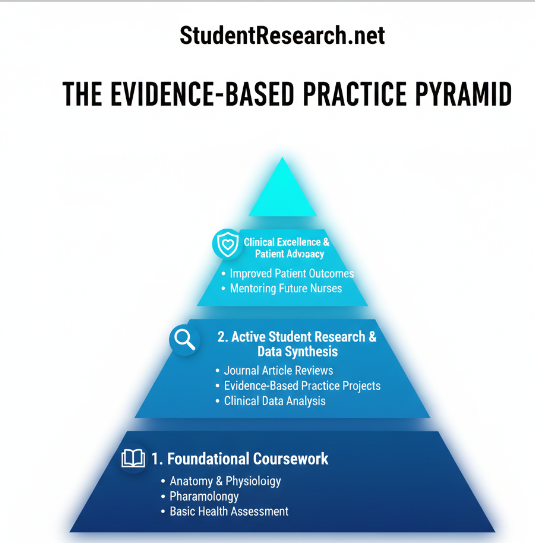
Modern nursing education demands that clinical performance be rooted in the latest science. This is where student research becomes an evaluation metric. Instructors look for students who don’t just “do as they’re told” but look for the “why” behind the practice.
Research-Driven Care
- Literature Reviews: Using recent journals to justify a specific patient intervention.
- Best Practice Guidelines: Following CDC or ANA guidelines rather than relying on “the way we’ve always done it.”
- Outcome Tracking: Monitoring if the interventions based on research are actually improving the patient’s condition.
Need evidence-based perfection for your next nursing project? Elevate your academic standing with professional assistance from StudentResearch.net. We specialize in deep clinical analysis and rigorous citations, ensuring your papers reflect true nursing expertise and scholarly authority. Join us now!
Evaluating Research Application
| Evaluation Area | Evidence of Research Integration |
| Skin Integrity | Cites the Braden Scale research when justifying a turning schedule. |
| Pain Management | Uses non-pharmacological methods found in recent nursing studies alongside meds. |
| Patient Safety | References “Just Culture” when reporting a minor documentation error. |
IX. Conclusion
Writing or receiving a clinical evaluation can be an emotional process, but it is the cornerstone of professional development. By utilizing these 14 candid examples for a comprehensive guide, both students and instructors can navigate this process with clarity and purpose.
Ultimately, the goal of these evaluations is to ensure that the next generation of nurses is prepared to provide safe, compassionate, and evidence-based care. Master clinical feedback with these 14 candid sample nursing student clinical evaluation comments. A comprehensive guide for educators and students.
Meta Description: Master clinical feedback with these 14 candid sample nursing student clinical evaluation comments. A comprehensive guide for educators and students.

