

Meta Description: Explore 13 nursing student weaknesses examples and learn how to master clinical skills with expert tips to transform your student research into success.
Introduction: Navigating the Hurdles of Clinical Training
Stepping onto a hospital floor for the first time as a trainee is an exhilarating yet humbling experience that exposes your hidden vulnerabilities. Understanding nursing student weaknesses examples is not about highlighting failure, but rather about identifying the specific areas where your academic knowledge meets the friction of real-world practice. By acknowledging these gaps early, you can leverage student research and mentorship to build a foundation of professional resilience and technical mastery.
I. The Psychological Barrier: Overcoming Clinical Anxiety
Clinical anxiety often stems from the high-stakes environment of patient care where the margin for error feels incredibly slim. Many students find that their initial nursing student weaknesses examples include a paralyzing fear of making a mistake in front of a preceptor. Addressing this requires a shift in mindset from perfectionism to a focus on incremental learning and safety-first protocols.
II. Fear of Procedure Errors
- Performance Pressure: The “all eyes on me” feeling during a first catheterization or IV start.
- Skill Regression: Forgetting basic steps under the gaze of a stern evaluator.
- Risk Aversion: Hesitating to try new tasks, which slows down the practical learning curve.IV. Strategies for Mastery
- Visualization: Mentally rehearsing the steps of a procedure before entering the patient’s room.
- Pre-Clinical Practice: Utilizing lab hours to build muscle memory until the action becomes second nature.
III. Time Management: The Struggle with Prioritization
In the classroom, you study one disease process at a time, but the ward demands you manage multiple patients with competing needs simultaneously. One of the most common nursing student weaknesses examples is the “task-oriented” trap, where a student focuses on finishing a checklist rather than assessing patient urgency. Mastering the art of the “brain sheet” is essential for surviving a 12-hour shift without feeling overwhelmed.
To master time management and address the common nursing student weaknesses examples related to organization, “brain sheets” are your most powerful weapon. These are customized organizational templates nurses carry in their pockets to track patient data, medication times, and pending tasks.
Since your student research likely shows that cognitive overload is a leading cause of clinical errors, using a structured sheet allows you to offload memory tasks and focus on critical thinking.
“Struggling to balance clinical rotations with complex essays?” Let the experts at StudentResearch.net handle the heavy lifting of your nursing assignments. We provide high-quality, plagiarism-free papers tailored to your specific rubric. Reclaim your time and boost your grades today!
Essential Nursing “Brain Sheet” Templates for Every Rotation
Transitioning from a disorganized student to a structured clinician requires a template that matches your specific unit’s workflow. One of the most frequent nursing student weaknesses examples is trying to use a “one-size-fits-all” sheet for every department. Instead, you should categorize your organizational tools by the acuity and pace of the environment.
The Medical-Surgical (Med-Surg) Brain Sheet
The Med-Surg environment is characterized by high patient volume (typically 5–7 patients). Your primary struggle here is usually keeping track of multiple medication passes and discharge orders.
- The Hourly Grid: A vertical column for each hour of a 12-hour shift to mark meds, vitals, and turns.
- Task Checkboxes: Dedicated boxes for “Assessment,” “Charting,” and “I&O” (Intake and Output).
- The “To-Do” Sidebar: A space for non-scheduled tasks like calling a doctor or grabbing a specific supply.III. Maximizing Med-Surg Efficiency
- Color Coding: Use different colored pens for different patients or for “Stat” versus “Routine” orders.
- Pre-Shift Mapping: Spend the first 10 minutes of your shift filling in the scheduled meds to visualize your “busy” hours.
The Intensive Care Unit (ICU) Flowsheet
In the ICU, you have fewer patients but a massive influx of data points. Common nursing student weaknesses examples in the ICU include getting “lost in the numbers” and failing to see
The Labor & Delivery (L&D) / Postpartum Sheet
In maternal-child health, your brain sheet must account for two patients in one—the mother and the baby. Students often find this to be one of the more complex nursing student weaknesses examples because the priorities shift rapidly between the two.
- The “Dyad” Layout: A split-page design where the top half is for the mother and the bottom half is for the newborn.
- Vaginal Exam Tracker: Space to record dilation, effacement, and station over time.
- Feeding Log: A simple checklist to ensure the newborn is feeding at appropriate intervals.VII. Managing the Dyad
- Time-Stamp Focus: Recording the exact time of rupture of membranes (ROM) or medication boluses.
- Safety Reminders: Checkboxes for “ID bands matched” and “Security tag active.”
Comparison: Brain Sheet Features by Department
To help you decide which tool to prioritize in your student research and clinical prep, refer to the table below comparing the focus of different brain sheet styles.
| Brain Sheet Type | Primary Organizational Focus | Essential Data Points | Complexity Level |
| a. Med-Surg | Task & Medication Completion | PRNs, Routine Meds, Discharges | Moderate (High Vol) |
| b. ICU | Physiological Trends | Drip Rates, Vent Settings, Labs | High (Data Dense) |
| c. ER | Rapid Assessment & Triage | Chief Complaint, Last Meal, ESI Level | High (Fast Pace) |
| d. Psych | Behavioral Observation | Safety Level, Mood/Affect, Group Attendance | Low (Narrative Focus) |
Creating Your Own Custom Brain Sheet
If you find that pre-made templates don’t fit your style, you can develop your own based on your student research of unit protocols. A custom sheet is often the best way to overcome the nursing student weaknesses examples associated with “information blindness”—where you have too much data and can’t find what you need.
- Identify Your Non-Negotiables: What are the three things you always forget? (e.g., checking IV expiration, charting a focused neuro assessment).
- Leave “White Space”: Avoid a cluttered design; you need room to scribble unexpected orders or doctor’s notes.
- Privacy First: Always remember that your brain sheet contains PHI (Protected Health Information); ensure it is shredded at the end of every shift.X. The “Brain” Evolution
- Version Control: Don’t be afraid to change your layout every week until it feels intuitive.
- Peer Review: Ask an experienced nurse on your unit to look at your sheet and see if you are missing any “high-risk” data points.
Mastering the Art of Organization
By adopting a structured brain sheet, you effectively neutralize many of the nursing student weaknesses examples that plague new clinicians. Organization is not just a soft skill; it is a clinical safety mechanism that prevents missed medications and facilitates smoother handoffs.
Explore 13 nursing student weaknesses examples and learn how to master clinical skills with expert tips to transform your student research into success. As you grow more confident, you’ll find that your “brain” becomes an extension of your practice, allowing you to spend less time worrying about what you forgot and more time providing high-quality care at the bedside.
Identifying Priority Mismanagement
- The Procrastination Loop: Putting off difficult charting or complex dressings until the end of the shift.
- Distraction Sensitivity: Getting sidetracked by non-urgent patient requests while a medication pass is due.
- Linear Thinking: Attempting to complete tasks in the order they appear rather than by medical necessity.VII. Tools for Efficiency
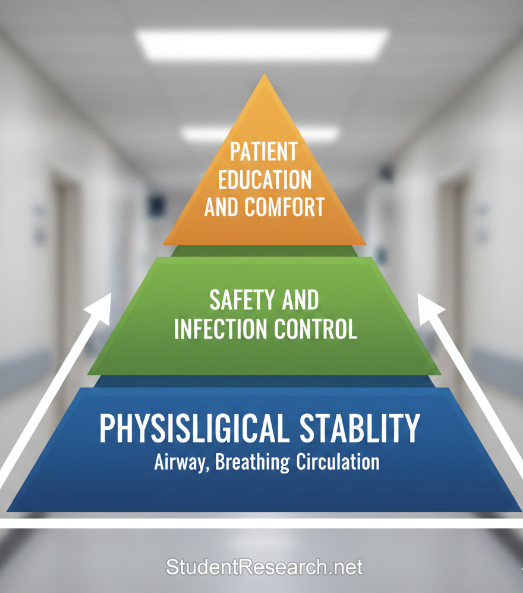
- The ABC Method: Categorizing tasks by Airway, Breathing, and Circulation/Safety.
- Hourly Rounding: Implementing proactive checks to reduce the frequency of call lights.
IV. Communication Gaps: Interprofessional and Patient Interaction
Effective communication is the backbone of nursing, yet it remains a prominent area among nursing student weaknesses examples due to the jargon-heavy nature of the field. Students often struggle to find the right balance between being overly technical with patients and being too timid when speaking to physicians. Improving these interactions requires deliberate practice and a deep dive into student research regarding therapeutic communication techniques.
V. Barriers to Clear Exchange
- SBAR Hesitation: Struggling to use the Situation-Background-Assessment-Recommendation framework during handoffs.
- Patient Rapport: Difficulty translating complex medical terms into “layman’s terms” for family members.
- Conflict Avoidance: Failing to speak up when a team member bypasses a safety protocol.X. Enhancing Your Voice
- Role-Playing: Practicing difficult conversations with peers to build confidence in vocalizing concerns.
- Active Listening: Focusing on the patient’s non-verbal cues to better understand their underlying needs.
VI. Data Comparison: Common Weaknesses vs. Professional Expectations
Understanding where you stand compared to industry benchmarks can help you focus your professional development efforts. The following table highlights common nursing student weaknesses examples and how they contrast with the expectations of a Registered Nurse (RN).
| Student Weakness Category | Impact on Care | Professional Expectation (RN) | Improvement Timeline |
| I. Technical Clumsiness | Potential for minor injury | Fluid, sterile technique | 6–12 Months |
| II. Slow Documentation | Delayed care coordination | Real-time, accurate charting | 3–6 Months |
| III. Assessment Shyness | Missed clinical cues | Comprehensive, confident physicals | Immediate/Ongoing |
| IV. Poor Delegation | Burnout and task backlog | Effective team leadership | 1–2 Years |
VII. Critical Thinking: Moving Beyond the Textbook
Critical thinking is the ability to synthesize data and predict a patient’s trajectory, a skill that is frequently cited in nursing student weaknesses examples. It is difficult to “teach” this because it relies on clinical experience and the application of student research to live scenarios. Many students struggle to connect the dots between a lab value, a physical symptom, and the necessary nursing intervention.
“Is your evidence-based practice project causing endless stress?” Secure top-tier academic support at StudentResearch.net. Our specialists excel in nursing theory and medical analysis, ensuring your student research stands out. Achieve clinical excellence without the late-night library marathons—order your custom paper now!
VIII. The Difficulty of Synthesizing Information
- Rote Memorization: Relying on flashcards instead of understanding the “why” behind a pathology.
- Tunnel Vision: Focusing on a single symptom while ignoring the systemic health of the patient.
- Decision Paralysis: Knowing what is wrong but waiting for a superior to suggest the next step.XIV. Developing Clinical Judgment
- Concept Mapping: Creating visual links between a patient’s diagnosis, medications, and potential complications.
- Post-Shift Reflection: Writing down one thing that surprised you each day to improve future pattern recognition.
Physical and Emotional Stamina: The Silent Struggle
The physical toll of nursing—standing for 12 hours, lifting patients, and skipping meals—is a shock to the system for many. Emotional exhaustion also ranks high among nursing student weaknesses examples, as students are often unprepared for the grief and trauma encountered in oncology or ICU rotations. Self-care is not a luxury in this profession; it is a clinical necessity for maintaining patient safety.
VIII. Physical and Mental Fatigue Factors
- Body Mechanics: Risking back injury by not asking for help with patient transfers.
- Compassion Fatigue: Feeling drained by the emotional weight of patient suffering.
- Dehydration and Nutrition: Neglecting personal health, leading to decreased cognitive function on the floor.XVII. Sustainable Practice Tips
- Ergonomic Awareness: Using assist devices (Hoyer lifts, slide sheets) for every heavy move.
- Mental Health Check-ins: Utilizing school counseling or peer support groups to process difficult shifts.
IX. Pharmacological Knowledge: The Medication Safety Gap
Medication errors are a primary concern in healthcare, making pharmacology one of the most stressful nursing student weaknesses examples. Students often feel overwhelmed by the sheer volume of drug classes, dosages, and contraindications they must remember. A “slow and steady” approach to medication administration is the only way to ensure patient safety while building expertise.
X. Common Medication Hurdles
- Calculation Errors: Struggling with dosage math under the pressure of a busy unit.
- Drug-Drug Interactions: Failing to recognize when two prescribed medications may conflict.
- Side Effect Blindness: Monitoring for the main effect but forgetting to assess for adverse reactions.XX. Mastery of Meds
- The 6 Rights: Rigorously checking Right Patient, Drug, Dose, Route, Time, and Documentation every single time.
- Pharmacology Summaries: Creating a personal database of the top 50 drugs used in your specific clinical area.
XI. Comparing Weakness Impact: Clinical vs. Academic
The way these nursing student weaknesses examples manifest depends on the environment, as shown in the comparison below.
| Feature | Clinical Environment Impact | Academic/Lab Impact |
| Confidence Level | Affects patient trust and safety | Affects test scores and participation |
| Mistake Consequence | Direct harm to a living person | Deducted points or a “do-over” |
| Feedback Loop | Immediate and often high-stress | Delayed (grading periods) |
| Collaboration | High—requires multidisciplinary teamwork | Low—mostly individual study |
XIICultural Competence and Diversity in Care
A subtle but significant area in nursing student weaknesses examples involves cultural competence—the ability to provide care that respects a patient’s diverse background. Students may unintentionally impose their own biases or fail to account for cultural dietary restrictions or religious practices. Bridging this gap requires an open mind and a commitment to lifelong learning about the communities you serve.
XIII. Overlooking Patient Diversity
- Language Barriers: Relying on family members for translation instead of official hospital interpreters.
- Bias Awareness: Unconscious prejudices affecting the quality of care provided to marginalized groups.
- Religious Sensitivity: Not accounting for prayer times or specific modesty requirements in care plans.XXIV. Building Inclusive Care
- Cultural Assessment: Adding specific questions about a patient’s beliefs and preferences during intake.
- Diverse Study: Seeking out clinical placements in underserved or culturally varied neighborhoods.
Conclusion: Turning Vulnerability into Professional Strength
Addressing these nursing student weaknesses examples is the first step toward becoming a competent, compassionate healthcare provider. By identifying where you fall short—whether in time management, technical skill, or emotional resilience—you can create a roadmap for improvement that lasts your entire career. Remember that even the most experienced nurses once stood in your shoes, feeling the same uncertainties you feel today.
Explore 13 nursing student weaknesses examples and learn how to master clinical skills with expert tips to transform your student research into success. Embracing these challenges now ensures that when you finally earn those initials behind your name, you do so with the confidence and competence your patients deserve.

