
Embarking on a journey that combines clinical practice with humanitarian aid is more than just a resume builder; it is a transformative rite of passage for future healers. Nursing student mission trips offer a unique intersection where academic theory meets the raw reality of underserved communities worldwide. By stepping outside the comfort of modern simulation labs, you will discover the true essence of compassionate care and cultural humility.
Benefits of Mission Trips for Nursing Students
- 1. Enhanced Clinical Confidence: Practice hands-on skills in high-volume environments that sharpen your diagnostic intuition and technical speed.
- 2. Cultural Competency: Gain a deep understanding of diverse belief systems and how they influence a patient’s approach to healthcare and healing.
- 3. Adaptability and Resilience: Learn to thrive in resource-limited settings, teaching you to provide excellent care without relying on advanced technology.
- 4. Global Networking: Connect with international medical professionals and like-minded peers, expanding your professional circle and future career opportunities.
- 5. Empathy Development: Witnessing global health disparities firsthand fosters a profound sense of advocacy and patient-centered compassion.
Preparing for Your Global Healthcare Journey
Preparation is the cornerstone of a successful international medical experience, requiring a balance of physical, mental, and logistical readiness. Before you can provide high-quality care, you must ensure your own documentation, health, and supplies are in perfect order. This section guides you through the essential checklist to ensure nothing is left to chance before your flight takes off.
Essential Pre-Departure Logistics
- 6. Passport and Visa Requirements: Ensure your passport has at least six months of validity beyond your return date and apply for medical volunteer visas early.
- 7. Vaccinations and Prophylaxis: Consult a travel clinic for region-specific immunizations like Yellow Fever, Typhoid, and Malaria prevention.
- 8. Liability Insurance: Verify if your school or the host organization provides malpractice coverage for students practicing abroad.
Packing for Clinical and Personal Needs
- 9. Lightweight Scrubs: Pack breathable, quick-dry scrubs that can withstand hand-washing and high humidity environments.
- 10. Diagnostic Tools: Bring your own high-quality stethoscope, penlight, and a manual blood pressure cuff, as these are often scarce in rural clinics.
- 11. Personal First Aid: Carry a personal supply of electrolytes, antihistamines, and digestive aids to ensure you stay healthy while working.
Top Destinations for Nursing Student Mission Trips
Choosing the right location depends on your clinical interests and the specific needs of the local population you wish to serve. Different regions offer varied challenges, from infectious disease management in tropical climates to geriatric care in rural mountain villages. Understanding the landscape of global health helps you align your skills with the communities that need them most.
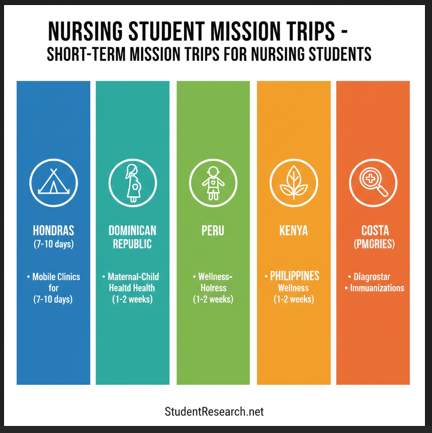
Short-Term Mission Trips for Nursing Students
- 12. Honduras Mobile Clinics: Participate in 7–10 day “brigades” that travel to remote mountain villages to provide primary care and deworming.
- 13. Dominican Republic Outreach: Engage in week-long programs focusing on public health education and diabetes management in rural “bateyes.”
- 14. Peru Sacred Valley Missions: Join short-term surgical teams providing essential post-operative care in high-altitude communities.
- 15. Kenya Rural Health Initiatives: Work alongside local practitioners on immunizations and malaria prevention in village dispensaries.
- 16. Philippines Community Nursing: Assist in short-duration urban clinic rotations that address respiratory illnesses in high-density areas.
- 17. Costa Rica Wellness Programs: Join interdisciplinary teams for a fast-paced week of community health assessments and geriatric support.
Clinical Skill Sets by Destination
| Destination Region | Primary Clinical Skill Focus | Essential “Soft” Skills |
| Central America | 18. Pediatric Hydration | Basic medical Spanish |
| Sub-Saharan Africa | 19. Infectious Disease Monitoring | High resilience |
| Southeast Asia | 20. Respiratory Health Assessment | Patience in urban flow |
| South America | 21. Maternal-Child Health | Family-centered care |
How to Master Clinical Skills in Resource-Limited Settings
One of the greatest benefits of nursing student mission trips is learning to provide excellent care without the luxury of advanced technology. When you don’t have an electronic monitor or an automated IV pump, your physical assessment skills must become your primary diagnostic tool. Mastering this “back-to-basics” approach will make you a significantly more competent and confident nurse in any setting.
Enhancing Physical Assessment Acuity
- 22. Manual Vital Signs: Practice your accuracy with manual BP cuffs and counting respirations without digital assistance.
- 23. Visual Diagnostics: Learn to identify dehydration, jaundice, and anemia through skin turgor and mucosal membrane inspection.
- 24. Palpation and Percussion: Refine your ability to assess organ size and abdominal tenderness through traditional nursing techniques.
Struggling to visualize your perfect paper? Visit StudentResearch.net to explore our extensive sample work portfolio. We offer free previews of high-quality nursing essays and clinical reports, helping you make informed decisions before you order. Quality you can trust!
Creative Problem Solving in the Field
- 25. Improvised Wound Care: Learn to use available resources to create sterile fields and manage dressings effectively.
- 26. Triage Prioritization: Master the art of quickly identifying which patients in a 200-person line need immediate intervention.
- 27. Patient Education: Develop ways to teach complex health concepts using visual aids and local translators.
Financial Planning and Fundraising Strategies
The cost of international travel and program fees can be a significant barrier, but it is one that can be overcome with a strategic plan. Many students successfully fund their entire trip through community outreach, grants, and creative digital campaigns. Viewing the fundraising process as your first step in professional advocacy will help you stay motivated and organized.
Average Trip Cost Breakdown
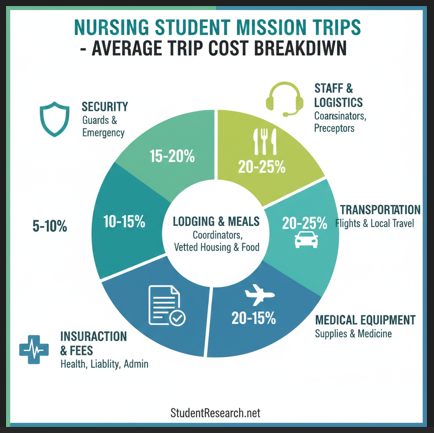
- 28. SECURITY: Includes 24/7 background-checked local guards and secure transport protocols (typically 5–10% of budget).
- 29. STAFF & LOGISTICS: Covers the salaries of on-site coordinators, translators, and skilled preceptors.
- 30. LODGING & MEALS: Includes safe, vetted dormitory stays and three nutritionally balanced meals per day.
- 31. INSURANCE & FEES: Encompasses comprehensive travel health insurance and professional liability coverage.
- 32. TRANSPORTATION: Accounts for international airfare, regional in-country travel, and daily clinical shuttles.
- 33. MEDICAL EQUIPMENT: Funds the procurement of essential pharmaceuticals, sterile disposables, and diagnostic tools.
Need a hand with those tricky citations? StudentResearch.net provides more than just writing; we offer free citation guides, writing tips, and academic resources to boost your grades. Let our experts guide your educational journey with value-added support today!
Navigating Cultural Sensitivity and Ethics
Providing medical care in a different culture requires a deep respect for local traditions and an understanding of your role as a guest. It is vital to avoid the “savior complex” and instead focus on sustainable, collaborative healthcare that empowers the local community. Ethical nursing abroad means prioritizing the patient’s dignity and long-term well-being over your own learning experience.
Best Practices for Ethical Volunteering
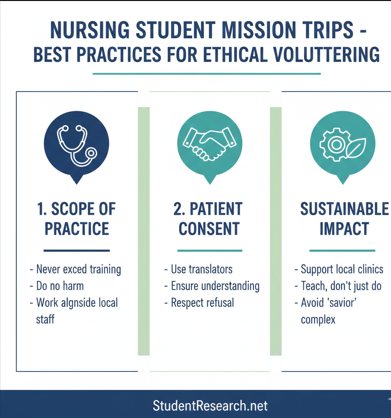
- 34. Scope of Practice: Never perform a procedure abroad that you are not licensed or trained to do in your home country.
- 35. Patient Consent: Always use a translator to ensure the patient understands and agrees to the care you are providing.
- 36. Sustainable Impact: Support programs that work with local doctors and nurses rather than those that operate in isolation.
Overcoming Language Barriers
- 37. Basic Medical Terms: Learn 20–30 key phrases in the local language, such as “Does it hurt?” and “Drink water.”
Conclusion and Future Career Impact
Returning from nursing student mission trips often leaves students with a renewed sense of purpose and a much broader perspective on global health equity. The skills you gain—adaptability, cultural competence, and advanced assessment—will set you apart in future job interviews and residency applications. As you transition back to your traditional clinicals, you will carry the stories and lessons of your global patients with you forever.
Summary of the Global Impact
- Clinical Growth: You will return with a sharper eye for assessment and a more resilient professional mindset.
- Resume Enhancement: Employers highly value the independence and cultural awareness gained through international service.
- Lifelong Perspective: These trips often spark a lifelong passion for advocacy and humanitarian work.
Meta Description: Explore nursing student mission trips with 37+ tips. Learn how to master global healthcare, choose the right program, and make a lasting impact today.

