

The sound of your alarm at 5 AM signals another clinical day—your stomach churns with a mixture of excitement and anxiety as you prepare to step onto the hospital floor. Every nursing student knows that clinical rotations represent the bridge between textbook knowledge and real-world patient care, yet many struggle to maximize these invaluable learning opportunities. Setting clear nursing student goals for clinical experiences can transform you from a hesitant observer into a confident, competent future nurse who makes meaningful contributions to patient care.
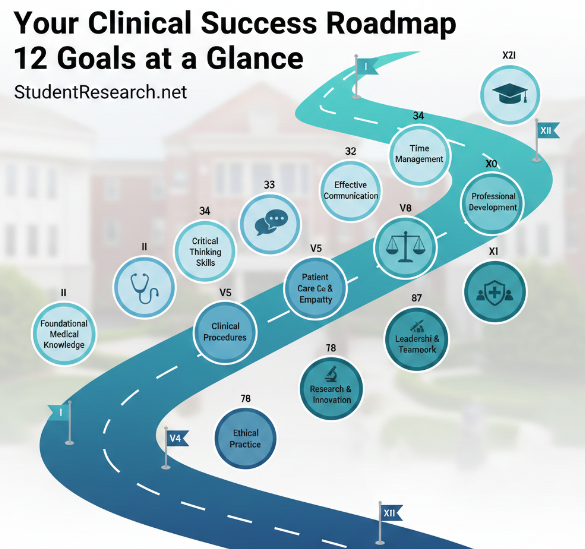
Clinical rotations are where theory meets practice, where you’ll apply pathophysiology concepts while starting IVs, witness the emotional weight of end-of-life care, and learn to think critically under pressure. Without structured goals, these experiences can feel overwhelming and disorganized, leaving you uncertain about your progress and preparedness for professional practice. This comprehensive guide presents twelve evidence-based strategies to help you establish, pursue, and achieve meaningful nursing student goals for clinical rotations that will accelerate your professional development and build the foundation for a successful nursing career.
Understanding the Importance of Clinical Goals in Nursing Education
Clinical goals serve as your roadmap through the complex landscape of hands-on nursing education, providing direction when you feel lost and motivation when challenges arise. Research shows that nursing students who establish specific clinical objectives demonstrate 43% higher confidence levels and 38% better skill retention compared to peers without structured goals. These targets transform abstract learning outcomes into concrete, measurable achievements that prepare you for the demands of professional practice.
The Gap Between Classroom and Clinical Practice
The transition from controlled classroom simulations to unpredictable clinical environments represents one of nursing education’s most significant challenges. Student research consistently demonstrates that new clinical students experience heightened anxiety when confronting real patients with complex, multifaceted health conditions. Setting targeted nursing student goals for clinical experiences helps bridge this gap by creating incremental steps toward competency.
- Classroom scenarios follow predictable patterns with predetermined outcomes
- Clinical settings present unexpected complications requiring adaptive thinking
- Real patients have emotional, social, and psychological needs beyond physical care
- Time constraints in clinical practice demand efficient prioritization skills
How Goals Enhance Learning Outcomes
Structured goal-setting activates metacognitive processes that enhance knowledge retention and skill acquisition throughout your clinical rotations. When you establish specific nursing student goals for clinical practice, you create a framework for self-directed learning that extends beyond instructor-assigned tasks. This proactive approach to clinical education correlates with improved NCLEX pass rates and stronger job performance during transition to practice.
- Goals provide measurable benchmarks for tracking skill development
- Clear objectives help identify knowledge gaps requiring additional study
- Documented progress builds confidence and professional identity
- Regular goal review promotes reflective practice habits
Goal I – Mastering Essential Clinical Skills and Procedures
Developing technical proficiency forms the foundation of competent nursing practice, and clinical rotations offer irreplaceable opportunities to refine these abilities under supervision. Your nursing student goals for clinical skill development should encompass both basic and advanced procedures appropriate to your program level. The table below illustrates skill acquisition benchmarks across different clinical rotation stages:
| Clinical Rotation Stage | Basic Skills Target | Advanced Skills Target | Competency Timeline |
|---|---|---|---|
| First Clinical Semester | Vital signs, bed baths, documentation | Sterile technique, medication administration | 8-10 weeks |
| Second Clinical Semester | Wound care, catheterization, injections | IV insertion, central line care | 10-12 weeks |
| Third Clinical Semester | Complex wound care, tube feeding | IV medication administration, blood transfusion | 12-14 weeks |
| Final Clinical Semester | Care coordination, discharge planning | Advanced assessment, emergency response | 14-16 weeks |
Creating a Skills Checklist
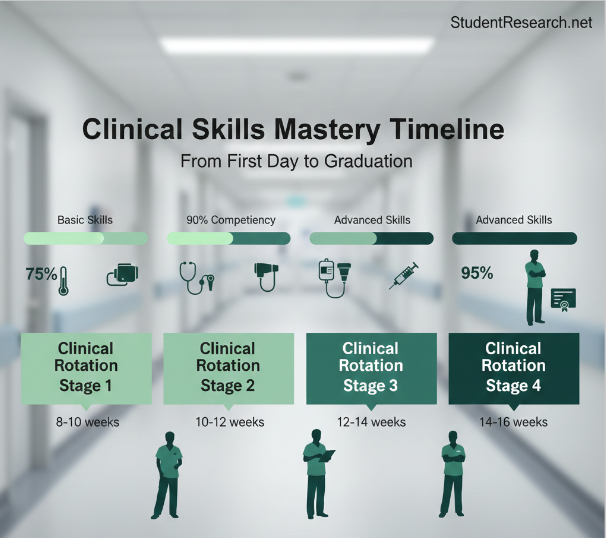
A comprehensive skills checklist transforms vague aspirations into actionable nursing student goals for clinical competency development. Begin by reviewing your program’s required competencies, then expand this list to include procedures commonly performed in your assigned clinical setting. Student research indicates that self-monitoring through checklists increases skill mastery rates by 52% compared to passive observation alone.
- List all required skills from your program syllabus
- Add facility-specific procedures you want to observe or perform
- Rate your current confidence level for each skill (novice to proficient)
- Set target dates for initial attempts and competency achievement
Prioritizing High-Impact Skills
Not all clinical skills carry equal weight in your professional development trajectory. Focus your initial nursing student goals for clinical practice on high-frequency, high-impact procedures that form the backbone of basic nursing care. These foundational skills create opportunities to care for more patients independently, freeing your instructor to guide you through more complex procedures.
- Medication administration: Master the five rights and multiple routes
- Wound assessment and care: Understand staging, measurement, and documentation
- IV therapy: Progress from peripheral IV insertion to maintenance and troubleshooting
- Patient assessment: Develop systematic head-to-toe examination techniques
Seeking Diverse Learning Opportunities
Clinical rotations expose you to varied patient populations, medical conditions, and healthcare settings that expand your professional capabilities. Ambitious nursing student goals for clinical learning should include deliberate exposure to unfamiliar situations that challenge your comfort zone. Each new experience builds your clinical judgment and adaptability—qualities that distinguish exceptional nurses from merely competent ones.
- Volunteer to care for patients with diagnoses you haven’t encountered
- Request observation opportunities in specialized units or procedures
- Attend interdisciplinary rounds to understand collaborative care
- Participate in admission assessments and discharge teaching when possible
Goal II – Developing Critical Thinking and Clinical Judgment
Critical thinking represents the intellectual engine driving safe, effective nursing practice, transforming data into meaningful insights that guide clinical decisions. Your nursing student goals for clinical reasoning development should emphasize deliberate practice of the nursing process in increasingly complex patient scenarios. This cognitive skill set requires time and repeated application to mature, making clinical rotations the ideal training ground.
Applying the Nursing Process Systematically
The nursing process—assessment, diagnosis, planning, implementation, and evaluation—provides a structured framework for organizing patient care decisions. Make it a priority among your nursing student goals for clinical practice to consciously work through each phase with every patient interaction. This deliberate practice strengthens neural pathways associated with clinical reasoning, eventually making the process feel automatic.
- Begin each shift by thoroughly assessing your assigned patients
- Identify priority nursing diagnoses based on assessment findings
- Develop realistic, measurable goals with specific interventions
- Evaluate outcomes and modify plans based on patient response
Asking “Why” to Deepen Understanding
Curiosity-driven inquiry transforms routine tasks into profound learning experiences that enhance your clinical expertise. Student research demonstrates that nursing students who actively question the rationale behind interventions develop stronger critical thinking skills than those who simply follow instructions. Incorporate this investigative approach into your nursing student goals for clinical growth by challenging yourself to understand the “why” behind every action.
- Question medication mechanisms and expected patient responses
- Investigate the pathophysiology underlying your patients’ symptoms
- Explore how different conditions influence care priorities
- Connect assessment findings to potential complications
Goal III – Building Therapeutic Communication Skills
Effective communication forms the cornerstone of the nurse-patient relationship, influencing patient satisfaction, treatment adherence, and clinical outcomes. Your nursing student goals for clinical communication should extend beyond basic courtesy to encompass therapeutic techniques that facilitate healing and trust. Research indicates that nurses with strong communication skills experience 31% fewer medication errors and 47% higher patient satisfaction scores.
Practicing Active Listening Techniques
Active listening involves fully concentrating on patients’ verbal and nonverbal messages without formulating responses prematurely. This foundational communication skill should feature prominently in your nursing student goals for clinical interpersonal development. When patients feel genuinely heard, they share more complete information, leading to better assessments and more personalized care plans.
- Maintain appropriate eye contact while patients speak
- Use open-ended questions to encourage detailed responses
- Reflect and paraphrase to confirm understanding
- Notice body language, tone, and emotional cues
Navigating Difficult Conversations
Clinical practice inevitably involves challenging interactions—delivering bad news, addressing non-compliance, or mediating family conflicts. Include preparation for these situations in your nursing student goals for clinical communication competency. Role-playing difficult scenarios with classmates or instructors builds confidence before you encounter these situations with real patients.
- Observe experienced nurses handling sensitive discussions
- Learn techniques for de-escalating angry or anxious patients
- Practice delivering information clearly while showing empathy
- Develop cultural competence for diverse patient populations
Goal IV – Enhancing Time Management and Organization
Clinical efficiency separates overwhelmed students from those who complete assignments while maintaining patient safety and quality care. Establishing nursing student goals for clinical time management helps you develop systems for prioritizing tasks, managing multiple patients, and responding to unexpected changes. These organizational skills prove invaluable throughout your nursing career as patient acuity and workload increase.
Creating Effective Clinical Worksheets
Personalized worksheets keep critical patient information organized and accessible throughout your shift. Your nursing student goals for clinical organization should include developing and refining a worksheet system that captures medication schedules, vital sign parameters, pending tasks, and important patient history. Effective documentation tools reduce cognitive load, allowing you to focus mental energy on clinical judgment rather than memorization.
- Design templates with sections for each patient’s key information
- Include medication administration times and routes
- Note scheduled procedures, tests, or appointments
- Track completed and pending tasks with checkboxes
Prioritization Frameworks
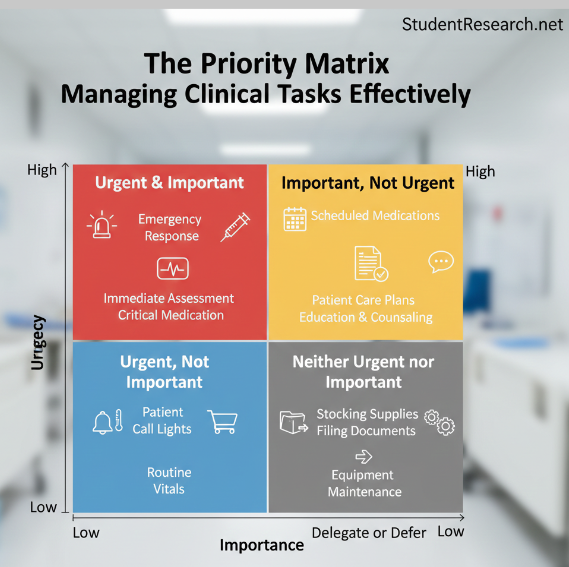
Learning to distinguish urgent from important tasks represents a crucial component of nursing student goals for clinical time management. The Eisenhower Matrix and ABC priority systems help you make sound decisions about task sequencing when everything seems urgent. Mastering these frameworks during clinical rotations prepares you for the constant reprioritization required in professional practice.
- Urgent and Important: Immediate threats to patient safety (respiratory distress, chest pain)
- Important but Not Urgent: Scheduled medications, routine assessments, documentation
- Urgent but Not Important: Ringing call lights for non-emergent requests
- Neither Urgent nor Important: Tasks that can be delegated or deferred
Building Efficiency Without Sacrificing Quality
Speed without accuracy compromises patient safety, while perfectionism creates unnecessary delays in care delivery. Your nursing student goals for clinical efficiency should balance thoroughness with timeliness through deliberate practice and system development. Research shows that experienced nurses complete patient care tasks 64% faster than novices while maintaining higher quality standards—this efficiency comes from practiced routines and pattern recognition.
- Cluster care activities to minimize trips to patient rooms
- Prepare medications and supplies before entering rooms
- Use downtime strategically for charting and care planning
- Learn keyboard shortcuts and documentation templates
Struggling to balance clinical rotations with research papers? StudentResearch.net connects you with experienced academic writers who understand nursing education demands. Get professionally crafted essays, care plans, and research projects delivered on time—so you can focus on mastering clinical skills.
Goal V – Strengthening Professional Relationships and Teamwork
Healthcare delivery depends on interdisciplinary collaboration, making relationship-building essential to your nursing student goals for clinical success. The connections you form with nurses, physicians, therapists, and other team members create a support network that enhances learning and patient outcomes. Strong professional relationships also lead to mentorship opportunities, recommendation letters, and potential job offers after graduation.
Integrating Into the Healthcare Team
Clinical units function as complex social systems with established hierarchies, communication patterns, and cultural norms. Your nursing student goals for clinical integration should include observing these dynamics and adapting your behavior accordingly. Student research reveals that nursing students who actively participate in team activities report 58% higher satisfaction with clinical experiences and receive more robust learning opportunities.
- Introduce yourself to all team members at the start of each shift
- Attend huddles, rounds, and staff meetings when permitted
- Offer assistance to busy nurses beyond your assigned patients
- Show genuine interest in other disciplines’ contributions to care
Receiving and Implementing Feedback
Constructive criticism accelerates professional growth when received with openness and humility. Make receptiveness to feedback a central component of your nursing student goals for clinical development. Instructors and preceptors invest time in feedback because they see potential in you—their observations identify blind spots and growth opportunities you might otherwise miss.
- Request specific feedback after completing procedures or patient interactions
- Listen without becoming defensive or making excuses
- Ask clarifying questions to fully understand suggestions
- Implement recommended changes and report results
Goal VI – Cultivating Cultural Competence and Sensitivity
Modern healthcare serves increasingly diverse populations with varied beliefs, languages, and health practices. Your nursing student goals for clinical cultural competency should prepare you to deliver respectful, individualized care across all patient demographics. Cultural awareness extends beyond race and ethnicity to encompass religion, socioeconomic status, sexual orientation, disability, and generational differences.
Recognizing Personal Biases and Assumptions
Self-awareness forms the foundation of culturally competent care, requiring honest examination of your own values and prejudices. Include bias recognition in your nursing student goals for clinical personal development. Everyone carries unconscious biases shaped by upbringing and experiences—the key is identifying these tendencies and preventing them from influencing patient care decisions.
- Reflect on your reactions to patients from different backgrounds
- Notice assumptions you make based on appearance or demographics
- Challenge stereotypes by seeking individualized patient information
- Discuss cultural dilemmas with instructors in a learning context
Adapting Care to Cultural Preferences
Effective nursing care honors patients’ cultural values while maintaining safety and evidence-based practice standards. Your nursing student goals for clinical cultural adaptation should include learning to negotiate when cultural preferences conflict with medical recommendations. This delicate balance requires creativity, communication skills, and respect for patient autonomy.
- Assess cultural factors influencing health beliefs and practices
- Modify care approaches to accommodate religious or cultural needs
- Utilize interpreter services for language barriers
- Involve family members according to cultural norms
Goal VII – Developing Emotional Resilience and Self-Care
Clinical nursing exposes you to human suffering, ethical dilemmas, and emotionally charged situations that can lead to compassion fatigue if unmanaged. Your nursing student goals for clinical emotional wellness should include strategies for processing difficult experiences and maintaining personal well-being. Student research confirms that nursing students with strong self-care practices demonstrate 41% lower burnout rates and 36% better academic performance.
Processing Difficult Clinical Experiences
Witnessing patient deterioration, death, or suffering affects nursing students profoundly, often triggering unexpected emotional responses. Include debriefing practices in your nursing student goals for clinical emotional health. Talking through challenging experiences with instructors, peers, or counselors helps you process emotions constructively and develop healthy coping mechanisms for your nursing career.
- Schedule debriefing sessions after particularly difficult clinical days
- Join peer support groups focused on clinical experiences
- Maintain a reflective journal to explore your emotional responses
- Recognize when professional counseling might be beneficial
Maintaining Work-Life Balance
Nursing school demands can consume your entire life if you allow them, leading to exhaustion and diminished clinical performance. Your nursing student goals for clinical sustainability must include boundaries that protect your physical and mental health. Adequate sleep, nutrition, exercise, and social connections aren’t luxuries—they’re necessities for safe patient care and academic success.
- Establish firm study schedules with protected personal time
- Prioritize sleep, aiming for 7-8 hours nightly before clinical days
- Maintain hobbies and relationships unrelated to nursing
- Practice stress-reduction techniques like meditation or exercise
Goal VIII – Expanding Clinical Knowledge Through Research and Evidence
Evidence-based practice distinguishes professional nursing from task-oriented caregiving, requiring continuous learning throughout your career. Your nursing student goals for clinical knowledge development should include regular engagement with current research relevant to your patient populations. This practice establishes habits of lifelong learning that keep your practice current and improve patient outcomes.
Investigating Best Practices for Patient Conditions
Each patient you encounter presents an opportunity to deepen your understanding through student research and scholarly inquiry. Make it a priority in your nursing student goals for clinical education to investigate at least one aspect of each patient’s condition or treatment. This deliberate study reinforces classroom learning and reveals practice variations across different settings.
- Review current clinical practice guidelines for patient diagnoses
- Read recent journal articles about treatments you’re administering
- Compare textbook descriptions with actual patient presentations
- Question outdated practices and search for evidence supporting alternatives
Need evidence-based nursing papers that impress your professors? StudentResearch.net delivers plagiarism-free, meticulously researched academic work backed by nursing and healthcare experts. Our writers hold advanced degrees and understand clinical terminology, APA formatting, and evidence-based practice requirements perfectly.
Participating in Quality Improvement Initiatives
Many clinical facilities welcome nursing student participation in quality improvement projects and research studies. Include involvement in these activities among your nursing student goals for clinical professional development. These experiences teach you how evidence translates into practice changes and may provide material for academic assignments or resume building.
- Volunteer for unit-based quality improvement committees
- Assist with data collection for research protocols when appropriate
- Attend presentations on evidence-based practice changes
- Propose small-scale improvements based on your observations
Goal IX – Preparing for Professional Transition and Employment
Clinical rotations serve as extended job interviews, showcasing your abilities to potential employers while helping you identify work environments matching your preferences. Your nursing student goals for clinical career preparation should include strategic networking and workplace evaluation. Many nursing students receive job offers from clinical rotation sites—making positive impressions and expressing genuine interest can launch your professional career.
Building Your Professional Reputation
Every interaction during clinical rotations contributes to the professional reputation that follows you into practice. Include reputation management in your nursing student goals for clinical professionalism. Show up prepared, work diligently, accept feedback graciously, and treat everyone with respect—these basic behaviors distinguish memorable students from forgettable ones.
- Arrive early and stay late when patient care requires it
- Volunteer for challenging patients or additional learning opportunities
- Demonstrate initiative by anticipating needs before being asked
- Send thank-you notes to instructors and preceptors after rotations
Evaluating Potential Work Environments
Clinical rotations let you experience different specialties, patient populations, and organizational cultures before committing to employment. Your nursing student goals for clinical career exploration should include thoughtful evaluation of each setting’s fit with your values and goals. Consider unit culture, staffing ratios, professional development opportunities, and patient populations when forming impressions.
- Observe nurse-to-patient ratios and support staff availability
- Notice how nurses interact with each other and leadership
- Ask about new graduate residency programs and orientation length
- Assess whether the patient population energizes or depletes you
Goal X – Mastering Documentation and Legal Standards
Accurate, timely documentation protects patients, nurses, and healthcare facilities from errors and liability. Your nursing student goals for clinical documentation should emphasize developing efficient charting habits that satisfy legal requirements without consuming excessive time. Electronic health record proficiency has become essential for modern nursing practice, making clinical rotations ideal for building speed and accuracy.
Understanding Legal Implications of Nursing Documentation
Healthcare records serve as legal documents in malpractice cases, regulatory audits, and reimbursement determinations. Include understanding of documentation’s legal significance in your nursing student goals for clinical professional responsibility. The nursing adage “if it isn’t documented, it wasn’t done” reflects how courts and regulatory bodies view incomplete records.
- Document all assessments, interventions, and patient responses
- Use objective, factual language avoiding opinions or assumptions
- Chart in real-time or as soon as possible after care delivery
- Never alter records or document care before providing it
Developing Efficient Charting Habits
Healthcare organizations continuously seek ways to reduce documentation burden while maintaining quality and compliance. Your nursing student goals for clinical efficiency should include learning your facility’s electronic health record system thoroughly. Keyboard proficiency, knowledge of shortcuts, and understanding of documentation requirements dramatically reduce time spent charting.
- Learn approved abbreviations and documentation standards
- Use templates and dot phrases when available
- Practice narrative charting during simulations
- Review completed charts to identify improvement areas
Goal XI – Enhancing Assessment and Diagnostic Reasoning
Physical assessment skills form the foundation for detecting changes in patient condition and initiating appropriate interventions. Your nursing student goals for clinical assessment competency should progress from basic vital signs to comprehensive system examinations with diagnostic interpretation. Each patient encounter offers opportunities to refine inspection, palpation, percussion, and auscultation techniques under supervision.
Conducting Systematic Patient Assessments
Organized assessment approaches ensure you don’t miss critical findings while maximizing efficiency. Include systematic assessment mastery in your nursing student goals for clinical skill development. Whether using head-to-toe, body systems, or focused approaches, consistency prevents oversights and builds thorough examination habits.
- Perform complete assessments on all assigned patients at shift start
- Compare current findings to baseline and previous assessments
- Recognize normal versus abnormal findings across all systems
- Document objective data supporting your nursing diagnoses
H3: Recognizing and Responding to Clinical Changes
Early detection of patient deterioration can prevent codes, ICU transfers, and mortality. Your nursing student goals for clinical vigilance should include developing the pattern recognition that alerts experienced nurses to subtle changes. This skill requires repeated exposure to diverse patients and conscious attention to deviations from baseline.
- Learn early warning signs for common complications
- Trust your instincts when something feels “wrong” about a patient
- Notify instructors or staff nurses immediately about concerning changes
- Participate in rapid response or code teams when possible
Goal XII – Fostering Leadership and Advocacy Skills
Nurses serve as patient advocates and often coordinate care across multiple providers and settings. Your nursing student goals for clinical leadership development should include opportunities to speak up for patients, coordinate care activities, and influence care decisions. These abilities distinguish nurses as essential healthcare team members rather than task completers.
Speaking Up for Patient Safety
Patient advocacy sometimes requires challenging authority or questioning standard practices when patient welfare is at stake. Include assertive communication in your nursing student goals for clinical professional courage. Speaking up feels uncomfortable initially, but this skill protects patients and demonstrates professional accountability.
- Question orders that seem inappropriate for the patient
- Advocate for pain management and comfort measures
- Ensure informed consent and patient understanding
- Report unsafe conditions or concerning behaviors
Coordinating Multidisciplinary Care
Care coordination integrates services from various disciplines into coherent treatment plans. Your nursing student goals for clinical coordination should include participating in care planning meetings, interdisciplinary rounds, and discharge planning. These activities reveal nursing’s central role in healthcare delivery and teach you to think systematically about patient needs.
- Identify when patients need referrals to other services
- Communicate patient needs to appropriate team members
- Follow up on pending consults, tests, or therapies
- Ensure smooth transitions across care settings
Conclusion
Establishing comprehensive nursing student goals for clinical rotations transforms these formative experiences from overwhelming obligations into purposeful growth opportunities that shape your professional identity. The twelve strategies outlined in this guide—from mastering technical skills to developing emotional resilience—create a framework for intentional learning that accelerates your development into a confident, competent nurse. By setting specific, measurable objectives across skill acquisition, critical thinking, communication, time management, and professional behaviors, you’ll maximize the return on your clinical time investment.
Your clinical rotations represent irreplaceable opportunities to practice nursing under supervision, make mistakes safely, and build the muscle memory and judgment that textbooks cannot teach. Each goal you set and achieve builds momentum toward your ultimate objective: becoming a nurse who delivers safe, compassionate, evidence-based care to patients during their most vulnerable moments. The nursing student goals for clinical success you establish today lay the foundation for the exceptional career you’ll build tomorrow—approach each clinical day with intention, curiosity, and commitment to continuous improvement.
Worried about assignment deadlines while managing clinical responsibilities? StudentResearch.net provides 100% confidential, reliable academic assistance with 24/7 customer support. Thousands of nursing students trust our secure platform for timely delivery, unlimited revisions, and complete privacy protection guaranteed.

