

Navigating the transition from textbook theory to the high-stakes environment of a hospital ward requires more than just a passing grade; it requires a roadmap of actionable feedback. By utilizing clear nursing student evaluation examples, clinical instructors can bridge the gap between “satisfactory” and “exceptional,” providing learners with the precise benchmarks needed to excel. This guide is designed to empower both educators and students with the language of professional growth, ensuring every clinical hour contributes to a legacy of patient safety and clinical mastery.
Understanding the Role of Nursing Student Evaluation Examples in Clinical Settings
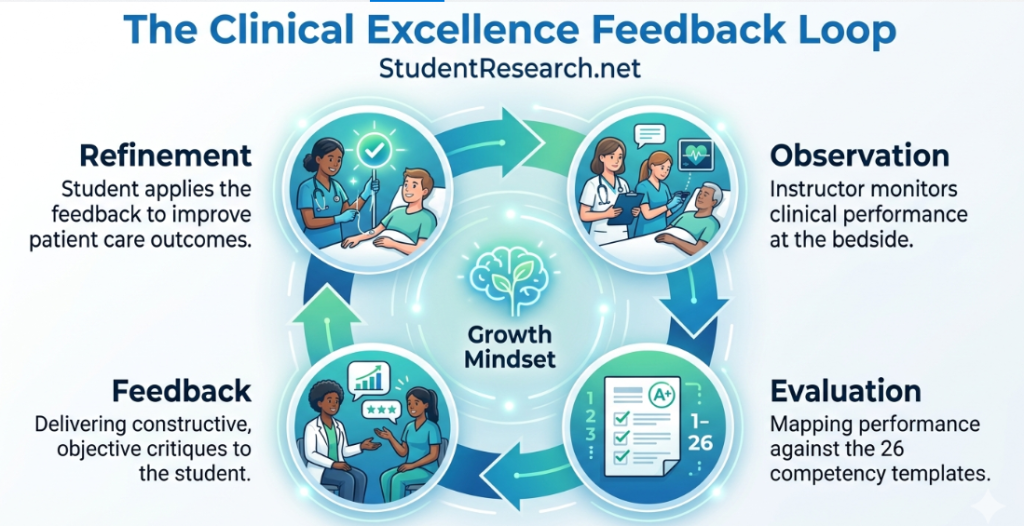
Clinical evaluations serve as the blueprint for professional growth, turning raw bedside experiences into structured learning opportunities. By utilizing specific nursing student evaluation examples, educators can provide consistent, fair, and objective feedback that aligns with modern healthcare standards. This section explores why standardized evaluation tools are the backbone of nursing education and how they foster a culture of continuous improvement.
The Importance of Objective Feedback in Nursing Education
- Reduces Grader Bias: Providing clear behavioral benchmarks for clinical performance ensures that every student is measured against the same professional yardstick.
- Enhances Student Confidence: Identifying specific strengths allows students to internalize their successes while pinpointing exact areas for improvement.
- Facilitates Student Research: Comprehensive evaluations allow learners to track their progress against evidence-based metrics, fostering a deeper commitment to student research within their clinical specialty.
- Ensures Patient Safety: Verifying that students meet essential competency thresholds before advancing is a non-negotiable requirement for high-quality care.
Core Components of a High-Quality Clinical Evaluation
- Assessment of Technical Skills: This involves measuring the accuracy and safety of hands-on procedures, from simple wound care to complex IV pump management.
- Critical Thinking Metrics: Educators evaluate the student’s ability to prioritize patient needs, anticipate complications, and react logically to changing clinical data.
- Professionalism Standards: Tracking soft skills such as punctuality, dress code adherence, ethical conduct, and the ability to accept constructive criticism gracefully.
- Communication Proficiency: Reviewing how effectively a student interacts with patients, worried family members, and the wider interdisciplinary medical team.
26 Comprehensive Nursing Student Evaluation Examples for Modern Educators
This section provides 26 specific examples of feedback and assessment criteria to streamline the grading process for instructors. These nursing student evaluation examples are designed to be “plug-and-play” for digital rubrics while remaining detailed enough for students to understand exactly where they stand in their journey. From fundamental hygiene to advanced diagnostic reasoning, these examples cover the full spectrum of the nursing experience.
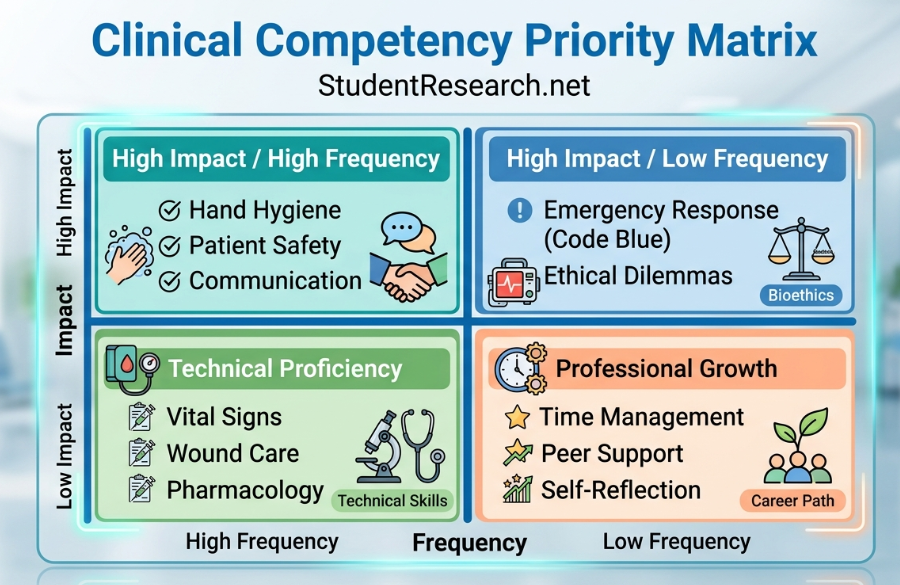
Foundational Clinical Competency Examples
- #1: Hand Hygiene and Infection Control: “Student consistently performs hand hygiene before and after patient contact and maintains a sterile field during all invasive procedures.”
- #2: Accurate Vital Sign Assessment: “Student demonstrates proficiency in manual blood pressure checks and correctly identifies abnormal trends in pediatric patients without prompting.”
- #3: Patient Safety Protocol Adherence: “Student proactively identifies fall risks, ensures bed alarms are active, and always places the call bell within the patient’s reach.”
- #4: Proper Patient Positioning: “Student correctly demonstrates the use of pillows and wedges to prevent pressure ulcers in a bed-bound patient during the 2-hour turn cycle.”
- #5: Bedside Manner and Rapport: “Student introduces themselves professionally, uses the patient’s preferred name, and explains every step of the assessment to reduce anxiety.”
- #6: Standard Precautions: “Student correctly identifies the need for contact precautions and dons/doffs PPE in the correct sequence when entering a C-diff isolation room.”
Advanced Critical Thinking and Clinical Judgment
- #7: Prioritization of Care: “During a high-acuity shift, the student correctly prioritized a patient with declining oxygen saturation over routine morning hygiene tasks.”
- #8: Interpretation of Lab Results: “Student correlated low potassium levels with the patient’s new-onset cardiac dysrhythmia, demonstrating strong clinical reasoning.”
- #9: Emergency Response Readiness: “Student remained calm during a simulated Code Blue and effectively assisted with chest compressions as directed by the lead nurse.”
- #10: Pharmacology Knowledge: “Student successfully identified a potential drug-drug interaction between the patient’s home meds and new hospital prescriptions.”
- #11: Fluid Balance Monitoring: “Student accurately calculated the 8-hour I&O and correctly alerted the nurse to a significant fluid deficit in a renal patient.”
- #12: Pain Management Advocacy: “Student recognized non-verbal cues of pain in a non-communicative patient and advocated for timely PRN medication.”
- #13: Wound Assessment Accuracy: “Student provided a detailed description of a Stage II pressure injury, including precise measurements and the presence of granulation tissue.”
Professionalism and Soft Skills Development
- #14: Interprofessional Collaboration: “Student actively participated in multidisciplinary rounds, providing concise and relevant updates on patient status to the attending physician.”
- #15: Patient Education and Advocacy: “The student used ‘Teach-Back’ methods effectively to ensure the patient understood their discharge instructions regarding anticoagulants.”
- #16: Ethical Decision Making: “Student demonstrated high integrity by reporting a self-identified medication error immediately to the clinical instructor for correction.”
- #17: Time Management Skills: “Student created a prioritized ‘brain sheet’ that allowed them to complete all morning assessments and charting before the lunch break.”
- #18: Conflict Resolution: “Student handled a difficult interaction with a frustrated family member with empathy, de-escalating the situation through active listening.”
- #19: Cultural Competency: “Student requested a translator for a non-English speaking patient to ensure medical history was captured accurately and respectfully.”
- #20: Adaptability to Change: “Student adjusted quickly to a change in their patient assignment when a high-acuity admission arrived on the unit.”
- #21: Documentation Precision: “Nursing notes were concise, objective, and followed the SOAP format, avoiding subjective opinions or vague terminology.”
- #22: Peer Support: “Student offered assistance to a classmate struggling with a difficult catheter insertion, fostering a positive team dynamic.”
- #23: Initiative and Self-Directed Learning: “Student researched a rare condition seen on the unit and shared their findings with the group during post-conference.”
- #24: Resilience and Composure: “Despite a stressful shift, the student maintained a professional demeanor and provided compassionate care to all patients.”
- #25: Accountability: “Student followed up on all tasks delegated by the primary nurse and reported outcomes promptly.”
- #26: Holistic Care Approach: “Student addressed not only the physical needs but also the spiritual and emotional needs of a patient facing a terminal diagnosis.”
Stressed by clinical paperwork? Don’t let complex grading rubrics slow your progress. At StudentResearch.net, we specialize in crafting high-quality nursing logs and reflective journals that mirror professional standards. Get the expert edge you need to impress your clinical instructors every single shift!
Comparative Analysis: Traditional vs. Competency-Based Evaluation Models
The way we measure nursing success has evolved from simple task-lists to holistic assessments of clinical “know-how.” Integrating student research into the evaluation process allows schools to see if students can apply evidence-based practice rather than just memorizing facts. The following tables highlight how modern evaluations compare to older methods and why data-driven feedback is winning.
Comparison of Evaluation Frameworks
| Feature | Traditional Evaluation | Competency-Based Evaluation |
| Primary Focus | Task completion and simple checklists | Mastery of skills and clinical judgment |
| Feedback Style | Summative (delivered at the end of term) | Formative (continuous and ongoing) |
| Student Role | Passive recipient of a grade | Active participant in self-reflection |
| Standardization | Often subjective based on instructor | Objective based on predefined benchmarks |
Nursing Education Statistics (2024-2026 Trends)
| Metric | Industry Standard (%) | Top Performing Schools (%) |
| Use of Simulation in Evaluation | 45% | 85% |
| Student Satisfaction with Feedback | 62% | 91% |
| NCLEX Pass Rate Correlation | Strong | Very Strong |
Implementing Formative Assessment Strategies for Nursing Success
The transition from a student to a professional nurse requires more than just a final grade; it requires a roadmap of continuous feedback. Utilizing nursing student evaluation examples in a formative manner allows for course correction in real-time before errors become permanent habits. This section outlines how to integrate these evaluations into daily clinical practice effectively.
Best Practices for Mid-Rotation Reviews
- Conduct Weekly Check-ins: Dedicate 10 minutes at the end of each week to discuss the student’s top three achievements and one specific goal for the following week.
- Encourage Self-Evaluation: Ask the student to grade themselves using the official rubric first; comparing their self-assessment with the instructor’s assessment reveals gaps in self-awareness.
- Set SMART Goals: Use current evaluation data to create goals that are Specific, Measurable, Achievable, Relevant, and Time-bound for the remainder of the rotation.
Utilizing Peer-to-Peer Evaluation
- Collaborative Learning: Pair students to observe each other’s non-invasive procedures, which builds confidence and hones their “critical eye” for safety.
- Communication Feedback: Have peers evaluate the clarity of “hand-off” reports during shift changes to ensure vital information is being passed correctly.
- Student Research Integration: Encourage students to cite recent literature or student research findings when discussing their clinical choices during peer reviews.
Overcoming Common Challenges in Clinical Grading and Assessment
Grading nursing students is rarely a black-and-white process, as human variables and high-stress environments introduce significant complexity. Even with the best nursing student evaluation examples, instructors often face “grade inflation” or the “halo effect,” where one positive trait masks other weaknesses. Understanding these pitfalls is the first step toward maintaining the integrity of the nursing profession.
Addressing Subjectivity and Bias
- The Halo/Horns Effect: Instructors must ensure that a student’s pleasant personality does not overshadow clinical incompetence, nor should a difficult personality mask high skill.
- Leniency Bias: Avoid the “nice” trap where instructors give higher grades than deserved to avoid conflict, which ultimately does a disservice to the student’s future patients.
- Recency Bias: Evaluate the student’s growth over the entire semester rather than basing the grade solely on a stellar—or poor—performance in the final week.
Strategies for Difficult Conversations
- Focus on Behavior: Use “I observed” statements rather than personality-based critiques to keep the focus on professional standards and safety.
- Provide Concrete Examples: Refer back to the #1 through #26 examples provided earlier to ground the critique in objective reality.
- Document Early and Often: If a student is struggling, ensure the documentation starts early in the semester so there are no surprises at the final evaluation.
Future Trends in Nursing Student Performance Metrics
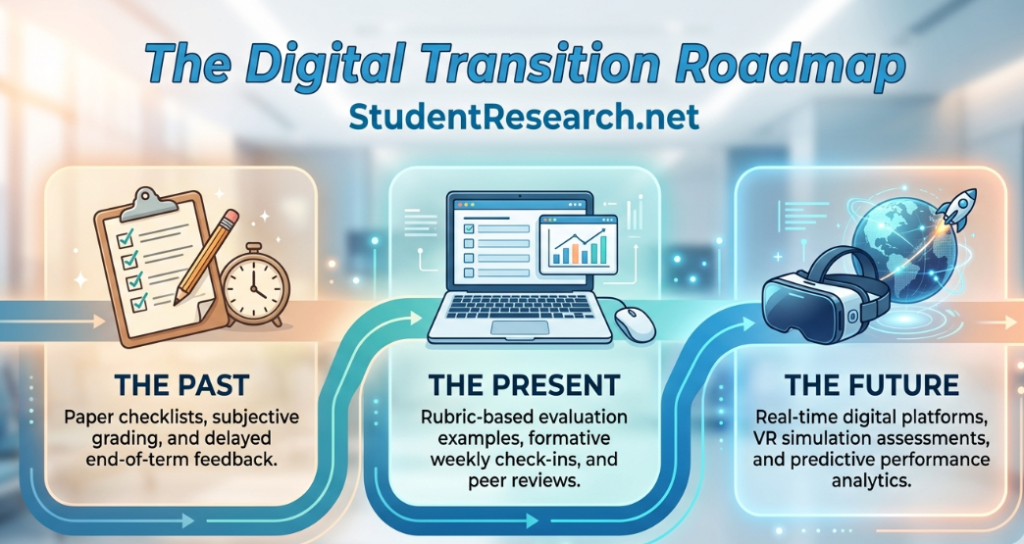
As healthcare technology evolves, so too must the way we evaluate the next generation of professional caregivers. We are seeing a shift where digital literacy and telehealth proficiency are becoming just as vital as physical bedside skills in a modern hospital. This section looks ahead at how digital integration and data analytics are shaping the future of clinical evaluations.
The Rise of Digital Evaluation Platforms
- Real-Time Data Entry: Mobile apps allow instructors to check off competencies at the bedside, ensuring the feedback is captured while the memory is fresh.
- Predictive Analytics: Emerging software can flag students who are struggling in specific sub-competencies by analyzing cumulative data across multiple clinical sites.
- Portfolio Building: Students are increasingly using their digital evaluations to build professional portfolios that prove their competency to prospective employers.
Incorporating Simulation and VR into Evaluation
- Virtual Reality Check-offs: Using VR to test high-stakes, low-frequency events like malignant hyperthermia allows for safe but rigorous assessment.
- High-Fidelity Manikins: Leveraging advanced simulation labs provides a standardized environment where every student faces the exact same clinical challenge.
- Integrated Student Research: Modern simulation scenarios often require students to perform real-time student research to solve complex patient cases.
Final Thoughts on Mastering Nursing Clinical Evaluations
In conclusion, providing high-quality feedback is an art form that requires the right tools and a commitment to professional excellence. By integrating these nursing student evaluation examples into your curriculum or personal study plan, you ensure that the path to nursing licensure is paved with clarity and rigor. Master clinical grading with these nursing student evaluation examples. Our guide features 26 templates to boost feedback and student research.
Summary of Key Takeaways
- Standardization is Key: Using objective examples prevents bias and ensures that all students are held to the same high standards of patient care.
- Focus on Growth: Evaluations should be viewed as a tool for development, not just a final grade, emphasizing continuous improvement.
- Embrace Technology: Digital tools and simulation are essential for preparing students for the high-tech reality of modern healthcare.
Resources for Further Professional Development
- AACN Essentials: Review the core competencies required for all professional nursing education programs.
- NCSBN Measurement Model: Deepen your understanding of how the NCLEX evaluates clinical judgment and critical thinking.
- Continuing Education: Look for workshops on clinical instruction to stay updated on the latest assessment strategies and pedagogical techniques.
Ready to ace your semester? Elevate your academic standing with precision-engineered papers from StudentResearch.net. Our expert writers deliver top-tier nursing care plans and evidence-based projects tailored to your success. Reach out today and order for specific academic writing services to secure your future.

