

Starting your nursing education requires more than textbooks—it demands a well-equipped nursing kit for students. Whether you’re entering your first clinical rotation or advancing to specialty placements, having the right tools ensures you’re prepared for real-world patient care scenarios.
A comprehensive nursing school supplies collection meets institutional requirements, prepares you for unexpected clinical situations, and establishes professional habits. From assessment instruments to protective equipment, each item supports your learning and patient safety. This guide covers essential supplies, organization strategies, and budget-friendly tips to build the perfect nursing kit for successful clinical rotations.
Struggling with complex topics? Our Master’s and Ph.D. subject specialists deliver impeccably researched, high-quality papers. Get the academic depth you need for top scores. Trust the experts at StudentResearch.net for guaranteed brilliance.
Essential Components of a Nursing Kit for Students
Basic Medical Instruments
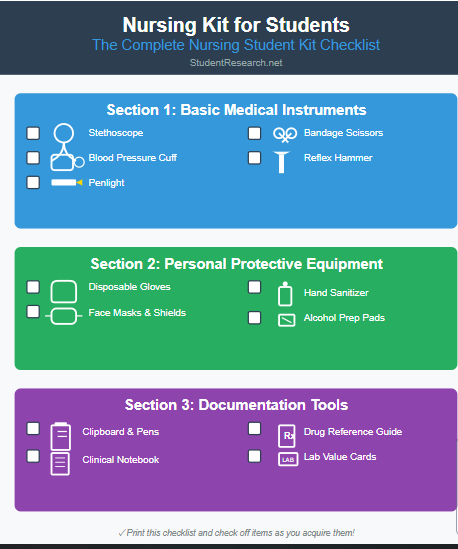
Building your essential nursing supplies collection starts with core assessment tools that you’ll use daily during clinical rotations. These fundamental instruments form the backbone of your clinical nursing kit and are non-negotiable for any student nurse equipment list.
Stethoscope
- Quality matters: Invest in a reliable brand like Littmann Classic III or Cardiology IV
- Acoustic performance: Choose models with excellent sound clarity for detecting heart murmurs and lung sounds
- Dual-sided chest piece: Allows assessment of both high and low-frequency sounds
- Personalization: Consider engraving your name to prevent loss or mix-ups
Blood Pressure Cuff (Sphygmomanometer)
- Aneroid vs. digital: Aneroid cuffs are more durable and required by most nursing programs
- Multiple cuff sizes: Ensure compatibility with pediatric, adult, and bariatric patients
- Portability: Opt for lightweight models that fit easily in your bag
Penlight or Diagnostic Light
- Pupil assessment: Essential for neurological examinations and checking pupillary responses
- Battery life: LED models offer longer-lasting performance
- Clip design: Pocket clips keep it accessible on scrubs or lab coats
Bandage Scissors and Hemostats
- Blunt-tip scissors: Safely cut through dressings, tape, and clothing without injuring patients
- Curved hemostats: Useful for clamping and handling small items during procedures
- Stainless steel construction: Ensures durability and easy sterilization
Reflex Hammer
- Neurological assessments: Test deep tendon reflexes during physical examinations
- Ergonomic handle: Comfortable grip for repeated use during clinical days
Personal Protective Equipment
Infection control is paramount in healthcare settings, making personal protective equipment essential . Your clinical rotation supplies must include adequate PPE to protect both you and your patients from cross-contamination.
Disposable Gloves
- Variety of sizes: Stock small, medium, and large to ensure proper fit during procedures
- Latex-free options: Many facilities require nitrile gloves due to allergy concerns
- Easy access: Keep a small box in your kit for immediate availability
Face Masks and Shields
- Surgical masks: Standard protection for most clinical environments
- N95 respirators: Required for airborne precaution situations
- Face shields: Additional eye protection during high-risk procedures
Hand Sanitizer and Antibacterial Wipes
- Alcohol-based sanitizer: Minimum 60% alcohol content for effective disinfection
- Portable bottles: Clip-on containers for convenient hand hygiene between patient rooms
- Surface wipes: Clean stethoscopes and equipment after each use
Alcohol Prep Pads
- Sterile preparation: Essential before injections, IV starts, and blood draws
- Individual packaging: Maintains sterility until point of use
- Bulk supply: Keep multiple pads readily available during clinical shifts
Documentation and Reference Materials
Accurate documentation and quick reference access are critical nursing tools for students. Your nursing school checklist should include organizational tools that support efficient clinical workflows and evidence-based practice.
Clipboard and Pen Collection
- Durable clipboard: Choose one with storage compartments for forms and reference cards
- Multiple pens: Black and blue ink for charting requirements, plus highlighters
- Retractable design: Prevents ink stains on scrubs and prevents cap loss
Notebook or Clinical Journal
- HIPAA compliance: Never record patient identifiers in personal notebooks
- Organized sections: Separate areas for skills, medications, and daily reflections
- Compact size: Fits easily in pockets for quick note-taking during rounds
Drug Reference Guide or Cards
- Pocket-sized guides: Quick lookup for medication actions, side effects, and nursing considerations
- Digital apps: Consider Davis’s Drug Guide or Epocrates for mobile access
- Common medications: Focus on frequently administered drugs in your clinical setting
Lab Value Reference Sheets
- Normal ranges: Quick reference for CBC, metabolic panels, and specialty tests
- Critical values: Know which results require immediate notification
- Laminated cards: Waterproof and durable for repeated use throughout clinicals
Organizational Tips and Best Practices for Your Nursing Kit
Choosing the Right Bag or Case
Selecting the appropriate container for your nursing kit for students significantly impacts your clinical efficiency and professional presentation. The right bag balances functionality with practicality during demanding nursing school supplies management.
Size and Compartment Considerations
- Adequate capacity: Large enough for all essentials without being cumbersome
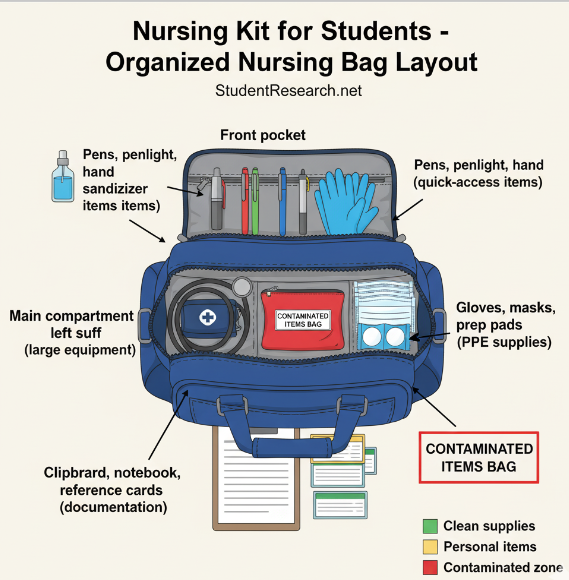
- Multiple pockets: Separate compartments prevent cross-contamination between clean and used items
- Clear sections: Transparent pouches allow quick visual identification of supplies
Durability and Easy-to-Clean Materials
- Water-resistant fabric: Protects contents from spills and environmental exposure
- Wipeable surfaces: Materials that withstand regular disinfection with antibacterial wipes
- Reinforced stitching: Handles heavy daily use throughout nursing school
Portability for Clinical Rotations
- Comfortable carrying: Padded straps or handles reduce fatigue during long shifts
- Compact design: Fits in hospital lockers and doesn’t obstruct workspace
- Professional appearance: Solid colors (black, navy, gray) maintain a professional image
Popular Bag Styles
- Nurse utility bags: Purpose-built with medical-specific compartments
- Pencil cases: Budget-friendly option for minimal essential storage
- Tactical pouches: Durable military-style organization systems
Maintaining Hygiene and Organization
Proper maintenance of your student nurse equipment prevents contamination and ensures your clinical nursing kit remains ready for action. Consistent hygiene practices protect patient safety and extend the life of your essential nursing supplies.
Regular Cleaning Protocols
- Daily disinfection: Wipe down stethoscope, scissors, and other reusable instruments after each clinical day
- Alcohol wipes: Use 70% isopropyl alcohol for effective surface disinfection
- Thorough drying: Prevent rust and bacterial growth by ensuring items dry completely
- Weekly deep cleaning: Empty your entire kit and sanitize the bag interior
Separating Clean vs. Contaminated Items
- Designated compartments: Use separate pockets for unused supplies and items requiring cleaning
- Disposable bags: Place used items in sealed bags until proper cleaning
- Color coding: Consider different colored pouches for instant visual organization
- Immediate removal: Take contaminated items out of your kit as soon as possible
Labeling and Inventory Management
- Name labels: Mark expensive items like stethoscopes to prevent loss
- Expiration dates: Check and replace expired items monthly
- Checklist system: Create a master list of kit contents for quick inventory checks
Replacement Schedules
- Monthly review: Assess quantities of disposable items like gloves and prep pads
- Bulk purchasing: Restock supplies before they run out during critical clinical weeks
Budget-Friendly Shopping Strategies
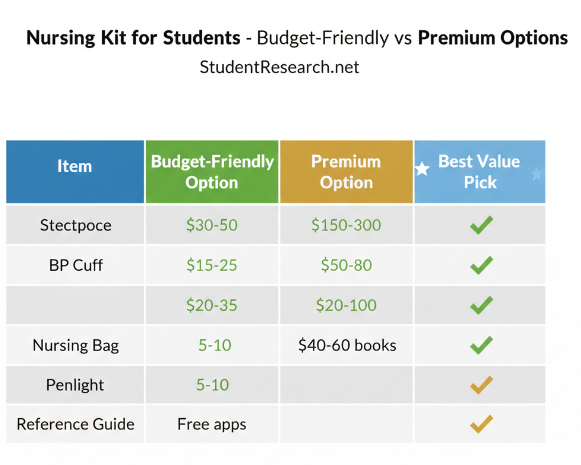
Building comprehensive nursing student essentials doesn’t require breaking the bank. Smart shopping for your medical student kit helps you acquire quality nursing tools for students while managing educational expenses.
Where to Buy Quality Supplies Affordably
- Online medical retailers: Websites like Uniform Advantage and Scrubs & Beyond offer student pricing
- Amazon bulk deals: Subscribe and Save programs reduce costs on disposable items
- University bookstores: Often provide bundled kits at discounted rates for enrolled students
- Secondhand marketplaces: Facebook nursing groups and eBay for gently used stethoscopes
Student Discounts and Bulk Purchasing
- Manufacturer programs: Littmann and other brands offer verified student discounts up to 20%
- Group orders: Coordinate with classmates to meet bulk pricing thresholds
- Membership stores: Costco and Sam’s Club for excellent prices on gloves and sanitizer
- Professional organizations: Student nursing association memberships include supplier discounts
Avoiding Unnecessary Expensive Items
- Start basic: Purchase only required items initially, adding specialty tools as needed
- Quality over quantity: Invest in excellent core tools rather than numerous mediocre items
Prioritizing Must-Haves
- School requirements first: Follow your program’s mandatory supply list before additions
- Versatile tools: Choose items serving multiple purposes across clinical settings
Advanced Items and Customization for Different Clinical Settings
Specialty-Specific Additions
As you progress through clinical rotation supplies requirements, tailoring your nursing kit for students for specific departments enhances learning and demonstrates professional preparedness. Different specialties demand unique student nurse equipment additions.
Pediatric Nursing Tools
- Smaller equipment: Child-sized blood pressure cuffs and stethoscope pediatric chest pieces
- Distraction items: Small toys or stickers help reduce patient anxiety during procedures
- Colorful tools: Fun designs make assessment less intimidating for young patients
- Age-appropriate reference cards: Growth charts and developmental milestone guides
Mental Health Nursing Considerations
- Minimal sharp objects: Safety protocols limit scissors and pointed instruments
- Observation tools: Mental status assessment scales and safety checklists
- Therapeutic communication cards: Quick reference for de-escalation techniques
- Personal safety alarms: Discrete devices for emergency situations
Surgical/OR-Specific Items
- Surgical caps and shoe covers: Sterile environment requirements
- Extra masks: Higher-grade protection for operating room procedures
- Sterile technique guides: Quick reference cards for maintaining aseptic conditions
Community Health Nursing
- Portable teaching materials: Health education pamphlets and visual aids
- Assessment tools: Portable scales, measuring tapes for home visits
Technology Integration
Modern nursing school supplies increasingly incorporate digital solutions that enhance learning and clinical efficiency. Integrating technology into your nursing tools for students arsenal improves information access and documentation accuracy.
Medical Calculator Apps
- Dosage calculators: IV drip rates, medication conversions, and body surface area calculations
- Clinical decision tools: Evidence-based protocols and assessment scoring systems
- Free options: Medscape and Calculate by QxMD provide comprehensive medical calculations
- Offline functionality: Download databases for use in areas with limited connectivity
Digital References and E-Books
- Nursing textbooks: Digital versions save money and physical space in your bag
- Evidence-based databases: Mobile access to clinical guidelines and research articles
- Subscription services: Nursing Central bundles multiple essential references in one app
- Cloud storage: Sync notes and references across devices for seamless access
Tablet or Device Protection
- Waterproof cases: Protect devices from spills and environmental hazards
- Antimicrobial screen protectors: Reduce pathogen transmission on frequently touched surfaces
- Privacy screens: Maintain HIPAA compliance in public clinical areas
Charging Accessories
- Portable power banks: Ensure devices stay charged during long shifts
- Compact charging cables: Keep in your kit for emergency battery boosts
HIPAA-Compliant Note-Taking Tools
- Secure apps: Password-protected applications preventing unauthorized access
Comfort and Self-Care Additions
Successful clinical rotations require caring for yourself while caring for patients. These nursing student essentials support your wellbeing and enhance your performance throughout demanding shifts on your nursing school checklist.
Healthy Snacks and Hydration
- Protein-rich options: Nuts, protein bars, and cheese sticks maintain energy levels
- Reusable water bottle: Stay hydrated during busy clinical days without single-use plastics
- Quick energy: Glucose tablets or fruit for when meal breaks are delayed
Pain Relief and Comfort Items
- Comfortable shoe inserts: Cushioning reduces foot fatigue during 12-hour shifts
- Compression socks: Improve circulation and reduce leg swelling
- Pain relievers: Headache medication for stress-related tension
- Blister prevention: Moleskin or bandages for new shoes
Stress Relief Tools
- Breath mints: Fresh breath boosts confidence during patient interactions
- Hand lotion: Combat dryness from frequent hand washing
- Hair ties: Keep hair professional and away from patient care areas
Emergency Personal Items
- Feminine hygiene products: Be prepared for unexpected situations
- Deodorant wipes: Quick refresh during breaks on demanding days
Conclusion
Building the perfect nursing kit for students requires thoughtful planning, smart budgeting, and regular maintenance. Your clinical nursing kit evolves alongside your education, adapting to specialty rotations and expanding clinical competencies. By investing in quality essential nursing supplies, maintaining rigorous organization standards, and customizing your kit for specific settings, you establish professional habits that serve your entire nursing career. Remember that your kit represents your commitment to safe, effective patient care—keeping it stocked, clean, and organized demonstrates the same attention to detail you’ll apply to clinical practice. Start with the basics, add specialty items as needed, and always prioritize patient safety and infection control in your supply choices.
Stop losing points on citations! Our professional writers master all academic styles—APA, MLA, Harvard, and more. Get perfectly formatted papers every time, letting you focus on the content. Perfect referencing is a guarantee at StudentResearch.net.

