

The transition from nursing classroom to clinical floor represents one of the most challenging yet rewarding phases of your nursing education journey. While textbooks provide essential theoretical knowledge, clinical rotations demand something more—a strategic approach to learning that transforms students into competent, confident healthcare professionals. This is where clinical goals for student nurses become absolutely critical.
Student research consistently shows that nursing students who set clear, structured clinical goals demonstrate significantly higher competency levels and confidence during rotations compared to those who approach clinical experiences without defined objectives. Recent student research also reveals that goal-oriented learners adapt more quickly to high-pressure healthcare environments and develop stronger critical thinking skills.
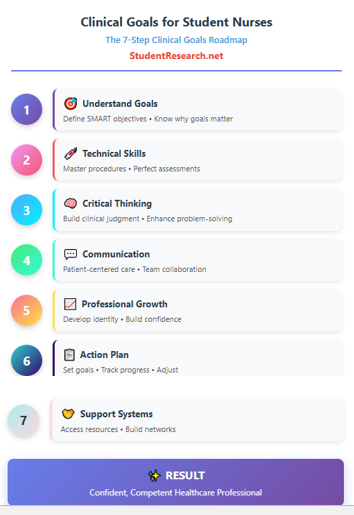
Setting effective clinical goals for student nurses isn’t just about checking boxes on a clinical evaluation form. It’s about creating a personalized roadmap that guides your professional development, helps you master essential nursing skills, and prepares you for the complex realities of patient care. In this comprehensive guide, we’ll walk you through seven proven steps that will help you establish, pursue, and achieve meaningful clinical goals that lead to nursing excellence.
Step #1: What Are Clinical Goals for Student Nurses?
Before you can set effective clinical goals for student nurses, you need to understand exactly what they are and why they matter. Clinical goals serve as your personal blueprint for success during rotations, providing clear direction and measurable outcomes.
Clinical Goals Definition and Purpose
What clinical goals mean in nursing education
- Clinical goals are specific, targeted objectives that guide your hands-on learning experiences in healthcare settings
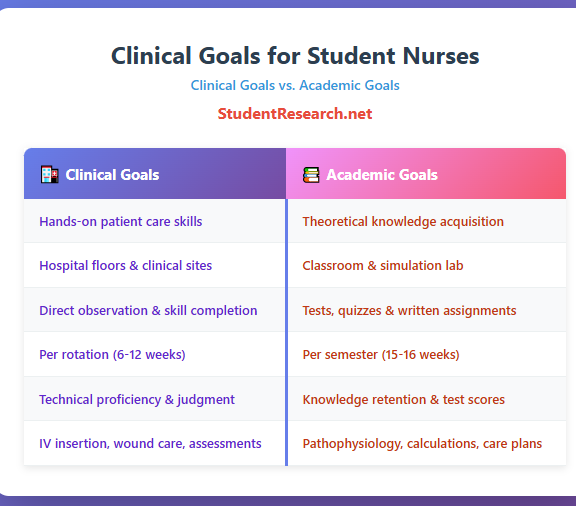
- They differ from academic goals by focusing on practical skill application rather than theoretical knowledge
- These goals transform random clinical experiences into purposeful learning opportunities
How clinical goals bridge theory and practice
- They help you connect classroom concepts to real patient scenarios on the floor
- Clinical goals encourage applying evidence-based practice principles in actual care delivery
- They provide a roadmap for translating nursing theory into tangible patient interventions
Understanding the SMART Goals Framework
Breaking down SMART for nursing students
- Specific: Clearly define what skill you want to develop (e.g., “perform three successful IV insertions”)
- Measurable: Include concrete criteria to track your progress
- Achievable: Set challenging yet realistic goals based on your current skill level
- Relevant: Ensure goals align with rotation focus and career aspirations
- Time-bound: Attach specific deadlines to create accountability
Practical SMART goal examples
- “Complete five head-to-toe assessments independently by week three of med-surg rotation”
- “Administer 10 medication types safely with 100% accuracy by rotation end”
- “Successfully communicate patient handoffs using SBAR in three consecutive shifts”
Why Clinical Goals Are Important for Student Nurses
Learning progression benefits
- Structured goals prevent overwhelm by breaking complex competencies into manageable steps
- They help track skill development across rotations, showing tangible growth evidence
- Goal-setting creates a clear path from novice to competent practitioner
Building confidence and competence
- Achieving small goals creates momentum and self-efficacy for challenging situations
- Written goals reduce anxiety by providing clear focus areas
- Successful completion provides concrete proof of your capabilities
Overwhelmed by complex nursing theories? StudentResearch.net makes challenging subjects simple with experts across 50+ specialized fields. From Pathophysiology to Nursing Ethics, our specialists create clear, well-structured papers. Master complex nursing coursework with professional support today!
Step #2: Types of Technical Skills Goals for Student Nurses
Technical proficiency forms the foundation of safe, effective nursing practice. This step focuses on the hands-on skills that clinical goals for student nurses should prioritize during rotations.
Essential Nursing Procedures to Master
Core medication administration skills
- Calculate dosages accurately using dimensional analysis and ratio-proportion methods
- Follow the six rights of medication administration consistently
- Recognize high-alert medications and apply extra verification protocols
- Demonstrate proper technique for oral, subcutaneous, intramuscular, and intradermal routes
Vital signs monitoring and interpretation
- Obtain manual blood pressure readings correctly using appropriate technique
- Assess respiratory rate, depth, and pattern while recognizing distress signs
- Identify abnormal vital sign patterns requiring immediate intervention
Wound care and sterile technique
- Perform hand hygiene and don sterile gloves without contamination
- Assess wounds systematically using proper measurement and documentation
- Select appropriate dressings based on wound type and healing stage
Patient Assessment Skills Development
Conducting head-to-toe physical assessments
- Follow systematic approach from general survey through neurological examination
- Use proper inspection, palpation, percussion, and auscultation techniques
- Complete assessments efficiently within 15-20 minutes
Recognizing abnormal findings
- Differentiate normal variations from pathological findings
- Identify early warning signs of patient deterioration
- Prioritize findings to determine urgent versus routine issues
Achieving documentation accuracy
- Chart assessments and interventions using approved abbreviations and clear language
- Complete electronic health records promptly without compromising thoroughness
- Avoid documentation errors like late entries or vague statements
Medical Equipment Proficiency Goals
Mastering IV insertion and maintenance
- Successfully insert peripheral IV catheters in various patient populations
- Select appropriate catheter gauge based on infusion needs
- Monitor for infiltration, phlebitis, and other complications
Catheterization procedures
- Insert indwelling urinary catheters using sterile technique
- Understand appropriate indications and alternatives
- Monitor urine output and catheter patency
Using monitoring devices and technology
- Set up cardiac monitors, pulse oximeters, and telemetry equipment
- Interpret basic cardiac rhythms and recognize life-threatening arrhythmias
- Navigate electronic health records efficiently
Step #3: How to Develop Critical Thinking Clinical Goals
Critical thinking separates task-oriented nursing from truly therapeutic, patient-centered care. Clinical goals for student nurses must extend beyond technical skills to encompass cognitive abilities that drive sound clinical judgment.
Steps to Building Clinical Judgment Skills
Systematically identifying priority patient needs
- Use frameworks like Maslow’s hierarchy or ABCs to rank patient problems
- Recognize immediate threats versus issues addressable later in your shift
- Re-evaluate priorities continuously as patient conditions change
Recognizing changes in patient condition
- Establish baseline assessment data early to identify deviations
- Look for patterns and trends in vital signs rather than isolated values
- Trust your instincts when something feels “off” about a patient
Making evidence-based decisions
- Question the “why” behind every nursing intervention and physician order
- Research unfamiliar conditions using reliable nursing resources
- Apply nursing research findings to patient care decisions
Problem-Solving Goals in Clinical Settings
Handling unexpected situations effectively
- Develop mental toolkit of scenarios for common clinical emergencies
- Practice remaining calm when patients deteriorate or equipment malfunctions
- Know rapid response procedures and your role as a student
Applying the nursing process in real-time
- Continuously cycle through assessment, diagnosis, planning, implementation, and evaluation
- Formulate nursing diagnoses addressing actual patient problems
- Modify interventions based on patient response and reassessment
Connecting theory to practice
- Recognize how pathophysiology explains signs and symptoms you observe
- Understand pharmacological rationale behind medication orders
- Apply concepts from psychology and ethics to complex situations
Safety and Risk Assessment Goals
Medication error prevention strategies
- Always perform independent double-checks for high-alert medications
- Use barcode scanning properly without bypassing safety features
- Question inappropriate orders for patient’s condition
Fall risk identification and intervention
- Complete fall risk assessment tools accurately for every patient
- Implement appropriate precautions including bed alarms and toileting schedules
- Educate patients and families about fall risks
Infection control practices
- Follow standard precautions consistently with appropriate PPE use
- Understand transmission-based precautions for isolation requirements
- Perform proper hand hygiene before and after every patient interaction
Need evidence-based research for nursing papers? StudentResearch.net provides deep-dive research using proprietary databases and peer-reviewed journals—not surface-level sources. Our writers access scholarly resources your professors expect, ensuring assignments reflect current nursing research. Quality research guaranteed!
Step #4: Communication Goals for Student Nurses
Effective communication distinguishes safe, coordinated care from dangerous medical errors. Clinical goals for student nurses must address both patient communication and healthcare team collaboration.
How to Improve Patient-Centered Communication
Therapeutic communication techniques
- Use open-ended questions encouraging patients to share concerns
- Demonstrate active listening through eye contact and verbal acknowledgments
- Employ reflection and clarification to ensure accurate understanding
Cultural competence and sensitivity
- Learn about cultural beliefs regarding health and medical treatment
- Avoid assumptions based on appearance or cultural background
- Use professional interpreters for language barriers
- Respect cultural practices around modesty and dietary restrictions
Patient education and health literacy
- Assess understanding using teach-back method
- Provide materials at appropriate reading levels and preferred languages
- Break complex information into smaller chunks
Ways to Enhance Interprofessional Collaboration
Effective handoff communication using SBAR
- Situation: State patient’s name, room, diagnosis, and current issue
- Background: Provide relevant history, medications, and allergies
- Assessment: Share clinical assessment with vital signs and concerns
- Recommendation: Clearly state needed action
Collaborating with healthcare specialists
- Present patient information concisely when calling physicians
- Anticipate needed information before making calls
- Understand roles of therapists, social workers, and dietitians
Delegating to nursing assistants appropriately
- Understand nurse practice act regarding delegation to unlicensed personnel
- Provide clear, specific instructions about tasks and timing
- Follow up to ensure task completion
Examples of Effective Clinical Communication
Chart documentation best practices
- Document facts objectively without personal opinions
- Use precise descriptions instead of vague terms
- Include patient quotes for subjective information
Incident reporting procedures
- Report all safety events including near-misses
- Focus on facts without assigning blame
- Submit reports promptly while details are fresh
Step #5: Professional Development Goals for Student Nurses
Professional growth extends beyond clinical skills to encompass values and behaviors defining nursing excellence. Clinical goals for student nurses should include objectives shaping your professional identity.
Steps to Building Your Professional Nursing Identity
Understanding nursing ethics and values
- Familiarize yourself with ANA Code of Ethics
- Recognize ethical dilemmas involving autonomy and justice
- Develop your nursing philosophy reflecting your values
Time management strategies
- Prioritize tasks based on urgency and importance
- Cluster care activities to maximize efficiency
- Build buffer time for unexpected emergencies
Stress management and self-care
- Develop healthy coping mechanisms for emotional demands
- Recognize burnout signs including exhaustion and cynicism
- Establish boundaries between responsibilities and personal life
Self-Assessment and Growth Goals
Reflective journaling practices
- Write clinical reflections regularly to process difficult experiences
- Use reflective models to structure thinking systematically
- Identify patterns in reactions and areas needing improvement
Seeking constructive feedback
- Ask specific questions rather than vague “How did I do?”
- Listen without becoming defensive
- Implement suggestions and follow up to show growth
Identifying personal learning needs
- Recognize knowledge gaps without shame
- Seek additional practice for challenging skills
- Ask for extra supervision when needed
Career Readiness Goals
Preparing for NCLEX and licensure
- Identify weak content areas and focus clinical goals accordingly
- Practice NCLEX-style questions related to clinical experiences
- Begin studying seriously 6-8 weeks before graduation
Building clinical confidence progressively
- Set increasingly challenging goals each rotation
- Volunteer for complex patient assignments
- Celebrate small victories and acknowledge growth
Struggling to achieve A-grades in nursing assignments? StudentResearch.net elevates your grade profile with expertly crafted academic work. Our nursing specialists understand clinical competencies and academic standards, delivering papers that earn you the top marks you deserve. Excel academically today!
Step #6: How to Create Your Clinical Goals Action Plan
Having knowledge about clinical goals for student nurses means nothing without implementation. This step provides the practical framework for translating goals into actionable plans.
Steps to Set Effective Clinical Goals
Self-assessment of current skill levels
- Review competency checklists and honestly evaluate independent performance
- Identify skills completed in simulation but not yet on actual patients
- Consider feedback from previous instructors
Prioritizing goals by rotation type
- Focus on specialty-specific skills during specialized rotations
- Establish foundational goals early before advancing to complex objectives
- Align goals with clinical site’s typical procedures
Breaking down large goals
- Transform big goals into specific measurable behaviors
- Create milestone goals building toward larger competencies
- Set daily or weekly micro-goals contributing to bigger objectives
Ways to Track Your Progress
Using clinical journals or portfolios
- Document each skill practice with date and reflection
- Keep running list of experiences and competencies completed
- Review regularly to identify patterns and celebrate progress
Regular check-ins with preceptors
- Schedule mid-rotation meetings to discuss goal progress
- Prepare specific questions to maximize limited instructor time
- Ask for immediate feedback after performing new skills
Adjusting goals based on feedback
- Revise unrealistic goals or modify those becoming too easy
- Add new goals when mastering objectives quickly
- Remain flexible viewing adjustment as smart adaptation
Step #7: Resources and Support for Goal Achievement
No nursing student succeeds in isolation. Clinical goals for student nurses are most achievable when you actively build and utilize support systems.
Utilizing Available Resources
Faculty mentorship opportunities
- Establish relationships with instructors for personalized guidance
- Attend office hours to discuss experiences and seek advice
- Ask faculty about their specialty expertise
Peer learning and study groups
- Form clinical study groups to share experiences
- Practice skills with classmates during open lab times
- Teach concepts to peers to deepen understanding
Clinical resource materials and tools
- Utilize nursing reference apps during clinical
- Keep pocket-sized reference cards for calculations and values
- Access textbooks for just-in-time learning
Building Your Support Network
Connecting with experienced nurses
- Build rapport by showing genuine interest in their knowledge
- Ask thoughtful questions demonstrating learning commitment
- Express appreciation for teaching time
Joining professional nursing organizations
- Become student member of ANA or specialty organizations
- Attend local chapter meetings and conferences
- Access journals, webinars, and continuing education
Accessing online learning platforms
- Utilize YouTube channels for skill demonstrations
- Join nursing student communities for peer support
- Subscribe to nursing podcasts discussing practice issues
Conclusion
Mastering clinical goals for student nurses is the proven pathway from uncertain beginner to confident, competent healthcare professional. Throughout this guide, you’ve discovered seven essential steps that transform clinical rotations from overwhelming experiences into structured learning opportunities. By understanding what clinical goals are, focusing on technical and cognitive skill development, enhancing communication abilities, nurturing professional growth, creating actionable plans, and leveraging support systems, you’re equipped to excel in every clinical setting.
Discover essential clinical goals for student nurses—learn SMART goal-setting, technical skills, critical thinking, and professional development strategies that lead to clinical excellence. The time you invest now in purposeful goal-setting will pay dividends throughout your entire nursing career. Take action now: Write down three clinical goals you want to achieve in your next rotation, share them with your clinical instructor, and begin your journey toward nursing mastery.

