

Navigating the challenging landscape of healthcare education requires reliable advice for nursing students who aim to excel both academically and clinically. Whether you are tackling complex pharmacology or preparing for your first day on the hospital floor, having a roadmap is essential for your professional development. In this guide, we provide 31 essential ideas to help you thrive in 2026 and beyond, ensuring you stay ahead of industry trends. By prioritizing your growth and utilizing dedicated resources like student research, you can transform your academic journey into a successful career trajectory. This comprehensive overview is designed to offer actionable advice for nursing students, equipping you with the tools needed to manage stress, master clinical skills, and plan for your future. As you progress, remember that your commitment to lifelong learning, supported by high-quality student research, will remain your most valuable asset throughout your nursing practice.
Essential Advice for Nursing Students: Building Your Academic Foundation
Building a strong academic foundation is the first step toward becoming a competent healthcare professional. The following strategies ensure that you remain focused on your goals while maintaining a healthy work-life balance.
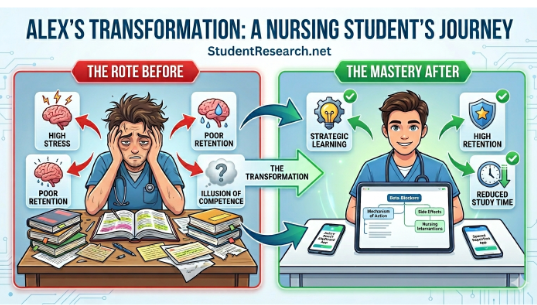
The Transformation: A Student’s Journey from Rote to Mastery
The “Before” Scenario: Meet Alex, a second-year nursing student who spent 10 hours a day highlighting textbooks and re-reading notes. Despite the high volume of effort, Alex struggled to retain information during clinical rounds, often finding that the data was “locked” in their brain, only accessible if a question was phrased exactly as it appeared in the lecture slides. This passive review style led to burnout and a plateau in grades, as the stress of nursing school began to outweigh the actual learning process.
The “After” Scenario: After adopting a concept mapping framework, Alex transitioned to active knowledge construction. Instead of linear note-taking, Alex began linking clinical symptoms to pharmacological interventions. Within one semester, Alex’s scores improved by 15%, but more importantly, the ability to synthesize information under pressure in the clinical setting became intuitive. By visualizing the why behind the what, Alex stopped memorizing facts and started understanding healthcare, dramatically reducing study time while increasing retention.
Mini-Case Study: Mapping Pharmacological Concepts (Beta-Blockers)
To understand how concept mapping works in practice, consider the classification of Beta-Blockers. Instead of memorizing a list of side effects, you should map them to their mechanism of action.
- Central Node (The Drug Class): Place “Beta-Blockers” in the center.
- Primary Action (The Mechanism): Link to “Blocks Beta-1 Receptors” → “Decrease Heart Rate (HR)” and “Decrease Contractility.”
- Secondary Outcomes (The Clinical Goal): Connect to “Decreased Myocardial Oxygen Demand,” which explains why these are used for Hypertension and Angina.
- Clinical Considerations (The “Nursing” Part): Branch out to “Nursing Interventions,” such as “Check apical pulse before administration” and “Monitor for orthostatic hypotension.”
By creating this visual hierarchy, you connect the pharmacology to the actual task you perform at the bedside, which serves as a powerful anchor for long-term memory.To practice applying your theoretical knowledge to real-world patient scenarios, review these nursing case studies examples for nursing students.
Deep Dive: The Science of Learning—Active Recall vs. Passive Review
Understanding the science behind your study habits is the ultimate advice for nursing students seeking to optimize their time.
- Passive Review: Reading, highlighting, and watching videos are “fluent” activities. They feel productive because the information is familiar, but this creates an “illusion of competence.” Your brain is simply recognizing the information, not storing it for retrieval under stress.
- Active Recall: This is the process of retrieving information from your brain without looking at your notes. Whether you are using flashcards or teaching a concept to a peer, the “struggle” of trying to remember is actually where the neural pathways are strengthened.
- Spaced Repetition: When you combine active recall with spaced intervals (reviewing a concept 1 day, 3 days, 7 days, and 14 days later), you interrupt the “Forgetting Curve.” This prevents the need for last-minute cramming and ensures that the material is deeply encoded in your long-term memory for the NCLEX and your future career.
Balancing Classroom Demands and Personal Well-being: A Guide for Success
Achieving a healthy balance in nursing school is not a luxury; it is a clinical necessity to prevent burnout and ensure you remain at your best for patient care. Below are essential strategies to help you navigate your academic workload while maintaining your personal well-being.
Implementing Effective Stress Management Routines
- Schedule Physical Activity: Commit to at least 30 minutes of intentional movement daily, such as brisk walking, swimming, or yoga, to release physical tension.
- Identify Stress Triggers: Keep a brief journal to note which academic tasks or clinical days cause the most stress, allowing you to plan ahead for those high-pressure moments.
- Utilize Progressive Muscle Relaxation: Learn to tense and release muscle groups before bed to help your body physically transition out of “fight or flight” mode.
- Engage in Creative Hobbies: Allocate time each week for a non-academic pursuit—like painting, cooking, or playing an instrument—to provide a necessary mental break.
- Practice Deep Breathing: Use box breathing techniques (inhale 4, hold 4, exhale 4, hold 4) during the few minutes you have between classes to lower your heart rate.
Building Resilient Study Habits
- Establish “Non-Negotiable” Study Blocks: Define specific windows of time in your weekly planner for dedicated study, treating these sessions as seriously as you would a clinical rotation.
- Practice Micro-Learning: Break down massive chapters into 25-minute “Pomodoro” sessions to avoid cognitive overload and maintain high focus throughout the day.
- Audit Your Environment: Create a dedicated, clutter-free study space that minimizes distractions and signals to your brain that it is time to work.
- Prioritize Understanding Over Memorization: Focus on explaining concepts to yourself out loud; if you cannot explain it simply, you need to revisit the material.
- Use a Cumulative Review Schedule: Instead of studying only for upcoming exams, spend 15 minutes at the end of each day reviewing content from the previous week to ensure long-term retention.
Prioritizing Sleep
- Adopt a Strict “Power Down” Routine: Stop all screen use 60 minutes before bed to allow your brain to naturally produce melatonin, which is essential for deep sleep.
- Optimize Your Sleep Hygiene: Keep your bedroom cool, dark, and quiet to create an environment that promotes uninterrupted rest for cognitive recovery.
- Implement Consistent Wake Times: Even on weekends, try to wake up within an hour of your weekday schedule to keep your circadian rhythm stable and improve morning alertness.
- Avoid Caffeine Late in the Day: Set a “caffeine curfew” at 2:00 PM to ensure that stimulants do not interfere with your ability to enter REM sleep later that evening.
- Recognize the Cognitive Link: Remind yourself that sleep is when your brain consolidates complex information; skimping on sleep is effectively undoing the hours you spent studying.
Mindfulness Practice
- Grounding Exercises: Practice the “5-4-3-2-1” technique (identifying 5 things you see, 4 you feel, 3 you hear, 2 you smell, and 1 you taste) to pull yourself out of spiraling thoughts.
- Intentional Transitions: Spend two minutes in your car or at your desk practicing mindfulness before heading into a lab or clinical shift to clear your head.
- Guided Meditation Apps: Utilize apps during your commute or lunch break to provide guided mindfulness sessions that require zero preparation on your part.
- Mindful Walking: During your walks between campus buildings, focus entirely on the sensation of your feet touching the ground to reconnect with the present moment.
- Gratitude Reflections: Take one minute at the end of your day to write down three things that went well, which shifts your mindset from focus-on-deficit to focus-on-growth.
Setting Boundaries
- Learn to Say “Not Right Now”: Politely decline social invitations or extra responsibilities during midterms and finals by citing your commitment to your current academic goals.
- Communicate Expectations: Be upfront with friends and family about your study schedule so they understand why you may be unavailable during specific days of the week.
- Batch Your Communications: Rather than responding to non-urgent texts immediately, set specific times in the day to check messages, preserving your focus for deep work.
- Delegate Personal Tasks: If your budget allows, use meal prep services or outsource small errands during peak testing weeks to save energy for your nursing exams.
- Protect Your “Me Time”: Schedule at least one block per week where you are completely unreachable, allowing your brain to fully recover from the week’s academic demands.
Seeking Support
- Know Your Campus Resources: Research exactly where your school’s counseling office is located and how to schedule an appointment before you actually feel the need to go.
- Normalize the Struggle: Understand that reaching out for help is a sign of professional maturity and resilience, not a weakness.
- Utilize Peer Mentorship: Seek out upperclassmen who have already navigated the semesters you are in; they can provide invaluable emotional perspective and practical tips.
- Establish a “Check-in” Partner: Designate a trusted friend or fellow student to text each other once a week to share how you are genuinely feeling, not just your grades.
- Monitor Early Warning Signs: Be honest with yourself about signs of burnout, such as persistent irritability, loss of motivation, or chronic fatigue, and act before they become unmanageable.
Expert Advice for Nursing Students: Excelling in Clinical Rotations
Clinical rotations are where your education comes to life, providing the hands-on experience necessary for real-world practice. Applying professional advice for nursing students in the clinical setting is vital for gaining the trust of your preceptors.
Navigating the Clinical Environment with Confidence
Clinical rotations are the bridge between theoretical knowledge and professional nursing practice. Mastering the following skills will help you build your reputation as a reliable, safe, and proactive student nurse.
Developing Professional Communication Skills
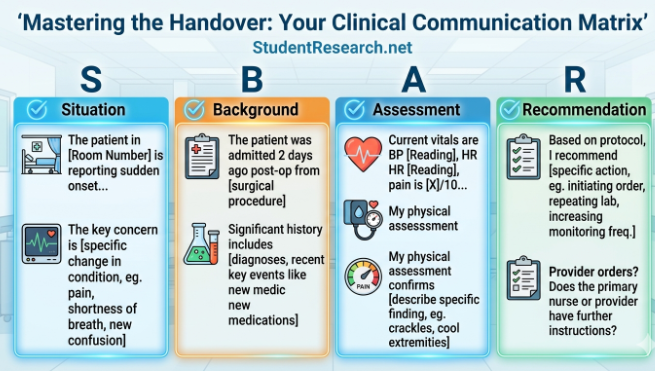
- Practice SBAR Reporting: Master the Situation, Background, Assessment, and Recommendation (SBAR) framework to provide concise, structured updates to your preceptor.
- Adopt Active Listening: Maintain eye contact and use verbal cues to demonstrate that you are fully engaged during report or patient interactions.
- Refine Your Introduction: Always introduce yourself clearly as a “Student Nurse,” stating your name and role to build immediate transparency and trust.
- Clarify Understanding: If a nurse or provider gives an instruction you don’t fully grasp, use the “teach-back” method to confirm expectations before acting.
- Maintain Professionalism: Avoid hospital gossip and maintain a neutral, positive tone, even when the clinical environment becomes high-pressure.
Prioritizing Patient Safety
- Follow the “Two-Challenge” Rule: If you feel a patient is at risk, voice your concern at least twice to ensure it is heard, even if it feels intimidating.
- Verify Before Acting: If you are unsure about a medication dosage or a specific procedure, pause and double-check with your preceptor—never guess.
- Adhere to Unit Protocols: Strictly follow hospital-specific safety checklists, such as patient identification bands, fall precautions, and allergy alerts.
- Speak Up on Hazards: Immediately report environmental risks, such as spills, blocked pathways, or malfunctioning equipment, to the nursing staff.
- Respect Sterile Fields: Always maintain a heightened awareness of sterile boundaries during procedures to prevent cross-contamination.
Proactive Learning
- Come Prepared: Review the patient’s chart and the expected procedures for the day before you even arrive at the clinical unit.
- Identify Learning Gaps: Keep a small notebook to jot down clinical procedures or conditions you’ve studied but haven’t seen in real life; present these to your preceptor.
- Request Shadowing Opportunities: Ask politely if you can observe or assist with specific interventions, such as central line dressing changes or wound debridement.
- Volunteer for Tasks: Offer to help with routine care tasks (e.g., patient hygiene, vitals, turning) so you can build familiarity with the unit’s routine while assisting the team.
- Reflect After Procedures: After observing a complex task, ask your preceptor one specific “why” question to deepen your understanding of the clinical rationale.
Professional Attire and Punctuality
- Respect Uniform Policies: Adhere strictly to your school’s dress code, ensuring your scrubs are clean, well-fitted, and that your ID badge is visible.
- Plan Your Commute: Arrive at the hospital parking lot 15 minutes before your shift starts to account for changing, badging in, and navigating the building.
- Maintain Grooming Standards: Follow unit-specific rules regarding hair, nails, and jewelry to ensure your appearance is functional and professional.
- Be Ready to Start: Be at your assigned station at the exact start time, prepared with your brain sheet and pens, so you are ready to receive report.
- Minimize Personal Tech: Keep your phone off or out of sight entirely during the shift to demonstrate your total focus on patient care.
Patient Advocacy
- Identify Vulnerabilities: Pay close attention to subtle changes in a patient’s condition that others might miss, such as a change in mood or a minor drop in oxygen saturation.
- Communicate Clearly: When escalating a concern, state the facts clearly: “I noticed the patient’s breathing rate has increased since my last assessment.”
- Escalate Through Chain of Command: Learn the unit’s hierarchy; know when to approach your student instructor versus when to involve the staff nurse or charge nurse.
- Validate Patient Concerns: If a patient expresses fear or pain, advocate for them by ensuring those concerns are documented and communicated to the primary nurse or provider.
- Protect Dignity: Advocacy also includes maintaining patient privacy and ensuring they have autonomy in their care decisions whenever possible.
Electronic Documentation
- Focus on Accuracy: Remember that EHR entries are legal documents; always document exactly what you did, what you saw, and the time it occurred.
- Learn the Unit-Specific EHR: Familiarize yourself with the layout and “shortcuts” of the hospital’s specific software (e.g., Epic, Cerner) early in your rotation.
- Maintain HIPAA Compliance: Never access charts for patients who are not under your direct care, and always log off terminals immediately when leaving a station.
- Use Standardized Terminology: Follow the hospital’s guidelines for professional abbreviations and descriptive language to ensure clarity for other healthcare team members.
- Seek Feedback on Notes: Ask your preceptor to review your draft charting occasionally to ensure you are capturing the necessary clinical details.
The STAR Method: Navigating Clinical Errors and Patient Encounters
One of the most critical pieces of advice for nursing students is learning how to manage high-stress moments with emotional intelligence and structured communication. When a clinical error occurs or you face a difficult patient encounter, the STAR Method (Situation, Task, Action, Result) provides a framework to maintain composure and professional accountability.
- Situation: Briefly define the event. Example: A patient becomes agitated and refuses their scheduled medication, citing lack of information.
- Task: Identify your goal. Example: My task is to de-escalate the patient and ensure they understand the importance of the medication for their safety.
- Action: Detail the steps taken. Example: I practiced active listening, acknowledged the patient’s fears, provided a clear, plain-language explanation of the drug’s benefit, and offered to return in 10 minutes if they needed more time.
- Result: Explain the outcome and what you learned. Example: The patient felt heard, agreed to take the medication, and my preceptor noted my calm bedside manner. I learned that prioritizing communication can prevent medication refusals.
Using this framework helps you objectively debrief with your clinical instructor, turning potentially negative experiences into vital learning opportunities.
The “Brain Sheet”: Your Roadmap to Clinical Organization
A high-performing student nurse is defined by their organization. The “brain sheet” is the single most important tool in your clinical arsenal—it is your external hard drive for patient data.
What to Include on Your Brain Sheet:
- Patient Vitals & Trends: Don’t just record current vitals; note the trend (e.g., BP has been trending upward since 08:00).
- Critical Meds & Schedules: List medications, dosages, and specific administration times, highlighted by urgency.
- I/O Monitoring: Track intake and output totals clearly to prevent fluid overload or dehydration.
- Lab Values & Diagnostics: Keep a small table for “Critical Labs” that need to be monitored closely.
- Plan of Care: Note upcoming procedures, discharge needs, or consultations requested by the provider.
Your 15-Minute “Pre-Shift” Routine:
- Minute 0–5 (Chart Review): Before touching the patient, scan the EMR for new orders, recent lab results, and shift notes from the previous nurse.
- Minute 5–10 (Brain Sheet Prep): Transfer key data from the EMR to your paper brain sheet. Organize tasks by priority—immediate interventions go at the top.
- Minute 10–15 (Goal Setting): Identify three clinical skills you want to practice or observe during the shift. This keeps you engaged in your own learning while ensuring you remain a helpful addition to the nursing team.
By dedicating this time to structure, you ensure that you aren’t just “busy,” but genuinely productive. As you master this routine, you will find that managing multiple patients becomes significantly less daunting, allowing you to focus on providing high-quality care.
Specialty Spotlights: Finding Your Niche
Understanding the nuances of different nursing environments is crucial for long-term job satisfaction. Each specialty demands a unique blend of technical expertise and emotional resilience.
| Specialty | Required Skillset | Biggest Challenge | Pathway to Entry |
| ICU (Critical Care) | Advanced hemodynamics, ventilator management, rapid titration. | Managing high mortality rates and complex life-support equipment. | Clinical rotations in Step-Down or ICU, followed by Critical Care internship programs. |
| Pediatrics | Age-appropriate assessment, family-centered communication, pediatric drug dosing. | Managing the emotional distress of children and their families during illness. | Pediatric-focused clinical rotations and specialized externships. |
| Emergency Room (ER) | Rapid triage, trauma assessment, stabilization of acute conditions. | Managing unpredictable patient volumes and high-intensity, chaotic environments. | Trauma-informed clinical training and Basic Life Support/ACLS certification. |
By exploring these areas during your clinical rotations, you can determine where your personal strengths best align with the needs of the healthcare team.
Professional Branding: Building a High-Impact Clinical Resume
Your resume is your personal marketing document. As a student, your goal is to bridge the gap between academic theory and practical clinical performance. Do not simply list your clinical hours; describe the impact you made on the unit.
Structure Your Clinical Experience Effectively:
- Clinical Summary: Include a brief statement highlighting your clinical rotations, total hours completed, and the types of facilities (e.g., Level 1 Trauma Center, Rural Clinic).
- Action-Oriented Experience: Instead of writing “Assisted with vitals,” use high-impact language to show your contribution to patient outcomes.
- Certifications & Skills: List technical competencies, such as EHR proficiency (e.g., Epic, Cerner), wound care, or phlebotomy.
High-Impact Verbs for Your Resume:
To elevate your professional profile, replace passive words like “helped” or “learned” with these power verbs:
- Collaborated: “Collaborated with an interdisciplinary team to update patient care plans.”
- Monitored: “Monitored complex hemodynamic trends in a high-acuity surgical population.”
- Advocated: “Advocated for patient safety by identifying and reporting medication contraindications.”
- Implemented: “Implemented evidence-based skin integrity protocols for long-term care residents.”
- Streamlined: “Streamlined patient handover processes by utilizing structured SBAR communication.”
By integrating these verbs, you demonstrate that you are not just a passive observer in the clinical setting, but an active, contributing member of the healthcare team. This proactive approach to professional branding is essential advice for nursing students who want to stand out during the interview process.
Preparing for Life After Graduation: Transitioning to the Workforce
The transition from a student nurse to a registered nurse is a pivotal career phase. These final steps are designed to bridge the gap between academic completion and professional independence, ensuring you are prepared to contribute effectively to your future healthcare team.
Navigating the Transition
- Treat Clinicals as a Resume Builder: View your final clinical rotation as an extended job interview; the professionalism, punctuality, and clinical skill you demonstrate now are your best references.
- Network with Management: Don’t hesitate to express your interest in the unit to your preceptor and the unit manager; let them know your timeline for graduation and licensure.
- Seek a Formal Residency: Many hospitals offer “Nurse Residency Programs” that provide extra mentorship during your first year; research these programs early in your final semester.
- Ask for Letters of Recommendation: If you have built a strong rapport with a preceptor or clinical instructor, ask for a letter of recommendation before you finish your final rotation.
- Understand the Hiring Timeline: Begin your job search 3–4 months before graduation, as the recruitment process—including interviews and background checks—can take time to finalize.
Setting Professional Goals
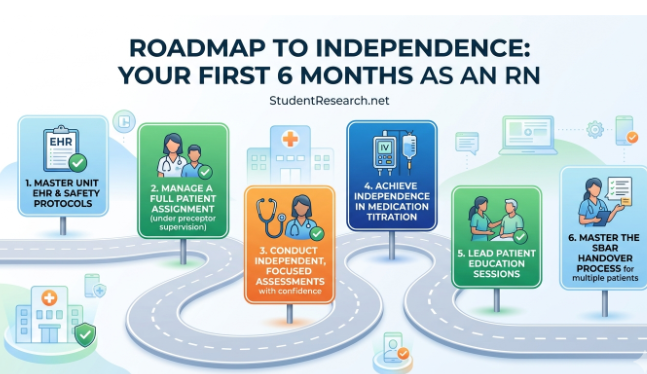
- Define Your “First-Year Focus”: Write down specific, measurable milestones for your first six months, such as “achieving independence in medication administration” or “mastering unit-specific emergency protocols.”
- Identify Areas for Growth: Be honest with yourself about your weaknesses; if you struggle with time management, make it a goal to improve your patient handover efficiency by the end of month three.
- Document Your Wins: Keep a “success journal” to track the clinical skills you’ve mastered and the feedback you’ve received; this will be invaluable during your six-month performance review.
- Align with Unit Values: Read your hospital’s mission statement and set goals that align with their priorities, such as focusing on patient satisfaction scores or quality improvement initiatives.
- Plan for Continued Education: Beyond your onboarding, identify one certification or specialty-specific skill (like BLS, ACLS, or PCCN) you want to pursue within your first year of practice.
Essential Advice for Nursing Students: Embracing Technology and Innovation
Modern healthcare is increasingly digital, and staying updated with emerging technology is crucial. Following this advice for nursing students ensures you remain competitive in an evolving market.
Leveraging Modern Healthcare Tools for Student Success
Technology is no longer just a support system in healthcare; it is the infrastructure upon which modern care is built. To be a competitive candidate in 2026 and beyond, nursing students must go beyond basic computer literacy and actively master the digital tools that define the current clinical landscape.Pharmacology mastery can be significantly accelerated by utilizing the best drug cards for nursing students, which help organize complex information into scannable formats.
Using Telehealth Simulation
- Understand the Virtual Triage Process: Telehealth isn’t just a video call; learn how to perform a focused assessment through a camera lens, including visual cues for patient distress.
- Practice Remote Monitoring Data: Familiarize yourself with how wearable technology—such as blood pressure cuffs or glucose monitors that sync with central hubs—transmits data in real-time.
- Master “Digital Bedside Manner”: Developing a professional and empathetic presence through a screen is a distinct skill; practice maintaining eye contact with the camera to build rapport.
- Engage with Simulation Platforms: Many nursing programs offer virtual simulation software; treat these sessions with the same seriousness as a live lab to learn how to identify trends in remote patient data.
- Learn Privacy and Security: Telehealth comes with strict HIPAA requirements; understand the protocols for ensuring patient privacy when conducting a visit from a remote setting.
Adapting to EHR Systems
- Prioritize “Super-User” Proficiency: Don’t just learn to chart vitals; spend extra time exploring advanced EHR features like patient history filters, medication administration record (MAR) alerts, and decision-support tools.
- Leverage Academic Training Modules: Most major EHR vendors (like Epic or Cerner) offer free or low-cost training materials for students; utilize these to understand the logic behind the software’s interface.
- Focus on Workflow Efficiency: Learn how to customize your EHR dashboard view to display the most relevant patient data, which will drastically reduce the time you spend navigating menus during your shifts.
- Understand Data Interoperability: Learn how different departments—lab, pharmacy, and imaging—contribute to a single patient’s EHR file; seeing the “big picture” helps you catch errors.
- Practice Error Mitigation: EHR systems have built-in safety alerts (e.g., drug-allergy interactions); learn to interpret these correctly rather than blindly clicking through them, which is a common hazard for new nurses.
Conclusion: Your Future in Nursing Starts Today
As you look toward graduation and beyond, remember that consistent growth is the hallmark of a great nurse. By implementing this advice for nursing students, you are taking the necessary steps to excel in your clinicals, study smarter, and thrive in your nursing career. Whether you are mastering new tech or honing your communication, your dedication today defines your impact tomorrow. As you finalize your path, look for our upcoming content for more expert advice for nursing students to help you reach your full potential. Embracing these 31 essential ideas will empower you to navigate any challenge with confidence and compassion. Your journey is uniquely yours, but with these strategies, you are prepared for a rewarding career. Good luck in your studies!

