

Entering nursing school is an exciting milestone, but navigating the requirements for your clinical uniform can feel overwhelming. Finding the perfect scrubs for nursing students is about more than just matching the color code dictated by your program; it is about securing reliable, high-performance gear that will sustain you through grueling 12-hour shifts. As you begin your journey, you will find that quality apparel is an essential tool for your success, affecting everything from your physical comfort to your professional confidence on the unit. Many students realize too late that the wrong fabric or poor fit can hinder their clinical performance. To excel, you must prioritize pieces that offer durability, breathability, and functional storage for your essential gear.
This comprehensive guide is designed to help you make informed decisions, ensuring your investment serves you well from your first day of lab through your final preceptorship. By applying diligent student research to your uniform search, you can avoid common pitfalls and arrive at the hospital ready to provide excellent patient care while feeling comfortable and looking every bit the professional you are training to become.
Meeting Your Nursing Program’s Specific Uniform Policy
Before you browse, you must review your school’s handbook. Failure to comply can result in being dismissed from clinicals.
- Color Requirements: Most programs mandate specific colors to identify students from staff.
- Logo Embroidery: Ensure your scrubs for nursing students are compliant if the school requires official department crests.
- Uniformity: Confirm if tops and bottoms must match exactly or if there is leeway in the shade.
Choosing Fabric Blends for Breathability & Comfort
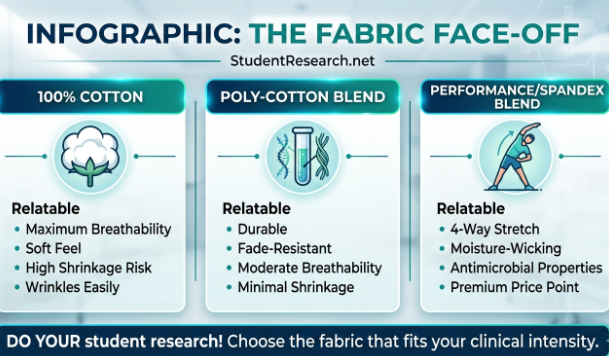
Clinical environments are high-stress and physically demanding. Selecting the right textile is paramount for long-term comfort.
- Moisture-Wicking Technology: Keeps you dry during high-exertion tasks.
- Antimicrobial Treatments: Added protection against the odors and bacteria commonly found in hospital settings.
- Fabric Weight: Lightweight blends are preferred for warm clinical environments, whereas heavier blends offer warmth in cold hospital wings.
Understanding the material science behind your scrubs for nursing students can prevent discomfort during those long, 12-hour shifts. Not all fabrics are created equal; the wrong blend can trap heat or restrict movement. Use the table below to decide which blend fits your clinical environment best:
| Fabric Blend | Best For | Pros | Cons |
| Polyester/Spandex | High-Activity Units | Excellent stretch, wrinkle-resistant | Can trap heat |
| Cotton/Poly/Spandex | General Clinicals | Breathable, soft feel, durable | Higher chance of shrinking |
| Rayon/Poly Blends | Professional Style | Drapes well, very soft | Can pill over time |
Beyond the blend, look for moisture-wicking technology. In a busy hospital, you will be constantly moving; moisture-wicking fabric pulls sweat away from your skin, keeping you cool. Additionally, antimicrobial treatments are a massive bonus for student research and clinical hygiene, as they inhibit the growth of odor-causing bacteria on your clothing throughout the shift.
Selecting the Right Fit for Clinical Mobility
You will be bending, reaching, and lifting frequently. Your scrubs for nursing students must allow for a full range of motion.
- 4-Way Stretch: Look for fabrics that move with you, not against you.
- The “Squat Test”: Always test your pants by squatting; if the material pulls or feels restrictive, size up.
- Adjustable Waistbands: Drawstring or elastic options provide a customizable fit that stays secure throughout your shift.
Achieving the perfect fit for scrubs for nursing students is often a trial-and-error process, but you can minimize returns by following a few simple steps. First, always consult the specific brand’s size chart—nursing sizing varies drastically between manufacturers.
Steps to find your ideal fit:
- Chest/Bust: Measure around the fullest part, keeping the tape horizontal.
- Waist: Measure your natural waistline. If you prefer high-waisted scrub pants, measure at your belly button rather than your hips.
- Inseam: This is critical for preventing your pants from dragging on hospital floors, which is a major hygiene hazard.
Remember, when you are in doubt, size up. A slightly looser fit allows for better airflow and easier layering of base layers during colder shifts. If you find your pants are too restrictive when you sit or bend, you are likely to experience discomfort during patient transfers. Prioritizing fit is not just about vanity; it is about ensuring your scrubs for nursing students are a functional component of your clinical success.
Maximizing Utility with Smart Pocket Configurations
Nurses are essentially mobile supply closets. Organizing your gear is a key skill developed through student research.
- Strategic Placement: Ensure your penlights and shears are easily accessible.
- Secure Storage: Look for zipper or Velcro-sealed pockets to keep your smartphone or ID badge from falling out.
- Internal Organizers: Some premium scrubs for nursing students feature specialized loops for stethoscope or pen storage.
The Ultimate Clinical Pocket Checklist
Organization is the hallmark of a prepared nurse. Beyond just having pockets, you need to know exactly where to put your gear for quick access.
- The Top/Chest Pocket: Reserved for your penlight, a black ink pen, and your scissors.
- The Side/Cargo Pocket: Use this for your nursing notebook, alcohol pads, and flushes.
- The Back Pocket: Ideally kept empty or used for non-essential items like your badge or a small snack bar.
By consistently placing your items in the same location, you build “muscle memory.” During an emergency, you won’t have to fumble through your scrubs for nursing students to find a pen; your hand will go exactly where it needs to go.
Prioritizing Durability for Frequent Wash Cycles
Nursing school uniforms face harsh industrial detergents and frequent washings.
- Reinforced Stitching: Check stress points like the crotch and pocket corners for double-stitching.
- Fade Resistance: High-quality polyester/spandex blends retain color much better than pure cotton.
- Pilling Prevention: Choose synthetic-heavy blends that resist the friction caused by daily movement and laundering.
Navigating Style, Color, & Professional Appearance
While comfort is king, you still need to maintain a professional image that instills patient trust.
- Tailored Cuts: Many brands now offer jogger-style or athletic-cut scrubs for nursing students that look modern without being baggy.
- Professional Standards: Avoid overly trendy patterns unless explicitly allowed by your clinical facility.
- Cleanliness: Always maintain a crisp, wrinkle-free appearance, as it reflects your dedication to your role.
In many clinical settings, your uniform is your identity. While you must adhere to the school’s color code, you can still express professionalism. Psychology shows that a crisp, well-fitted appearance can increase patient trust and your own perceived competence.
Avoid “baggy” looks—which can appear unprofessional and snag on medical equipment—in favor of tailored, athletic-cut scrubs for nursing students. If your program allows for personalization, consider opting for high-quality fabrics that resist wrinkling. A wrinkled, stained uniform can communicate to preceptors and patients that you are not attentive to detail. By investing in quality, you ensure that even after a grueling 12-hour shift, you look as composed as you did at the start of your day.
Budget-Friendly Strategies for Nursing School Sets
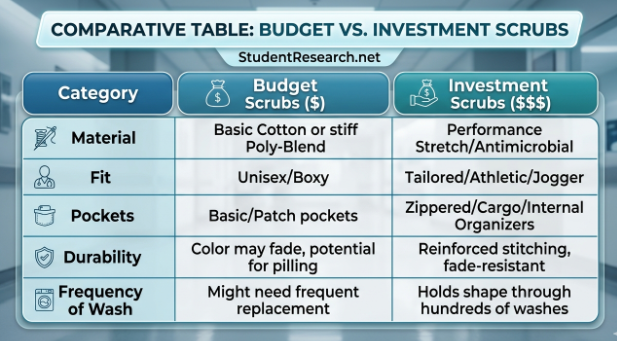
Nursing school is expensive, and purchasing clinical gear adds up quickly.
- Bulk Ordering: Coordinate with your cohort to see if local vendors offer student discounts.
- Outlet Sections: Check major retailers for last year’s colors, which are often heavily discounted.
- Quality over Quantity: It is better to have two sets of high-quality scrubs for nursing students than four sets that tear after a month.
Investing in Supportive Footwear for Long Shifts
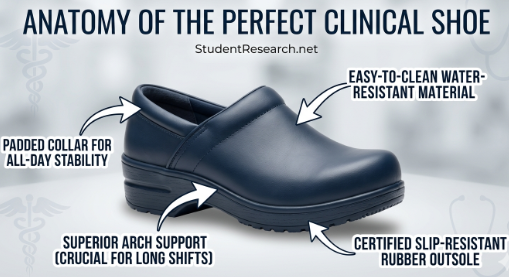
Your feet will feel the impact of your shift more than any other part of your body.
- Supportive Insoles: Prioritize arch support to prevent plantar fasciitis.
- Non-Slip Soles: A non-negotiable safety feature for hospital floors that are often wet.
- Ease of Cleaning: Choose materials that can be wiped down quickly if fluids spill.
Your scrubs for nursing students are only as good as the foundation you stand on. The transition to clinicals is often the first time students spend 12 hours straight on their feet.
- Clogs (e.g., Dansko): Known for superior arch support and a firm structure that keeps your spine aligned.
- Athletic Sneakers (e.g., Hoka, Brooks): Provide maximum cushioning for those who suffer from joint pain.
- Compression Socks: These are a “hidden” part of your uniform. They are essential for preventing leg swelling and varicose veins by promoting blood flow back to the heart.
Pro-Tip: Always buy your clinical shoes at the end of the day when your feet are at their most swollen. This ensures you aren’t buying a shoe that feels tight by the time you reach hour eight of your clinical rotation.
Where to Buy: Shopping Guide for Students
Navigating the marketplace for scrubs for nursing students can be overwhelming due to the sheer number of options available. Whether you are shopping in a physical storefront or browsing online, having a strategy is key to finding the right balance of price, quality, and convenience.
The Online vs. In-Store Dilemma
Choosing how to shop depends on your personal needs:
- In-Store Advantages: The biggest benefit of a physical shop is the ability to try on garments. Because sizing differs significantly between brands, being able to physically check how a scrub top sits on your shoulders or how the pants feel when you bend can save you from the hassle of returns. It also allows you to feel the fabric weight and quality firsthand.
- Online Advantages: Online stores typically offer a wider selection of colors, patterns, and modern fits (like joggers or athletic cuts) that local shops may not carry. They are often more budget-friendly, providing access to bulk-buy discounts, student-specific promo codes, and customer reviews that offer real-world feedback on how the scrubs for nursing students perform after multiple washes.
Mastering the Size Chart and Return Policy
If you choose to purchase online, do not skip these two critical steps:
- Understand Brand-Specific Sizing: Never assume an “S” or “M” in your everyday clothing translates to your scrub size. Brands like Cherokee, Dickies, or more modern labels all have unique measurement standards. Always keep a flexible measuring tape handy and measure yourself according to the brand’s specific chart. Pro-tip: Measure first thing in the morning when you are least bloated for the most accurate results.
- Scrutinize the Return Policy: Before clicking “Buy Now,” ensure the retailer has a clear, user-friendly exchange or return policy. Since you are likely ordering multiple sets to test, knowing you can easily swap a size that doesn’t fit is a safety net you shouldn’t ignore.
When to Bulk Buy
As a student, your schedule is unpredictable, and laundry is often a low priority. It is generally recommended to start with one or two sets to ensure you like the feel and fit. Once you have confirmed that a particular brand’s scrubs for nursing students meet your program’s standards and your personal comfort requirements, consider buying in bulk. Many retailers provide significant discounts for students who order three or more sets, which will save you money in the long run and ensure you always have a clean, professional uniform ready for your next shift.
Ultimately, your goal is to find a reliable retailer where you can consistently source your gear, ensuring that as you grow in your career, your uniform remains a reliable, stress-free part of your clinical success.
After conducting your own student research, identify the vendors that offer the best return policies and student-specific loyalty programs.
- Online Medical Retailers: Often have the largest selection and best price-matching policies.
- Local Scrub Shops: Excellent for trying on fits before committing to a purchase.
- School Bookstore: Often the most convenient, though sometimes the most expensive.
Conclusion: Stepping Into Your Career with Confidence
Choosing the right attire is a foundational step in your clinical journey. By prioritizing quality, fit, and functionality, you ensure that your scrubs for nursing students support your performance rather than distract from it. Whether you are searching for the best deals or the most durable fabric, remember that your choices reflect your professional standards. Shop the best scrubs for nursing students! Follow our top 9 expert tips to find comfortable, durable, and stylish uniforms for your 2026 clinicals.
As you progress, keep evaluating your needs—your future patients deserve a student who is prepared, professional, and ready to provide the best care possible in their perfect pair of scrubs for nursing students. Remember, finding the ideal scrubs for nursing students is an ongoing process of refinement that ultimately enhances your clinical experience. Always prioritize gear that allows you to focus on what matters most: your nursing education and your future patients.

