

Finding the perfect gifts for a student nurse is a thoughtful way to acknowledge the immense dedication required during their clinical rotations and academic journey. Nursing school is notoriously challenging, often involving long hours of intense study, high-stakes lab work, and emotionally taxing hospital shifts. Whether you are shopping for a holiday, a graduation milestone, or simply want to show your support, practical items that bridge the gap between classroom theory and bedside care are always the most appreciated. Our student research into nursing educational needs reveals that students often prioritize tools that enhance efficiency and personal comfort during their transition into the healthcare workforce. By choosing items that alleviate the physical and mental strain of their day-to-day routine, you provide more than just a material gift; you offer essential encouragement for their demanding path toward becoming a licensed professional.
Clinical Gear for Nursing Students
The clinical environment requires specific equipment that must be both reliable and durable. Because students often spend hours on their feet in high-pressure settings, the quality of their gear is a primary factor in preventing injury and maintaining long-term physical health. Providing high-end clinical tools can significantly improve a student’s confidence during their first rotations, ensuring they are prepared for the rigorous demands of hospital life. This section details how to select the right foundation of gear to support both patient care and personal well-being.
Stethoscope Buying Guide: Acoustic vs. Digital
Investing in a stethoscope is a major career milestone, and understanding the nuances between models is essential for diagnostic success.
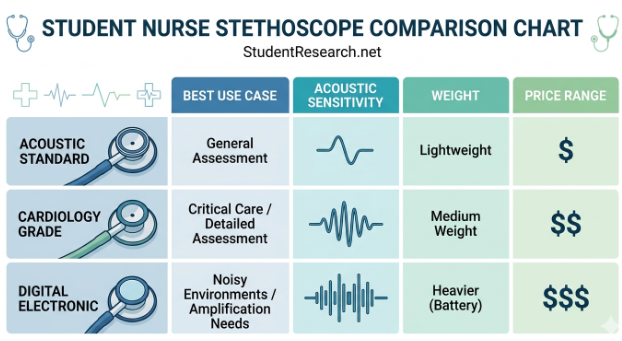
- Acoustic Stethoscopes: These are the industry standard for nursing students. They rely on physical sound waves traveling through the tubing to your ears. They are highly reliable, require no batteries, and are generally more affordable. Look for “tunable” diaphragms that allow you to hear both low and high frequencies simply by varying the pressure applied to the patient’s skin.
- Digital Stethoscopes: These models use electronic sensors to amplify heart and lung sounds, often by up to 40 times. They are particularly beneficial in noisy clinical environments or for students who may have mild hearing impairments. Many digital stethoscopes also offer Bluetooth connectivity to visualize heart rhythms on a screen or record sounds for later review with an instructor. While they offer superior clarity, they do require regular charging and are significantly more expensive.
- Selection Strategy: For most clinical rotations, a high-quality acoustic model is sufficient. However, if your budget allows and you anticipate working in critical care, the amplification provided by digital models can significantly reduce diagnostic fatigue. Always ensure the ear tips provide a tight, comfortable seal to minimize external noise interference, regardless of the technology you choose.
Fit and Function: Selecting Nursing Footwear
Your shoes are the most vital piece of clinical equipment you will own. Choosing the wrong footwear often leads to chronic foot, leg, and back pain.
- Orthopedic Support: Given the long hours on hard hospital floors, prioritize shoes with robust arch support to prevent conditions like plantar fasciitis. Removable insoles are a huge advantage, as they allow you to swap in custom orthotics if you have specific structural needs.
- Safety Standards: Non-slip safety is non-negotiable. Ensure your shoes feature a certified slip-resistant outsole to protect you on slick hospital floors, especially in emergency or surgical units where fluid spills are common.
- Material Integrity: Avoid mesh-heavy running shoes that absorb fluids. Choose non-porous materials like high-grade leather or specialized synthetic composites that are easy to sanitize and comply with strict infection control protocols.
- Long-Term Comfort: A deep, reinforced heel cup is essential for preventing lateral rolling and stabilizing your gait. Always try on your shoes with the compression socks you intend to wear during shifts, as this will affect the fit and overall level of support.
Clinical Gear Checklist
To help you manage your budget and professional needs, here are the essential items categorized by your stage in the program.
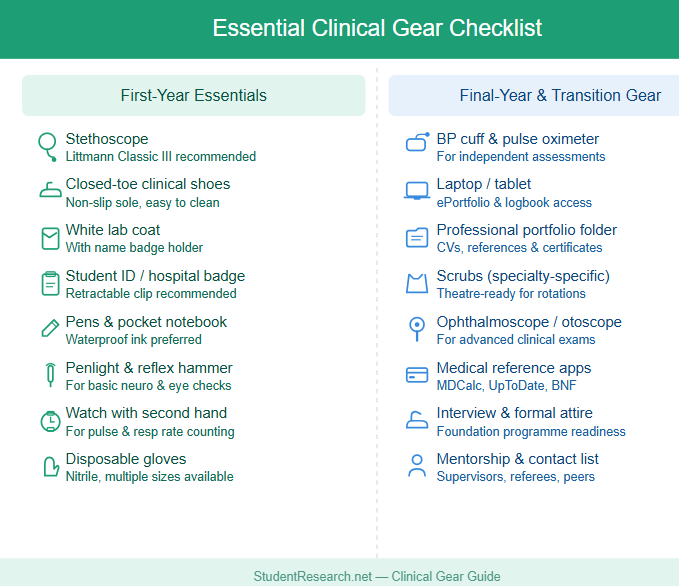
- First-Year Essentials: Focus on the absolute basics: a reliable acoustic stethoscope, a high-quality nursing planner, a set of durable, leak-proof pens, and comfortable, non-slip nursing shoes.
- Final-Year/Transition Essentials: As you approach graduation, add to your kit: a professional digital watch for vitals monitoring, a pocket-sized pharmacology reference guide, a personalized high-durability badge reel, and high-compression stockings for those grueling final-rotation shifts.
Essential Tools for Academic and Clinical Tasks
Nursing school is not just about clinical skills; it requires rigorous academic discipline and constant reference to complex medical information. Having the right resources at their fingertips allows students to bridge the gap between textbooks and patient interactions effectively. Through extensive student research, it is clear that organization and quick access to data are the keys to academic success. These tools help students stay on top of their pharmacology, anatomy, and assessment requirements with ease.
High-Quality Nursing Pocket Guides
- Seek pocket-sized references that cover drug dosages, lab values, and common nursing interventions.
- Look for waterproof or laminated pages that can withstand frequent use in a clinical setting.
- Prioritize guides that feature color-coded sections for rapid information retrieval.
Organizational Tools and Nursing Planners
- Select planners with dedicated sections for clinical rotation schedules and assignment deadlines.
- Consider digital options that sync with mobile apps for real-time schedule adjustments.
- Ensure the planner has enough space for clinical notes and personal reflection tracking.
Technology and Gadgets
Modern nursing education relies heavily on technology to monitor patient health and manage complex information streams. Providing gadgets that streamline these workflows helps students maintain focus on what matters most: patient care. Smart technology has become a staple for students who need to track vitals and manage their demanding timelines effectively. These tech-forward gifts ensure they remain connected, charged, and prepared for every challenge their instructors present.
Integrating Smartwatches with Clinical Apps
The modern smartwatch is no longer just a fitness tracker; it has evolved into a critical clinical assistant that bridges the gap between bedside data and electronic health records.
- Real-Time Data Syncing: Many top-tier smartwatches integrate directly with mobile nursing apps and hospital-approved charting platforms, allowing students to check patient status updates or lab results with a quick glance at their wrist.
- Medical Reference Integration: Advanced apps sync drug reference databases to the watch face, providing students with rapid, hands-free access to critical dosage information or drug interactions during rounds.
- Efficient Workflow Management: By syncing with academic and hospital calendars, smartwatches push timely notifications regarding clinical shift changes or upcoming assignment deadlines, ensuring the student never misses a critical update.
- Hands-Free Communication: Many clinical apps allow for silent, haptic alerts when an instructor or preceptor sends a message, maintaining professional etiquette while ensuring constant availability in high-acuity settings.
Battery Life and Reliability Analysis
In the high-traffic environment of a hospital, a device that dies mid-shift is worse than having no device at all. Nursing students require “military-grade” reliability to ensure their tools perform under pressure.
- Extended Battery Requirements: Students should prioritize devices with a minimum of 24–48 hours of battery life. Clinical rotations are long, and the ability to operate through an entire 12-hour shift—plus study time—without needing a wall outlet is a significant advantage.
- Durability and Build Quality: Hospital environments are prone to frequent bumps, drops, and exposure to liquid spills. Look for devices that meet ruggedization standards, such as impact-resistant screens and water-sealed casings that can withstand daily sanitization protocols.
- Fast-Charging Infrastructure: A reliable “tech kit” should include high-speed portable chargers capable of a 50% charge in under 30 minutes. This ensures that even on the busiest days, a student can recover power during a quick lunch break.
- Cable Integrity: Always opt for reinforced, braided charging cables. Standard plastic cables frequently fray under the stress of being packed and unpacked in a crowded nursing bag, making industrial-strength alternatives a necessary investment for long-term reliability.
Must-Have Nourishment and Hydration Solutions
Nutrition is often neglected during the hustle of back-to-back clinical rounds and lectures. Maintaining energy levels is essential for cognitive performance and physical stamina, yet hospital dining options are not always ideal. A well-prepared meal or a cold drink can make the difference between a productive shift and a draining one. Supporting their health through better hydration and nutrition is an excellent way to show you care.
Insulated Lunch Boxes for Shift Work
- Select bags with multiple compartments to keep snacks and main meals organized and fresh.
- Ensure the lining is BPA-free and easy to wipe clean after daily use.
- Look for styles that fit easily into a standard-sized nursing locker.
Leak-Proof Tumblers for Busy Nurses
- Opt for double-walled vacuum insulation to keep beverages hot or cold for over 12 hours.
- Prioritize locking, leak-proof lids to prevent spills inside bags or at the nursing station.
- Choose durable stainless steel constructions that resist drops and daily wear and tear.
Personalized Touches for Uniforms
While nursing uniforms are strictly standardized, there is always a small window for individuality. Small, professional accessories can provide a morale boost and make the long process of education feel more like a personal journey. These items are often affordable yet highly impactful in making a student feel more confident and recognized. It is the subtle details that help differentiate a student’s gear and keep them motivated during repetitive clinical tasks.
Custom Badge Reels and ID Holders (H3)
- Select high-strength cord retraction mechanisms to handle daily use.
- Look for designs that can be easily cleaned or sanitized between clinical rotations.
- Choose tasteful patterns or colors that reflect the student’s personality without violating dress codes.
Relaxation and Post-Shift Recovery
The mental and physical demands of nursing school require intentional downtime to prevent burnout and sustain long-term academic performance. After a day of critical thinking and high-pressure clinical situations, students need a structured sanctuary at home to recharge their physiological and mental batteries. Providing gifts that foster recovery demonstrates that you value their well-being as much as their academic success. These items help create a restorative atmosphere that allows them to return to the clinical setting refreshed and ready for the next day’s challenges.
The Science of Recovery and Cortisol Reduction
Understanding the biology of stress is the first step toward effective recovery. After a 12-hour shift, the body often remains in a heightened state of “fight or flight,” characterized by elevated cortisol levels that can disrupt sleep and impair cognitive function.
- Compression Therapy: Beyond simply reducing leg swelling, graduated compression helps improve venous return, which alleviates the physical “heaviness” associated with prolonged standing. Physically lowering this fatigue signal helps the nervous system transition more quickly into a resting state.
- Aromatherapy for Cortisol Management: Studies have shown that specific scents—such as lavender, bergamot, or eucalyptus—can stimulate the olfactory system to trigger a parasympathetic response. This biological “brake” on the stress response helps lower serum cortisol, facilitating a smoother transition to sleep.
- Thermal Regulation: Using warm baths or cooling sleep aids helps normalize body temperature. Rapid cooling or controlled warming acts as a physiological cue to the brain that the “work” phase is complete, signaling the release of melatonin.
- Burnout Prevention Insights: According to recent student research, burnout prevention is most effective when recovery is proactive rather than reactive. Expert recommendations consistently highlight that even 20 minutes of “non-negotiable” decompression time can significantly decrease the risk of emotional exhaustion over an entire semester.
30-Minute Post-Shift Wind-Down Plan
This sample routine is designed to help students efficiently shed the stress of the clinical environment in just half an hour.
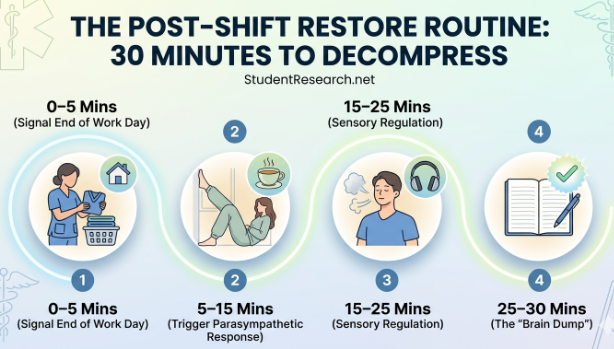
- Minutes 0–5 (De-clutter and Transition): Immediately remove clinical scrubs and sanitize hands. Placing your uniform in a designated laundry hamper creates a psychological “boundary” between your professional responsibilities and your home life.
- Minutes 5–15 (Physical Decompression): Engage in gentle restorative movement, such as legs-up-the-wall yoga or light stretching, to counteract the muscular tension built up during long shifts. Use this time to hydrate with water or herbal tea.
- Minutes 15–25 (Sensory Regulation): Use aromatherapy or a quiet, dimly lit environment to practice deep, rhythmic breathing. Avoid looking at clinical apps or school emails during this window; instead, listen to an audiobook or soft music to shift your focus away from medical stressors.
- Minutes 25–30 (The “Brain Dump”): Spend the final five minutes writing down one thing you learned that day and one thing you are grateful for. This habit, supported by ongoing student research, helps “close the loop” on clinical anxieties, allowing your brain to fully power down for a restful night of sleep.
Conclusion: Investing in Their Nursing Future
Supporting a student nurse is a meaningful way to contribute to the future of healthcare. Through our ongoing student research, it is evident that the right tools and a strong support system are the pillars of professional success. Whether you chose a clinical essential or a comfort item, your contribution helps them navigate the pressures of school while maintaining their passion for patient care. As they continue their path, remember that your encouragement is the most valuable gift of all. Searching for gifts for a student nurse? Discover 10 practical, high-rated gifts perfect for clinical rotations and nursing school success.
Need to reclaim your limited free time without sacrificing your grades? Simplify your nursing journey by accessing professional, evidence-based academic support tailored just for you at StudentResearch.net. Visit our platform today and order your custom study resources now!

