

Stepping into the world of healthcare requires more than just a high GPA and a pristine set of scrubs; it demands a heart for service and hands-on experience. Finding the right volunteer opportunities for nursing students can be the bridge between theoretical classroom knowledge and the high-stakes reality of the hospital floor. Whether you are looking to polish your patient interaction skills or simply want to give back to the community, volunteering offers a unique vantage point into the nursing profession that textbooks simply cannot replicate.
Why Pursue Volunteer Opportunities for Nursing Students Early in Your Career?
Engaging in community service is not just a resume filler; it is a strategic move for any aspiring healthcare professional. By seeking out volunteer opportunities for nursing students, you gain exposure to diverse patient demographics and various healthcare settings before you even sit for the NCLEX. This early immersion helps solidify your commitment to the field and provides a “soft landing” for learning the nuances of bedside manner.
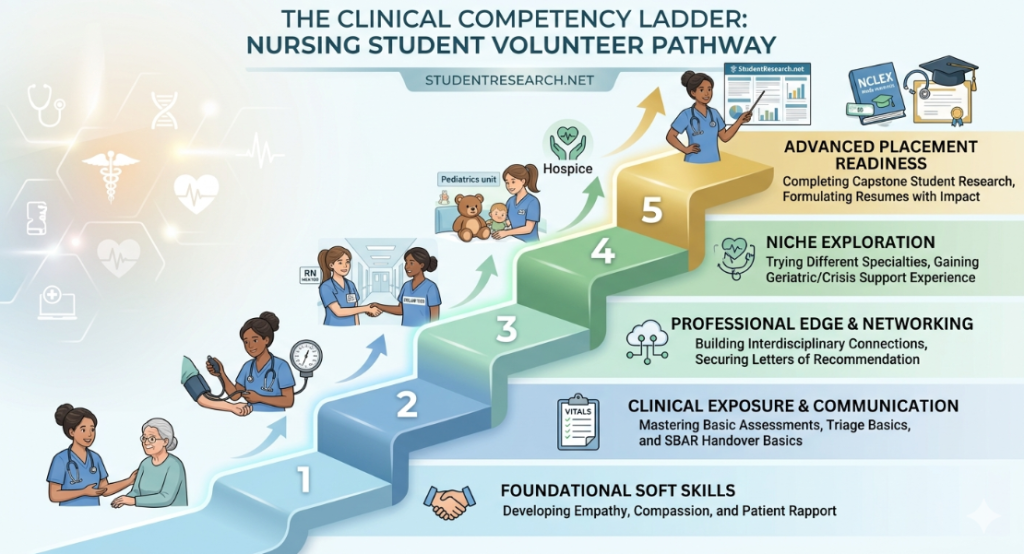
Clinical Skill Development and Practical Exposure
- Vital Sign Monitoring: Gain confidence in measuring blood pressure, pulse, and respirations in non-emergency settings.
- Patient Interaction: Learn how to communicate effectively with patients who may be anxious, confused, or in pain.
- Charting Basics: Observe how medical records are maintained and the importance of accurate documentation.
Networking and Professional Growth
- Mentorship: Connect with seasoned Registered Nurses (RNs) who can provide career guidance and letters of recommendation.
- Interdisciplinary Teamwork: Understand how nurses collaborate with doctors, social workers, and therapists.
- Job Placement: Many hospitals prioritize hiring former volunteers who have already proven their dedication and fit within the culture.
Struggling to balance clinical rotations with complex nursing essays? Let the experts at StudentResearch.net handle the heavy lifting. We provide top-tier, evidence-based academic writing tailored to your specific grading rubric. Reclaim your time and secure your future today!
Hospital-Based Volunteer Opportunities for Nursing Students
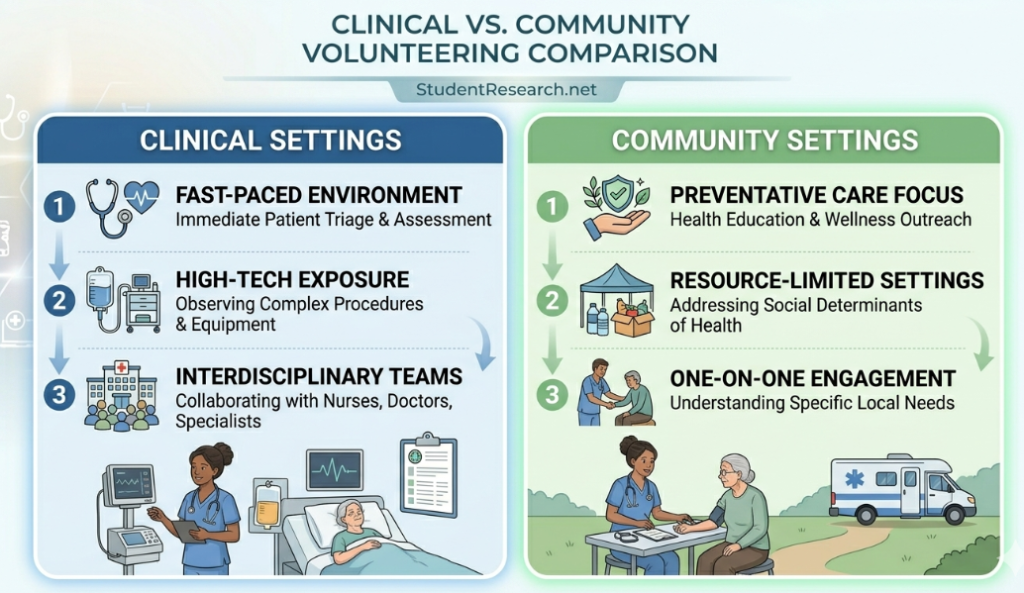
Hospitals remain the gold standard for nursing students seeking a fast-paced environment and a wide variety of clinical exposures. These volunteer opportunities for nursing students allow you to see the inner workings of different units, from Pediatrics to Oncology. While you won’t be performing invasive procedures, the observational value of being “in the room” is unparalleled.
Emergency Room (ER) Support Staff
- Patient Comfort: Providing blankets, water (when cleared), and updates to waiting families.
- Stocking Supplies: Learning the location and names of essential medical equipment and PPE.
- Transport Assistance: Helping move patients between departments for imaging or admissions.
Pediatric Ward and Child Life Services
- Therapeutic Play: Engaging children in activities to distract them from the stress of hospitalization.
- Parental Support: Offering a listening ear or a break for parents staying overnight with their children.
- Ward Safety: Assisting staff in maintaining a clean and safe environment for immunocompromised youth.
Community Health and Public Outreach Roles
Not all nursing happens within the four walls of a hospital, and community-based volunteer opportunities for nursing students prove exactly that. These roles focus on preventative care and health equity, often reaching populations that lack consistent access to medical facilities. It is an excellent way to understand the social determinants of health and how they impact patient outcomes.
Free Clinics and Underserved Populations
- Triage Assistance: Helping document the primary complaints of patients as they arrive at mobile clinics.
- Health Literacy Education: Explaining medication schedules or lifestyle changes in easy-to-understand language.
- Resource Mapping: Connecting patients with local food banks, housing assistance, or specialized care.
H Vaccination Drives and Health Screenings
- Data Entry: Ensuring that immunization records are accurately updated in state databases.
- Crowd Management: Guiding patients through the flow of a mass vaccination site to ensure efficiency.
- Post-Injection Observation: Monitoring patients for immediate adverse reactions and providing comfort.
Comparing Domestic vs. International Volunteer Experiences
When deciding where to dedicate your time, you might find yourself choosing between local community service and global medical missions. Both types of volunteer opportunities for nursing students offer significant value, but they cater to different learning objectives and personal goals. Use the following comparison to see which path aligns best with your current stage of education.
| Feature | Domestic Volunteering (Local) | International Medical Missions |
| Accessibility | High; usually requires a short commute and flexible hours. | Low; requires significant travel, cost, and time off. |
| System Familiarity | Teaches you the specific regulations and tech of your home country. | Exposes you to resource-limited settings and different pathologies. |
| Consistency | Allows for long-term relationships with mentors and patients. | Intensive, short-term immersion that builds adaptability. |
| Cost | Usually free or involves minimal background check fees. | Often requires fundraising for airfare, lodging, and supplies. |
Specialized Nursing Volunteer Roles for Skill Niche Building
If you already have a specific area of interest, such as geriatrics or mental health, seeking niche volunteer opportunities for nursing students can give you a competitive edge. These roles allow you to dive deeper into specialized care protocols and patient needs. Tailoring your volunteer work to your future specialty shows foresight and a targeted passion for your chosen path.
Hospice and Palliative Care Support
- Companionship: Providing presence and emotional support to patients in their final stages of life.
- Respite Care: Giving family caregivers a much-needed break while ensuring the patient is not alone.
- Legacy Projects: Helping patients record stories or letters for their loved ones.
Mental Health Support and Crisis Lines
- Active Listening: Mastering the art of empathy and non-judgmental communication over the phone or text.
- De-escalation Skills: Learning how to stay calm and helpful during a patient’s psychological crisis.
- Resource Navigation: Directing callers to local mental health professionals and support groups.
Incorporating Student Research into Mental Health
- Data Collection: Tracking common stressors among callers to contribute to student research on community mental health trends.
- Outcome Analysis: Helping organizations measure the effectiveness of their intervention strategies through surveys.
- Literature Reviews: Using your academic skills to keep the organization updated on the latest evidence-based psychiatric care.
The Commercial Edge: How Our Nursing Placement Program Boosts Your Career
While general volunteering is great, our “Elite Nurse Placement Program” streamlines the process of finding high-impact volunteer opportunities for nursing students. We partner with top-tier teaching hospitals and international NGOs to ensure our participants get the best possible exposure. By joining our program, you aren’t just a volunteer; you are a professional-in-training with a curated path to success.
Exclusive Access to Premier Clinical Sites
- Pre-Vetted Partnerships: Skip the months-long waiting lists at major hospitals through our direct-entry agreements.
- Premium Placements: Get into high-demand units like the ICU or NICU that are usually closed to traditional volunteers.
- Safety and Insurance: Benefit from comprehensive liability coverage and safety protocols managed by our team.
Resume Optimization and Interview Prep
- Professional Branding: We help you translate your volunteer hours into powerful bullet points for your CV.
- Mock Interviews: Practice articulating your volunteer experiences with our career coaches to ace your first RN interview.
- Letter of Recommendation Service: We coordinate with your site supervisors to ensure you have strong, clinical references.
Leveraging Student Research for Graduate School
- Capstone Support: Our program provides the data and site access necessary to conduct high-level student research.
- Poster Presentations: We offer opportunities to present your findings at our annual nursing excellence symposium.
- Academic Credits: Work with your university to turn your placement hours into formal independent study units.
Administrative and Red Tape: Getting Started the Right Way
Before you can start your journey with volunteer opportunities for nursing students, there are several logistical hurdles you must clear. Most organizations require a rigorous screening process to ensure patient safety and HIPAA compliance. Staying organized during this phase will show potential supervisors that you are professional and ready for the responsibilities of nursing.
Essential Documentation and Compliance
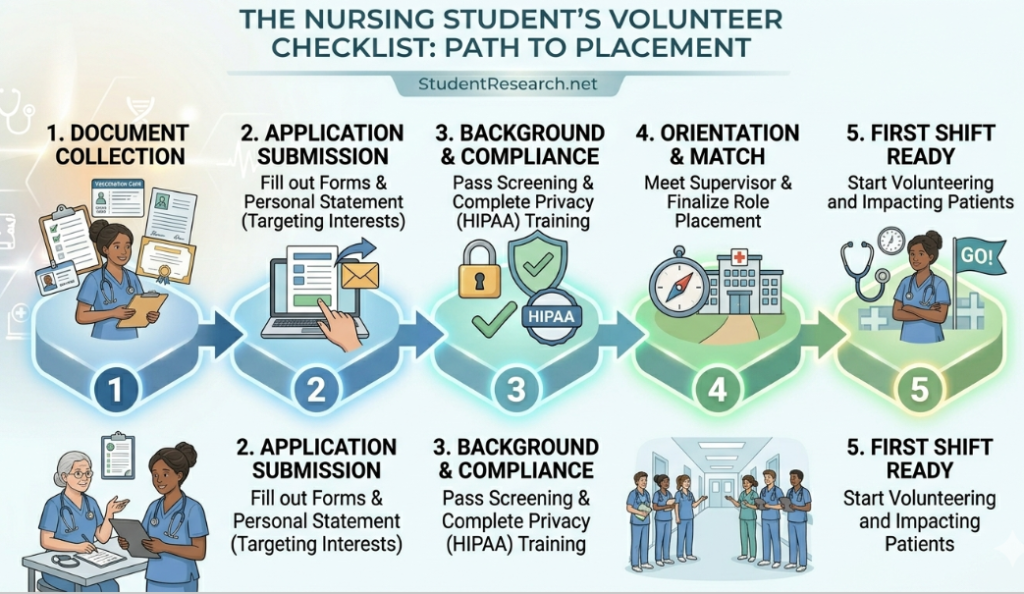
- Background Checks: Be prepared to provide fingerprints and consent to a criminal history review.
- Immunization Records: Ensure you are up to date on TB tests, Flu shots, and Hep-B series.
- HIPAA Training: Complete the mandatory privacy training to understand how to handle sensitive patient information.
Finding the Right Time Commitment
- Consistency over Quantity: It is better to volunteer 4 hours a week for a year than 40 hours in a single week.
- Balancing Academics: Ensure your volunteer schedule does not interfere with your clinical rotations or study time.
- Summer Intensives: Consider using your school breaks for more demanding or travel-based opportunities.
H4: Documentation for Future Student Research
- Journaling: Maintain a log of your experiences (avoiding PHI) to use as a reflection for future student research papers.
- Hour Tracking: Use a verified app or logbook to have your hours signed off by a supervisor every shift.
- Skill Checklists: Keep a list of the non-clinical skills you’ve mastered to discuss during your academic reviews.
Conclusion and Final Checklist
In conclusion, finding the right volunteer opportunities for nursing students is a transformative step that shapes both your character and your career. By diversifying your experiences—from hospital hallways to international clinics—you build the resilience and empathy required for this demanding profession. Remember that every hour spent serving others is an investment in the nurse you are destined to become.
Explore 16 life-changing volunteer opportunities for nursing students to boost clinical skills and resumes. Start your healthcare journey today!
Frequently Asked Questions
Aspiring nurses often have many questions before committing to a volunteer role, especially regarding the limitations of their scope of practice. It is important to remember that while you are a student, your role as a volunteer is strictly non-clinical unless specified by a formal school agreement. These volunteer opportunities for nursing students are designed to complement, not replace, your formal education.
Common Concerns Addressed
- Can I perform injections? Generally, no; volunteers are restricted from invasive procedures to maintain liability standards.
- Will this help me get into CRNA school? Yes, early exposure to acute care environments is highly looked upon by advanced practice programs.
- Is it too early to start? Never! Even pre-nursing students can benefit immensely from early exposure to the healthcare environment.
Meta Description: Explore 16 life-changing volunteer opportunities for nursing students to boost clinical skills and resumes. Start your healthcare journey today!
Want to turn your volunteer experiences into a high-distinction research paper? Our specialized writers at StudentResearch.net craft flawless academic assignments that impress professors every time. Don’t let deadlines stress you out—visit our site to order now!

