

Most high school students spend years reading textbooks and memorizing facts. Active learning flips the script by pushing you to ask questions and create original knowledge. Student research week represents the pinnacle of this transformation, where you showcase your unique discoveries. This shift from passive consumer to active creator defines true college readiness.
The research journey—culminating in student research week—offers high school students the most impactful pathway from knowledge consumers to knowledge creators. Colleges don’t just want students who can ace tests. They seek young scholars who demonstrate intellectual curiosity, resilience, and the ability to contribute new insights to their field. Undergraduate research during high school proves you possess these exact qualities.
Why Student Research Week Matters for Your Future:
- College readiness accelerates dramatically when you engage in high school research rather than just traditional coursework
- Research for college applications provides authentic stories of challenge and growth that admissions officers value most
- Student research symposium participation signals your preparedness for rigorous academic environments
- Research opportunities discovered through student research week often lead to mentorships and recommendation letters that stand out
- The scholarly presentation skills you develop transfer directly to college seminars and professional settings
Understanding Student Research Week:
- Student research week serves as a dedicated campus-wide celebration where undergraduate research takes center stage. High school students can participate as presenters or attendees at these university-hosted events. The research showcase features poster presentations, oral talks, and scholarly presentations across all disciplines. Students display months of investigative work through visual displays and condensed research abstracts.
- A student research symposium creates networking opportunities with professors, graduate students, and fellow young researchers. You’ll witness diverse research opportunities spanning humanities, STEM, social sciences, and creative fields. Faculty judges often attend to evaluate presentations and offer feedback. These interactions frequently lead to mentorship connections and strengthen research for college applications.
- Attending or presenting at student research week demonstrates college readiness better than test scores alone. The experience builds student critical thinking through real-world academic engagement. Universities typically host these events annually, making them accessible to motivated high school students seeking authentic scholarly experiences.
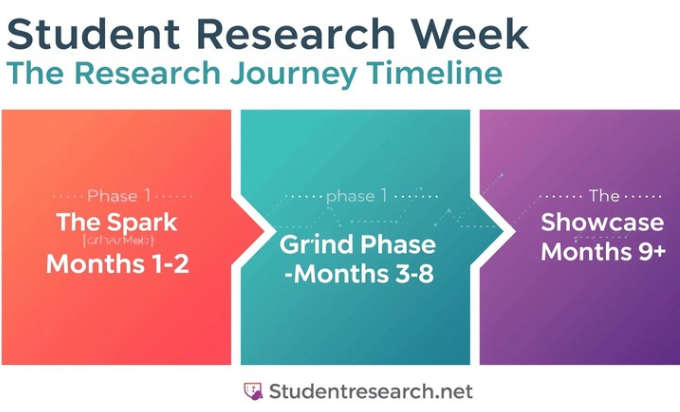
The Research Spark: Finding Your Intellectual Vitality
Starting your high school research journey doesn’t require laboratory access or expensive equipment. The key is identifying questions that genuinely intrigue you and match your available resources.
Beyond the Beaker: What Counts as High School Research?
Many students mistakenly believe research only happens in science labs with white coats and microscopes. The truth is that undergraduate research encompasses any disciplined investigation that answers a question in your unique way.
Defining Research for Student Research Week:
- Research means investigating a question that no one else has answered exactly as you will answer it. Your specific perspective, local context, or creative approach makes your work original. High school research thrives on curiosity rather than costly equipment or advanced degrees. The research opportunities available to you right now are far broader than you imagine.
Creative and Humanities Research Examples:
- Analyze how local newspapers covered a historical event differently from national media outlets. Create a new artistic technique by combining traditional methods with digital tools, demonstrating creative scholarship. Investigate social media trends within your school community to understand peer communication patterns. Document oral histories from community elders to preserve disappearing cultural knowledge. These projects qualify fully for any student research symposium presentation.
STEM and Coding Research Examples:
- Develop an original mobile app that solves a problem your community faces daily. Optimize a local environmental solution by testing water quality at different locations over time. Code a new data visualization tool that makes complex information accessible to younger students. Design experiments comparing the effectiveness of different sustainable materials. Build a machine learning model that predicts patterns in publicly available datasets.
The Curiosity Factor in Student Research Week:
- The “R” in student research week celebrates intellectual curiosity above expensive resources. College admissions officers value students who ask thoughtful questions regardless of fancy lab equipment. Your research for college applications becomes stronger when it reflects genuine interest rather than forced participation. A high school research mentor can guide you, but your curiosity drives the entire process. Remember that scholarly presentations at research showcases feature projects completed with everyday tools and free online resources.
Building Your Idea Incubator: Where to Start
Every impressive research showcase project begins with a single observation or frustrating question. Learning how to start a research project requires cultivating awareness of problems around you.
The Problem Log Strategy:
- Keep a running list of annoying problems or phenomena you don’t understand in daily life. Why does your bus route always run late during certain hours? How do viral social media trends actually start and spread? What makes some study techniques work better than others for you? These everyday frustrations often become excellent high school research topics. Review your problem log weekly and highlight questions that genuinely excite your curiosity.
Leveraging the Power of Mentorship:
- A high school research mentor transforms vague ideas into structured projects worth presenting at student research week. Ask your current teachers which topics from class could expand into original investigations. Reach out to local professionals working in fields that interest you for advice. Contact university graduate students through email explaining your interest and requesting a brief consultation. Many graduate students remember their own beginnings and willingly share guidance. Professional mentorship provides accountability and prevents you from wasting time on dead-end approaches.
Mining Your Existing Coursework:
- AP Capstone programs specifically prepare students for undergraduate research through structured inquiry projects. Advanced science classes often include lab components that can expand into independent investigations. History and English courses provide rich opportunities for analyzing primary sources in new ways. Even elective classes like computer science or art offer frameworks for student research week projects. Talk to your teachers about extending class assignments into presentations worthy of a research symposium. Your existing schoolwork already contains seeds of research opportunities waiting to grow.
Finding the Data: Open-Source Resources for Teens
Data collection intimidates many students, but free resources make high school research surprisingly accessible. You don’t need university credentials or expensive subscriptions to gather meaningful information.
Free Data Sources for Student Research Week Projects:
- Government websites like Data.gov and Census.gov provide massive datasets on demographics, economics, and social trends. Google Scholar offers free access to millions of academic papers and research studies. Public libraries grant free access to newspaper archives and historical documents for humanities research. Open-source code repositories like GitHub let you build upon existing programming projects. Survey tools like Google Forms enable you to collect original data from your community. These resources support research for college applications without costing anything.
Starting with Low-Barrier Research Methods:
- Literature reviews compile existing studies on a topic and identify gaps in current knowledge. Surveys and interviews gather original perspectives from people in your school or neighborhood. Observational studies document patterns in public spaces or online communities over time. Comparative analyses examine how different groups approach similar problems or questions. These methods require minimal equipment yet produce results worthy of any student research symposium. A high school research mentor can help you identify which approach suits your question best. Remember that starting small builds the confidence needed for more ambitious undergraduate research later.
Need expert academic writing help? Student Research.Net connects you with subject-matter specialists holding Master’s and Ph.D. degrees. Get well-researched, accurate, high-quality content for essays, research papers, dissertations, and all academic assignments. Excellence delivered every time.
The Grind and the Breakthrough: Mastering Resilience and Skill
Research rarely follows a straight path from question to answer. The messy middle phase builds professional skills that separate truly college-ready students from those who only complete assignments.
The Failure Paradox: Why Mistakes are Your Best Teacher
Your first research hypothesis will probably be wrong, and that’s exactly as it should be. Student research week presenters rarely discuss their many failed attempts before reaching their final results.
Normalizing Failure in High School Research:
- Research consists of roughly 90% frustration and only 10% exciting discovery moments. Experiments fail, surveys return confusing data, and initial theories collapse under scrutiny. These setbacks aren’t signs you should quit but rather proof you’re doing real undergraduate research. College admissions officers specifically seek students who persevere through intellectual challenges rather than those who only tackle guaranteed successes. Document your failures carefully because they become powerful material for research for college applications essays.
Building Resilience Through Redesign:
- Resilience means redesigning your experiment or thesis after hitting a dead end rather than abandoning the project. When preliminary data contradicts your hypothesis, you analyze why and adjust your approach accordingly. This ability to pivot represents the exact skill colleges truly seek in applicants. Your research project timeline should always include buffer time for unexpected problems and course corrections. Students who present polished work at student research week have usually reworked their projects multiple times. A high school research mentor helps you distinguish between fixable problems and truly unworkable approaches.
The Power of Documentation and Peer Review:
- Meticulous notes prevent you from repeating the same mistakes or forgetting successful techniques. Keep a research journal documenting what you tried, what failed, and what worked. Share your progress regularly with teachers, friends, or mentors who can spot flaws you’ve overlooked. Peer review sessions catch errors before you waste weeks pursuing flawed reasoning. This collaborative approach mirrors professional scholarly presentation standards at any research showcase. Student critical thinking sharpens dramatically when you must defend your methods to others.
The Essential Soft Skills Stack: Traits that Transfer to College
Beyond subject knowledge, high school research develops transferable abilities that determine college success. These skills matter more than your actual research findings when preparing for student research week.
Sharpening Critical Thinking Skills:
- Your analytical abilities intensify when preliminary data contradicts your carefully formed hypothesis. You must evaluate whether your methods were flawed or your theory was simply wrong. This process of questioning assumptions builds student critical thinking that applies to every college course. Research forces you to distinguish between correlation and causation rather than accepting surface-level explanations. These analytical habits become permanent parts of how you approach problems. College professors expect this level of intellectual rigor from day one of freshman year.
Mastering Synthesis and Time Management:
- Juggling a demanding research project alongside regular schoolwork mirrors college workload intensity perfectly. You learn to synthesize information from multiple sources while maintaining quality across all commitments. Your research project timeline teaches you to break large goals into manageable weekly tasks. Meeting deadlines for your student research symposium presentation while keeping grades high demonstrates exceptional time management. These organizational skills directly predict college readiness better than standardized test scores. Students who complete undergraduate research during high school enter college already knowing how to balance competing priorities.
Developing Communication Excellence:
- Preparing your research abstract tests whether you truly understand your own work deeply. You must condense months of complex investigation into clear, compelling language that non-experts can grasp. This skill becomes essential for student research week presentations where judges span multiple disciplines. Learning to explain technical concepts simply strengthens your college interview performance and essay writing. The scholarly presentation experience at research showcases builds public speaking confidence that serves you throughout life. Strong communication separates good researchers from those who make real impact.
Overwhelmed with assignments? Student Research.Net reduces your academic stress by handling your workload. Focus on exams, part-time jobs, and personal priorities while our experts deliver quality research papers, essays, and projects. Balance academics and life effortlessly.
Career Clarity Check: Discovering Your True Fit
Deep engagement with a research topic either solidifies your intended major or guides you toward better options. This clarity proves invaluable when crafting focused college applications.
Testing Your Passion Through Immersion:
- Spending months investigating a field reveals whether you genuinely love the work or just like the idea. High school research exposes you to the daily reality of your potential career before you commit. Some students discover their supposed dream major actually bores them when pursued deeply. Others find unexpected fascination in subjects they initially chose merely as backup options. This self-knowledge prevents costly major changes later in college.
Building Conviction for Applications:
- Student research week participation gives you the vocabulary and confidence to discuss your field convincingly. College interviews become easier when you’ve already presented to professors and defended your methodology. Your research for college applications provides concrete examples of intellectual curiosity and academic initiative. You can speak authentically about challenges you’ve overcome rather than inventing generic obstacles. Admissions officers immediately recognize the difference between genuine research experience and resume padding. Your research showcase presentation becomes a compelling story that distinguishes your application from thousands of others.
The Showcase: Acing Your Student Research Week Experience
The event itself offers strategic opportunities beyond just presenting your findings. Knowing how to navigate student research week maximizes your return on months of hard work.
Presenting Like a Pro: From Poster to Pitch
Your presentation quality matters as much as your research quality when faculty judges evaluate student research symposium entries. Polish and confidence separate memorable presentations from forgettable ones.
Designing Engaging Visual Materials:
- Create a clear poster using simple charts and minimal text that viewers can absorb quickly. Use high-contrast colors and large fonts so people can read your poster from several feet away. Include only your most essential findings rather than cramming every detail onto the display. Place your research question and conclusion prominently so busy judges grasp your main point immediately. Professional-looking visuals signal that you take undergraduate research seriously and deserve attention at the research showcase.
Mastering the Three-Minute Hook:
- Prepare an elevator pitch explaining your project in three minutes or less without technical jargon. Anticipate tough questions about your methodology and practice confident responses beforehand. Make eye contact with listeners and speak clearly rather than reading directly from your poster. The “Grad Slam” format common at student research week events rewards engaging storytelling over data dumps. Your goal is clearly articulating your process and findings, not necessarily winning awards. Strong scholarly presentations demonstrate college readiness by showing you can think on your feet. Remember that a high school research mentor can conduct mock presentations to build your confidence.
Strategic Networking: Making Connections Count
Research opportunities often emerge from conversations you initiate at student research symposium events. Strategic networking transforms a one-day event into lasting relationships.
Approaching Faculty Members Effectively:
- Introduce yourself to a presenter or professor whose work interests you genuinely. Mention specifically what intrigued you about their research rather than offering generic compliments. Ask a thoughtful, specific question that shows you actually understand their project. Request their business card or email address for future follow-up communication. These brief interactions plant seeds for potential mentorship or shadowing opportunities. Many high school research mentors discover their students through exactly these types of student research week encounters.
Crafting the Perfect Follow-Up Email:
- Send a brief thank-you email within 48 hours while your conversation remains fresh in their memory. Reference the specific topic you discussed to help them remember who you are. Express your interest in learning more about their research area or department. Request a brief virtual chat or campus visit if you’re considering their university. Keep the message to five sentences maximum to respect their time. These earned interactions, especially those built during and after student research week, lead to far more powerful letters than typical high school teacher recommendations provide.
Leveraging Connections for College Applications:
- Professors who actually know your work write substantially stronger recommendation letters than those fulfilling obligations. Your research for college applications gains credibility when university faculty can vouch for your abilities. Mentorship relationships established through research showcases often continue throughout your college career. Some students even join their mentor’s lab as undergraduate research assistants after enrollment. These connections give you insider knowledge about specific programs when choosing where to apply. Student research symposium networking might feel awkward initially but becomes natural with practice.
The Power of Attendance: Visiting as an Analyst
You gain tremendous value from student research week even if you’re not yet ready to present. Attending strategically prepares you for future participation while building research literacy.
Preparing for Your Visit:
- Research the abstract book and presentation schedule beforehand to identify interesting projects. Dress professionally as you would for a college interview to signal serious academic engagement. Bring a notebook to record observations and questions rather than passively wandering. Target specific presentations spanning different disciplines to explore potential research opportunities. Treat the visit like a professional commitment rather than a casual school field trip. This mindset shift helps you extract maximum value from the student research week experience.
Engaging as an Active Learner:
- Take detailed notes on presentation techniques you want to emulate for future high school research projects. Ask thoughtful questions of presenters to understand their methodology and challenges encountered. Notice how different disciplines approach scholarly presentations and adapt techniques to your own style. Observe which posters attract the most attention and which presenters communicate most effectively. These insights accelerate your learning curve when you begin planning your own undergraduate research project. Many students discover their research passion simply by attending a research showcase before starting their own work. The exposure builds student critical thinking by showing you how experts structure investigations and communicate findings.
The Ultimate Application Power-Up
High school students who master the three-step guide to student research week position themselves as exceptional college candidates ready for academic rigor.
Transforming Research into Essay Gold:
- Research provides the perfect “show, don’t tell” narrative for college essays about challenge and growth. You can describe specific obstacles you overcame rather than making vague claims about perseverance. Your student research week presentation becomes a compelling story demonstrating intellectual curiosity and initiative. Admissions officers read thousands of essays about sports victories and volunteer work annually. Authentic undergraduate research stories stand out because relatively few high school students pursue this path. The specificity of your research journey makes your application memorable and credible.
Your Action Steps Starting Today:
- Find the nearest university’s student research symposium calendar and mark the dates immediately. Start your “Problem Log” today by listing three things that confuse or frustrate you. Identify one teacher or professional who might serve as a high school research mentor. Explore one free data source mentioned earlier to see what research opportunities exist. Commit to attending a research showcase this year even if you’re not presenting yet. These small actions launch your research project timeline and build momentum toward college readiness.
The Empowering Truth About Research:
- Student research week involvement proves you’re ready for the rigor of college life better than any test score. You demonstrate student critical thinking, time management, and resilience through completed scholarly presentations. Research for college applications transforms you from a typical applicant into someone who has already succeeded at undergraduate research. Top universities actively seek students who ask original questions and persist through challenges to find answers. Your high school research experience signals you possess exactly these qualities and will thrive in their academic environment. The research opportunities you pursue now directly shape your college future and career trajectory.
Questions at midnight? Student Research.Net offers 24/7 customer support via chat, phone, and email. Get instant answers about essays, research papers, dissertations, or any academic writing service. We’re always here when you need us most.

