

Stepping out of the lecture hall and into the clinical ward can feel like diving into the deep end of a very high-stakes pool. Finding the right student nurse intern jobs is the definitive bridge between academic theory and the fast-paced reality of patient care, providing a safe yet rigorous environment to test your mettle. In this guide, we explore twenty transformative insights to help you navigate your first professional steps with confidence, clinical precision, and strategic career planning.
Navigating the Landscape of Student Nurse Intern Jobs
Securing a position as a nurse intern is about more than just padding a resume; it is about finding an environment that fosters growth and professional identity. These roles allow you to perform essential tasks under the supervision of Registered Nurses (RNs) while building your professional network and understanding hospital hierarchies. Whether you are looking for summer intensives or year-round placements, understanding the variety of available student nurse intern jobs is the first step toward long-term success.
Factors Influencing Internship Availability
The availability of intern roles often fluctuates based on regional demand, hospital funding, and the specific needs of specialized departments. Many healthcare systems prioritize students who demonstrate a commitment to long-term employment within their network, often offering “bridge” programs that lead directly to residency.
- Geographic Demand: Urban centers often have more openings but higher competition and more complex patient demographics.
- Facility Type: Teaching hospitals typically offer more structured intern programs with dedicated clinical educators.
- Academic Timing: Most positions open during summer breaks, but “per diem” intern roles may be available throughout the school year.
#1. Local vs. National Opportunities
- Community Clinics: Offer a slower pace but more intimate patient interaction and primary care experience.
- Level 1 Trauma Centers: Provide high-intensity experience for those eyeing ICU or ER roles and specialized surgical interventions.
- Government/VA Hospitals: Provide unique insights into veteran care and often offer robust federal benefits packages for interns.
Comparing Clinical Settings: Where Should You Apply?
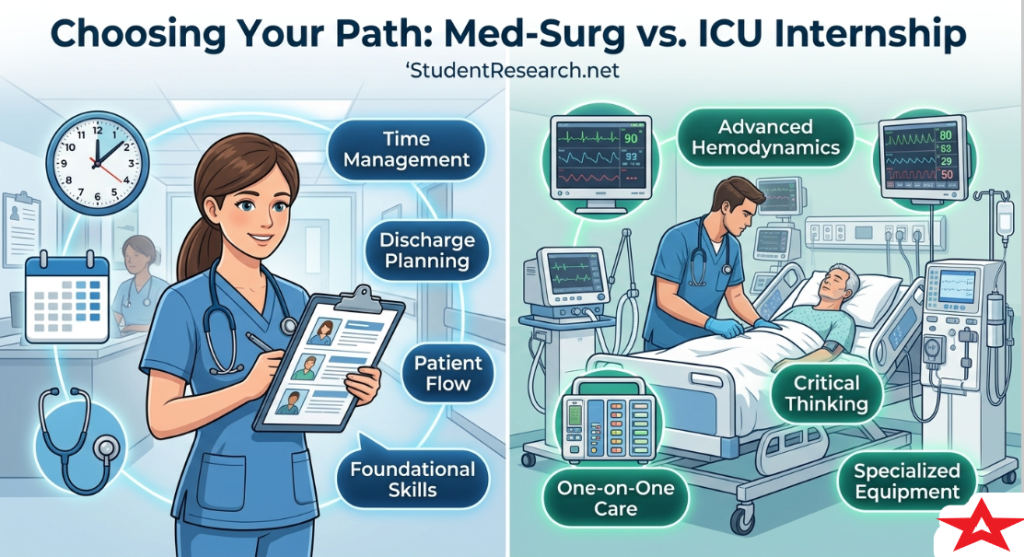
Not all student nurse intern jobs are created equal, and the setting you choose will dictate your daily workflow and the technical skills you acquire. Comparing a fast-paced surgical unit to a specialized pediatric wing helps you narrow down where your passions truly lie before committing to a full-time residency. By evaluating these environments early, you ensure that your student nurse intern jobs align with your eventual career goals and personal temperament.
Primary Care vs. Specialized Units
Deciding between a general medical-surgical floor and a specialty unit is a common crossroads for many students. Each offers a unique set of skills: Med-Surg builds the foundation of prioritization, while specialty units offer deep dives into specific organ systems or patient populations.
| Feature | Medical-Surgical Unit | Intensive Care Unit (ICU) |
| Patient Ratio | Typically 1:4 to 1:6 | Typically 1:1 or 1:2 |
| Skill Focus | Time management, discharge planning, and foundational skills | Advanced hemodynamics, monitoring, and pharmacology |
| Pace | Consistently busy; high volume of admissions and discharges | Variable; periods of intense monitoring and sudden emergencies |
| Technology Use | Standard EHR and medication dispensing | Advanced ventilators, CRRT, and multiple IV pumps |
#2. Identifying Your Niche
- Maternity/L&D: Focuses on family-centered care, neonatology, and the unique physiological changes of pregnancy.
- Psychiatric Nursing: Prioritizes therapeutic communication, de-escalation, and understanding the psychosocial aspects of health.
- Emergency Department: Ideal for those who thrive on unpredictability and rapid-fire clinical assessments.
Struggling with complex clinical concepts? Our team of seasoned healthcare professionals and subject-matter experts is ready to assist. At StudentResearch.net, we bridge the gap between difficult theory and high-grade academic submissions. Trust the experts who truly understand nursing.
Financial Realities: Salary and Statistics for Interns
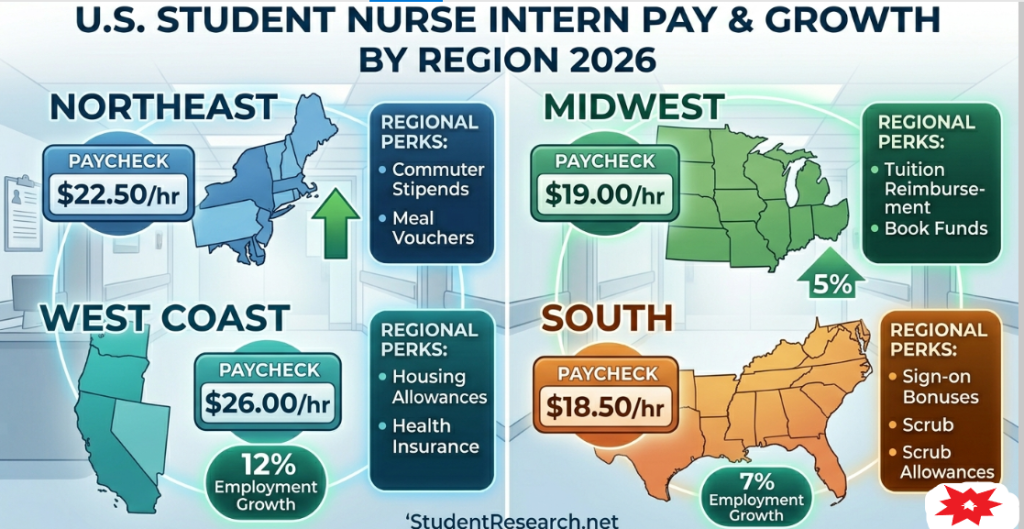
While the primary goal is experience, understanding the compensation for student nurse intern jobs is vital for your financial planning during school. Pay rates vary significantly across the country, often reflecting the cost of living and the specific responsibilities of the intern role. Reviewing current data helps you negotiate or choose offers that respect your growing expertise and help offset the rising costs of nursing education.
National Averages and Regional Variances
Current data suggests that intern pay is rising as hospitals compete to secure talent early in the nursing pipeline. These figures represent the median hourly rates across various sectors in 2026, including potential “perks” that add value to the base pay.
| Region | Average Hourly Rate | Benefits Included | Employment Growth |
| Northeast | $22.50 | Commuter stipends & meal vouchers | 8% Increase |
| Midwest | $19.00 | Tuition reimbursement & book funds | 5% Increase |
| West Coast | $26.00 | Housing allowances & health insurance | 12% Increase |
| South | $18.50 | Sign-on bonuses & scrub allowances | 7% Increase |
#3. Beyond the Hourly Wage
- Tuition Assistance: Some hospitals pay for your final semester in exchange for a one-year work commitment post-graduation.
- Shift Differentials: Earning extra hourly pay for working night shifts (typically +$3-5) or weekend rotations.
- Health Benefits: Some high-tier internships offer partial health or dental coverage for long-term student workers.
The Application Process: Standing Out in the Pool
The competition for high-quality student nurse intern jobs can be fierce, requiring a strategic approach to your application and personal branding. Your resume should highlight not just your clinical hours, but any student research projects you have participated in during your undergraduate studies. Tailoring your cover letter to the specific mission and values of the hospital can make the difference between a rejection and an interview.
Crafting a Competitive Resume
A nursing resume should be clean, professional, and focused on clinical competencies and soft skills. Highlighting your certifications and specific rotations shows that you are ready to hit the floor with a baseline of safety and competence.
- Clinical Rotations: List the specific units, total hours completed, and any unique procedures observed.
- Certifications: Clearly display BLS, ACLS, PALS, or any specialized CNA/PCT certifications.
- Academic Achievements: Mention honors, Dean’s List, and leadership roles in student nursing associations.
- Academic Inquiry: Explicitly mention any student research posters or presentations you have contributed to.
#4. Perfecting the Interview
- Behavioral Questions: Use the STAR method (Situation, Task, Action, Result) to explain how you handled conflict or stress.
- Peer Interviews: Be prepared to speak with current staff nurses who are looking for a teammate, not just a student.
- Shadowing Opportunities: Always ask if you can shadow a nurse on the unit for a few hours before accepting an offer.
Skills You Will Master in Student Nurse Intern Jobs
One of the greatest benefits of student nurse intern jobs is the hands-on mastery of skills that textbooks can only describe in two dimensions. From perfecting your IV starts to learning how to document accurately in an EHR system, the learning curve is steep but provides a massive advantage. These practical skills are what will eventually set you apart during your transition to a New Grad RN role, making you a more efficient and confident provider.
Technical and Soft Skill Development
Internships provide a safe environment to practice technical procedures while also honing your “soft” skills, such as patient empathy and family education. Balancing these two aspects is the hallmark of a truly great nurse who can manage a patient’s body and soul simultaneously.
- Clinical Skills: Advanced phlebotomy, complex wound care, and sterile catheterization techniques.
- Communication: Interacting with multidisciplinary teams including physicians, pharmacists, and social workers.
- Critical Thinking: Learning to recognize early “soft signs” of patient deterioration before a Code Blue occurs.
- Patient Advocacy: Learning how to speak up for a patient’s needs during multidisciplinary rounds.
#5. Mastering Documentation
- Electronic Health Records (EHR): Learning the nuances of systems like Epic or Cerner, focusing on efficiency and accuracy.
- Legal Compliance: Understanding how to chart defensively to meet hospital standards and HIPAA regulations.
- Narrative Notes: Developing the ability to write clear, concise summaries of a patient’s condition and response to care.
Integrating Student Research into Practical Care
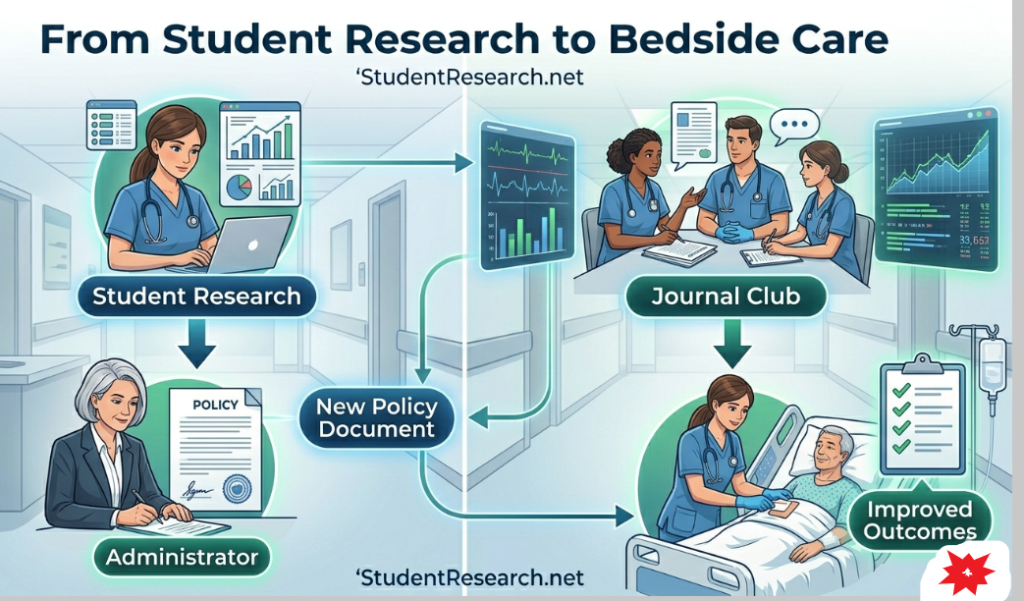
Modern nursing is deeply rooted in evidence-based practice (EBP), and student nurse intern jobs offer a front-row seat to how this is applied. Engaging in student research while on the floor allows you to understand the “why” behind hospital protocols, such as why we turn patients every two hours. By bridging the gap between academic student research and bedside care, you become a more informed and effective clinician who values science.
Applying Evidence-Based Practice (EBP)
Every dressing change or medication administration is governed by clinical guidelines derived from rigorous study and peer-reviewed data. Understanding this connection helps you provide the highest standard of care and justifies your actions to the wider healthcare team.
- Protocol Adherence: Following hospital-wide safety bundles for things like VAP (Ventilator-Associated Pneumonia) prevention.
- Outcome Tracking: Observing how specific interventions—like early ambulation—drastically improve patient recovery times.
- Journal Clubs: Participating in unit-based discussions where nurses review the latest student research and clinical studies.
#6. Contributing to Quality Improvement
- Audit Participation: Helping the unit track hand-hygiene compliance or fall-prevention strategies.
- Pilot Programs: Being part of a team testing new technologies, such as “smart” IV pumps or wearable monitors.
- Case Studies: Collaborating with mentors to document unique patient cases for internal educational use.
Is your capstone project or thesis looking polished? Ensure your hard work meets the highest standards with our PhD-level editorial team. StudentResearch.net offers meticulous quality assurance to refine your citations, logic, and professional tone. Aim for excellence today!
Overcoming Challenges and Avoiding Burnout
The emotional and physical toll of student nurse intern jobs can be surprising to those new to the high-stakes healthcare environment. Long shifts, high-stress situations, and the weight of patient responsibility require a robust self-care strategy from day one of your internship. Recognizing the signs of compassion fatigue and burnout early is essential for maintaining your passion for the profession throughout your entire career.
Strategies for Resilience
Building a support system of peers and mentors can provide a safety net when the job becomes overwhelming or emotionally draining. Remember that every seasoned nurse started exactly where you are now, navigating the same fears, exhaustion, and “imposter syndrome.”
- Time Management: Learning to prioritize tasks (e.g., pain meds vs. linen changes) without sacrificing patient safety.
- Mental Health: Utilizing hospital counseling resources, employee assistance programs, or peer-led debriefing sessions.
- Physical Health: Investing in high-quality compression socks, staying hydrated, and bringing nutrient-dense meals for long shifts.
- Social Support: Connecting with fellow interns who understand the unique pressure of balancing school and work.
#7. Setting Professional Boundaries
- Decompression: Finding a specific “post-shift” ritual, such as listening to a podcast or exercising, to leave work at the hospital.
- Self-Advocacy: Learning how to say no to extra shifts when you are reaching your limit or have a big exam coming up.
- Mentorship: Seeking out a “work mom” or “work dad”—a seasoned nurse who can offer perspective and encouragement.
Conclusion and Future Career Pathways
In conclusion, finding and excelling in student nurse intern jobs is a monumental step toward a rewarding and stable career in healthcare. This experience provides the foundation for your clinical judgment and professional identity, ensuring you are ready for the challenges of 2026 and beyond. As you move forward, remember that the goal is continuous growth and a commitment to excellence in every patient interaction you lead.
Final Takeaways for Your Nursing Journey
As you finalize your search, keep your focus on the long-term benefits of these early roles rather than just the immediate paycheck. The connections you make today will often lead to your first full-time job offer and professional recommendations that will last a lifetime.
- Networking: Maintain contact with your preceptors and managers through LinkedIn or professional emails.
- Reflective Practice: Keep a journal of your experiences to help you answer behavioral questions in future job interviews.
- Continuous Learning: Always stay curious about new treatments, technologies, and evolving patient care standards.
Final Meta Note: Discover top student nurse intern jobs with our expert 2026 guide. Compare roles, pay, and settings to kickstart your nursing career today!
#8. Your Path to Licensure
- NCLEX Prep: Use your real-world clinical experiences to help you visualize and answer complex exam questions.
- Career Advancement: Consider how your internship might lead to future leadership, specialized NP roles, or nurse educator positions.
- Professional Legacy: Remember that every intern today is the mentor of tomorrow; start building your professional reputation now.
Meta Description: Discover top student nurse intern jobs with our expert 2026 guide. Compare roles, pay, and settings to kickstart your nursing career today!
Ready to submit an assignment that stands out? Don’t let deadlines overwhelm your clinical practice. Visit StudentResearch.net now to secure expert writing support. Click here to start ordering your custom nursing papers and reclaim your precious study time!

