

Navigating the Clinical Assessment Landscape
Clinical evaluations are pivotal milestones that bridge the gap between classroom theory and bedside practice. These assessments provide a structured framework for mentors to measure a student’s technical proficiency, critical thinking, and professional conduct. Understanding these benchmarks allows you to align your performance with the high standards expected in modern healthcare environments.
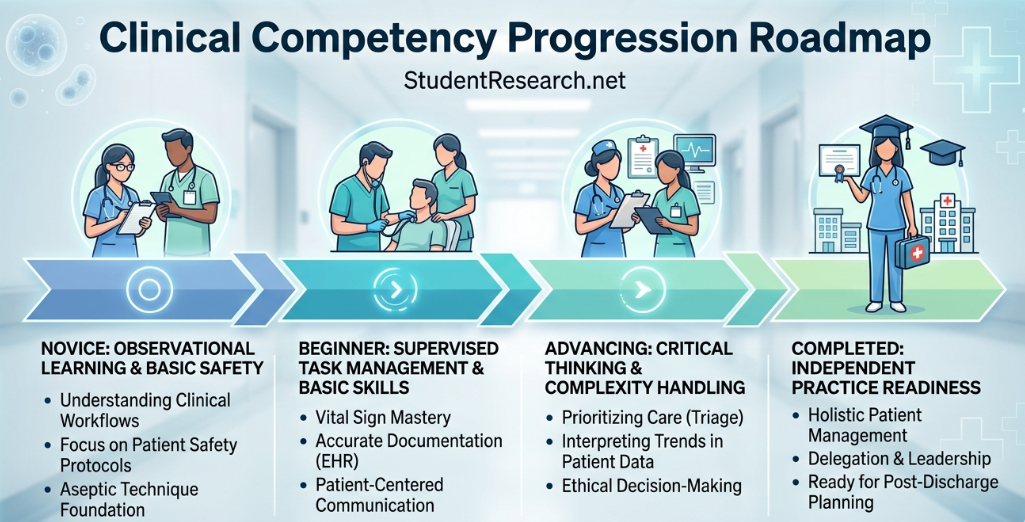
The Purpose of Performance Appraisals in Nursing
- Skill Validation: Confirming that a student can safely perform procedures like catheterization or wound care.
- Critical Thinking Assessment: Evaluating how well a student prioritizes patient needs during a shift.
- Professional Growth: Identifying specific areas for improvement to foster long-term career development.
Common Criteria for Clinical Grading
- Safety Protocols: Adherence to infection control and medication administration rights.
- Communication: Effectiveness in hand-off reports and patient interactions.
- Documentation: Accuracy and timeliness of charting in Electronic Health Records (EHR).
Struggling to articulate your clinical experiences? Let our expert writers transform your nursing reflections into high-scoring academic papers. At StudentResearch.net, we specialize in professional nursing content that meets rigorous clinical standards and helps you excel effortlessly.
Essential Student Nurse Evaluation Examples for Daily Practice
Consistency is the hallmark of a reliable healthcare professional, and your daily evaluations should reflect a steady upward trajectory in competence. By reviewing student nurse evaluation examples, you can anticipate the feedback you might receive and proactively address potential gaps in your care delivery. These examples serve as a mirror, reflecting both your current strengths and the skills that require further refinement.
Technical Skill Competency Scenarios
- #1: Aseptic Technique Mastery: Demonstrating flawless sterile field maintenance during a dressing change.
- #2: Medication Administration: Correctly calculating dosages and verifying patient identity for three different routes.
- #3: Vital Sign Interpretation: Not just recording numbers, but identifying a trend in rising blood pressure and reporting it immediately.
Vital Sign Scenarios
- Accuracy: Ensuring the cuff size is appropriate for the patient’s arm circumference.
- Reporting: Using the SBAR (Situation, Background, Assessment, Recommendation) method to notify the RN of abnormalities.
Communication and Interpersonal Excellence
Effective communication is the lifeblood of patient safety and a core component of any student nurse evaluation example. Mentors look for students who can navigate difficult conversations with empathy while maintaining professional boundaries. Your ability to collaborate with the interdisciplinary team is just as important as your ability to comfort a grieving family member.
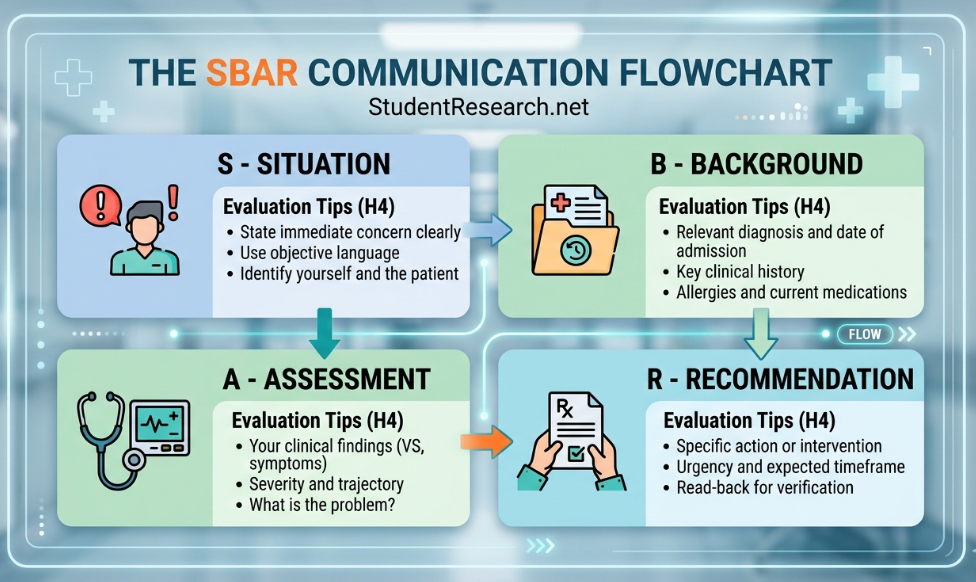
Patient-Centered Communication Strategies
- #4: Therapeutic Listening: Spending five minutes in active listening to alleviate a patient’s pre-operative anxiety.
- #5: Patient Education: Explaining post-discharge insulin management in a way the patient can teach back.
- #6: De-escalation Skills: Calmly managing a confused or agitated patient without compromising safety.
Team Collaboration Examples
- Handoff Reports: Delivering a concise and organized report at the change of shift.
- Conflict Resolution: Addressing a misunderstanding with a CNA or fellow student professionally.
Critical Thinking and Clinical Judgment
The transition from “following orders” to “anticipating needs” is a key indicator of a student’s readiness for independent practice. Instructors use specific student nurse evaluation examples to document a student’s ability to synthesize data and act decisively. Developing a keen eye for subtle changes in a patient’s condition is a skill honed through repeated exposure and self-reflection.
Prioritization and Time Management Benchmarks
- #7: Triaging Care: Deciding which of four patients requires an assessment first based on acuity.
- #8: Emergency Response: Initiating the correct protocol when a patient suddenly experiences respiratory distress.
- #9: Resource Utilization: Knowing when to ask for help versus when to manage a task independently.
Clinical Decision-Making Tools
- Nursing Process Application: Consistently using Assessment, Diagnosis, Planning, Implementation, and Evaluation (ADPIE).
- Evidence-Based Practice: Referencing recent student research to justify a specific nursing intervention.
Professionalism and Ethical Conduct
Nursing is a profession built on trust, and your evaluation will heavily weigh your adherence to ethical standards and institutional policies. Demonstrating punctuality, a positive attitude, and a commitment to lifelong learning are non-negotiable traits for success. These student nurse evaluation examples often highlight the “soft skills” that differentiate a good nurse from a great one.
Accountability and Integrity in the Ward
- #10: Admitting Mistakes: Immediately reporting a “near miss” medication error to the clinical instructor.
- #11: Punctuality and Preparation: Arriving 15 minutes early with all necessary tools and having researched patient histories.
- #12: Cultural Sensitivity: Adapting care plans to respect a patient’s religious or cultural dietary restrictions.
Professional Image and Behavior
- Dress Code: Adhering to the university’s scrub and hygiene policies.
- Social Media Privacy: Strictly following HIPAA guidelines regarding patient information.
Specialized Clinical Rotation Evaluations
Different nursing specialties require unique skill sets, and your evaluations will vary significantly between a maternity ward and an intensive care unit. Using targeted student nurse evaluation examples for each rotation ensures you are meeting the niche requirements of that specific patient population. Tailoring your focus helps you get the most out of these diverse learning opportunities.
Mental Health and Community Nursing Goals
- #13: Boundary Setting: Maintaining professional distance with a patient experiencing a manic episode.
- #14: Community Assessment: Identifying environmental triggers for asthma during a home health visit.
- #15: Support Group Facilitation: Leading a brief discussion on coping mechanisms in a rehab setting.
Pediatric and Maternity Care Indicators
- #16: Pediatric Distraction: Using play-based techniques to distract a toddler during an immunization.
- #17: Newborn Assessment: Accurately performing a Head-to-Toe assessment on a two-hour-old infant.
- #18: Postpartum Teaching: Educating a new mother on the signs of postpartum hemorrhage.
Acute Care and Surgical Benchmarks
- Pre-op Checklist: Ensuring all legal and medical clearances are signed before transport.
- Post-op Monitoring: Checking surgical sites for drainage and assessing distal pulses.
Self-Evaluation and Reflective Practice
The most successful students are those who can critically analyze their own performance before the instructor even speaks. Incorporating student nurse evaluation examples into your self-reflection journals allows you to track your progress over the semester. This proactive approach shows your mentor that you are invested in your own education and capable of self-correction.
Tools for Effective Self-Assessment
- #19: Reflective Journaling: Writing weekly entries on what went well and what could be improved.
- #20: Seeking Feedback: Actively asking the primary nurse, “How could I have handled that situation better?”
- #21: Goal Setting: Creating three “SMART” goals for the following clinical week.
Utilizing Student Research for Growth
- Literature Reviews: Using student research to find the latest protocols for fall prevention.
- Peer Review: Exchanging feedback with classmates to gain a different perspective on clinical performance.
Preparing for the Final Summative Evaluation
As the semester draws to a close, your focus shifts toward the summative evaluation, which determines your final grade and readiness for the next level. This final set of student nurse evaluation examples focuses on the culmination of all skills learned throughout the course. It is your opportunity to prove that you can provide safe, holistic care to a full load of patients.
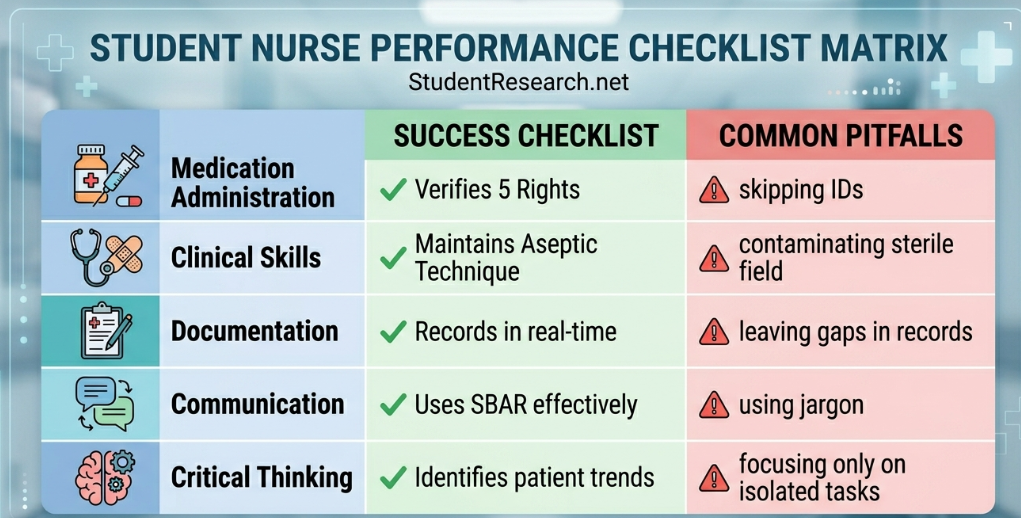
Final Competency Checklists
- #22: Holistic Care Integration: Managing the physical, emotional, and spiritual needs of a terminal patient.
- #23: Delegation Skills: Appropriately assigning tasks to unlicensed assistive personnel (UAP).
- #24: Complexity Management: Caring for a patient with multi-system organ failure and multiple infusions.
Moving Toward Independent Practice
- #25: Time Efficiency: Completing all assessments and medications for four patients by the midday mark.
- #26: Critical Alert Response: Recognizing the signs of sepsis and initiating the “Sepsis Bundle” immediately.
- #27: Discharge Planning: Coordinating with social workers to ensure a patient has oxygen at home.
- #28: Leadership Potential: Mentoring a junior student on their first day of clinical.
Final Review Strategies
- Mock Evaluations: Having a peer “grade” you using the official clinical rubric.
- Portfolio Building: Saving high-quality student research papers and positive evaluations for future job interviews.
Conclusion and Path Forward
Mastering the clinical environment is a journey of continuous improvement, and these examples provide the clarity needed to succeed. By internalizing these benchmarks, you transform from a learner into a practitioner ready for the demands of the healthcare industry. These student nurse evaluation examples help learners master clinical skills and improve patient care outcomes through structured, expert feedback.
Take advantage of every opportunity to learn, whether through direct patient care or reviewing the latest student research. Your dedication today will define the quality of care you provide tomorrow. Stay curious, stay compassionate, and keep striving for excellence.

