

Introduction: Finding Spiritual Support in Nursing Education
Every nursing student knows the weight of responsibility that comes with preparing for a career in healthcare. Between rigorous coursework, demanding clinical rotations, and the emotional toll of caring for suffering patients, the journey through nursing school can feel overwhelming. During these challenging moments, many students search for sources of inspiration and strength beyond textbooks and study groups. For centuries, Catholic nursing students have turned to the patron saint of nursing students for spiritual support and guidance through their educational journey.
The Catholic tradition of patron saints offers believers specific intercessors who understand particular professions, situations, or struggles. These saints, through their earthly lives and heavenly advocacy, provide both inspiration and spiritual companionship to those who invoke them. St. Catherine of Siena, a 14th-century mystic and caregiver, holds the special designation as patron saint of nursing and nursing students. Her remarkable life of service to the sick and suffering continues to resonate with modern healthcare students who face similar challenges in their calling to care for others.
This article explores the life and legacy of St. Catherine of Siena, examining why she became the patron saint of nursing students and how her example remains profoundly relevant today. Student research has shown that those who connect with spiritual traditions often find additional resilience and purpose during difficult academic periods. Whether you’re seeking prayer support before a challenging exam, looking for inspiration during a tough clinical rotation, or simply wanting to understand the rich spiritual heritage of the nursing profession, learning about your patron saint offers valuable perspective. Student research consistently demonstrates that finding meaning and connection beyond the purely academic aspects of nursing education contributes to both personal wellbeing and professional development. Through exploring St. Catherine’s story, nursing students can discover a powerful source of encouragement and a timeless model of compassionate care.
Who Was St. Catherine of Siena?
Early Life and Background
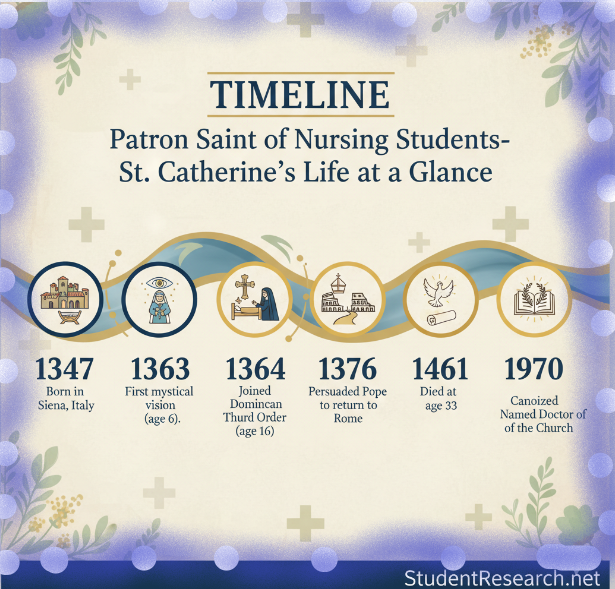
- Born Caterina di Giacomo di Benincasa on March 25, 1347, in Siena, Italy, as the 24th of 25 children in her family
- Experienced her first mystical vision at age six, seeing Christ surrounded by saints above the Church of San Domenico
- Despite family pressure to marry, she took a private vow of virginity at age seven and committed herself to religious life
- Faced significant opposition from her family who wanted her to follow traditional expectations for young women of her time
- Demonstrated remarkable spiritual maturity and determination from childhood, refusing to compromise her calling despite hardship
Her Calling to Nursing and Service
- Joined the Third Order of St. Dominic (the Mantellate) at age sixteen, dedicating herself to prayer and service
- Devoted much of her time to caring for the sick in hospitals and homes throughout Siena, particularly those suffering from leprosy and plague
- Tended to patients whom others refused to touch due to fear of contagion or revulsion at their conditions
- During the devastating plague epidemic of 1374, she worked tirelessly among the dying, providing both physical care and spiritual comfort
- Her nursing work was characterized by extraordinary compassion, personal sacrifice, and a belief in the dignity of every suffering person
Beyond Nursing: Her Broader Legacy
- Became a influential spiritual advisor, mystic, and author, penning “The Dialogue,” a major work of medieval theology
- Played a significant political role in Church affairs, famously persuading Pope Gregory XI to return to Rome from Avignon
- Was declared a Doctor of the Church in 1970, recognizing her theological contributions alongside her charitable works
- Died on April 29, 1380, at age 33 after years of intense service and mystical experiences
- Canonized in 1461 and later named co-patron saint of Italy alongside St. Francis of Assisi
Struggling with nursing research papers or complex assignments? StudentResearch.net connects you with expert academic writers who understand healthcare education. Get professional writing assistance for essays, case studies, and research projects. Focus on clinical skills while we support your academic success.
Why St. Catherine Is the Patron Saint of Nursing Students
Her Hands-On Care of the Sick
- St. Catherine didn’t simply pray for the sick from a distance; she provided direct, physical nursing care to those suffering from the most feared diseases of her era
- She personally bathed, fed, and dressed the wounds of patients with leprosy, plague, and cancer, diseases that caused most people to flee in terror
- One particularly powerful example involves her care of a woman named Andrea, who had breast cancer with suppurating wounds that produced such a terrible odor that other caregivers abandoned her
- St. Catherine not only stayed with Andrea but reportedly drank the pus from her wounds to overcome her own natural revulsion and demonstrate complete charity
- Her nursing extended to the prisoners, the poor, and anyone society had marginalized or abandoned, reflecting the inclusive nature of professional nursing today
The Virtues She Embodied
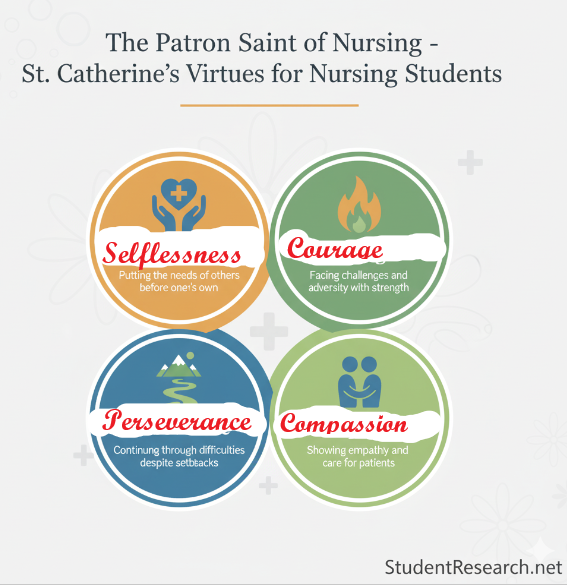
Selflessness and Sacrifice
- She gave away her own food, clothing, and resources to those in need, often going without herself
- Placed the needs of her patients above her own comfort, safety, and health without hesitation
Courage in the Face of Disease and Death
- Continued caring for plague victims even as the disease killed thousands around her, demonstrating extraordinary bravery
- Faced her own fear and transformed it into compassionate action, a quality every nursing student must develop
Perseverance Through Difficult Circumstances
- Maintained her commitment to nursing despite exhaustion, illness, and lack of resources
- Never abandoned her patients, even when their conditions seemed hopeless or their behavior was difficult
Compassion Without Judgment
- Treated every patient with dignity regardless of their social status, disease, or behavior
- Saw Christ in the suffering of each person she served, a perspective that elevated her caregiving to a spiritual practice
Recognition by the Church
- The Catholic Church formally recognizes St. Catherine as a patron saint of nursing and nurses, acknowledging her life of medical service
- She shares this patronage with other saints like St. Camillus de Lellis and St. John of God, but her specific designation for nursing students reflects her embodiment of the learning and growth inherent in the nursing journey
- Her feast day, April 29, is celebrated annually by nursing students and professionals worldwide as a day to honor the nursing vocation
- Many nursing schools, particularly Catholic institutions, hold special Masses or ceremonies on her feast day to invoke her intercession for students
Relevance to Modern Nursing Education
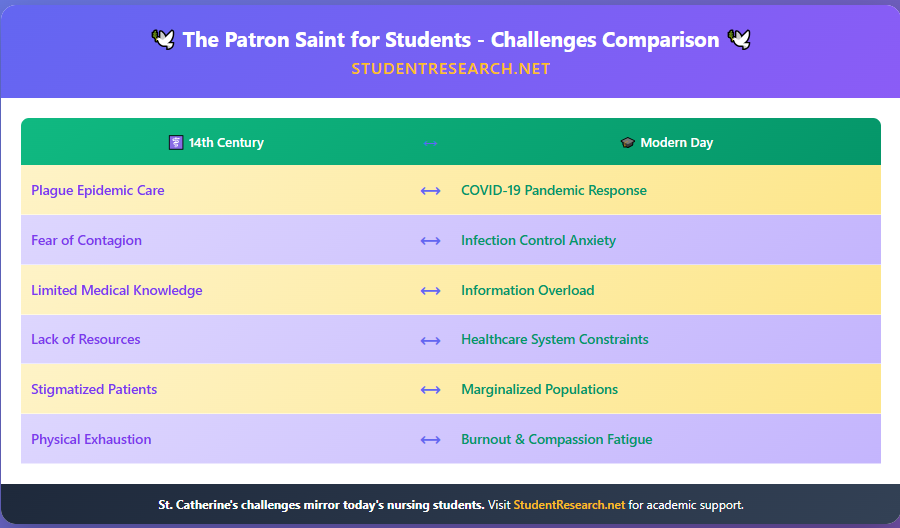
- The challenges St. Catherine faced—fear of contagion, compassion fatigue, difficult patients, limited resources—remain remarkably similar to what nursing students encounter today
- Her integration of physical care with attention to patients’ emotional and spiritual needs reflects modern holistic nursing philosophy
- Her commitment to serving vulnerable and marginalized populations mirrors contemporary nursing ethics and social justice emphases
- Student nurses today can look to her example when facing their own moments of doubt, fear, or exhaustion during clinical experiences
Need trustworthy academic assistance for your nursing program? StudentResearch.net provides plagiarism-free, custom-written papers backed by quality guarantees. Our experienced writers specialize in nursing topics, from pathophysiology to patient care plans. Achieve better grades with professional support you can trust
How Nursing Students Can Connect with Their Patron Saint
Prayer and Spiritual Practices
The Prayer to St. Catherine of Siena
- Many nursing students recite specific prayers asking for St. Catherine’s intercession during their studies and clinical work
- A common prayer asks for her courage, compassion, and perseverance to be granted to those following in her footsteps
- Students might pray: “St. Catherine of Siena, patron of nursing students, guide me as I learn to care for the sick. Grant me your courage to face difficult situations, your compassion to see Christ in every patient, and your perseverance to complete this challenging journey. Amen.”
Incorporating Prayer into Study Routines
- Beginning study sessions with a brief prayer to St. Catherine can help students feel spiritually grounded and focused
- Some students keep a small prayer card with her image at their study space as a reminder of their higher calling
Prayers Before Clinical Rotations or Exams
- Invoking St. Catherine’s intercession before entering the clinical setting can provide comfort and confidence
- Many students report that praying before major exams helps calm anxiety and reminds them why they chose nursing
Celebrating Her Feast Day
- April 29 offers nursing students a special opportunity to honor their patron saint through various meaningful activities
- Students might attend Mass on this day, specifically offering their intentions for success in their nursing program and growth in compassionate care
- Organizing a group reflection or prayer service with fellow nursing students creates community and shared spiritual support
- Some students use this day for personal reflection on their progress, challenges, and commitment to the nursing profession
- Schools with Catholic affiliations often host special events, blessing ceremonies, or pinning previews on or near St. Catherine’s feast day
Wearing Medals and Symbols
- St. Catherine medals are popular among nursing students as tangible reminders of their patron saint’s presence and protection
- Many students wear these medals on chains, attach them to stethoscopes, or keep them in uniform pockets during clinical rotations
- The practice of wearing religious medals in healthcare has a long tradition and can serve as a conversation starter about faith and values
- Some students receive St. Catherine medals as gifts at the beginning of nursing school or before graduation, making them meaningful keepsakes
- Beyond medals, students might keep holy cards, small statues, or images of St. Catherine in their study areas or lockers
Emulating Her Virtues in Clinical Practice
Applying Her Compassion in Patient Care
- When encountering difficult or unpleasant patient situations, students can ask themselves, “How would St. Catherine respond?”
- Remembering her example of seeing Christ in every patient can help students treat even challenging individuals with dignity
Finding Courage During Challenging Rotations
- Drawing on St. Catherine’s bravery when facing frightening or unfamiliar clinical experiences provides spiritual strength
- Her willingness to care for plague victims can inspire students working with infectious diseases or in intimidating settings like ICUs
Maintaining Dedication Through Difficult Coursework
- When tempted to give up during particularly hard semesters, students can remember St. Catherine’s perseverance and ask for her help
- Her life demonstrates that great achievement requires sacrifice, a message nursing students need during long study sessions and exhausting clinical days
Serving Vulnerable Populations as She Did
- Following St. Catherine’s example by seeking clinical experiences or volunteer opportunities with underserved communities
- Approaching patients who are homeless, addicted, mentally ill, or otherwise marginalized with the same dignity she showed her patients
Creating Support Communities
- Forming prayer groups with nursing school classmates provides both spiritual and emotional support throughout the program
- These groups can meet regularly to pray together, share struggles, and seek St. Catherine’s intercession for specific needs
- Building a supportive community of faith-based nursing students helps combat the isolation and stress many experience during their education
- Some students create online groups or social media communities to share prayers, inspirational quotes from St. Catherine, and encouragement
Balancing clinical rotations, exams, and assignments? StudentResearch.net offers reliable academic writing support for busy nursing students. Our healthcare-specialized writers deliver quality papers on time, helping you manage your demanding schedule. Reclaim your study time and reduce stress today.
Other Patron Saints for Nurses and Healthcare Workers
St. Camillus de Lellis
- St. Camillus de Lellis (1550-1614) is recognized as a patron saint of nurses, the sick, and hospitals
- After a conversion experience, he dedicated his life to caring for the sick and founded the Order of Clerks Regular, Ministers to the Sick
- He revolutionized hospital care by introducing hygiene practices, fresh air, and nutritious diets for patients
- Nursing students might invoke St. Camillus particularly when learning about infection control and evidence-based practice
St. John of God
- St. John of God (1495-1550) is the patron saint of hospitals, nurses, and those suffering from heart disease
- He founded the Brothers Hospitallers, an order dedicated to caring for the sick and mentally ill
- Known for his innovative and compassionate approach to mental healthcare, treating psychiatric patients with dignity when others used chains and punishment
- His example is particularly relevant for nursing students entering psychiatric or mental health nursing specialties
St. Agatha
- St. Agatha is venerated as a patron saint of nurses, particularly those working in breast cancer care and women’s health
- According to tradition, she was tortured by having her breasts cut off during Roman persecution, leading to her association with breast diseases
- Many oncology nurses and nursing students specializing in women’s health find special meaning in her patronage
- Her feast day is February 5, and she is often depicted carrying her breasts on a plate in religious art
St. Raphael the Archangel
- St. Raphael, whose name means “God heals,” is the patron saint of healing, healthcare workers, and travelers
- Biblical accounts describe him healing Tobit’s blindness and protecting Tobias on his journey
- Unlike the human saints, St. Raphael offers angelic intercession for those in healthcare professions
- Many hospitals and healthcare facilities are named after St. Raphael, reflecting his long association with healing
How Multiple Patrons Support Different Aspects of Nursing
- Having multiple patron saints allows nursing students to seek intercession specific to their particular needs, specialties, or situations
- A student struggling with coursework might pray to St. Catherine for perseverance, while one facing a difficult psychiatric rotation might invoke St. John of God
- The variety of patron saints reflects the diverse nature of nursing itself, with different specialties, challenges, and patient populations
- Students need not choose just one patron but can develop relationships with multiple saints who inspire different aspects of their nursing practice
- This rich spiritual heritage reminds nursing students they are part of a centuries-old tradition of faith-based healthcare
Conclusion
St. Catherine of Siena’s life offers nursing students far more than historical interest; it provides a living example of what nursing at its best can be. Her courage in the face of terrifying diseases, her compassion for the most marginalized patients, and her perseverance through exhausting conditions mirror the daily challenges today’s nursing students face. By developing a relationship with the patron saint of nursing students, whether through prayer, studying her life, or consciously emulating her virtues, students connect with a tradition of caring that spans centuries. As you progress through your nursing education, remember that St. Catherine understands your struggles, celebrates your victories, and intercedes for your success. Consider taking a first step today: obtain a St. Catherine medal, learn her prayer, or simply pause to reflect on how her example can strengthen your own journey. In doing so, you join countless nursing students who have found inspiration, courage, and spiritual support through their patron saint, carrying forward her legacy of compassionate, courageous care into a new generation of healthcare.

