

Stepping into a clinical rotation for the first time feels like being a small boat in a vast, unpredictable ocean where every wave is a new patient need. Success in this demanding field isn’t just about memorizing pharmacology; it’s about a deep, honest self-assessment of your personal and professional capabilities. Understanding various nursing student strengths and weaknesses examples is the first step toward mastering the transition from a nervous learner to a confident healthcare provider.
The Importance of Self-Awareness in Nursing Education
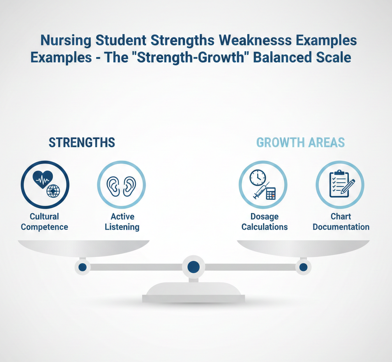
Self-awareness serves as the foundational bedrock for any successful career in the medical field. By identifying your internal assets and liabilities early, you can tailor your study habits and clinical focus to bridge the gap between “student” and “professional.” This section explores why recognizing nursing student strengths and weaknesses examples is a vital exercise for academic and career longevity.
Building Professional Resilience
- Aiding Emotional Regulation: Identifying your personal triggers helps you maintain a professional “poker face” during emergency codes or difficult patient interactions.
- Preventing Burnout: Recognizing the early signs of compassion fatigue allows you to implement self-care strategies before emotional exhaustion sets in.
- Long-term Career Planning: Understanding whether you thrive in chaos or prefer structured environments helps you choose the right specialty, such as ICU versus outpatient care.
Enhancing Patient Safety Through Honesty
- Error Prevention: When you acknowledge a weakness in a specific skill, such as hanging a complex IV piggyback, you naturally seek a second pair of eyes to ensure safety.
- Better Team Dynamics: Being transparent about your learning curve fosters trust with your preceptor, who can then provide targeted support rather than general oversight.
- Ethical Integrity: True professional ethics involve the humility to admit when a task is outside your current scope of competence, thereby protecting the patient from harm.
25+ Common Strengths for Nursing Students
Every student brings a unique set of “soft” and “hard” skills to the hospital floor that can significantly improve patient outcomes. These nursing student strengths and weaknesses examples highlight the positive traits that mentors look for during evaluations. Leveraging these strengths allows you to provide high-quality care while maintaining your own mental well-being.
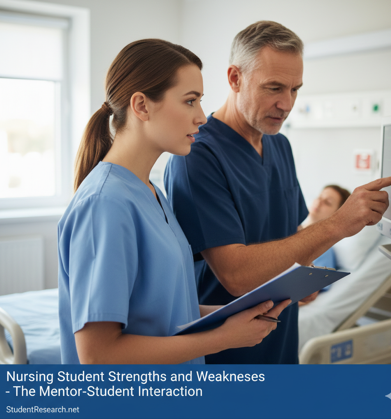
Interpersonal and Soft Skill Strengths
- 1. Active Listening: This involves giving the patient your undivided attention and reflecting back their concerns to ensure they feel heard and understood.
- 2. Cultural Competence: The ability to provide care that respects the diverse values, beliefs, and behaviors of different patient populations.
- 3. High Emotional Intelligence: Recognizing your own emotions and the emotions of others to navigate complex social situations at the bedside.
- 4. Adaptability: Staying flexible when a patient’s condition changes or when the unit becomes unexpectedly understaffed.
- 5. Conflict Resolution: Using de-escalation techniques to handle tense moments with family members who may be acting out of fear or grief.
Why Emotional Intelligence Matters
- Patient Trust: When patients feel an empathetic connection, they are more likely to share sensitive information that is crucial for an accurate diagnosis.
- Team Cohesion: Nurses with high EQ contribute to a positive work culture, which reduces the overall stress of the entire clinical team.
- Effective Advocacy: Understanding the emotional landscape of a situation allows you to advocate more persuasively for a patient’s needs during multidisciplinary rounds.
Technical and Academic Strengths
- 6. Strong Anatomy Knowledge: Having a firm grasp of the human body allows you to predict how certain diseases will progress and affect different systems.
- 7. Technological Literacy: In the modern age, mastering the electronic health record (EHR) and various bedside monitoring devices is a significant technical advantage.
- 8. Attention to Detail: Small details, like a slight change in skin color or a minor dip in urine output, are often the first signs of a serious complication.
- 9. Time Management: The ability to prioritize multiple patient needs so that all medications are delivered on time and all documentation is accurate.
- 10. Critical Thinking: Moving beyond simple task completion to understanding the “why” behind every intervention and laboratory result.
Ready to see your GPA soar? Stop settling for average results. At StudentResearch.net, our primary goal is to craft high-quality academic work that earns you the top marks you deserve. Let our professional writers help you elevate your grade profile today!
Additional Key Strengths (11-25)
- 11. Physical Stamina: The endurance to remain focused and active throughout a grueling 12-hour shift without compromising care quality.
- 12. Multitasking: Efficiently managing several responsibilities simultaneously while maintaining a high level of safety and accuracy.
- 13. Patience: Maintaining a calm and supportive demeanor even when dealing with repetitive questions or challenging patient behaviors.
- 14. Effective Communication: Delivering clear, concise, and structured reports using the SBAR (Situation, Background, Assessment, Recommendation) format.
- 15. Resilience: The capacity to recover quickly from a difficult clinical experience or a less-than-perfect performance evaluation.
- 16. Leadership Potential: Taking the initiative to mentor junior peers or lead small group projects within the clinical cohort.
- 17. Ethical Judgment: Consistently making decisions that align with the Nursing Code of Ethics and prioritize the patient’s best interests.
- 18. Resourcefulness: Finding creative solutions to problems when supplies are limited or when the standard workflow is disrupted.
- 19. Advocacy: Boldly speaking up for the patient’s rights, especially when they are unable to speak for themselves due to illness.
- 20. Curiosity: A constant drive to ask questions and seek out new learning opportunities that go beyond the standard curriculum.
- 21. Precision: Demonstrating excellence in fine motor tasks, such as starting peripheral IV lines or performing sterile wound dressings.
- 22. Organization: Keeping a clean and systematic workspace, which reduces the cognitive load and minimizes the chance of errors.
- 23. Stress Tolerance: Remaining functional and clear-headed during high-pressure situations, such as a respiratory arrest or a rapid response call.
- 24. Collaborative Spirit: Actively seeking input from all members of the healthcare team, including therapists, aides, and physicians.
- 25. Empathy: The ability to genuinely share in the feelings of another, which provides profound emotional support to those in distress.
25+ Common Weaknesses and How to Overcome Them
No student is perfect, and identifying “growth areas” is actually a sign of professional maturity. When discussing nursing student strengths and weaknesses examples, it is crucial to view weaknesses as skills that haven’t been fully developed yet. Acknowledging these hurdles is the first step toward mastering the complexities of the nursing profession.
Common Clinical Struggles
- 26. Over-sensitivity to Criticism: Taking feedback personally rather than seeing it as a necessary tool for professional improvement and patient safety.
- 27. Difficulty with Prioritization: Struggling to decide which task is the most urgent when several patients require attention at the same time.
- 28. Perfectionism: An unrealistic desire to perform every task flawlessly, which can lead to high anxiety and “analysis paralysis.”
- 29. Lack of Confidence: Feeling hesitant to perform skills in front of an instructor, even after successful practice in the simulation lab.
- 30. Communication Gaps: Difficulty translating clinical findings into a concise and professional summary for a busy attending physician.
Mastering Prioritization
- The ABC Method: Training yourself to always address Airway, Breathing, and Circulation issues before moving to secondary needs like pain management.
- Brain Sheets: Creating a customized paper template to track tasks, vitals, and medications so that nothing is forgotten during a busy shift.
- Delegation Skills: Learning how to safely delegate tasks like vital signs or hygiene to unlicensed assistive personnel (UAP) to free up time for assessments.
Personal and Professional Growth Areas
- 31. Procrastination in Charting: Leaving all documentation until the end of the shift, which increases the risk of forgetting important clinical details.
- 32. Difficulty Saying “No”: Agreeing to help everyone else with their tasks while your own assigned patients’ needs are being neglected.
- 33. Impatience with Slow Learners: Feeling frustrated when colleagues do not grasp concepts as quickly as you do, which can harm team morale.
- 34. Boundary Issues: Becoming too emotionally involved in the personal lives of patients, making it difficult to maintain professional objectivity.
- 35. Fear of Failure: Avoiding the chance to try new or difficult procedures because of the possibility of not succeeding on the first attempt.
Additional Growth Areas (36-50)
- 36. Public Speaking Anxiety: Feeling overwhelmed when required to present a patient case during multidisciplinary rounds or clinical post-conference.
- 37. Tech Aversion: Feeling intimidated by new medical software updates or complex machinery like ventilators and continuous renal replacement therapy.
- 38. Difficulty Delegating: Feeling that “if I want it done right, I have to do it myself,” which leads to unnecessary burnout.
- 39. Math Anxiety: Doubting your own accuracy when performing medication dosage calculations, even for simple oral medications.
- 40. Limited Experience: A general lack of “muscle memory” for procedures like catheterization or nasogastric tube insertion due to being new to the field.
- 41. Defensive Attitude: Responding with excuses when a mistake is pointed out, rather than taking accountability and learning from the event.
- 42. Poor Sleep Hygiene: Sacrificing sleep for study time, which leads to decreased cognitive function and a higher risk of clinical errors.
- 43. Information Overload: Feeling completely overwhelmed by the volume of new information presented during a single 12-hour shift.
- 44. Poor Non-Verbal Cues: Failing to notice a patient’s body language, such as wincing or guarding, which may contradict their verbal reports of no pain.
- 45. Rigidity: Struggling to adjust when the pre-planned daily schedule is interrupted by an emergency or a sudden change in patient status.
- 46. Over-analyzing: Spending excessive time questioning a decision you already made, which prevents you from moving forward with current care.
- 47. Neglecting Self-Care: Ignoring your own physical and mental health needs, which ultimately makes you a less effective caregiver for others.
- 48. Hesitation in Emergencies: Feeling “frozen” for a few vital seconds when a patient’s condition deteriorates rapidly, requiring immediate intervention.
- 49. Conflict Avoidance: Staying silent when a colleague performs an unsafe action because you are afraid of creating a confrontation.
- 50. Knowledge Gaps: Having specific academic areas, like acid-base balance or EKG interpretation, that require significant additional study and review.
Comparing Strengths and Weaknesses in Action
To truly understand how these traits play out, we can look at how a strength in one area might be balanced by a weakness in another. This comparison helps in creating a balanced professional profile during your nursing school journey. Here is a look at how different nursing student strengths and weaknesses examples contrast in a clinical setting.
| The Strength Profile | The Weakness Profile |
| High Technical Proficiency: Excels at starting IVs and mastering medical equipment. | Low Interpersonal Focus: May neglect the patient’s emotional state while focusing on the “machine.” |
| Exceptional Empathy: Provides profound comfort and build’s deep patient trust. | Poor Professional Boundaries: May struggle to detach emotionally after a shift, leading to fatigue. |
| Rapid Critical Thinking: Makes swift, safe decisions during high-stress medical emergencies. | Impatience with Protocol: May feel frustrated by the slow speed of administrative tasks or documentation. |
| Strong Organizational Skills: Keeps a perfectly clean cart and a strict schedule for all tasks. | Difficulty with Ambiguity: Struggles when a patient’s diagnosis is “atypical” and the plan of care changes. |
Practical Tools for Self-Assessment
To bridge the gap between theory and practice, students must utilize concrete tools to track their development. This section introduces a specialized toolkit for evaluating nursing student strengths and weaknesses examples in real-time. These resources ensure that you are consistently mastering the competencies required for the NCLEX and beyond.
The Clinical Performance Rubric
- Scoring System (1-5): This system allows you to rank yourself from “Novice” (requires constant cues) to “Exemplary” (performs at a professional level).
- Targeted Clinical Categories: You should evaluate yourself specifically in areas like Pharmacology Safety, Physical Assessment, and Documentation Integrity.
- Objective Benchmarking: Using a rubric removes the guesswork and gives you a clear, visual map of where you stand compared to graduation requirements.
The Self-Improvement Contract and Weekly Log
- Formalizing Growth: By writing down your weaknesses and signing a contract, you create a psychological commitment to improving those specific skills.
- Tracking Incremental Progress: A Weekly Log allows you to see small improvements that might be missed during the hectic pace of a semester.
- Professional Accountability: Sharing these documents with your clinical instructor shows that you are a self-directed learner who takes your education seriously.
Strategies for Mastering Your Skills
Once you have identified your personal list from these nursing student strengths and weaknesses examples, you need a plan for action. Continuous improvement is the hallmark of a great nurse, and it requires a proactive approach to learning. By applying these strategies, you can turn your weaknesses into formidable strengths over time.
Turning Weaknesses into Strengths
- Seek Targeted Mentorship: Identify a nurse on your unit who is an expert in your weak area and ask to shadow them specifically for that task.
- Utilize Simulation Labs: Most nursing schools offer “open lab” hours where you can practice technical skills in a low-stakes, non-patient environment.
- Active Feedback Loops: At the end of every shift, ask your preceptor, “What is one thing I did well today, and what is one thing I should do differently tomorrow?”
Using Reflection to Grow
- Post-Shift Journaling: Spending ten minutes writing about a difficult situation helps process the emotions and crystallize the clinical lessons learned.
- The “What-If” Game: When you have a stable patient, ask yourself “What if they started hemorrhaging right now?” to practice mental prioritization and readiness.
- Group Discussion: Talking with your clinical cohort about shared struggles can reduce feelings of isolation and provide new perspectives on overcoming hurdles.
Leveraging Your Strengths
- Peer Tutoring: If you have mastering a specific subject like pathophysiology, helping a struggling classmate will actually deepen your own understanding.
- Professional Specialization: If your strengths lie in rapid assessment and high-stress management, you should look toward a career in Emergency or Trauma nursing.
- Building Your Resume: Highlighting your specific strengths on your CV will help you stand out to recruiters when you apply for your first “New Grad” residency program.
Conclusion and Final Thoughts
In conclusion, the journey to becoming a registered nurse is as much about personal growth as it is about clinical knowledge. Reviewing these nursing student strengths and weaknesses examples regularly will help you stay grounded and focused on your development. Remember that every expert nurse once started as a student who was unsure of their own abilities.
By identifying areas for improvement and celebrating your natural talents, you are well on your way to providing the best possible care for your future patients. Mastering your clinical skills takes time, but with honesty and dedication, success is inevitable.
Meta Description: Explore nursing student strengths and weaknesses examples to master your clinicals using 50+ tips to improve skills and boost confidence.
Feeling overwhelmed by your syllabus? From pathophysiology to medical law, StudentResearch.net makes complex subjects simple. With experts across 50+ challenging fields, we provide the clarity you need to succeed in nursing and beyond. Simplify your academic journey with our specialized assistance.

