

A nursing student preceptorship represents the final and most critical phase of your nursing education, bridging the gap between classroom theory and real-world clinical practice. This immersive experience pairs you with an experienced registered nurse who guides your transition from student to competent healthcare professional. Student research consistently shows that quality preceptorship experiences significantly impact new graduate confidence, competency levels, and long-term career satisfaction. Understanding the fundamentals of nursing student preceptorship will empower you to maximize this transformative learning opportunity.
What Is a Nursing Student Preceptorship Explained
Strategy #1: Understanding the preceptorship model and structure
A nursing student preceptorship is a structured clinical learning experience where you work one-on-one with an experienced nurse preceptor in a real healthcare setting. Key characteristics include:
- Individualized mentorship from a registered nurse with clinical expertise in your chosen specialty area
- Extended time commitment typically ranging from 120 to 240 hours over several weeks or months
- Progressive autonomy where you gradually assume more patient care responsibilities under supervision
- Real-world patient assignments that mirror the actual workload and complexity you’ll face as a licensed nurse
- Focused skill development in clinical judgment, time management, and professional communication
- Integration of theory into practice through hands-on application of nursing concepts learned in coursework
Why Is Nursing Student Preceptorship Important in Clinical Education
The significance of nursing student preceptorship extends far beyond fulfilling graduation requirements. Here are the compelling reasons why this experience is essential:
- Builds clinical confidence by allowing you to practice nursing skills repeatedly in a supportive environment
- Develops critical thinking through exposure to complex patient situations requiring rapid assessment and intervention
- Enhances professional socialization as you learn unit routines, interprofessional collaboration, and workplace culture
- Reduces transition shock by familiarizing you with the pace, demands, and realities of professional nursing practice
- Improves patient safety outcomes through supervised practice that prevents errors while building competence
- Increases job readiness with employers viewing preceptorship completion as evidence of clinical preparedness
- Provides networking opportunities that may lead to employment offers in your preceptorship facility
- Strengthens time management skills essential for juggling multiple patients with competing priorities
Difference Between Preceptorship and Traditional Clinical Rotations
| Aspect | Traditional Clinical Rotations | Nursing Student Preceptorship |
| Structure | Group-based with multiple students per instructor | One-on-one mentorship with dedicated preceptor |
| Duration | Shorter rotations (6-12 weeks) across multiple units | Extended placement (8-16 weeks) in single unit |
| Patient Load | Typically 1-2 patients with simplified assignments | Full patient assignment matching staff nurse ratios |
| Supervision | Clinical instructor oversees 8-10 students | Individual preceptor provides direct oversight |
| Learning Focus | Broad exposure to various nursing specialties | Deep immersion in specific practice area |
| Autonomy Level | Limited independence with frequent check-ins | Progressive independence approaching graduate nurse level |
| Scheduling | Usually day shifts during academic terms | Varies shifts including nights, weekends, and holidays |
| Evaluation | Instructor assessment based on periodic observations | Continuous feedback from preceptor on daily performance |
How to Prepare for Your Nursing Student Preceptorship: Essential Steps
Successful preceptorship experiences don’t happen by chance—they require thoughtful preparation and strategic planning. The weeks leading up to your placement offer a valuable opportunity to set yourself up for success. Taking time to complete administrative requirements, organize your resources, and clarify your learning goals will help you hit the ground running on day one.
Steps to Complete Pre-Preceptorship Requirements and Documentation
Strategy #2: Comprehensive preparation and documentation
Ensure you’ve completed all necessary paperwork and clearances before your first day:
- Health documentation including immunization records, TB tests, physical examinations, and COVID-19 vaccination proof
- Background checks such as criminal record screenings and child abuse clearances required by healthcare facilities
- Liability insurance verification through your nursing program or personal malpractice coverage
- HIPAA and compliance training with certificates of completion for patient privacy and safety modules
- CPR and BLS certification ensuring your credentials are current throughout the preceptorship period
- Facility-specific orientations completing any required online modules or in-person training sessions
- Emergency contact forms providing accurate information for communication during clinical hours
How to Set Clear Learning Objectives for Your Preceptorship
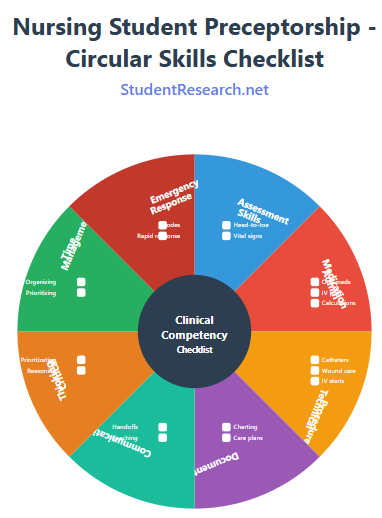
Establishing concrete goals transforms your preceptorship from passive observation into active skill acquisition:
- Review program competencies identifying specific skills you must demonstrate before graduation
- Assess your knowledge gaps honestly evaluating areas where you need additional practice or experience
- Discuss expectations with your preceptor aligning your personal goals with unit-specific learning opportunities
- Create SMART objectives ensuring goals are Specific, Measurable, Achievable, Relevant, and Time-bound
- Document your progress maintaining a learning log that tracks skill performance and confidence levels
- Adjust goals as needed remaining flexible as you discover new interests or encounter unexpected challenges
Examples of Clinical Competency Goals
- Master medication administration for 10+ patients including IV push medications and complex titrations
- Perform comprehensive assessments completing head-to-toe physical examinations within appropriate timeframes
- Demonstrate proficiency in technical skills such as catheter insertion, wound care, and IV starts
- Manage time effectively organizing care for multiple patients while meeting all documentation deadlines
- Respond to emergencies participating in rapid response or code situations with appropriate interventions
Types of Professional Development Targets
- Interprofessional communication collaborating effectively with physicians, pharmacists, and allied health professionals
- Critical thinking enhancement developing clinical reasoning skills for complex patient situations
- Leadership experience taking charge nurse responsibilities or coordinating care for the unit
- Evidence-based practice implementing current research findings into patient care protocols
- Cultural competence providing respectful, individualized care to diverse patient populations
Guide to Building Your Nursing Student Preceptorship Toolkit
Strategy #3: Assembling essential clinical tools and resources
Prepare a comprehensive toolkit with items that will support your daily clinical practice:
- Clinical reference materials including drug guides, lab value references, and disease pathophysiology handbooks
- Physical assessment equipment such as stethoscope, penlight, bandage scissors, and hemostats
- Documentation supplies with multiple pens, highlighters, and a small notebook for patient information
- Personal protective equipment keeping your own backup masks, gloves, and hand sanitizer readily available
- Comfortable, professional footwear investing in quality shoes that provide support during 12-hour shifts
- Healthy snacks and water bottle maintaining energy and hydration throughout demanding clinical days
- Mobile apps and resources downloading nursing calculators, drug references, and clinical decision support tools
Ways to Maximize Learning During Your Nursing Student Preceptorship
Your preceptorship represents a unique window of opportunity for accelerated professional growth. Making the most of every clinical day requires intentional effort, active engagement, and strategic learning approaches that go beyond simply completing assigned tasks.
How to Communicate Effectively with Your Nursing Preceptor
Strategy #4: Establishing open communication channels
Building a strong working relationship with your preceptor starts with clear, professional communication:
- Express your learning style preferences helping your preceptor understand how you learn best
- Ask for specific feedback requesting concrete examples rather than general comments about your performance
- Communicate honestly about comfort levels alerting your preceptor when you need additional support or supervision
- Share your goals and interests ensuring your preceptor knows which skills you most want to develop
- Practice active listening paying full attention during teaching moments without interrupting or becoming defensive
- Follow up on feedback demonstrating improvement in areas previously identified as needing development
How to Conduct Daily Check-ins and Feedback Sessions
- Begin each shift with a brief huddle discussing the patient assignment, anticipated challenges, and learning priorities
- Request mid-shift check-ins reviewing progress on tasks and addressing questions before they become problems
- End shifts with reflective debriefs analyzing what went well, what could improve, and key learning moments
- Prepare specific questions coming to discussions with thoughtful inquiries rather than vague requests for help
- Document feedback received keeping notes on suggestions to track patterns and measure improvement over time
Examples of the Right Clinical Questions to Ask
- “What are the most important assessments for this patient given their diagnosis?” focusing on priority-setting skills
- “Can you walk me through your clinical reasoning for this intervention?” learning critical thinking processes
- “What red flags should I watch for with this condition?” developing early recognition of complications
- “How would you handle this challenging patient interaction differently?” gaining communication strategies
- “What resources do you consult when facing unfamiliar situations?” building problem-solving independence
Ways to Develop Hands-On Clinical Skills During Preceptorship
Skill mastery requires deliberate practice and progressive challenge:
- Volunteer for procedures actively seeking opportunities to perform skills rather than waiting to be assigned
- Practice systematically repeating basic skills until they become automatic, then progressing to complex techniques
- Seek diverse experiences requesting exposure to different patient populations, conditions, and acuity levels
- Learn from mistakes viewing errors as learning opportunities rather than failures to hide
- Observe expert practitioners watching your preceptor and other experienced nurses perform advanced skills
- Teach back what you’ve learned explaining concepts and procedures to solidify your own understanding
How to Enhance Critical Thinking During Your Nursing Student Preceptorship
Strategy #5: Developing critical thinking through reflection
Transform routine tasks into deep learning experiences through intentional cognitive engagement:
- Question the “why” behind interventions understanding the rationale rather than just following protocols blindly
- Anticipate potential complications thinking proactively about what could go wrong and planning preventive measures
- Connect pathophysiology to symptoms linking textbook knowledge to real patient presentations
- Evaluate outcomes of your interventions assessing whether your nursing actions achieved the desired patient responses
- Compare similar patients analyzing how conditions present differently across diverse individuals
- Challenge your assumptions considering alternative explanations when patient responses seem unexpected
Benefits of Case Study Analysis for Learning
- Deepens understanding of disease processes by examining complex cases with multiple interacting conditions
- Develops pattern recognition skills helping you identify clinical presentations more quickly in future situations
- Enhances clinical reasoning by requiring you to justify assessment findings and intervention choices
- Improves documentation abilities as you learn to tell clear, concise patient stories
- Builds confidence in decision-making through safe practice with realistic scenarios
Types of Reflective Practice Methods for Nursing Students
- Daily journaling writing brief entries about significant learning moments, challenges, and insights gained
- Critical incident analysis examining specific events in depth to understand contributing factors and lessons learned
- Peer discussion groups sharing experiences with classmates to gain multiple perspectives on similar situations
- Guided reflection with preceptor using structured frameworks to analyze clinical reasoning and decision-making
- Portfolio development collecting evidence of competency achievement and professional growth throughout preceptorship
Need evidence-based content backed by credible sources? StudentResearch.net writers access proprietary databases and peer-reviewed academic journals—not just surface-level Google searches. Get deep-dive research that meets rigorous academic standards for your nursing papers and projects.
How to Navigate Common Nursing Student Preceptorship Challenges
Even the most well-prepared students encounter obstacles during their preceptorship journey. Recognizing potential challenges in advance allows you to develop proactive coping strategies. Understanding that difficulties are normal parts of professional development helps you maintain perspective and resilience when facing setbacks.
Ways to Overcome Performance Anxiety During Nursing Student Preceptorship
Strategy #6: Building resilience and confidence
Managing stress and anxiety is essential for optimal learning and patient safety:
- Practice self-compassion acknowledging that learning involves mistakes and nobody expects perfection from students
- Use positive self-talk replacing negative thoughts with realistic, encouraging internal dialogue
- Implement stress-reduction techniques such as deep breathing, mindfulness, or brief meditation before shifts
- Maintain work-life balance ensuring adequate sleep, nutrition, and time for relaxation outside clinical hours
- Celebrate small victories recognizing daily progress rather than focusing only on what remains to be learned
- Seek support when needed talking with instructors, counselors, or peers when anxiety becomes overwhelming
- Prepare thoroughly reviewing patient conditions and procedures in advance to reduce uncertainty-related stress
How to Manage Difficult Preceptor Relationships
Not every preceptor-student match is ideal, but you can take steps to improve challenging dynamics:
- Clarify expectations early discussing learning goals, communication preferences, and evaluation criteria upfront
- Address concerns promptly speaking directly with your preceptor about issues before they escalate
- Remain professional always maintaining courtesy and respect even when feeling frustrated or criticized
- Seek feedback from others consulting with your faculty advisor or program coordinator about relationship challenges
- Document interactions keeping factual records of conversations, feedback, and incidents in case formal intervention becomes necessary
- Focus on learning outcomes keeping your educational goals as the priority regardless of personality differences
Fixing Communication Breakdowns with Your Preceptor
- Request a private conversation addressing misunderstandings away from the busy clinical environment
- Use “I” statements expressing how situations affect you without blaming or accusing your preceptor
- Ask for specific examples requesting concrete instances when feedback seems vague or contradictory
- Propose solutions collaboratively working together to identify communication strategies that work for both parties
- Involve your instructor if needed utilizing faculty support when direct communication attempts prove unsuccessful
What to Do When Teaching Styles Conflict
- Adapt to your preceptor’s approach demonstrating flexibility while advocating for your learning needs
- Communicate your learning preferences explaining what helps you understand and retain information best
- Seek supplementary resources using textbooks, videos, or other materials to fill gaps in instruction
- Request alternative learning opportunities asking to shadow other nurses if your preceptor’s style isn’t working
- Document your learning keeping records of competencies achieved regardless of teaching method used
Ways to Balance Nursing Student Preceptorship with Academic Demands
Managing competing priorities requires excellent organizational skills and boundary-setting:
- Create a realistic schedule mapping out clinical days, study time, coursework deadlines, and personal commitments
- Communicate with instructors alerting faculty when workload becomes unmanageable before falling behind
- Prioritize ruthlessly focusing on high-impact activities and letting go of less essential commitments temporarily
- Use commute time efficiently listening to nursing podcasts or reviewing notes during travel to clinical sites
- Batch similar tasks grouping coursework, studying, and administrative tasks to maximize productivity
- Ask for help delegating household responsibilities or seeking academic support services when necessary
- Maintain boundaries protecting time for sleep and self-care even when feeling pressured to do more
Struggling with nursing assignments while juggling preceptorship demands? StudentResearch.net specializes in crafting academically rigorous work that earns top marks. Our expert writers understand nursing education requirements and deliver excellence every time. Elevate your grade profile today!
Guide to Professional Development During Nursing Student Preceptorship
Your preceptorship offers far more than clinical skill development—it’s a pivotal opportunity for professional networking and career advancement. The relationships you build and the impressions you create during this experience can significantly influence your employment prospects and long-term career trajectory. Approaching your preceptorship strategically allows you to lay the groundwork for a successful nursing career while simultaneously completing your educational requirements.
How to Build Lasting Professional Relationships During Preceptorship
Strategy #7: Strategic networking and relationship building
Cultivating meaningful professional connections extends your support network beyond graduation:
- Learn names and roles of everyone on the unit, demonstrating genuine interest in the interdisciplinary team
- Contribute positively to unit culture maintaining a helpful, enthusiastic attitude even during challenging shifts
- Express genuine appreciation thanking your preceptor and colleagues for their time, patience, and guidance
- Stay connected through LinkedIn adding professional contacts to maintain relationships after preceptorship ends
- Offer assistance proactively helping colleagues with tasks when your own patient care responsibilities are complete
- Participate in unit activities attending staff meetings, shared governance sessions, or social events when invited
- Follow up after completion sending thank-you notes and updates about your NCLEX success and job placement
Ways to Leverage Your Nursing Student Preceptorship for Employment
Transform your preceptorship into a strategic job search advantage:
- Treat every day as a job interview consistently demonstrating professionalism, competence, and cultural fit
- Express interest in employment letting unit leadership know you’d be excited to work there after graduation
- Learn the hiring process understanding application timelines, required credentials, and selection criteria for new graduates
- Build relationships with managers introducing yourself and making your career interests known to decision-makers
- Showcase your unique strengths highlighting specialized skills, certifications, or experiences that differentiate you
- Research organizational opportunities exploring new graduate residency programs or specialty rotations available
- Network beyond your unit connecting with nurses in other departments that might interest you professionally
How to Secure Strong References from Your Preceptor
- Perform consistently well demonstrating reliability, clinical competence, and professional behavior throughout your placement
- Ask permission thoughtfully requesting to use your preceptor as a reference after establishing a positive relationship
- Provide necessary information supplying your resume, reference forms, and contact details to make the process easy
- Keep them informed updating your preceptor about job applications, interviews, and employment outcomes
- Follow up with gratitude thanking them for their support and letting them know when their reference helped you succeed
Understanding Unit Culture: What to Look For
- Communication patterns observing how team members interact, resolve conflicts, and support one another
- Leadership style noticing whether management is approachable, supportive, and responsive to staff concerns
- Workload and staffing assessing whether patient ratios, resources, and support systems are adequate
- Professional development opportunities learning about continuing education, certification support, and advancement pathways
- Work-life balance gauging whether the schedule, expectations, and demands align with your personal needs
- Patient population and acuity confirming the clinical focus matches your interests and skill level
Benefits of Continuing Education Beyond Your Preceptorship
Commit to lifelong learning as a cornerstone of professional excellence:
- Maintains clinical competence keeping your knowledge and skills current with evolving evidence-based practices
- Expands career opportunities opening doors to specialized roles, leadership positions, and advanced practice
- Improves patient outcomes translating new knowledge directly into better care quality and safety
- Increases earning potential with many employers offering pay increases for additional certifications and degrees
- Builds professional confidence reinforcing your expertise and credibility among colleagues and patients
- Fulfills licensure requirements meeting continuing education mandates for license renewal in most states
How to Transition from Nursing Student Preceptorship to Professional Nurse
The final stretch of your nursing education brings both excitement and apprehension as you prepare to practice independently. Your preceptorship serves as the bridge between supervised learning and autonomous professional practice, making this transition period crucial for consolidating your knowledge and building lasting confidence. The strategies you employ during these final weeks will significantly influence your readiness for licensure and your success as a new graduate nurse. Approaching this transition thoughtfully ensures you enter professional practice with the competence, confidence, and resilience needed to thrive in your nursing career.
Ways to Consolidate Clinical Knowledge After Your Preceptorship
Strengthen your foundation as you prepare for independent practice:
- Review common patient conditions revisiting pathophysiology, assessment findings, and evidence-based interventions for frequent diagnoses
- Practice calculations regularly maintaining proficiency in medication dosing, IV drip rates, and intake/output measurements
- Create reference materials developing quick-reference cards or digital resources for information you’ll need frequently
- Join study groups collaborating with peers to review complex concepts and share learning strategies
- Seek additional clinical experiences volunteering for extra shifts or observational opportunities in specialized areas
- Reflect on challenging cases analyzing difficult situations to extract lessons learned and identify areas for continued growth
How to Use Your Nursing Student Preceptorship to Prepare for NCLEX
Strategy #8: Connecting preceptorship to licensure success
Your clinical experiences provide invaluable preparation for the licensing examination:
- Connect clinical cases to NCLEX questions relating real patients to test item formats and question styles
- Apply the nursing process systematically using assessment, diagnosis, planning, implementation, and evaluation in every patient encounter
- Practice prioritization daily making triage decisions that mirror NCLEX priority-setting questions
- Understand medication classifications learning drug categories, actions, and nursing considerations through hands-on administration
- Review delegation principles observing and practicing appropriate task assignment to unlicensed assistive personnel
- Study lab values in context interpreting actual patient results rather than memorizing isolated normal ranges
Ways to Apply Preceptorship Experiences to NCLEX Preparation
- Create case studies from real patients writing practice scenarios based on your clinical encounters for study group review
- Link interventions to rationales always identifying the “why” behind nursing actions to improve critical thinking
- Practice teaching patients developing explanations that demonstrate your understanding of conditions and treatments
- Analyze near-misses and errors learning from mistakes to avoid similar NCLEX distractors designed to catch common pitfalls
- Identify NCLEX-style priority questions recognizing when patient situations mirror “what should the nurse do first” test items
Steps to Build Confidence for Independent Nursing Practice
- Gradually increase autonomy taking on more independent decision-making as your preceptorship progresses
- Develop a pre-shift routine establishing systematic approaches to patient assignment review and care planning
- Practice emergency responses participating in mock codes or simulation scenarios to build crisis management skills
- Seek feedback on readiness asking your preceptor and instructor to assess your preparedness for independent practice
- Address knowledge gaps proactively identifying and studying areas where you feel least confident before graduation
- Visualize success mentally rehearsing yourself functioning competently as a licensed nurse
What to Expect in Your First 90 Days as a New Graduate Nurse
Realistic expectations help you navigate the initial challenges of professional practice:
- Steep learning curve with each shift bringing new situations, procedures, and learning opportunities
- Feelings of overwhelm as you adjust to full patient loads without direct preceptor oversight
- Continued reliance on experienced nurses needing frequent guidance and support from colleagues
- Gradual confidence building becoming more comfortable with each successful patient interaction and shift completion
- Physical and emotional exhaustion adjusting to the demands of 12-hour shifts and the weight of patient care responsibility
- Imposter syndrome episodes questioning your competence despite having earned your license
- Team integration finding your place within the unit culture and building trusting relationships with coworkers
- Skill refinement continuing to improve technical abilities and time management strategies
Conclusion: Benefits of Embracing Your Nursing Student Preceptorship Journey
Your nursing student preceptorship represents a transformative experience that shapes your professional identity and clinical capabilities. Master nursing student preceptorship with 8 powerful strategies. Learn how to prepare, communicate effectively, and transition to practice in 2026. By approaching this opportunity with intentionality, openness to learning, and resilience in facing challenges, you position yourself for success both on the NCLEX examination and throughout your nursing career.
The relationships you build, skills you develop, and confidence you gain during preceptorship become the foundation for a fulfilling, impactful career in nursing. Embrace every moment of this journey—the triumphs and struggles alike—knowing that each experience contributes to your growth as a compassionate, competent healthcare professional ready to make a meaningful difference in patients’ lives.
Overwhelmed by pathophysiology, pharmacology, or advanced clinical concepts? StudentResearch.net employs experts across 50+ challenging fields who simplify complex nursing subjects into clear, comprehensive academic work. From medical-surgical nursing to psychiatric care—we’ve got you covered!

