

Few experiences are as crushing as receiving that letter—the one telling you your dream of becoming a nurse has been put on hold due to dismissal. If you’re feeling a wave of disappointment, you’re not alone. Many passionate and capable students face setbacks in nursing school due to common issues like academic struggles, clinical performance deficiencies, or professional conduct violations.
Here’s the reassurance you need: dismissal is not the end of your nursing career. It’s simply a detour. Your commitment to patient care remains valuable, and the good news is that there are many nursing schools that accept dismissed students.
This guide is your roadmap to a fresh start. We’ll cover everything from understanding readmission policies to identifying alternative schools and developing a strong application strategy. It’s time to turn that setback into your comeback story.
Understanding Nursing Program Dismissals and Readmission Policies
Why are Students Dismissed from Nursing Programs?
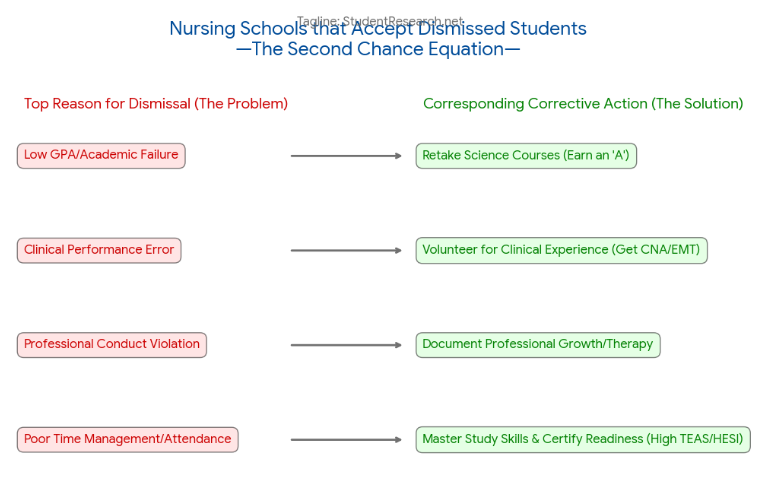
Dismissal often stems from failing to meet the rigorous standards necessary for safe patient care. Key reasons include:
- Academic Performance Issues: This is the most frequent cause, covering failing grades or inability to maintain the required low GPA in nursing or science coursework.
- Clinical Performance Deficiencies: Errors in practice, poor clinical judgment, or failure to master specific skill milestones are critical deficiencies.
- Professional Conduct Violations: Serious offenses like academic dishonesty (cheating), plagiarism, HIPAA violations, or disrespect towards faculty are taken very seriously.
- Attendance and Punctuality Problems: Consistent unreliability in attending classes or clinical sites often leads to dismissal.
- Drug Screening Failures: Failing a required drug test is an immediate cause for dismissal.
- Background Check Issues: Problems uncovered during the required background check process can also result in dismissal.
- Addressing the specific root cause of your dismissal is the first step toward a successful reapplication.
How Do Readmission Policies Work at Different Institutions?
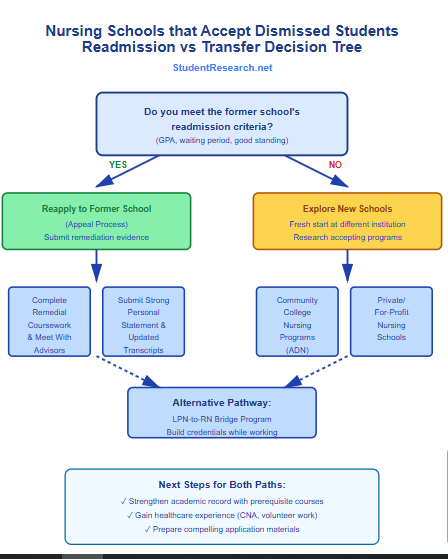
When planning your return, you must first differentiate between seeking readmission to your former school versus transferring to new schools.
Key Aspects of Readmission Policies:
- Waiting Periods: Most institutions mandate a typical waiting period, often one to two years, before you are eligible to reapply.
- GPA Requirements: Candidates often face strict GPA requirements for readmission, which may be higher than those for initial applicants.
- Remediation: Schools frequently require the completion of specific remediation courses or additional prerequisites before considering your return.
- Opportunities: Be aware of policies regarding one-time vs. multiple readmission opportunities.
- Appeals: Research the success rates and procedures for the official appeals processes if you decide to contest the initial dismissal decision.
What Schools Look for in Previously Dismissed Students
Admissions committees want evidence of positive change, not excuses. They look for:
- Addressing Previous Issues: Clear evidence that you have taken steps to fix the specific problems that led to your dismissal.
- Academic Improvement: Retaking failed courses and completing additional prerequisite courses with high marks to show preparedness.
- Professional Growth: Demonstrable maturity and personal growth since the dismissal.
- Strong Personal Statement: A compelling essay that honestly explains the circumstances, demonstrates accountability, and focuses on future resilience.
- Letters of Recommendation: References that specifically highlight your recent positive changes and commitment.
- Healthcare Experience: Gaining recent additional certifications or healthcare experience (like CNA, EMT) to show continued dedication to the field.
Types of Nursing Schools That Accept Dismissed Students
Community College Nursing Programs: A Flexible Path
Community colleges offering Associate Degree in Nursing (ADN) programs often represent the best opportunity for a fresh start, particularly for previously dismissed students:
- Flexible Admission Policies: They typically have more flexible admission policies compared to large universities.
- Lower Cost: The lower cost of tuition provides a lower financial barrier for students seeking a fresh start.
- Second-Chance Track Record: Many community colleges have a strong track record of accepting second-chance students, focusing on recent academic performance rather than solely on past dismissal.
- BSN Pathway: The ADN programs serve as a practical pathway to BSN completion via RN-to-BSN bridge programs.
- Supportive Practices: They often have supportive admission practices and offer multiple campus options for geographic accessibility.
- Transfer Credit: Community colleges are often more accommodating with transfer credit considerations from previous institutions.
Private and For-Profit Nursing Institutions: Understanding the Trade-Offs
These institutions can also be excellent options, though they require careful consideration of cost versus flexibility:
- Individualized Review: They often employ a more individualized application review process, which benefits applicants with complex academic histories.
- Flexible Scheduling: Features like rolling admissions and multiple start dates throughout the year can reduce the waiting period before re-entry.
- Cost vs. Flexibility: While they offer flexibility, applicants must weigh this against the typically higher tuition costs.
- Accelerated Options: They frequently offer accelerated program options for students who have previous college credits to expedite their degree.
- Student Support: Many provide strong career services and dedicated student support systems.
- Accreditation Check: Always ensure the school holds proper accreditation from recognized bodies like the ACEN (Accreditation Commission for Education in Nursing) or CCNE (Commission on Collegiate Nursing Education).
- Some are known for holistic admissions, looking beyond GPA.
Tired of hidden fees? Get an instant, all-inclusive quote! Our transparent price includes formatting, bibliography, and title pages for free. Know your budget upfront, only at StudentResearch.net.
Benefits of Online and Hybrid Nursing Programs
Online and hybrid formats offer practical advantages for students needing to rebuild their academic record:
- Work Flexibility: They provide necessary flexibility for students who need to work while studying.
- Non-Traditional Focus: These programs are often designed specifically for non-traditional students.
- Clinical Placement: Be sure the program assists with clinical placement coordination in your local area.
- Record Rebuilding: The scheduling flexibility is advantageous for students who are simultaneously rebuilding their academic record.
The LPN to RN Bridge Programs Pathway
The Licensed Practical Nurse (LPN) to Registered Nurse (RN) bridge program can be a strategic move after dismissal:
- Alternative Pathway: It offers a structured, alternative pathway to becoming an RN.
- Credential Building: Students can gain credentials and real-world experience (as an LPN) while working towards their RN.
- Admission Requirements: These programs sometimes have less competitive admission requirements than direct-entry ADN or BSN programs.
- Commitment Demonstration: Successfully working as an LPN demonstrates a clear and tangible commitment to the nursing profession.
- This transition provides a clear career progression and transition timeline.
How to Apply to Nursing Schools Successfully After Dismissal
Steps to Strengthening Your Application Profile
The time after dismissal is for demonstrating accountability and building a stronger, more resilient profile. Here are the steps to take:
- Retaking Failed Courses: Retake any failed courses, focusing on earning high marks to significantly improve your GPA.
- Completing Additional Prerequisites: Take extra prerequisite courses with high grades to show your current academic capability.
- Relevant Certifications: Obtain relevant certifications such as CNA, EMT, or phlebotomy to show dedication and gain experience.
- Healthcare Work Experience: Gain hands-on healthcare work experience.
- Volunteering: Volunteer in medical settings to show commitment to service.
- Entrance Exams: Take the TEAS or HESI exam prep seriously and aim for high scores.
- Consistent Improvement: Build a consistent record of academic and professional improvement.
- Timeline: Plan a clear timeline for rebuilding your credentials before re-applying.
Is your assignment too complex? From a 5-paragraph essay to a full dissertation, we cover $50+$ subjects and every format (APA/MLA/Chicago). Tackle any academic challenge with expert help at StudentResearch.net today!
Guide to Crafting a Compelling Personal Statement
Your personal statement is your chance to frame your dismissal as a growth opportunity.
- Honest Accountability: Address the dismissal honestly without making excuses.
- Self-Awareness: Demonstrate accountability and profound self-awareness regarding the past issues.
- Action Taken: Highlight the specific, concrete steps you have taken to address the issues that led to dismissal.
- Growth: Showcase your personal and professional growth since leaving your previous program.
- Resilience: Connect your past challenges to the future resilience and commitment you will bring as a nurse.
- Forward Focus: Avoid negative language about your previous school; focus on forward momentum.
- Evidence: Use specific examples and concrete evidence to back up your claims of change.
Navigating the Application Process: What to Disclose
Transparency is key when applying after a dismissal.
- Be Transparent: Be fully transparent about your academic history right from the start.
- Disclosure: Understand and follow all disclosure requirements on the application forms.
- Transcripts: Request and submit official transcripts from all previous institutions properly.
- Interviews: Prepare thoroughly for interviews, as you will likely be asked to discuss your past dismissal.
- Follow Up: Follow up appropriately with the admissions offices regarding your application status.
- Strategy: Utilize a multiple applications strategy to maximize your chances of acceptance
Conclusion: Moving Forward in Your Nursing Education Journey
A single setback doesn’t define your destiny. Many nurses who are now highly successful once faced dismissal, proving that your journey may involve a detour, but with persistence and realistic planning, you can absolutely achieve your goal. Seeking nursing schools that accept dismissed students? Find your second chance guide on readmission, application strategies, and alternative programs.
Remember that this is your chance to demonstrate growth and unwavering commitment to your future patients. Start researching specific schools now, strengthen your credentials by retaking courses, and don’t hesitate to reach out to admissions advisors for personalized guidance. You’ve got this!

