

Finding the right academic fit can feel like a high-stakes puzzle, but transitioning between institutions shouldn’t mean starting your medical career from scratch. If you have already completed some college credits, nursing programs that accept transfer students—A beginner’s guide is your essential roadmap to navigating the complex admissions landscape. By leveraging your existing hard work, you can fast-track your journey toward becoming a Registered Nurse without redundant coursework.
Your Path to a Nursing Career Starts Here
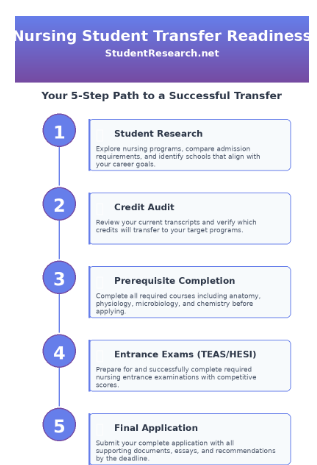
Transitioning into a clinical major requires a strategic approach to ensure your previous credits are honored and your graduation timeline remains intact. This guide highlights nursing programs that accept transfer students to help you identify which institutions offer the smoothest credit evaluations and the most supportive environments. Whether you are moving from a community college or changing majors within a university, understanding the transfer process is the first step toward a rewarding career in healthcare.
Understanding the Transfer Landscape in Nursing Education
The nursing school admission process is notoriously competitive, but many institutions have dedicated pathways specifically for those coming from other schools. Schools generally look for a strong GPA in science prerequisites and a clear demonstration of commitment to the field. By conducting thorough student research, you can identify which programs align with your current academic standing and career goals.
Common Requirements for Transfer Applicants
- Minimum GPA Standards: Most competitive programs require at least a 3.0 cumulative GPA, though some may accept a 2.75.
- Prerequisite Completion: Mastery of Biology, Anatomy, Physiology, and Microbiology is non-negotiable for most nursing programs that accept transfer students.
- TEAS or HESI Scores: Standardized entrance exams are often required to prove your readiness for the rigors of clinical training.
The Importance of Credit Evaluation
- Official Transcript Reviews: Always request a preliminary audit to see how many of your general education credits will move over.
- Syllabus Documentation: Be prepared to provide course syllabi for science classes to ensure they meet the specific lab requirements of the new institution.
- Regional Accreditation: Ensure your current school is regionally accredited, as this is a primary factor in credit portability.
Struggling with complex Anatomy or Microbiology research papers?” StudentResearch.net specializes in technical nursing coursework. Our professional academic writers help you translate complex medical concepts into stellar assignments that impress admissions committees. Get the expert help your nursing degree deserves!
Top 27 Nursing Programs That Accept Transfer Students
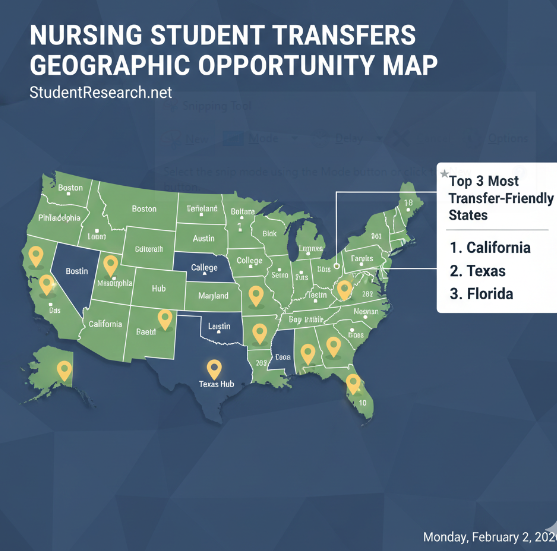
Choosing the right school involves comparing NCLEX pass rates, clinical placement opportunities, and the ease of the transfer process. Below is a curated list of institutions known for their robust support of transfer applicants and high-quality instruction. Engaging in proactive student research will help you narrow down this list to the schools that best fit your geographic and financial needs.
#1 University of Pennsylvania
- Admission Requirements: Minimum 3.0 GPA (3.5+ preferred); completion of core sciences (Chemistry, A&P); SAT/ACT scores often required for transfers with <30 credits.
- Credit Transfer Policy: Accepts credits from regionally accredited institutions for grades C or higher; maximum of 20 course units generally transferable.
- When to Apply: Fall opening in September; transfer deadline typically March 15.
- Program Units & Cost: ~120 total credits; **$2,300+ per unit**; base tuition ~$66,000/year.
- Location: Philadelphia, PA.
#2 Emory University
- Admission Requirements: 3.0+ cumulative GPA; 60 transferable semester hours; TEAS score of 90%+ recommended.
- Credit Transfer Policy: Prerequisite courses (A&P, Micro) must be taken within 7 years; no Pass/Fail grades accepted for prerequisites.
- When to Apply: Priority deadline December 1 (Fall), July 1 (Spring).
- Program Units & Cost: 60 nursing credits; **$1,800+ per unit**; base tuition ~$57,000/year.
- Location: Atlanta, GA.
#3 New York University (NYU)
- Admission Requirements: Cumulative GPA of 3.0+; official high school and college transcripts; personal statement (250–650 words).
- Credit Transfer Policy: Liberal transfer policy for general education; nursing-specific prerequisites must match NYU syllabus rigor.
- When to Apply: March 15 (Fall), October 15 (Spring).
- Program Units & Cost: 128 credits total; **$1,700+ per unit**; base tuition ~$60,000/year.
- Location: New York, NY.
#4 Villanova University
- Admission Requirements: Minimum 3.0 GPA; completion of Anatomy, Physiology, and Microbiology with a grade of B or better.
- Credit Transfer Policy: Credits accepted for courses with a grade of C or higher from accredited 4-year institutions or community colleges.
- When to Apply: Application deadline March 1.
- Program Units & Cost: ~122 units; **$1,900+ per unit**; base tuition ~$64,000/year.
- Location: Villanova, PA.
#5 University of Michigan
- Admission Requirements: Competitive GPA (usually 3.5+); “Direct to Nursing” transfer pathway; test-optional for 2026.
- Credit Transfer Policy: Course-by-course evaluation required; science prerequisites must have lab components.
- When to Apply: Deadline February 1 for Fall entry.
- Program Units & Cost: 120 credits; $700–$1,200 per unit (Res vs. Non-Res); base tuition ~$18,000–$58,000/year.
- Location: Ann Arbor, MI.
#6 Drexel University
- Admission Requirements: Minimum 3.0 undergraduate GPA; completion of 8 prerequisite science courses; 11-month Accelerated (ACE) option available.
- Credit Transfer Policy: Prerequisite grades must be B or better for ACE; WES evaluation required for international credits.
- When to Apply: October 15 (Priority Fall), December 1 (Final Fall).
- Program Units & Cost: 60–120 units; **$1,300+ per unit**; base tuition ~$56,000/year.
- Location: Philadelphia, PA.
#7 Ohio State University
- Admission Requirements: 3.2+ GPA; completion of 30 college credits post-high school; TEAS score may be required.
- Credit Transfer Policy: Strong articulation agreements with Ohio community colleges; most general education credits transfer seamlessly.
- When to Apply: May 15 (Autumn), November 1 (Spring).
- Program Units & Cost: 121 units; $550–$1,400 per unit; base tuition ~$13,000–$38,000/year.
- Location: Columbus, OH.
#8 University of Washington
- Admission Requirements: 3.0 minimum GPA; 100 volunteer or work hours in healthcare; Proctored Essay.
- Credit Transfer Policy: Nursing prerequisites must be completed within 10 years; 90+ transferable quarter credits required.
- When to Apply: Deadline January 15.
- Program Units & Cost: 180 quarter units; $450–$1,300 per unit; base tuition ~$13,000–$42,000/year.
- Location: Seattle, WA.
#9 University of North Carolina – Chapel Hill
- Admission Requirements: 3.0 GPA; 60 transferable credits; 3.0 minimum in science prerequisites (A&P, Micro, Chem).
- Credit Transfer Policy: Strict evaluation of science syllabi; no credits accepted for nursing-specific courses from other schools.
- When to Apply: Deadline December 1 (Early), January 15 (Regular).
- Program Units & Cost: 120 units; $350–$1,200 per unit; base tuition ~$9,000–$39,000/year.
- Location: Chapel Hill, NC.
#10 Duke University
- Admission Requirements: Bachelor’s degree required (Accelerated BSN track); 3.0 minimum GPA; video essay/interview.
- Credit Transfer Policy: Focuses on prerequisite completion; 58 credits of previous degree required for the ABSN track.
- When to Apply: December 1 (Fall), May 1 (Spring).
- Program Units & Cost: 58 nursing units; **$2,250 per unit**; base cost ~$130,000 total (16-month program).
- Location: Durham, NC.
#11 Case Western Reserve University
- Admission Requirements: 3.0+ GPA; 12+ transferable credits; strong emphasis on clinical volunteerism.
- Credit Transfer Policy: Prerequisites must have a grade of C or better; maximum 60 transfer credits.
- When to Apply: Deadline March 15 for Fall.
- Program Units & Cost: 121 units; **$2,100+ per unit**; base tuition ~$68,000/year.
- Location: Cleveland, OH.
#12 University of Wisconsin-Madison
- Admission Requirements: 3.0 cumulative and prerequisite GPA; “Essential Skills” personal statement; 54 transferable credits.
- Credit Transfer Policy: Prerequisite science courses must be completed within 7 years.
- When to Apply: Deadline December 1 (Early), February 1 (Final).
- Program Units & Cost: 124 units; $500–$1,500 per unit; base tuition ~$11,000–$40,000/year.
- Location: Madison, WI.
#13 Georgetown University
- Admission Requirements: 3.5+ competitive GPA; high school and college transcripts; Dean’s Report from current institution.
- Credit Transfer Policy: Evaluated by the Dean’s Office; nursing courses rarely transfer; focus on liberal arts credits.
- When to Apply: Deadline March 1 for Fall.
- Program Units & Cost: 120 units; **$2,600+ per unit**; base tuition ~$67,000/year.
- Location: Washington, D.C.
#14 Rutgers University
- Admission Requirements: 3.0 GPA; 12+ college credits; completion of English Comp, Psychology, and one science lab.
- Credit Transfer Policy: NJ Transfer database used for state community colleges; C or higher required for all credits.
- When to Apply: February 1 (Fall), October 1 (Spring).
- Program Units & Cost: 120 units; $500–$1,100 per unit; base tuition ~$17,000–$36,000/year.
- Location: New Brunswick/Newark, NJ.
#15 University of Texas at Austin
- Admission Requirements: 3.0 cumulative GPA; 3.0 in science prerequisites; completion of 60 transferable credits.
- Credit Transfer Policy: Texas Common Course Numbering System (TCCNS) compatibility; nursing-specific courses do not transfer.
- When to Apply: Deadline March 1.
- Program Units & Cost: 120 units; $500–$1,300 per unit; base tuition ~$12,000–$43,000/year.
- Location: Austin, TX.
#16 University of Pittsburgh
- Admission Requirements: 3.0 GPA; completion of Chem, A&P, and Statistics; SAT/ACT scores (optional).
- Credit Transfer Policy: Transfer credits accepted for courses with a grade of C or higher; science courses must be recent (10 years).
- When to Apply: Rolling admission; April 1 recommended for Fall.
- Program Units & Cost: 122 units; $800–$1,500 per unit; base tuition ~$21,000–$41,000/year.
- Location: Pittsburgh, PA.
H3: #17 Boston College
- Admission Requirements: Highly competitive (3.5+ GPA); Common App for Transfer; 2 letters of recommendation.
- Credit Transfer Policy: Core curriculum credits transfer; nursing sequence must be completed at BC over three years.
- When to Apply: Deadline March 15.
- Program Units & Cost: 116 units; **$2,200+ per unit**; base tuition ~$67,000/year.
- Location: Chestnut Hill, MA.
#18 Purdue University
- Admission Requirements: 3.0 GPA; completion of 12+ post-high school credits; 3.0 science GPA (Chemistry/Bio).
- Credit Transfer Policy: Prerequisite coursework must have direct equivalency as determined by the Transfer Credit Course Guide.
- When to Apply: March 1 (Summer/Fall), October 1 (Spring).
- Program Units & Cost: 120 units; $400–$1,000 per unit; base tuition ~$10,000–$29,000/year.
- Location: West Lafayette, IN.
#19 University of Miami
- Admission Requirements: 3.0 GPA; RN license (for some tracks); Statistics prerequisite; 2 recommendation letters.
- Credit Transfer Policy: No evaluation until application is received; courses from accredited institutions with C or higher transfer.
- When to Apply: October 1 (Spring), March 1 (Fall).
- Program Units & Cost: 120 units; **$2,400+ per unit**; base tuition ~$59,000/year.
- Location: Coral Gables, FL.
#20 University of Florida
- Admission Requirements: Bachelor’s degree in another field (ABSN track); 3.0 GPA; 6 science/math prerequisites with C or better.
- Credit Transfer Policy: Holistic assessment; syllabi required for course equivalency determination.
- When to Apply: Extended deadline February 1 for Summer start.
- Program Units & Cost: 60 units (ABSN); $200–$900 per unit; base tuition ~$7,000–$30,000/year.
- Location: Gainesville, FL.
#21 Indiana University
- Admission Requirements: 3.0 cumulative GPA; 2.7 science GPA; apply as “pre-nursing” first.
- Credit Transfer Policy: Inter-campus transfer forms used; 30+ credits from IU campuses preferred.
- When to Apply: March 15 (Fall), September 15 (Spring).
- Program Units & Cost: 120 units; $350–$1,100 per unit; base tuition ~$12,000–$40,000/year.
- Location: Indianapolis/Bloomington, IN.
#22 Arizona State University
- Admission Requirements: 3.0 minimum GPA; completion of A&P and Chemistry; TEAS score may be requested.
- Credit Transfer Policy: Transfer Credit Guide available online; generous acceptance of community college credits.
- When to Apply: November 1 (Priority), January 15 (Regular).
- Program Units & Cost: 120 units; $500–$1,200 per unit; base tuition ~$12,000–$33,000/year.
- Location: Phoenix/Tempe, AZ.
#23 University of Minnesota
- Admission Requirements: 3.0 minimum GPA; 26+ transferable credits; 3.0 science GPA; Supplemental Application required.
- Credit Transfer Policy: Unofficial transcripts accepted for initial review; credits must be from regionally accredited schools.
- When to Apply: February 1 (Fall), October 1 (Spring).
- Program Units & Cost: 120 units; $600–$1,300 per unit; base tuition ~$16,000–$37,000/year.
- Location: Minneapolis, MN.
#24 Texas A&M University
- Admission Requirements: 3.0 GPA; TEAS score of 75%+; 60 transferable hours including 4 of 5 science prerequisites.
- Credit Transfer Policy: Automatic admission if GPA > 3.25; uses EDI-Electronic Data Interchange for Texas schools.
- When to Apply: March 15 (Priority Fall), June 30 (Final Fall).
- Program Units & Cost: 120 units; $400–$1,200 per unit; base tuition ~$13,000–$40,000/year.
- Location: College Station, TX.
#25 San Diego State University
- Admission Requirements: 3.0 cumulative GPA; completion of “The Big Eight” nursing prerequisites; strictly impacted major.
- Credit Transfer Policy: Only Upper-Division transfers (60+ credits) accepted; no change of major allowed once admitted.
- When to Apply: October 1 – December 1.
- Program Units & Cost: 120 units; $300–$900 per unit; base tuition ~$8,000–$20,000/year.
- Location: San Diego, CA.
#26 University of Maryland
- Admission Requirements: 3.0 cumulative GPA; 3.0 science GPA (Chem, A&P, Micro); 2 letters of recommendation.
- Credit Transfer Policy: 60 credits of prerequisites must be completed before starting; transfer evaluation after admission.
- When to Apply: February 1 (Fall Priority), July 15 (Spring Priority).
- Program Units & Cost: 120 units; $400–$1,100 per unit; base tuition ~$11,000–$41,000/year.
- Location: Baltimore, MD.
#27 Vanderbilt University
- Admission Requirements: 3.0 minimum GPA; completion of all prerequisites; focuses on Pre-Specialty (Bridge to MSN).
- Credit Transfer Policy: No transfer of nursing credits; prerequisite science credits must be from the last 10 years.
- When to Apply: November 1 (Priority), January 1 (Final).
- Program Units & Cost: ~120 bridge units; **$1,900+ per unit**; base tuition ~$65,000/year.
- Location: Nashville, TN.
Comparing Program Success and Costs
When looking at nursing programs that accept transfer students, it is vital to weigh the financial investment against the career outcomes. A high NCLEX pass rate is often more important than the brand name of the school, as it dictates your ability to get licensed. Detailed student research into the following metrics will ensure you get the best return on your educational investment.
Want to maintain a competitive GPA during your transfer?” Ensure your essays and research papers stand out with StudentResearch.net. We provide comprehensive writing support to help you secure top marks in your prerequisites and core nursing modules. Success starts here!
Comparative Statistics for Prospective Transfers
| Institution Type | Avg. NCLEX Pass Rate | Transfer Acceptance Rate | Est. Annual Tuition (USD) |
| Top-Tier Private | 96% – 99% | 15% – 25% | $55,000 – $65,000 |
| State University | 90% – 95% | 30% – 45% | $12,000 – $30,000 |
| Community College (ADN) | 85% – 92% | 50% – 70% | $3,000 – $8,000 |
Key Takeaways from the Data
- NCLEX Success: Look for programs consistently above 90% to ensure you are being prepared for the national boards.
- Cost vs. Value: State universities often provide the best balance of clinical reputation and affordable tuition for transfer students.
- Acceptance Nuances: Private institutions may have lower acceptance rates but often offer more personalized credit evaluation services.
Strategic Steps for a Successful Transfer Application
The window for applying to nursing programs that accept transfer students is often much earlier than for other majors due to clinical placement scheduling. You must be meticulous with your documentation and timing to avoid missing a full academic year. Diligent student research regarding specific deadline dates for each school on your list is the only way to stay ahead of the competition.
Documenting Your Academic History
- Syllabus Collection: Keep a digital folder of every course syllabus you have taken, especially in the sciences.
- Personal Statement: Craft a narrative that explains why you are transferring and how your previous experience makes you a better nurse.
- Letters of Recommendation: Secure at least one letter from a science professor who can speak to your lab skills and academic rigor.
Drowning in nursing assignments and tight deadlines?” Let StudentResearch.net lighten your academic load. Our expert writers deliver high-quality, plagiarism-free papers tailored to your specific nursing curriculum. Regain your peace of mind and focus on your clinical practice today!
The Personal Statement: A Sample Narrative
Transitioning between institutions requires more than just a high GPA; it requires a compelling story that explains your “why.” When applying to nursing programs that accept transfer students, your personal statement is the bridge that connects your past academic choices to your future clinical goals. This sample demonstrates the proactive steps a student takes during a transition.
Prompt: Please describe your reasons for transferring and your long-term goals in the nursing profession.
Growing up in a rural community where healthcare access was a luxury, I witnessed firsthand the impact of compassionate, skilled nursing. While my initial years at [Current College] provided a strong foundation in the biological sciences, I have reached a point where I require a more clinically integrated environment to fulfill my potential. My student research led me to your program, which is widely recognized among nursing programs that accept transfer students for its commitment to underserved populations and its state-of-the-art simulation labs.
During my sophomore year, I served as a volunteer patient advocate at [Hospital Name]. This experience was transformative; I wasn’t just observing treatments, I was learning the art of patient communication and the critical importance of the nursing process. I am eager to bring this hands-on perspective to your #1-ranked clinical cohort. My goal is not simply to earn a degree, but to contribute to the diverse academic community at [Target University] while preparing for a career in emergency medicine.
I am confident that my 3.8 GPA in prerequisites and my dedication to the field make me an ideal candidate for your incoming class. I look forward to the opportunity to continue my journey within a program that values the unique perspectives and maturity that transfer students bring to the nursing profession.
Overcoming Common Challenges for Transfer Students
Many students worry that they will be “behind” their peers when they join nursing programs that accept transfer students, but this is rarely the case. Nursing cohorts are often diverse, including second-career seekers and students of all ages. The biggest hurdle is usually the social integration and learning the specific “flavor” of your new nursing department’s culture.
Managing “Credit Loss”
- Appealing Decisions: If a course doesn’t transfer, don’t be afraid to appeal the decision with additional documentation.
- CLEP Exams: Some schools allow you to test out of general education requirements to make up for lost credits.
- Summer Bridging: Be prepared to take one or two summer courses to align your schedule with your new cohort.
The Ultimate Prerequisite Checklist
Navigating the transition to a new university is a significant undertaking, and for nursing hopefuls, the core set of requirements remains consistent. By completing these courses early, you ensure your application remains competitive across our list of 27 top-tier institutions. Use this checklist to guide your student research and academic planning.
- Anatomy & Physiology I & II (with Lab): A full 8-credit sequence covering all human body systems.
- Microbiology (with Lab): A deep dive into pathogens and sterilization techniques.
- Lifespan Development: Covers patient needs from infancy through geriatrics.
- Statistics: Used extensively for evidence-based practice and interpreting clinical studies.
- TEAS or HESI A2 Scores: Aim for the 80th percentile or higher for competitive entries.
Maximizing Your Experience and Timeline
Once you have successfully navigated nursing programs that accept transfer students—A beginner’s guide, your focus shifts to clinical excellence. Planning your transition into a clinical program requires precision, as nursing cohorts often fill up a year in advance. Your student research shouldn’t stop at admission; continue learning about the faculty’s specialties to find a mentor early on.
H3: Strategic Application Timeline
| Action Item | Fall Start Timeline | Spring Start Timeline |
| Initial Student Research | September – October | March – April |
| TEAS/HESI Testing | November – December | May – June |
| Application Deadline | January – March | July – September |
| Admission Decisions | April – May | October – November |
Post-Interview Professionalism
The interview process for competitive healthcare majors is often the final gatekeeper between your application and an enrollment offer. Sending a professional follow-up is a strategic way to reinforce your interest in nursing programs that accept transfer students while demonstrating the soft skills required in clinical practice.
Subject: Thank You – Nursing Transfer Interview – [Your Full Name]
Dear [Interviewer Name],
Thank you very much for the opportunity to interview for a seat in the upcoming nursing cohort at [University Name]. It was a pleasure to learn more about your program’s unique approach to [mention a specific school feature].
Our conversation further solidified my desire to transfer into your program, as I believe my previous academic background and clinical volunteer experience align perfectly with your school’s mission. I look forward to hearing from you soon.
Sincerely, [Your Name]
Conclusion: Your Nursing Future Awaits
Starting over in a new environment is a bold step toward your dream of helping others, and selecting from the best nursing programs that accept transfer students is a proven way to reach your goals. By staying organized, advocating for your credits, and choosing a school that values your unique background, you can transition smoothly into the healthcare workforce. Take the first step today by contacting an admissions counselor at your top-choice school.
Meta Description: Discover nursing programs that accept transfer students with this beginner’s guide. Explore 27 top schools, transfer tips, and a comprehensive comparison.

