

The United States faces a critical nursing shortage, with the Bureau of Labor Statistics projecting over 275,000 new nursing positions needed annually through 2030. This creates unprecedented opportunities for nursing jobs for international students in USA who dream of building a healthcare career in America. International students bring diverse perspectives, cultural competency, and dedication to the nursing profession, making them valuable assets to U.S. healthcare institutions. However, navigating the complex landscape of visa requirements, educational credentials, and work authorization can feel overwhelming without proper guidance.
Whether you’re just beginning your student research into American nursing programs or actively seeking employment opportunities, understanding the complete pathway is essential for success. This comprehensive guide walks you through everything from visa options and educational requirements to job search strategies and frequently asked questions. By the end, you’ll have a clear roadmap to launch your nursing career in the United States while maintaining legal work authorization throughout your journey. So if you are navigating nursing jobs for International Students in USA? Get the complete
Understanding Visa Options and Work Authorization: A Guide to Working Legally in the USA
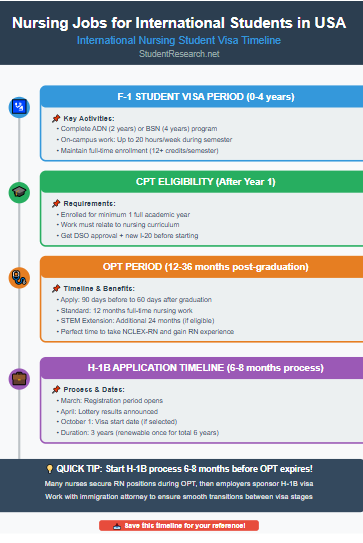
Securing the right to work legally in the United States is the foundation of your nursing career journey as an international student. Understanding visa categories and work authorization programs determines your ability to gain valuable clinical experience. This section breaks down the most common pathways for international nursing students.
What Is F-1 Student Visa and How Does It Work for Nursing Students?
The F-1 visa is the primary nonimmigrant student visa for academic studies in the United States:
- On-Campus Employment: Work up to 20 hours weekly during semesters and full-time during breaks at university hospitals or student health centers
- Off-Campus Restrictions: Generally prohibited during the first academic year except in cases of severe economic hardship
- Status Maintenance: Requires full-time enrollment (minimum 12 credits per semester) and satisfactory academic progress
Steps to Apply for Curricular Practical Training (CPT)
- Must complete one full academic year before eligibility
- Work must relate directly to your nursing curriculum
- Obtain job offer, DSO approval, and new I-20 authorization before starting
Understanding Optional Practical Training (OPT) Requirements
- Standard 12-Month Period: Available after degree completion for work in nursing field
- STEM Extension: Nursing programs may qualify for additional 24-month extension
- Application Window: Apply 90 days before to 60 days after graduation using Form I-765
How to Get H-1B Visa Sponsorship as a Registered Nurse
The H-1B visa provides longer-term employment through employer sponsorship:
- Requirements: BSN degree, valid state RN license, and sponsoring employer
- Lottery Process: 85,000 annual cap with approximately 25-30% selection odds
- Timeline: Registration in March, results in April, October 1st start date
- Duration: Three-year initial period, renewable once for total of six years
- Sponsorship Steps: Employer files Labor Condition Application then Form I-129 petition to USCIS.
Educational Requirements Explained: What You Need to Become a Nurse in the USA
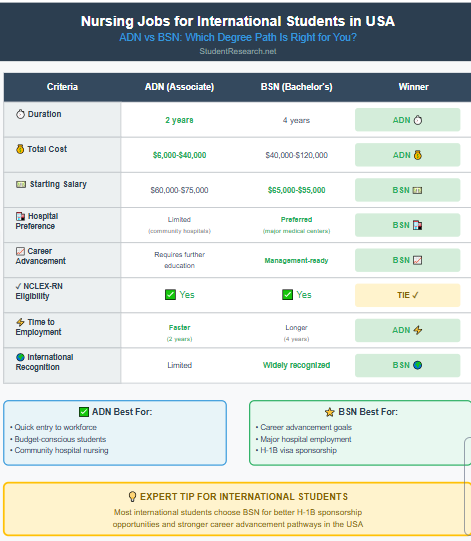
Your educational foundation determines your eligibility for nursing jobs for international students in USA and sets the trajectory for your entire career. International students must navigate both academic requirements and complex credential recognition processes. Understanding these requirements early helps you make informed decisions about your nursing education path.
Types of Nursing Degree Programs for International Students
International students can choose between two primary nursing degree pathways, each with distinct advantages:
What Does an Associate Degree in Nursing (ADN) Mean for Your Career?
- Duration: Two-year program at community colleges or technical schools
- Cost Range: $6,000-$40,000 total tuition, significantly more affordable than BSN programs
- Career Entry: Qualifies you to take NCLEX-RN and work as registered nurse in most states
- Limitations: Many hospitals now prefer or require BSN degrees; fewer advancement opportunities without further education
Benefits of a Bachelor of Science in Nursing (BSN) Degree
- Program Length: Four-year degree at universities, includes liberal arts and advanced nursing theory
- Career Advantages: Preferred by major hospital systems, required for management and specialized roles
- Higher Salaries: BSN nurses earn approximately $5,000-$10,000 more annually than ADN nurses
- Universities Accepting International Students: NYU, Johns Hopkins, University of Pennsylvania, Duke University, and University of Michigan offer strong programs with international student support
Steps to NCLEX-RN Credential Evaluation and Licensure
International nursing graduates must complete several steps before practicing in the United States:
- Foreign Credential Evaluation: Submit transcripts to CGFNS (Commission on Graduates of Foreign Nursing Schools) or other NACES-approved agencies for equivalency assessment
- NCLEX-RN Examination: Pass the National Council Licensure Examination, required in all 50 states, with pass rates around 80% for first-time international test-takers
- English Proficiency Tests: Demonstrate English competency through TOEFL (minimum 83 iBT) or IELTS (minimum 6.5) unless educated in English-speaking country
- VisaScreen Certification: Obtain this certificate from CGFNS combining credential review, NCLEX passage, and English proficiency for visa processing
Struggling with complex nursing assignments? StudentResearch.net connects you with PhD-qualified writers specializing in healthcare and nursing. Our degree-holding professionals deliver academically rigorous papers backed by real-world expertise. Get subject-specific support from experts who understand your field
Types of Nursing Jobs Available for International Students in the USA
International students have access to various nursing positions depending on their education level and work authorization status. Starting with entry-level roles during your studies and advancing to professional registered nurse positions after graduation creates a clear career progression. This section outlines realistic job opportunities at each stage of your nursing education journey.
Entry-Level Positions: Ways to Gain Experience During Your Studies
Building clinical experience while studying strengthens your resume and develops essential patient care skills:
What Is a Certified Nursing Assistant (CNA) and What Do They Do?
- Core Responsibilities: Assist patients with daily activities including bathing, feeding, mobility, vital signs monitoring, and documentation under RN supervision
- Training Requirements: Complete state-approved 75-150 hour program and pass competency examination
- Hourly Wages: $13-$19 per hour depending on location and healthcare setting
- Work-Study Opportunities: Many universities offer CNA positions through on-campus employment programs, perfect for F-1 visa holders
Patient Care Technician Definition and Career Path
- Role Description: Provides direct patient care with additional clinical skills like EKG monitoring, phlebotomy, and catheter care beyond basic CNA duties
- Required Certifications: CNA certification plus additional training in specialized procedures; some employers provide on-the-job training
- Settings: Hospital units, dialysis centers, and specialty clinics prefer PCT credentials over basic CNA certification
Post-Graduation Nursing Roles: Examples of Career Opportunities
After earning your nursing degree and passing NCLEX-RN, professional opportunities expand significantly:
Registered Nurse (RN) Positions: Where to Find the Best Opportunities
- Hospital Nursing: Medical-surgical units, emergency departments, intensive care units, and operating rooms hire new graduate RNs
- Specialty Areas: Pediatrics, oncology, labor and delivery, psychiatric nursing, and geriatrics offer focused career paths with additional training
- Salary Range: $65,000-$95,000 annually depending on location, specialty, and shift differentials, with California and New York offering highest compensation
Understanding Advanced Practice Nursing Roles
- Nurse Practitioner Pathways: Requires Master’s degree (MSN) or Doctorate (DNP), provides diagnostic and prescriptive authority in specialized areas
- Clinical Nurse Specialist: Advanced degree focused on improving patient outcomes within specific populations or practice settings
- Additional Requirements: 2-3 years of additional graduate education and national certification examinations beyond RN licensure
Worried about academic integrity in your nursing papers? StudentResearch.net guarantees 100% original content written from scratch for every assignment. Receive comprehensive plagiarism reports with each delivery, ensuring your work meets the highest academic standards. Your success, our commitment.
Best States for International Nursing Students: Which Location Is Better for Your Career?
Geographic location significantly impacts your educational experience, job prospects, and salary potential as an international nursing student. Different states offer varying levels of support for international students, diverse clinical opportunities, and distinct cost-of-living considerations. Researching state-specific advantages helps you make strategic decisions about where to study and launch your nursing career.
Top States Offering Nursing Jobs and Education Opportunities
Three states consistently rank highest for international nursing students based on program quality, employment rates, and international student services:
Why Is California Important for International Nursing Students?
- Program Availability: Over 150 accredited nursing programs including prestigious universities like UCLA, UCSF, and Stanford
- Highest Salaries: Average RN salary of $120,000-$130,000 annually, significantly above national average
- International Support: Large immigrant populations and robust international student services at most institutions
- Employment Demand: Chronic nursing shortage creates abundant job opportunities across urban and rural settings
Benefits of Studying Nursing in New York
- Healthcare Hub: World-renowned hospitals including NYU Langone, Columbia Presbyterian, and Mount Sinai offer clinical rotations
- Diversity Advantages: Multicultural patient populations provide invaluable experience for international nurses
- Cost Considerations: High living expenses ($2,000-$3,500 monthly) offset by higher salaries ($85,000-$100,000 for new RNs)
Reasons for Choosing Texas as Your Nursing Education Destination
- Growing Healthcare Sector: Population growth drives continuous demand for nurses in Houston, Dallas, Austin, and San Antonio
- Affordable Education: Lower tuition costs at public universities and community colleges compared to coastal states
- Job Market Outlook: Projected 20% nursing job growth through 2030, exceeding national average
Emerging Markets: Where Does Nursing Job Growth Come From?
- Florida: Aging population creates high demand for geriatric and home health nurses; no state income tax benefits
- Illinois: Chicago’s major medical centers and teaching hospitals provide excellent training opportunities
- Pennsylvania: Strong nursing programs at University of Pittsburgh and Thomas Jefferson University with established international student pathways
How to Find and Secure Nursing Jobs as an International Student
Successfully landing nursing jobs for international students in USA requires strategic planning, networking, and understanding where employers actively seek international talent. The job search process differs from your home country’s practices and demands familiarity with American workplace culture. This section provides actionable strategies to connect with employers and present yourself as the ideal candidate.
Job Search Strategies: Ways to Connect with Employers
Effective job searching combines multiple approaches to maximize your visibility to potential employers:
How Do I Use University Career Services Effectively?
- Campus Recruitment Events: Attend nursing career fairs where hospitals and healthcare systems specifically recruit from your university
- Alumni Networks: Connect with international alumni working in nursing through LinkedIn and university databases for mentorship and referrals
- Career Counseling: Schedule appointments with career counselors specializing in international student employment to review visa documentation and employer communication strategies
Guide to Using Online Job Platforms for Nursing Positions
- Specialized Job Boards: Indeed, Nurse.com, and HealthcareJobsite.com feature nursing-specific listings with filters for visa sponsorship
- LinkedIn Strategies: Build professional profile highlighting clinical rotations, certifications, and multilingual abilities; join nursing groups and engage with hospital recruitment posts
- International-Friendly Employers: Research hospitals and health systems with history of hiring international nurses like Mayo Clinic, Cleveland Clinic, and major university medical centers
Application Process Explained: Steps to Landing Your First Nursing Job
Presenting your international credentials effectively distinguishes you from other candidates:
How to Write a Resume That Highlights International Credentials
- Format Considerations: Use reverse-chronological format emphasizing clinical experience, certifications, and technical skills rather than objective statements
- International Credentials: Clearly list credential evaluation results, NCLEX-RN passage, and state licensure with dates
- Visa Status Transparency: Include work authorization status (OPT, H-1B eligible) in cover letter to address employer questions upfront
When to Follow Up After a Nursing Job Interview
- Interview Preparation: Research common behavioral questions about patient safety, teamwork, and conflict resolution; prepare examples from clinical rotations
- Cultural Competence: Emphasize multilingual skills and cross-cultural experience as assets for diverse patient populations
- Follow-Up Timing: Send thank-you email within 24 hours; follow up on application status after one week if no response
Need urgent help with your nursing assignment at midnight? StudentResearch.net offers 24/7 customer support across all time zones. Whether you’re an international student facing tight deadlines or need immediate revisions, our team is always available. Expert assistance when you need it most
Conclusion: Your Path to Nursing Jobs for International Students in USA
Pursuing nursing jobs for international students in USA represents a challenging yet rewarding journey filled with opportunities for personal and professional growth. From understanding F-1 visa work privileges and OPT extensions to navigating NCLEX-RN requirements and state licensure, each step brings you closer to your dream healthcare career. The United States healthcare system needs dedicated, culturally competent nurses who bring global perspectives to patient care.
Start your journey today by researching accredited nursing programs that welcome international students, preparing your credential evaluations, and connecting with current international nursing students through social media groups. Build your clinical experience early through CNA or PCT positions, maintain excellent academic standing, and actively network with healthcare professionals in your desired specialty. Remember that persistence, cultural adaptability, and continuous learning are your greatest assets.
Your unique background as an international nurse will enrich American healthcare while providing you with unparalleled professional opportunities. Take the first step toward your American nursing career with confidence, knowing thousands of international students have successfully navigated this path before you.
Frequently Asked Questions (FAQs)
How Do I Work as a Nurse in the USA While Studying?
International students on F-1 visas can work on-campus up to 20 hours weekly during semesters. After completing one academic year, you can apply for CPT (Curricular Practical Training) for off-campus nursing internships or clinical positions related to your curriculum. Upon graduation, OPT (Optional Practical Training) allows 12 months of full-time nursing work, with potential 24-month STEM extension for eligible programs.
How Long Does It Take to Become a Registered Nurse as an International Student?
An ADN program requires two years, while a BSN takes four years to complete. After graduation, allow 2-3 months for NCLEX-RN preparation and testing, plus additional time for state licensure processing. International students should also factor in 3-6 months for credential evaluation through CGFNS before beginning your program.
When to Take the NCLEX-RN Before Applying for Nursing Jobs
Most new graduates take NCLEX-RN within 2-3 months after graduation during their OPT period. Many hospitals offer conditional job offers pending NCLEX passage, allowing you to secure employment before taking the exam. Some employers provide NCLEX preparation support and study time for new graduate hires.
Which Nursing Specialties Are Better for International Students?
High-demand specialties include medical-surgical nursing, emergency department, intensive care, geriatrics, and psychiatric nursing. These areas frequently face staffing shortages and welcome international nurses. Specialties requiring advanced English communication like telephone triage or home health may be more challenging initially for non-native speakers.
How to Get Permanent Residency Through a Nursing Job in the USA
Registered nurses can pursue employment-based green cards through the EB-3 category when sponsored by their employer. The process typically takes 2-5 years depending on your country of origin. Maintain H-1B status while your green card application processes, and work closely with an immigration attorney to navigate PERM labor certification and adjustment of status procedures.

