

Every Nurse Practitioner (NP) student knows the adrenaline-fueled mix of excitement and sheer terror that comes with stepping into a new clinical rotation. You aren’t just there to shadow; you are there to transform from a registered nurse into a diagnostic powerhouse. Setting clear, actionable nurse practitioner student clinical goals is the secret sauce to moving beyond “just getting through the day” and actually mastering the art of advanced practice. Whether you are tackling your first primary care stint or diving into acute care, having a roadmap ensures every patient encounter brings you closer to provider-level competency.
Navigating the Transition: Why Nurse Practitioner Student Clinical Goals Matter
The shift from bedside nursing to the provider role requires a fundamental rewiring of how you process information and interact with patients. Establishing nurse practitioner student clinical goals early in your semester provides a structured framework for this evolution, ensuring you don’t miss critical competencies. These objectives serve as a contract between you and your preceptor, signaling that you are proactive about your professional growth.
Defining Your Path to Autonomy
- Bridge the Gap: Transitioning from “implementing orders” to “generating orders” requires specific milestones.
- Focus Your Learning: Narrowing down specific skills prevents you from feeling overwhelmed by the vastness of clinical medicine.
- Build Confidence: Achieving small, measurable wins daily builds the mental stamina needed for independent practice.
- Enhance Communication: Clear goals help you articulate your needs to your clinical site supervisor.
Aligning Goals with Board Certification Standards
- Quality Metrics: Aligning your daily tasks with national board standards (like ANCC or AANP) ensures you are exam-ready.
- Core Competencies: Focus on the domains of NP practice, including ethics, policy, and health delivery systems.
- Patient Safety: Prioritizing safety-oriented goals reduces clinical errors during the learning curve.
Drowning in care plans and case studies? StudentResearch.net is your ultimate lifeline for conquering complex NP coursework. We provide expert academic writing support to ensure you stay ahead while mastering your clinical rotations. Achieve excellence without the burnout!
Mastery of Assessment and Diagnostic Reasoning Keywords: Clinical Skills, Diagnostic Accuracy
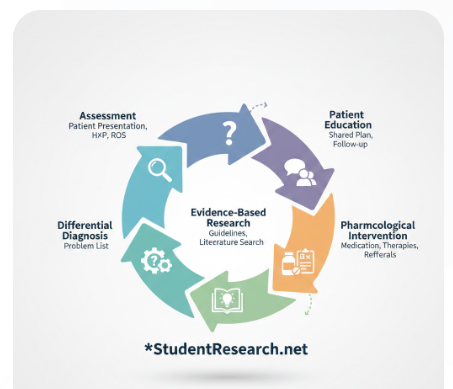
To become a proficient provider, you must move beyond head-to-toe checklists and start thinking like a detective. Developing nurse practitioner student clinical goals centered on diagnostics will sharpen your ability to filter out “noise” and find the “signal” in a patient’s history. This stage of your education is where you learn to turn symptoms into a cohesive differential diagnosis list.
Refining Physical Examination Techniques
- #1 Focused Assessments: Conduct ten focused physical exams on specific systems (e.g., musculoskeletal or neurological) within the first week.
- #2 Standardized Tools: Utilize validated screening tools (like the PHQ-9 for depression) consistently for every relevant patient encounter.
- #3 Specialized Maneuvers: Master at least three specialty-specific maneuvers, such as the McMurray test for knee pain or the Dix-Hallpike for vertigo.Deep Dive into Specialized Maneuvers
- Proper Technique: Ensuring the patient is positioned correctly to elicit the most accurate clinical sign.
- Interpretation: Understanding what a positive vs. negative result truly means for your differential diagnosis.
- Documentation: Learning how to chart these findings accurately to reflect your high-level clinical reasoning.
Developing a Differential Diagnosis (DDx)
- #4 The Rule of Three: For every chief complaint, provide at least three plausible differential diagnoses to your preceptor.
- #5 Pathophysiology Linking: Explain the underlying biological mechanism for each potential diagnosis on your list.
- #6 Ruling Out Extremes: Identify the “must-not-miss” (life-threatening) diagnoses for every patient presenting with chest or abdominal pain.
Developing Evidence-Based Treatment Plans Keywords: Pharmacology, Patient-Centered Care
Once the diagnosis is established, the next hurdle is deciding what to do about it based on the latest science. Your nurse practitioner student clinical goals should prioritize Evidence-Based Practice (EBP) to ensure your treatment plans are both safe and effective. This is an excellent area to integrate student research by looking up current clinical guidelines (like JNC 8 for hypertension) to support your pharmacological choices.
Strategic Pharmacological Interventions
- #7 Rational Prescribing: Explain the “why” behind choosing a specific antibiotic class over another based on local resistance patterns.
- #8 Cost-Effective Care: Research the retail cost of three common medications to ensure your treatment plan is financially feasible for the patient.
- #9 Polypharmacy Review: Conduct a thorough medication reconciliation for an elderly patient to identify potential drug-drug interactions.
Non-Pharmacological and Holistic Management
- #10 Lifestyle Counseling: Develop and deliver a five-minute education session on DASH diet implementation for a newly diagnosed hypertensive patient.
- #11 Specialist Referrals: Identify the exact criteria for when a patient needs to be escalated from primary care to a specialist (e.g., cardiology or nephrology).
- #12 Follow-Up Sequencing: Determine appropriate timeframes for follow-up visits based on the acuity and chronicity of the patient’s condition.
Need evidence-based papers that impress your preceptors? At StudentResearch.net, we specialize in high-level clinical writing and research. Let our professionals help you bridge the gap between bedside nursing and advanced practice with precision-crafted academic assignments today.
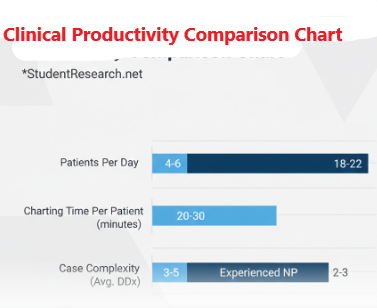
Clinical Efficiency and Data Review
| Category | Student NP Target (Mid-Rotation) | Experienced NP Standard | Why it Matters |
| Patients per Day | 4–6 Patients | 18–22 Patients | Balances learning with productivity |
| Documentation Time | 20–30 mins/chart | 5–10 mins/chart | Efficiency prevents burnout |
| DDx Range | 3–5 Differentials | 2–3 Differentials | Students need broader logic nets |
| Evidence Use | Every Case | Rapid Recall | Student research builds the foundation |
Communication and Interprofessional Collaboration Keywords: Patient Education, Preceptor Relationship
The “soft skills” of being a provider are often the hardest to master but are essential to your nurse practitioner student clinical goals. You must learn to lead a room, manage difficult conversations, and collaborate with the broader healthcare team. Effective communication ensures that your clinical reasoning isn’t lost in translation when talking to patients or consultants.
Mastering Patient-Provider Communication
- #13 Motivational Interviewing: Use the “OARS” technique (Open-ended questions, Affirmations, Reflections, Summaries) with a non-compliant patient.
- #14 Shared Decision Making: Present two treatment options to a patient and help them choose based on their personal values and lifestyle.
- #15 Explaining Complex Results: Practice “Teach-Back” methods to ensure a patient understands their new diagnosis of a chronic illness like Diabetes.Optimizing the Teach-Back Method
- Clarity: Using non-medical jargon to explain pathophysiology.
- Validation: Asking the patient to explain the plan in their own words to catch misconceptions.
- Reinforcement: Providing written materials that mirror your verbal instructions.
Strengthening the Preceptor-Student Bond
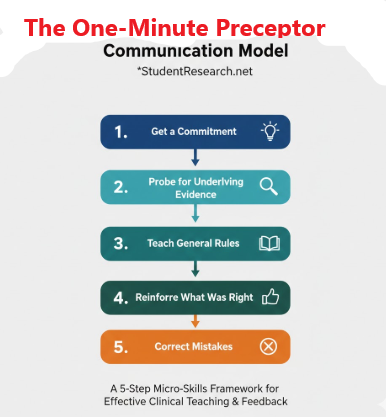
- #16 The “One-Minute Preceptor” Model: Present cases using the structure: findings, diagnosis, plan, and a specific question for the preceptor.
- #17 Constructive Feedback Loops: Weekly, ask your preceptor for one specific area of clinical weakness to focus on the following week.
- #18 Interprofessional Handoffs: Practice giving a concise SBAR report to a consulting physician or a social worker.
Technical Skills and Procedural Competency Keywords: Suturing, Lab Interpretation
While the NP role is heavily focused on cognitive work, many rotations require “hands-on” procedural skills. Setting specific nurse practitioner student clinical goals for procedures ensures you don’t graduate with “book knowledge” only. Whether it’s interpreting an EKG or performing a biopsy, these skills are vital for many specialized NP roles.
High-Frequency Clinical Procedures
- #19 Diagnostic Interpretation: Independently interpret 20 EKGs or 10 Chest X-rays before checking the radiologist’s report.
- #20 Suture and Wound Care: Perform at least five simple interrupted suture repairs or complex dressing changes under supervision.
- #21 Point-of-Care Testing: Demonstrate proficiency in performing and interpreting rapid strep, flu, and UAs.
Lab and Imaging Logistics
- #22 Lab Rationale: For every lab ordered, be able to state exactly how the result will change your clinical management.
- #23 Imaging Selection: Understand the ACR Appropriateness Criteria to choose between an Ultrasound, CT, or MRI for specific complaints.
- #24 Interpreting Results: Practice explaining abnormal lab results (like a high A1c) to a patient in a way that motivates action rather than fear.
Professional Growth and Resource Utilization Keywords: Health Policy, Professionalism
Being a Nurse Practitioner is more than just seeing patients; it’s about participating in a profession. Your nurse practitioner student clinical goals should include an understanding of the business and legal side of healthcare. Integrating student research into your clinical day—such as looking up billing codes or state-specific scope of practice laws—prepares you for the “real world” of healthcare.
Understanding the Business of Healthcare
- #25 Coding and Billing: Correctly identify the E/M (Evaluation and Management) code for five different patient visits based on complexity.
- Research Integration: Utilize student research to find one peer-reviewed article per week that addresses a clinical dilemma you faced in the clinic.
- Time Management: Develop a routine that allows you to finish all charting before leaving the clinic for the day.
Ethics and Self-Care
- Ethical Advocacy: Identify an ethical dilemma in the clinic (such as resource allocation) and discuss it with your preceptor.
- Burnout Prevention: Establish a “post-clinical” ritual to decompress and maintain mental health throughout the semester.
- Your Essential NP Clinical Goal Tracker
Staying Organized During Rotations
The journey through clinicals is often chaotic, making it easy to lose track of your progress amidst a heavy patient load. By using a structured tracker, you can ensure that you are meeting your nurse practitioner student clinical goals systematically rather than by chance. This section provides a streamlined version of the 25 goals discussed, formatted for quick reference and daily check-offs.
How to Use This Weekly Progress Log
- Daily Review: Check off specific procedural or diagnostic goals as you complete them in real-time.
- Preceptor Signature: Use the “Notes” column to jot down brief feedback for your weekly sit-down with your supervisor.
- Student Research Integration: Mark the “SR” box when you have performed student research to support a specific goal.
The 25-Point Clinical Goal Checklist
| Goal # | Clinical Competency Category | Specific Milestone Goal | Date Met | Student Research (SR) |
| #1 | Assessment | Conduct 10 focused physical exams | [ ] | [ ] |
| #2 | Assessment | Consistently utilize PHQ-9/Screening tools | [ ] | [ ] |
| #3 | Assessment | Master 3 specialty-specific maneuvers | [ ] | [ ] |
| #4 | Diagnostics | Provide “The Rule of Three” DDx per case | [ ] | [ ] |
| #5 | Diagnostics | Explain pathophysiology for each DDx | [ ] | [ ] |
| #6 | Diagnostics | Identify “must-not-miss” diagnoses | [ ] | [ ] |
| #7 | Pharmacology | Justify antibiotic/medication selection | [ ] | [ ] |
| #8 | Pharmacology | Evaluate cost-effectiveness of meds | [ ] | [ ] |
| #9 | Pharmacology | Complete complex med reconciliation | [ ] | [ ] |
| #10 | Management | Deliver 5-minute DASH/Lifestyle education | [ ] | [ ] |
| #11 | Management | Identify specialist referral criteria | [ ] | [ ] |
| #12 | Management | Sequence follow-up based on acuity | [ ] | [ ] |
| #13 | Communication | Apply OARS Motivational Interviewing | [ ] | [ ] |
| #14 | Communication | Demonstrate Shared Decision Making | [ ] | [ ] |
| #15 | Communication | Execute “Teach-Back” for chronic illness | [ ] | [ ] |
| #16 | Collaboration | Use “One-Minute Preceptor” presentation | [ ] | [ ] |
| #17 | Collaboration | Solicit weekly constructive feedback | [ ] | [ ] |
| #18 | Collaboration | Deliver concise SBAR to consultants | [ ] | [ ] |
| #19 | Procedures | Interpret 20 EKGs or 10 CXRs | [ ] | [ ] |
| #20 | Procedures | Perform 5 suture or wound repairs | [ ] | [ ] |
| #21 | Procedures | Demonstrate POC testing proficiency | [ ] | [ ] |
| #22 | Logistics | State rationale for every lab ordered | [ ] | [ ] |
| #23 | Logistics | Apply ACR Criteria for imaging choice | [ ] | [ ] |
| #24 | Logistics | Explain abnormal lab results to patient | [ ] | [ ] |
| #25 | Professional | Assign correct E/M billing codes | [ ] | [ ] |
Maximizing the Value of Student Research in Clinicals
As a student, you are not expected to know everything, but you are expected to know how to find everything. Integrating student research into your daily workflow—such as utilizing UpToDate or DynaMed at the point of care—demonstrates a commitment to evidence-based practice. Preceptors are significantly more impressed by a student who says, “I researched the latest GOLD guidelines for this COPD patient,” than one who waits to be told what to do.
Critical Resources for Real-Time Research
- Clinical Practice Guidelines: Focus your student research on national organizations (AHA, ADA, IDSA) to ensure your treatment plans are defensible.
- Pharmacology Databases: Use Epocrates or Lexicomp to fulfill goal #9 (Polypharmacy Review).
- Peer-Reviewed Journals: Dedicate one hour a week to deep-dive student research on a recurring pathology you see in your specific clinic.
Overcoming Common Obstacles to Meeting Clinical Goals
Setting nurse practitioner student clinical goals is one thing; achieving them in a fast-paced environment is another. You may encounter “slow” days where the patient volume is low, or “high-intensity” days where your preceptor has little time for teaching. Learning to pivot your goals based on the day’s reality is a hallmark of a successful NP candidate.
Strategy for Low-Volume Days
- Chart Review: Go back into the EMR and look at the outcomes of patients you saw the previous week.
- Mock Presentations: Practice your SBAR or case presentations with other staff members.
- Policy Review: Engage in student research regarding the facility’s internal protocols for common screenings.
Strategy for High-Intensity Days
- Observation Focus: If you cannot lead the visit, focus your goal on observing the preceptor’s “Shared Decision Making” (Goal #14).
- Efficiency Tracking: Use high-volume days to work on Goal #25 (Coding and Billing) to see how an experienced provider manages high-turnover documentation.
Conclusion: Solidifying Your Success in Clinical Practice
In summary, setting nurse practitioner student clinical goals is the most effective way to transform your education from a passive observation into an active apprenticeship. By focusing on diagnostic reasoning, evidence-based treatment, and professional communication, you ensure that you are not just a student, but a provider-in-training. Remember that your clinical hours are a limited resource—using them strategically will pay dividends when you finally sit for your boards and begin your first job.
Next Steps for Your Rotation
As you move forward, discover how to master your rotation with nurse practitioner student clinical goals. This guide offers 25 examples to boost your clinical skills and ensure you remain at the forefront of patient care. By consistently evaluating your progress against these milestones, you will build the competence and confidence needed for a thriving career.

