

Pharmacology is often cited as the most daunting hurdle in nursing school, but it doesn’t have to be. By leveraging structured medication cards for nursing students, you can transform overwhelming lists of medications into actionable, bite-sized knowledge. This systematic approach allows you to focus on the most critical information required for both exams and safe clinical practice. According to recent student research, active recall methods like flashcards significantly outperform passive reading when it comes to long-term memory retention of complex drug classifications. By mastering this study tool, you are not just preparing for a test; you are building the foundation for safe patient care and professional excellence in your future career.
1. Why You Need a Smarter Way to Study Pharmacology
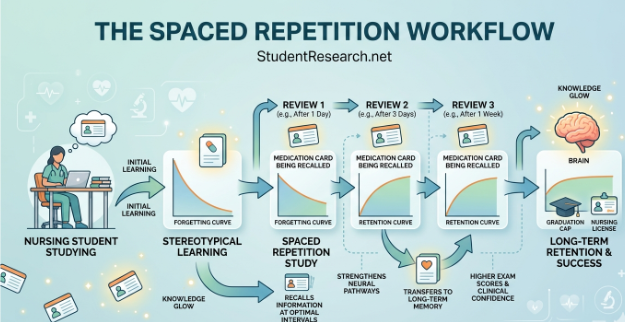
Traditional textbooks are excellent for deep dives, but they are often too dense for quick daily review sessions. Medication cards serve as a distilled version of your nursing drug handbook, focusing only on what is “must-know” versus “nice-to-know.” Using these cards allows you to engage in spaced repetition, which is a scientifically proven method to move information from short-term to long-term memory. When you carry these cards, you turn idle time—like waiting for a bus or a clinical instructor—into productive study windows.
Struggling to keep up with complex pharmacology assignments? StudentResearch.net provides expert academic writing services to help you excel. Save time, reduce stress, and achieve the high grades you deserve with our professional, customized nursing research support today.
2. What Are Medication Cards and Why Do They Work?
At their core, medication cards are personalized, condensed study aids that summarize the essential profile of a specific drug or drug class. Rather than relying on the overwhelming, hundreds-of-pages-long pharmacology textbook, students create these cards to distill complex data into a highly portable and digestible format. They serve as an active bridge between the abstract theory learned in a lecture hall and the tangible reality of clinical medication administration. By focusing on the “need-to-know” rather than the “nice-to-know,” students can synthesize information more efficiently and reduce the mental clutter that often leads to exam-day anxiety.
The Cognitive Science Behind Active Recall
The effectiveness of medication cards is rooted in the cognitive principle of active recall, which requires the brain to retrieve information rather than simply re-reading it. When you look at the name of a drug on the front of your card and attempt to state its mechanism of action before flipping it over, you are strengthening neural pathways in a way that passive highlighting never could. Extensive student research highlights this as the “testing effect,” confirming that the effort required to retrieve information significantly improves long-term memory consolidation.
- Breaking the Passive Cycle: Transitioning from reading notes to quizzing yourself transforms your study session from a passive intake of data into an active mental workout.
- Building Neural Pathways: Each successful retrieval makes the next retrieval of that same information faster and more accurate, mimicking the rapid clinical decision-making required on the hospital floor.
- Reducing Cognitive Load: By isolating a single drug or class, your brain can focus on specific patterns rather than trying to memorize an entire textbook chapter at once.
- Immediate Feedback: The card provides instant verification of your knowledge, allowing you to identify “blind spots” in your understanding immediately.
Why They Are Vital for Clinical Competency
Beyond just passing exams, medication cards act as a crucial safety tool during your clinical rotations. In a fast-paced hospital environment, you do not have time to flip through a massive drug guide while your patient is waiting for their morning medications. Having a concise, self-created card allows you to perform your “five rights” check with confidence and speed. Furthermore, the very act of creating these cards forces you to synthesize information from your lectures and student research, ensuring that when you arrive at the clinical site, you understand not just what the drug is, but why you are giving it to that specific patient.
Integration with Practice: These cards become a living document that grows with your experience, allowing you to add clinical pearls or specific patient reactions you encounter during your shifts..
Enhanced Safety: Having quick access to contraindications and “hold” parameters ensures that you remain vigilant and can catch potential errors before they reach the patient.
Improved Critical Thinking: By summarizing the therapeutic intent, you shift your focus from rote memorization to understanding the physiological goal of the therapy.
Confidence under Pressure: Being able to quickly recall drug interactions or key side effects in front of your clinical instructor demonstrates professional readiness and clinical competence.
3. Essential Elements: What to Put on Your Pharmacology Flashcards
Creating effective medication cards requires a balance between comprehensive clinical data and concise, actionable notes. To prevent your study aids from becoming overwhelming, you must adhere to a strict structure that prioritizes patient safety and critical thinking over pure rote memorization. By standardizing the layout of your cards, you ensure that your brain learns to scan for specific data points—like “black box” warnings or peak-and-trough timing—in the exact same location every time you review. This organizational consistency is the secret to moving from panicked test-taking to confident, evidence-based nursing care.
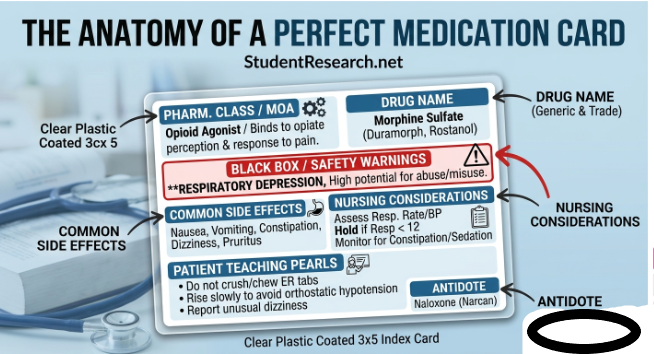
Mastering the Core Drug Profile
When you design the front and back of your card, focus on the “must-know” pharmacological facts that define the drug’s role in the body. A well-constructed card allows you to quickly differentiate between drug classes, which is essential for understanding why a provider might switch a patient from one medication to another.
- Generic and Trade Names: Always list both clearly at the top. Familiarity with trade names is helpful for clinical shifts, but generic names are essential for exam mastery.
- Pharmacological vs. Therapeutic Class: Record both categories. For example, knowing a drug is an “ACE Inhibitor” (pharmacological) helps you predict its mechanism, while knowing it is an “Antihypertensive” (therapeutic) tells you its clinical purpose.
- Mechanism of Action (MOA): Keep this brief. Use one or two sentences to explain how the drug achieves its therapeutic effect at the cellular or systemic level.
- Indications and Off-Label Uses: List the primary conditions the drug is intended to treat, and note if there are common “off-label” uses that you might see in specific hospital units.
Prioritizing Clinical Safety and Nursing Judgment
The most critical section of your medication card is the “Nursing Considerations” block, which directly impacts your ability to prevent medication errors. This is the information that matters most when you are at the bedside performing a medication pass or assessing a patient for a change in status.
- Black Box Warnings: If a drug carries an FDA Black Box Warning, write this in red or highlight it. These are your “stop signs” for patient safety.
- Vital Sign Parameters: Clearly list the parameters for withholding the drug. For instance, define the specific pulse or blood pressure thresholds that trigger a call to the provider.
- Key Lab Value Monitoring: Identify the exact labs required to track efficacy or toxicity. Include normal ranges if you are still building your baseline knowledge.
- Peak and Trough Timing: For medications with narrow therapeutic windows, note exactly when you need to draw the blood levels to avoid toxic peaks or sub-therapeutic troughs.
- Patient Education “Pearls”: Choose two or three vital points to communicate to the patient during discharge. Focus on symptoms that require immediate medical attention, such as signs of angioedema or severe allergic reaction.
Optimizing Your Card Structure for Rapid Retrieval
To truly maximize your efficiency, consider using a consistent visual layout across all your cards to reduce visual fatigue. If you use a physical index card, place the drug name in the top right corner so you can fan through your deck quickly. If you prefer digital flashcards, utilize color-coded tags to sort by system or class, ensuring that your study sessions remain focused and targeted.
- Standardized Positioning: Keep the “Side Effects” in the same bottom-left quadrant on every card to build spatial memory.
- Visual Icons: Use small, hand-drawn symbols for recurring warnings. A “heart” icon for cardiac monitoring or a “kidney” icon for drugs requiring renal dosing adjustments can save you from writing long sentences.
- Summary Tables: For complex drug classes, create a “summary card” that lists the common suffixes (like -olol for beta-blockers) so you can quickly identify the class of any unknown drug you encounter on the floor.
4. Handwritten vs. Digital: Which Study Method Boosts Retention?
The debate between physical index cards and digital platforms is a constant theme in student research regarding nursing pharmacology. While both methods aim to simplify complex drug data, they engage your brain through different cognitive processes. Understanding these differences allows you to tailor your study routine to your personal learning style, ensuring that the time you invest yields the highest possible retention rates during your clinical rotations and examinations.
The Power of Handwriting and Tactile Encoding
Handwriting your medication cards creates a “cognitive imprint” that digital typing simply cannot replicate. Research in educational psychology suggests that the physical act of writing—forming letters, drawing diagrams, and arranging information on a physical card—requires a deeper level of cognitive processing. This multi-sensory engagement helps anchor the information in your long-term memory, making it easier to recall during the high-pressure environment of a written exam.
- Enhanced Focus: Writing by hand forces you to slow down and summarize the most critical information, preventing the “copy-paste” trap that often leads to mindless note-taking.
- Spatial Memory: You likely remember where on the card you wrote a specific detail, creating a “mental map” of the drug’s profile that acts as a visual cue during testing.
- Personalization: You can draw unique symbols, use color-coding, or create shorthand notes that make sense to your personal cognitive map, which is often harder to do in rigid digital formats.
- No Tech Distractions: Utilizing physical index cards allows you to study anywhere—even in hospital areas where mobile device use might be restricted or frowned upon.
The Advantage of Digital Platforms and Spaced Repetition
Digital tools offer a different set of advantages, particularly regarding speed, organization, and the efficiency of your study sessions. Platforms like Anki, Quizlet, or Brainscape utilize powerful algorithms based on the “forgetting curve,” which automatically schedule your reviews for cards you are about to forget. This data-driven approach ensures that you are always spending your study time where it is needed most, rather than reviewing information you have already mastered.
- Spaced Repetition Algorithms: Digital decks track your progress and present challenging cards more frequently, maximizing your retention of difficult pharmacology topics.
- Searchability and Editing: If a drug’s guidelines change or you discover a clinical error, you can update your digital library instantly without needing to rewrite a physical card.
- Media Integration: You can easily embed images, audio clips, or even links to clinical videos to provide context for drugs that are difficult to visualize.
- Portability: You carry thousands of cards in your pocket, making it easy to turn a 5-minute break into a productive, high-yield review session.
Finding Your Hybrid Strategy
Most successful nursing students do not stick strictly to one method but instead adopt a “hybrid approach.” You might choose to hand-write cards for the most complex, high-risk drug classes to ensure deep understanding, while utilizing digital decks for common, less complex medications that require rote memorization. By experimenting with both, you can leverage the best of both worlds to build a pharmacology foundation that is both robust and flexible enough to survive the rigors of nursing school.
5. How to Organize Your Medication Cards for Clinical Rotations
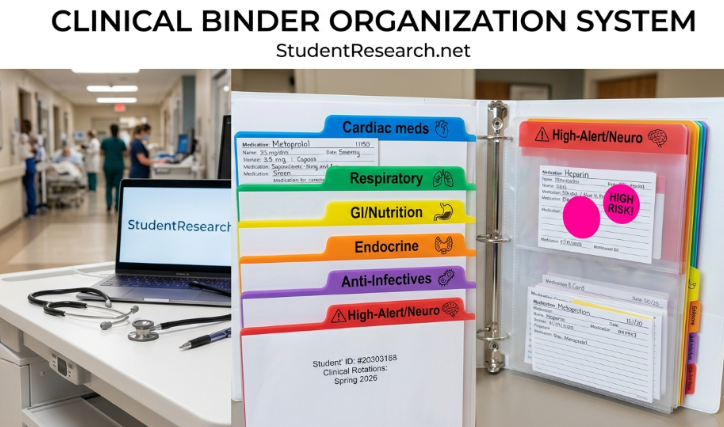
Organization is the fundamental key to ensuring your pharmacology study materials remain a reliable resource rather than a source of stress during intense clinical rotations. When you are on the floor, you need immediate access to critical safety information, and a disorganized pile of index cards can lead to frustration when seconds count. By implementing a systematic filing approach, you transform your collection of cards into a professional “clinical toolkit” that you can navigate with muscle memory, freeing up your mental energy for patient assessment and care.
Establishing a Categorical Filing System
The most efficient way to keep your cards accessible is to organize them by therapeutic system or drug classification, rather than the order in which you learned them in class. This method mimics the way you will encounter patients in the hospital, where you are often managing conditions related to specific body systems like cardiovascular or respiratory health.
- System-Based Dividers: Use tabbed dividers in a small 3×5 or 4×6 binder to separate cards by body system (e.g., Cardiac, Respiratory, GI, Endocrine).
- High-Priority Section: Keep a “Must-Know” section at the very front of your binder for high-alert medications you encounter daily, such as insulin, heparin, and common antihypertensives.
- Rotation-Specific Organization: Before starting a new clinical rotation, reorganize your binder so that the most common drugs for that specialty (e.g., Labor and Delivery vs. Med-Surg) are easily accessible.
- The “Active vs. Archive” Method: Maintain an “Active” section for the unit you are currently on and an “Archive” section for previous units, ensuring your immediate workspace remains clutter-free.
Implementing a Color-Coding Strategy
Visual cues are processed by the brain faster than text, making color-coding one of the most effective strategies for rapid information retrieval. By assigning specific colors to pharmacological classes or safety risk levels, you can instantly group related medications and identify potential interactions or shared side effects.
- Class-Based Color Coding: Assign a unique color to each major drug class using colored index cards or highlighters (e.g., Blue for Antihypertensives, Red for Anticoagulants, Green for Antibiotics).
- Safety Alert Stickers: Use small, colored dot stickers to flag high-risk drugs, such as those requiring double-verification or strict titration schedules.
- Progression Mapping: If you are using digital files, utilize tag systems to apply color labels that persist across your devices, keeping your physical and digital notes synced visually.
- Emergency Color Coding: Designate a specific neon color for “Antidote” or “Emergency Intervention” cards so they stand out immediately if you need to reference them in a time-sensitive situation.
By maintaining this level of organization, you demonstrate professional readiness to your instructors and preceptors. Your medication binder becomes a curated repository of your learning, and the time you spend maintaining it is an investment in your long-term clinical efficiency.
6. Pro-Tips for Memorizing Complex Drug Data Fast
To speed up your learning, try using mnemonic devices or “word associations” directly on the cards. For example, remembering that many beta-blockers end in “-lol” can instantly help you categorize a new drug you encounter. Visual learners should add small icons, such as a heart for cardiac drugs or a lightning bolt for fast-acting stimulants. Based on student research in cognitive psychology, adding these “memory anchors” makes the data much easier to retrieve during a timed examination.
7. Common Pitfalls: What to Avoid When Making Nursing Drug Cards
One of the biggest mistakes students make is trying to transcribe the entire drug monograph onto a single 3×5 card. Too much information leads to “visual fatigue,” making it harder for your brain to prioritize what is actually important. Avoid using vague terms like “nausea” for every side effect; instead, focus on the unique or dangerous side effects specific to that drug. Additionally, don’t wait until the night before an exam to start making your cards, as the process of creation is a vital part of the learning journey itself.
8. Top-Rated Resources: Where to Find Proven Drug Card Templates
If you are short on time, you don’t have to reinvent the wheel; many reputable sources offer pre-formatted templates. You can find high-quality layouts on nursing education sites or purchase pre-printed decks that follow the major nursing curricula. For students who want to bridge the gap between academic theory and clinical performance, it is helpful to look at comprehensive guides that help you identify your Nursing Student Strengths and Weaknesses. Using a template ensures you don’t miss critical safety checks like “antidotes” or “peak and trough” timing.
9. Conclusion: Simplifying Pharmacology for Your Nursing Career
Mastering pharmacology is a marathon, not a sprint, and having the right tools makes all the difference. By using a structured system for your study sessions, you can significantly reduce anxiety and improve your clinical performance. To help you get started, we have compiled a list of Drug Cards for Nursing Students and other proven strategies to help you succeed. Master pharmacology with ease! Discover how effective medication cards for nursing students can improve drug retention and boost your clinical confidence.
Tired of staring at a blank page when you should be studying clinical skills? Let StudentResearch.net handle your academic writing requirements with precision. Visit our platform to order your professional nursing papers and secure your academic success right now!

