

Searching for a high-tier clinical placement can feel like navigating a labyrinth without a map, yet it is the single most transformative bridge between the classroom and the bedside. Securing a prestigious internship for nursing students is not just about fulfilling a graduation requirement; it is about auditioning for your future career and mastering high-stakes patient care. This guide provides a comprehensive roadmap to landing, surviving, and thriving in the most competitive nursing programs available today.
H2: The Strategic Importance of an Internship for Nursing Students
Clinical rotations provide the foundation, but a dedicated internship for nursing students offers the immersion necessary to develop true “nurse logic” and critical thinking. These programs allow you to transition from a student who follows a preceptor to a professional who anticipates patient needs and manages complex workloads. By prioritizing these opportunities, you position yourself at the top of the hiring pile before you even sit for the NCLEX.
H3: Bridging the Gap Between Theory and Practice
- Application of Knowledge: Moving beyond textbooks to manage real-time physiological changes in patients.
- Confidence Building: Reducing “new grad jitters” by mastering hospital workflows and documentation systems early.
- Skill Mastery: Gaining repetitive practice with IV starts, catheterizations, and wound care under expert supervision.
Struggling to balance clinical rotations and heavy coursework? Let StudentResearch.net handle your complex nursing essays and case studies. Our expert writers ensure top-tier grades so you can focus on mastering your bedside skills. High-quality academic support starts here!
H3: Networking and Career Longevity
- Professional Mentorship: Establishing relationships with nurse managers and educators who can provide high-quality letters of recommendation.
- Unit Culture Fit: Testing different specialties (ICU, ER, Oncology) to see where your personality and skills align best.
- Early Recruitment: Many hospitals use their internship for nursing students as a primary pipeline for their New Graduate Residency programs.
H2: 18 Proven Strategies for Landing Competitive Internships
Landing a spot in a premier hospital requires more than a high GPA; it requires a calculated approach to your application and persona. The following list outlines the essential steps to differentiate yourself from thousands of other applicants.
H4: #1 Optimize Your Professional Resume
- Highlight clinical hours and specific units visited.
- Include any certifications like ACLS or PALS.
- Focus on “soft skills” like communication and conflict resolution.
H4: #2 Master the Behavioral Interview
- Use the STAR method (Situation, Task, Action, Result) for all answers.
- Prepare stories about overcoming a mistake or handling a difficult patient.
- Research the hospital’s mission statement and incorporate it into your dialogue.
H4: #3 Leverage Faculty Connections
- Ask clinical instructors for “inside leads” on which units are hiring interns.
- Inquire about student research opportunities that might complement your clinical application.
- Seek feedback on your personal statement from nursing department heads.
H4: #4 Early Application Submission
- Track deadlines six months in advance; many summer programs close in January.
- Set alerts for “Nurse Extern” or “Student Nurse Intern” roles on job boards.
H4: #5 Professional Social Media Presence
- Clean up public profiles and ensure your LinkedIn is updated.
- Join nursing student groups to hear about unlisted opportunities.
H4: #6 Volunteer Experience
- Gain “non-clinical” hospital experience to show comfort in the healthcare environment.
- Focus on patient-facing roles, such as being a “cuddler” in the NICU or a greeter in the ER.
H4: #7 Obtain High-Quality Reference Letters
- Request letters from instructors who have seen you interact with patients directly.
- Provide your referees with a “cheat sheet” of your accomplishments to help them write specifically.
H4: #8 Perfecting the Cover Letter
- Address the specific nurse manager by name if possible.
- Explain exactly why that specific hospital (e.g., Magnet status) appeals to you.
H4: #9 CPR and Basic Life Support (BLS) Verification
- Ensure your American Heart Association (AHA) card is current and valid throughout the internship.
H4: #10 GPA Maintenance
- While not everything, most elite programs require a minimum 3.2 to 3.5 GPA.
H4: #11 Attend Career Fairs
- Bring physical copies of your resume to nursing-specific job fairs.
- Follow up with a “thank you” email to every recruiter you speak with.
H4: #12 Mock Interview Practice
- Record yourself answering common questions to check for “filler words” and body language.
H4: #13 Shadowing Shifts
- Request to shadow a nurse on your target unit for a day to show genuine interest.
H4: #14 Specialization Focus
- Tailor your elective courses toward the unit you want (e.g., taking an extra EKG class for Telemetry).
H4: #15 Membership in Professional Organizations
- Join the National Student Nurses’ Association (NSNA) to show professional commitment.
H4: #16 Bilingual Proficiency
- Highlight any second languages that could assist in patient education and advocacy.
H4: #17 Tech Savviness
- Mention familiarity with Electronic Health Records (EHR) like Epic or Cerner.
H4: #18 Resilience and Grit
- Demonstrate a “can-do” attitude and willingness to work night shifts or holidays.
H2: Analyzing Internship Types: Comparison of Clinical Roles
Not every internship for nursing students is structured the same way, and choosing the wrong type can stall your progress. Some programs are strictly observational, while others allow for “hands-on” technical work under a license-protected preceptor. Understanding these distinctions ensures you select a program that matches your current skill level and future goals.
| Internship Type | Primary Focus | Typical Duration | Pay Scale | Clinical Autonomy |
| Summer Externship | Skill mastery & logic | 8–10 Weeks | Paid (Competitive) | High (Under Preceptor) |
| Co-op Program | Academic Credit/Work | 1 Semester | Usually Paid | Moderate |
| Observation/Shadow | Exposure to specialty | 1–5 Days | Unpaid | Low (No hands-on) |
| Nurse Tech Role | Basic Patient Care | Ongoing/Part-time | Hourly Wage | Moderate (Task-oriented) |
H2: Navigating the Application Timeline and Prerequisites
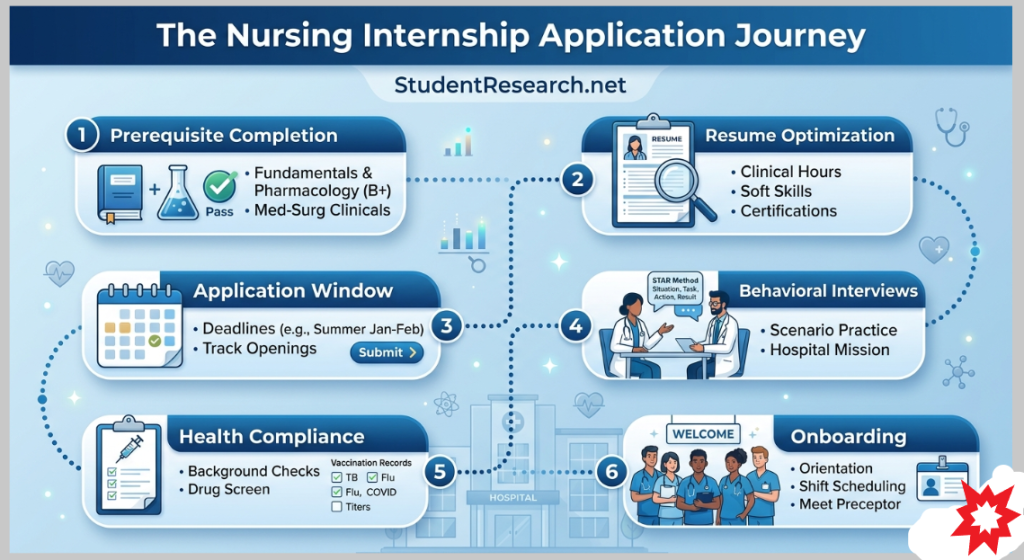
Success in securing an internship for nursing students depends heavily on your ability to manage administrative requirements and tight deadlines. Most top-tier medical centers require you to have completed at least one “core” clinical rotation (usually Med-Surg) before you are eligible to apply. Staying organized with a checklist prevents the last-minute panic that often leads to errors in the application process.
H3: Academic Requirements and Transcripts
- Prerequisite Completion: Ensuring you have passed Fundamentals and Pharmacology with a “B” or higher.
- Official Transcripts: Ordering digital copies early to avoid delays from the registrar’s office.
- Faculty Approval: Some programs require a Dean’s signature to verify you are a student in good standing.
H3: Health and Safety Compliance
- Immunization Records: Having proof of Titers, TB tests, and Flu/COVID vaccinations ready.
- Background Checks: Completing state and federal fingerprinting requirements immediately upon request.
- Drug Screening: Maintaining a “clean” status as most hospitals have a zero-tolerance policy.
H2: Maximizing Learning During Your Clinical Immersion
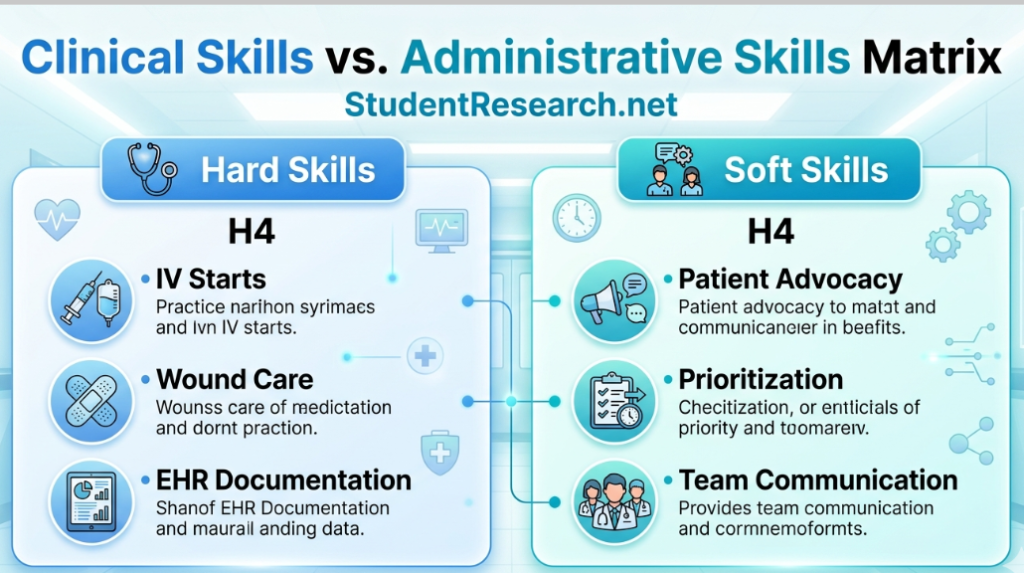
Once you have started your internship for nursing students, the focus shifts from “getting in” to “getting ahead” through active participation. You are there to learn, but also to contribute to the unit’s efficiency and patient safety. Approaching every shift as a learning laboratory will accelerate your growth and make you an indispensable member of the team.
H3: Active Participation and Questioning
- The “Why” Behind the “What”: Constantly asking your preceptor the rationale behind specific interventions or medications.
- Seeking Feedback: Requesting a 5-minute debrief at the end of every shift to discuss what went well and what needs improvement.
- Proactive Help: Offering to assist other nurses with heavy turns or cleanups to gain broader experience.
H3: Documentation and Time Management
- Real-Time Charting: Learning to document findings immediately to improve accuracy and save time at the end of the shift.
- Priority Setting: Utilizing “brain sheets” to organize patient meds, vitals, and dressing changes.
- Delegation Skills: Learning how to respectfully work with Unlicensed Assistive Personnel (UAPs) to deliver care.
Is your internship schedule leaving zero time for research papers? StudentResearch.net provides custom, plagiarism-free nursing assignments tailored to your specific requirements. Reclaim your sleep and let our professionals manage your academic workload with precision and nursing-specific expertise.
H2: Common Challenges and Professional Etiquette
The hospital environment is high-stress, and an internship for nursing students will inevitably present moments of exhaustion or interpersonal friction. Maintaining professional decorum—even when you are tired or overwhelmed—is what separates a student from a future colleague. Understanding the “unwritten rules” of the nursing station can help you navigate social dynamics smoothly.
H3: Handling High-Stress Situations
- Emotional Regulation: Developing techniques to stay calm during codes or rapid responses.
- Critical Feedback: Viewing “constructive criticism” as a tool for patient safety rather than a personal attack.
- Self-Care: Prioritizing sleep and hydration between shifts to prevent burnout before your career even starts.
H3: Professional Boundaries and Privacy
- HIPAA Compliance: Never discussing patient details in elevators, cafeterias, or on social media.
- Phone Etiquette: Keeping personal devices in your locker to ensure total focus on patient care.
- Team Dynamics: Avoiding “unit gossip” and staying neutral in workplace politics.
H2: Transitioning from Intern to Registered Nurse
As your internship for nursing students nears its end, you must begin the formal process of converting that experience into a permanent job offer. This is the time to finalize your portfolio and ensure your name is top-of-mind for the hiring manager. Many interns find that their final “capstone” or student research project can serve as a powerful talking point during their final interview.
H3: The Final Evaluation and Exit Interview
- Reflective Practice: Presenting a summary of your growth and the specific skills you mastered during the term.
- Letter of Intent: Submitting a formal letter expressing your desire to join the unit as a Full-Time RN.
- Closing Gaps: Identifying any remaining weaknesses and creating a plan to address them during your final semester.
H3: Finalizing Your Portfolio
- Case Studies: Including anonymized examples of complex patient care you managed (with permission).
- Certifications: Adding any new skills acquired, such as Phlebotomy or EKG interpretation.
- Student Research Integration: Highlighting how your academic student research on evidence-based practice improved your bedside care.
H2: Resource Guide: Best Tools for Modern Interns
To truly excel in an internship for nursing students, you need the right gear and digital resources at your fingertips. From high-quality diagnostic tools to apps that help with drug calculations, being prepared physically makes the mental load much easier to bear. Investing in these items early in your internship will serve you well through your first year of practice.
H3: Essential Medical Gear
- Acoustic Stethoscopes: High-quality tubing that allows for clear heart and lung sound auscultation in noisy rooms.
- Compression Socks: Non-negotiable for 12-hour shifts to prevent leg fatigue and swelling.
- Reliable Penlight: Essential for pupil checks and neuro assessments.
H3: Digital and Educational Apps
- Drug Guides: Mobile versions of Lexicomp or Davis’s Drug Guide for quick bedside verification.
- Lab Value Reference: Quick-access charts for electrolytes, ABGs, and CBC differentials.
- Note-Taking Tools: Using digital planners to track your internship hours and key learning moments.
H2: Final Thoughts on Your Clinical Journey
Successfully completing an internship for nursing students is the definitive milestone that marks your transition from a learner to a practitioner. It requires a blend of academic rigor, physical endurance, and emotional intelligence, but the rewards are a seamless entry into the nursing profession. Elevate your career by treating every patient interaction as a chance to refine your craft and prove your value to the healthcare team. Master clinical skills and boost your career readiness with this elite internship for nursing students guide to landing high-impact placements.
Metadescription
Master clinical skills and boost your career readiness with this elite internship for nursing students guide to landing high-impact placements
Ready to transition from student to professional RN? StudentResearch.net offers specialized help with nursing portfolios, capstone projects, and clinical reflections. Don’t let a deadline stall your career. Click here to order the relevant academic writing service you require today!

