

Nursing school is notoriously overwhelming. Between 12-hour clinical rotations, back-to-back lectures, medication calculations, care plan submissions, and somehow maintaining a social life, it’s no wonder that nursing students consistently rank among the most stressed college populations.
But here’s the truth that successful nursing students discover early: the right organizational system can completely transform your nursing school experience. That’s where finding the best planners for nursing students becomes absolutely critical. Unlike generic academic planners, nursing-specific planners are designed with your unique challenges in mind—clinical rotation tracking, NCLEX prep schedules, skills checklists, and medication documentation all in one place.
In this comprehensive guide, we’ll walk you through everything you need to know about selecting from the best planners for nursing students, review 7 top-rated options for 2026, and show you exactly how to maximize your planner’s effectiveness. Whether you’re a budget-conscious student looking for affordable options or willing to invest in premium features, we’ve got you covered.
Let’s dive in and find your perfect planning companion for nursing school success.
Why Nursing Students Need Specialized Planners
Nursing education isn’t like any other college program—it demands juggling multiple complex schedules simultaneously while maintaining perfect accuracy in clinical settings. Generic planners simply weren’t designed for the unique pressures nursing students face daily. Here’s why investing in one of the best planners for nursing students isn’t just helpful—it’s essential for survival and success.
The Unique Demands of Nursing Education
- Clinical rotation scheduling: Unlike traditional classes, clinical rotations operate on hospital time with varying shifts (days, nights, weekends) across multiple facilities, requiring meticulous tracking of locations, preceptor names, and required documentation deadlines
- NCLEX preparation timelines: Successful NCLEX prep requires strategic study schedules spread across semesters, with dedicated blocks for practice questions, content review, and weak area reinforcement
- Skills lab practice sessions: Competency checkoffs for procedures like IV insertion, catheterization, and wound care must be tracked and completed before clinical application
- Medication administration schedules: Learning pharmacology requires organizing drug cards, memorizing administration times, and tracking medication calculation practice—all critical for patient safety
Consequences of Poor Time Management
- Missed assignments and clinical hours: Forgetting a single clinical shift or care plan deadline can result in course failure, as nursing programs maintain strict attendance and submission policies
- Exam preparation challenges: Without structured study schedules, students often cram the night before exams, leading to poor retention of critical information needed for patient care
- Burnout and stress: Disorganization creates constant anxiety about what’s due next, contributing to the alarming 50% attrition rate in nursing programs
- Impact on grades and performance: Students without planning systems average 10-15% lower grades due to rushed assignments and inadequate preparation time
What is your time worth in nursing school? Stop writing, start living! Reclaim your week and focus on critical clinical classes. Our expert service saves you hours of stress, giving you back your evenings and weekends. Learn more at StudentResearch.net.
Benefits of Using a Dedicated Planner
- Reduced anxiety and mental load: Externalizing your schedule frees up mental energy for actual learning rather than constantly trying to remember what’s due
- Better work-life balance: Clear visibility of your commitments allows strategic scheduling of self-care, social activities, and adequate sleep
- Improved academic performance: Organized students consistently achieve higher GPAs by allocating appropriate study time and meeting deadlines without last-minute panic
- Enhanced clinical preparedness: Tracking required skills and patient care experiences ensures you complete all competencies and enter clinicals feeling confident and ready
How to Choose the Best Planner for Nursing Students
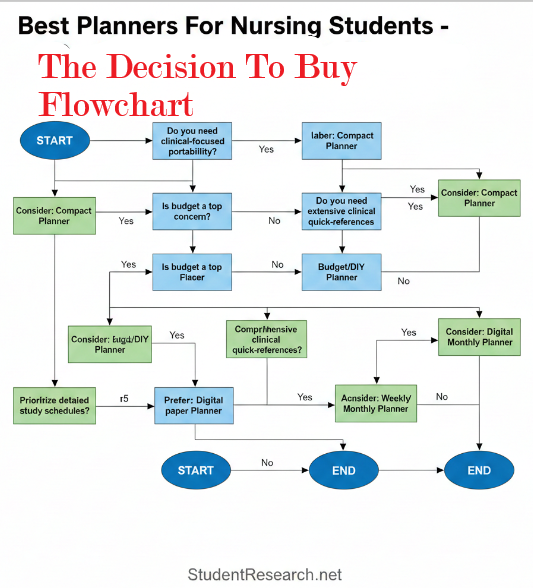
Selecting the right planner can feel overwhelming with countless options flooding the market, but knowing what features truly matter for nursing students simplifies the decision dramatically. The best planners for nursing students share specific characteristics that directly address your program’s demands. Let’s break down what to look for so you can make an informed investment in your organizational success.
Layout and Structure Considerations
Key layout elements to look for
- Weekly vs. daily spreads: Daily spreads provide hourly breakdowns ideal for clinical days with shift times and patient assignments, while weekly spreads offer better overview for balancing multiple courses simultaneously
- Hourly time blocks for clinical days: Look for planners with 6am-10pm time slots to accommodate various shift schedules, pre-clinical prep time, and post-clinical documentation
- Monthly overview pages: Essential for visualizing exam clusters, clinical rotation changes, and major project deadlines at a glance
- Academic year vs. calendar year format: Academic year planners (July-June or August-July) align with nursing program schedules, preventing wasted pages during summer breaks
Nursing-Specific Features Worth the Investment
Must-have sections
- Clinical rotation tracker: Dedicated pages for recording facility names, unit types, preceptor contact information, required documentation, and competency completion dates
- Skills checklist pages: Pre-printed lists of common nursing procedures (injections, assessments, medication administration) with checkboxes for practice and mastery tracking
- Drug calculation practice areas: Built-in spaces for working through dosage calculations, IV drip rates, and unit conversions—critical for medication exam success
- Patient care documentation space: Areas to document patient encounters, nursing diagnoses practiced, and interventions performed for clinical reflection papers
- NCLEX study schedules: Structured timelines for question bank completion, content area review, and practice test scheduling throughout your program
Practical Design Elements
- Durable binding and cover: Spiral or disc-bound planners lay flat for easy writing during clinical shifts, while hardcover protection withstands constant transport in backpacks and scrub pockets
- Portable size for clinical settings: 5×8″ or 8.5×11″ dimensions balance adequate writing space with fitting into clinical bags without adding excessive bulk
- Pocket folders for handouts: Built-in folders store clinical assignment sheets, medication cards, and important reference documents you need immediate access to
- Perforated pages or tear-out sheets: Removable pages allow submitting clinical reflections or sharing study schedules with classmates without destroying planner integrity
- Color-coding capabilities: Planners with colored tabs, multiple ink-friendly paper, or pre-printed color sections help visually separate courses, clinical vs. classroom days, and priority levels
Additional Features That Add Value
- Reference pages: Quick-access charts for normal vital signs ranges, lab value interpretations, common medication classifications, and medical abbreviations save time during clinical preparation
- Goal-setting sections: Dedicated spaces for semester goals, NCLEX target dates, and personal milestones keep you motivated and accountable throughout the program
- Self-care tracking: Mood logs, sleep trackers, and wellness check-ins remind you to prioritize mental health during demanding semesters
- Budget planning for students: Expense tracking helps manage limited finances across textbook purchases, certification exams, and clinical supplies
Top 7 Best Planners for Nursing Students: Reviews 2025
Finding the perfect planner can be game-changing for your nursing school success. We’ve thoroughly reviewed the top options available in 2025, evaluating each based on nursing-specific features, price points, and real student feedback. Here are the best planners for nursing students that will keep you organized from orientation through graduation.
Best Overall: LuxBook Nursing Planner
The LuxBook Nursing Planner earns our top spot because it combines comprehensive nursing-specific features with digital convenience at an accessible price point. This digital planner includes medication study sheets, clinical rotation trackers, and NCLEX study schedules—all organized in a clean, aesthetically pleasing layout that nursing students rave about. Its compatibility with GoodNotes, Notability, and Xodo makes it incredibly versatile for students who prefer digital organization.
General Points
- Features: Digital format with nursing ethics page, medication study templates, habit tracker, research templates, common nursing abbreviations reference, skeletal anatomy page, and customizable weekly/daily spreads
- Best for: Tech-savvy nursing students who want instant access and the ability to print sections as needed
- Price range: $15-20 (digital download with lifetime access)
- Where to buy: Etsy, instant digital download
- Value assessment: Exceptional value—costs less than paper planners while offering more flexibility and nursing-specific content
Pros:
Instant download, affordable, works on tablets and can be printed, includes valuable nursing reference pages, no shipping wait time, lifetime access
Cons:
Requires tablet or printing costs, learning curve for digital planning apps, no physical tactile experience
Best Budget-Friendly: Etsy Nursing Planner Printable
For budget-conscious nursing students, Etsy offers numerous printable planner options starting at just $3.29. These affordable planners prove you don’t need to spend a fortune to stay organized during nursing school. While they lack some premium features, they provide essential scheduling pages, clinical rotation trackers, and assignment logs—everything you truly need without the unnecessary extras that inflate prices.
General Points
- Features: Basic weekly spreads, clinical rotation pages, assignment trackers, medication calculation practice space, customizable sections
- Best for: Students on tight budgets, those who prefer printing only what they need, minimalists who want simple organization
- Price range: $3.29-$10 (one-time digital purchase)
- Where to buy: Etsy marketplace from various sellers
- Value assessment: Unbeatable affordability—perfect starter planner or backup option
Pros:
Extremely affordable, instant download, print only pages you need, multiple seller options, often includes bonuses like stickers or bookmarks
Cons:
Basic design, may require additional purchases for complete organization, variable quality between sellers, paper and printing costs add up
Best Digital/Hybrid Option: GoodNotes/Notability with Plum Paper
GoodNotes App | Plum Paper Planners
This powerful combination represents the best of both worlds for nursing students who want digital flexibility with physical backup options. GoodNotes and Notability apps provide robust digital planning capabilities with handwriting recognition, while Plum Paper offers deeply customizable physical planners that perfectly complement digital workflows. Many successful nursing students use both systems—digital for daily scheduling and notes, physical for big-picture planning and goal setting.
General Points
- Features: Cloud sync across devices, handwriting recognition, unlimited space, audio recording capability (digital), customizable layouts and covers (Plum Paper), nursing-specific add-ons available
- Best for: Students who want flexibility to switch between digital and paper, those with iPads or tablets, tech-forward learners
- Price range: GoodNotes $9.99 one-time, Notability free-$14.99, Plum Paper $18-25
- Where to buy: App Store, Plum Paper website
- Value assessment: Medium to high investment but maximum flexibility and functionality
Pros:
Ultimate flexibility, sync across devices, search capability, unlimited storage, eco-friendly, combine strengths of both formats
Cons:
Requires technology investment (tablet/stylus), steeper learning curve, subscription costs for some features, potential for digital distraction
Best Comprehensive Academic Planner: Level Up RN Nursing School Study Planner
Level Up RN’s planner stands out for its incredibly thorough approach to nursing school organization, created by actual nurse educators who understand exactly what students need. This planner includes reference pages for lab values, vital signs, EKG interpretation, medication levels, and more—essentially combining your planner with a clinical quick-reference guide. The monthly “Cool Chicken” drawings add delightful touches that make studying feel less overwhelming.
General Points
- Features: Clinical quick-reference pages, lab values charts, medication level guides, daily/weekly/monthly spreads, habit trackers, assignment planning, goal-setting sections, 12-month academic format
- Best for: Detail-oriented students who want all-in-one organization, those preparing for NCLEX alongside coursework, visual learners
- Price range: $49 (often on sale for $40 or bundled with other Level Up RN products)
- Where to buy: LevelUpRN.com, Amazon, eBay
- Value assessment: Higher price justified by comprehensive nursing content and quality construction
Pros:
Created by nurse educators, extensive clinical reference materials, durable binding, academic year format, supports popular YouTube nursing education channel, member discounts available
Cons:
Higher price point, may be too detailed for some students, physical size requires bag space, dated format limits flexibility
Best Customizable Planner: Nurse in the Making & CareRev
Nurse in the Making on Etsy | CareRev App
For nursing students who want complete control over their organizational system, Nurse in the Making offers customizable printable planners while CareRev provides digital shift management specifically for nursing students and professionals. This combination allows you to build exactly the planning system you need—choose your layout, add only relevant sections, and adjust as your program requirements change semester to semester.
General Points
- Features: Fully customizable layouts, mix-and-match sections, nursing-specific templates, clinical shift scheduling, facility tracking, preceptor contact management
- Best for: Students with unique scheduling needs, those who want to design their perfect system, minimalists and maximalists alike
- Price range: Nurse in the Making $8-15, CareRev free app
- Where to buy: Etsy, iOS/Android app stores
- Value assessment: Excellent value for personalization capabilities
Pros:
Complete customization, pay only for what you need, adaptable to changing needs, combines student and professional features, lifetime access to templates
Cons:
Requires time to set up initially, decision fatigue from too many options, may need to purchase multiple template sets
Best Compact Planner for Clinical Rotations: The Ultimate Nursing Student Planner
When you’re rushing between clinical floors with limited pocket space, this compact planner becomes your best friend. Sized perfectly to fit in scrub pockets or small clinical bags, it focuses exclusively on what you need during rotations—shift times, patient assignments, skills checklists, and quick medication references. The water-resistant cover protects against inevitable spills in fast-paced clinical environments.
General Points
- Features: Pocket-friendly 5×7″ size, water-resistant cover, hourly clinical day spreads, patient assignment tracker, skills competency checklist, medication calculation pages, durable spiral binding
- Best for: Students prioritizing portability, those primarily needing clinical organization, minimalists
- Price range: $15-22
- Where to buy: Amazon, nursing school bookstores, specialty retailers
- Value assessment: Worth the investment for clinical-focused students
Pros:
Perfect size for clinical settings, durable construction withstands hospital environment, focused content without clutter, affordable, quick reference pages
Cons:
Limited space for detailed notes, small size may be too compact for some, lacks comprehensive semester planning, not ideal for classroom organization
Best Premium Planner: Erin Condren LifePlanner
If you’re willing to invest in the best quality planner available, Erin Condren’s LifePlanner delivers luxury planning with healthcare-themed customization options. The thick 80lb paper prevents ink bleed-through, the hand-coiled binding allows pages to lay flat, and the customizable covers let you create a planner that truly reflects your personality. While expensive, the superior construction means this planner will last your entire nursing program without falling apart.
General Points
- Features: Premium 80lb paper, hand-coiled in USA, fully customizable covers and layouts, vertical or horizontal weekly spreads, monthly goal-setting, inspirational quotes, pocket folders, sticker sheets, productivity pages
- Best for: Students who value premium quality, those wanting a planner that doubles as a journal, organized individuals who plan to use it daily
- Price range: $55-70 (often sales and discounts available)
- Where to buy: ErinCondren.com with frequent promotional offers
- Value assessment: Premium price for premium quality—investment piece for serious planners
Pros:
Exceptional paper quality, beautiful aesthetic design, highly customizable, durable construction, lifetime customer support, made in USA, doubles as motivation tool
Cons:
Expensive compared to alternatives, long shipping times during peak season, may have too many features for simple needs, interchangeable covers sold separately
Nursing Student Planner Alternatives: Digital vs. Paper Options
Choosing between digital and paper planners often feels like picking sides in a debate, but the smartest nursing students recognize that each format offers distinct advantages depending on your learning style and circumstances. Understanding the strengths of both options—and how they can work together—helps you build the most effective organizational system for your unique needs.
Best Paper Planners: Advantages for Nursing Students
Top Paper Options: Student Nurse Planner (Etsy/Specialty Shops), Erin Condren, Plum Paper, Passion Planner, Nurse in the Making, and RekMed
- Tactile memory benefits: Research shows that physically writing information enhances memory retention by up to 50% compared to typing, making paper planners ideal for memorizing medication dosages, lab values, and nursing procedures
- No battery or tech issues: Paper planners work everywhere without charging, WiFi, or device compatibility concerns—critical during 12-hour clinical shifts when outlets are scarce
- Better retention through handwriting: The motor memory created while writing helps cement clinical rotation schedules, exam dates, and care plan deadlines into long-term memory
- Works in all clinical environments: Many hospitals restrict personal device usage in patient care areas, making paper planners the only reliable option for documenting patient assignments and shift notes
Best Digital Planning Tools for Nursing School
Top Digital Options: Anki, UWorld, Medscape, Notion, Google Suite, GoodNotes, Notability, NurseGrid
- Cloud synchronization across devices: Access your schedule from phone, tablet, or computer, ensuring you always have clinical rotation details and assignment deadlines regardless of which device is available
- Easy editing and rearranging: When clinical rotations change last-minute or professors adjust exam dates, digital planners allow instant updates without messy cross-outs or wasted pages
- Automated reminders and notifications: Set alerts for medication exam prep, care plan submissions, and clinical documentation deadlines so nothing slips through the cracks during hectic weeks
- Integration with other apps: Connect your planner with clinical documentation apps, medication reference tools like Medscape, and study platforms like UWorld for seamless workflow across all your nursing school needs
Hybrid Approach: Getting the Best of Both Worlds
For nursing students seeking optimal flexibility, combining digital and paper planning methods delivers unmatched advantages. Plum Paper offers deep customization for unique scheduling needs, LuxBook provides excellent digital templates compatible with GoodNotes and Notability, while physical options like Nurse in the Making or Level Up RN offer specialized nursing content alongside schedule management.
- Combining both methods effectively: Use digital tools for daily scheduling, quick reference, and study app integration, while maintaining a paper planner for big-picture semester planning, goal tracking, and clinical reflection where deeper thinking benefits from handwriting
- When to use paper vs. digital: Choose paper for clinical shifts, exam prep notes, and situations requiring focused attention without digital distractions; opt for digital when you need quick access, searchability, or integration with other study tools
- Recommended apps to complement paper planners: Pair physical planners with NurseGrid for shift scheduling, Google Calendar for shared study group coordination, and GoodNotes for digital note-taking during lectures
- Backup strategies: Photograph paper planner pages weekly as digital backup, maintain cloud storage of important documents, and keep critical rotation information in both formats to prevent disaster if one system fails
How to Get the Most Value from Your Nursing Planner
Even the best planners for nursing students won’t help if you don’t use them effectively. The difference between struggling students and successful ones often comes down to consistent planning habits rather than planner choice. Here’s exactly how to transform your planner from a nice-to-have accessory into your most valuable nursing school survival tool.
Setting Up Your Planner for Success
- Transferring syllabus information immediately: During the first week of each semester, block out every exam date, clinical rotation, skills lab session, and major assignment deadline from all course syllabi—this creates your roadmap for the entire term
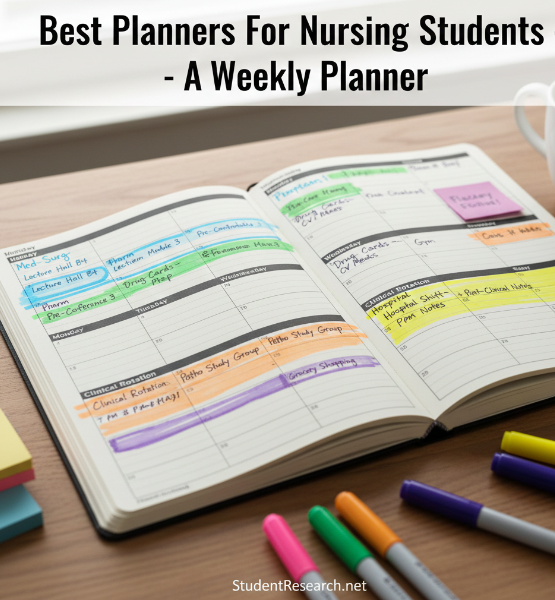
- Color-coding system for different subjects: Assign specific colors to each course (blue for Med-Surg, green for Pharmacology, red for Mental Health) so you can visually identify which subject needs attention at a glance
- Blocking out clinical rotation dates: Mark all clinical days with facility names, shift times, and preceptor contact information well in advance, then work backward to schedule pre-clinical preparation time
- Setting up recurring study sessions: Schedule weekly NCLEX question practice, pharmacology review sessions, and skills lab practice as non-negotiable recurring appointments just like classes
Daily Planning Habits That Work
Morning planning routine
- Reviewing the day ahead: Spend 5 minutes each morning reviewing your schedule, identifying top priorities, and mentally preparing for clinical challenges or exams
- Prioritizing tasks: Mark your top 3 must-complete items for the day, ensuring critical assignments and clinical prep take precedence over less urgent activities
- Setting realistic goals: Limit daily task lists to achievable quantities—overloading your schedule guarantees disappointment and creates planning system abandonment
Evening review routine
- Reflecting on completed tasks: Check off finished items for motivation, note what worked well, and identify any obstacles that prevented completion
- Preparing for next day: Review tomorrow’s schedule, pack clinical bags, prepare study materials, and set out scrubs or professional attire to eliminate morning stress
- Adjusting schedules as needed: Move incomplete tasks to appropriate future dates rather than letting them clutter your current day, maintaining planner accuracy and reducing overwhelm
Weekly and Monthly Review Practices
- Assessing progress toward goals: Every Sunday, review your semester goals, evaluate progress on long-term projects, and celebrate completed milestones to maintain motivation
- Identifying time-wasting patterns: Notice recurring issues like last-minute cramming or missed study sessions, then adjust your planning approach to eliminate these problems
- Adjusting strategies for improvement: If certain planning methods aren’t working (like daily spreads feeling too restrictive), experiment with different layouts or time-blocking approaches
- Planning for upcoming exams and deadlines: Look ahead 2-4 weeks to identify exam clusters or heavy assignment periods, then schedule extra study time in advance
Integration with Other Organization Tools
- Pairing with clinical documentation apps: Sync your planner schedule with apps like NurseGrid or clinical facility scheduling systems to maintain unified calendars across platforms
- Using alongside medication reference apps: Reference Medscape, Epocrates, or Davis’s Drug Guide directly from planner medication study pages for efficient pharmacology learning
- Coordinating with study group schedules: Share availability through Google Calendar or group messaging, then transfer confirmed study sessions into your planner for accountability
- Syncing with hospital scheduling systems: When facilities release clinical schedules electronically, immediately transfer those details into your planner to prevent conflicts with personal obligations
Cheap and Affordable Nursing Student Planner Options
Budget constraints shouldn’t prevent you from staying organized during nursing school. Fortunately, numerous affordable alternatives deliver excellent organization without the premium price tag. Whether you’re stretching limited financial aid or simply prefer not to invest heavily in planning tools, these budget-friendly options prove that effective organization doesn’t require expensive purchases.
DIY: How to Create Your Own Nursing Planner
- Free printable templates online: Websites like Pinterest, Teachers Pay Teachers, and nursing student blogs offer free downloadable planner pages specifically designed for nursing students—simply print and organize in a binder
- Bullet journal method for nursing students: A simple notebook transforms into a customized planner using the bullet journal system, allowing complete creative control over layouts, trackers, and nursing-specific pages at minimal cost
- Using binders and customizable inserts: Purchase a basic three-ring binder and print only the planner pages you actually need, adding or removing sections as your requirements change throughout the program
- Digital tools and free apps: Google Calendar, Notion (free version), and NurseGrid provide robust planning capabilities without any financial investment
When to Buy Premium vs. Budget Planners
- Determining your planning needs: Students with complex schedules across multiple clinical sites benefit most from comprehensive planners, while those with straightforward schedules can succeed with basic options
- Trial periods with cheaper options: Start with affordable planners to discover your planning style and preferences before investing in premium versions
- Long-term value considerations: A $50 planner used daily throughout nursing school costs less per day than daily coffee, making quality investments worthwhile for committed planners
- Student discount codes and deals: Many premium planner companies offer nursing student discounts (15-20% off)—always search for promo codes before purchasing
Making Your Planner Last: Cost-Saving Tips
- Protection and care tips: Use protective covers, avoid overstuffing pockets, and keep planners away from clinical spills to extend lifespan throughout your program
- Archiving previous semesters: Remove completed semester pages to reduce bulk, storing them separately for future reference during NCLEX prep
- Reusing certain sections: Reference pages for lab values, vital signs, and medication calculations remain useful across multiple semesters—transfer these to new planners to avoid repurchasing
- Sustainable planning practices: Choose refillable planner systems where you replace only dated pages annually rather than purchasing entirely new planners each year
Conclusion
Surviving and thriving through nursing school requires more than intelligence and dedication—it demands systematic organization that keeps pace with the profession’s relentless demands. The best planners for nursing students serve as external brains, tracking countless deadlines, clinical rotations, medication calculations, and NCLEX preparation tasks that would overwhelm even the most organized minds.
Throughout this guide, we’ve explored why specialized nursing planners outperform generic options, identified essential features worth investing in, and reviewed seven top-rated planners spanning every budget and preference. Whether you choose the premium Erin Condren LifePlanner, the budget-friendly Etsy printables, or a hybrid digital-physical system, the key lies in selecting a planner that matches your learning style and using it consistently. As such, find the best planners for nursing students 2026: 7 top picks reviewed, budget to premium options, features guide, and organization tips. Find yours!
Remember that finding the perfect planner often involves trial and error—what works brilliantly for your classmate might feel completely wrong for you. Don’t hesitate to experiment with different formats, layouts, and systems until you discover your ideal organizational match. The investment you make today in one of the best planners for nursing students will pay dividends throughout your entire nursing career, establishing organizational habits that transition seamlessly from student to practicing nurse. Start planning for next semester now. Review the options we’ve covered, consider your specific needs and budget, then commit to an organizational system that will support your success. Your future self—the confident, organized nurse who never misses clinical requirements or crams for exams—will thank you for making this choice today. Nursing school is challenging enough without adding disorganization to the mix. Equip yourself with the right planning tools and watch your stress decrease while your grades and confidence soar
Tired of risking your GPA? Why settle for less? Every paper is crafted by writers with Master’s or PhD degrees who truly understand your discipline. Get the quality assurance your academic career demands. Elevate your grades instantly at StudentResearch.net.

