

Nursing education is undergoing a massive digital transformation, moving away from dry textbooks and toward interactive, high-stakes simulations. If you are a student trying to memorize the complexities of pharmacology or the rapid-fire steps of ACLS, you know that traditional studying can sometimes feel like a chore. Integrating games for nursing students into your routine isn’t just about having fun; it’s about building the muscle memory and critical thinking skills required for real-world patient care.
The Gamification Revolution in Healthcare Education
The shift toward gamification in nursing schools is driven by the need for safer, more engaging ways to practice clinical judgment. By using games for nursing students, learners can make mistakes in a risk-free environment, allowing for immediate feedback and deeper retention. This section explores why these digital and physical tools are becoming the gold standard for modern medical training.
Why Play Matters in Professional Training
- Active Engagement: Unlike passive reading, gaming requires constant decision-making and input.
- Immediate Feedback Loops: Players learn instantly whether a chosen intervention helped or hindered the patient.
- Reduced Anxiety: Gamified environments allow students to practice high-pressure scenarios without the fear of harming a real person.
Bridging the Gap Between Theory and Practice
- Clinical Correlation: Turning a lecture on cardiac rhythms into a competitive quiz helps solidify the “why” behind the “what.”
- Peer Collaboration: Many interactive platforms allow students to work in teams, mimicking the interdisciplinary nature of a hospital ward.
- Student Research Integration: According to recent student research, learners who utilize gamified platforms score significantly higher on retention tests than those who use only traditional methods.
Comparing the Best Gamified Platforms
Choosing the right tool depends on whether you are focusing on NCLEX prep, anatomy, or bedside manner. Many games for nursing students offer different strengths, ranging from 3D simulations to card-based memory aids. At this juncture, the resource provides a data-driven look at how different platforms stack up against one another to help you choose the best fit for your curriculum.
Top Platform Comparison
The following table highlights the effectiveness and focus areas of popular gaming tools used in top-tier nursing programs.
| Platform Name | Primary Focus | Engagement Score (1-10) | Format |
| I. Kahoot! | General Knowledge/Trivia | 9 | Group Quiz |
| II. Level Ex | Advanced Clinical Skills | 8 | Mobile App (3D) |
| III. Nursing.com | NCLEX Mastery & Review | 10 | Interactive Video/Quiz |
| IV. vSim for Nursing | Patient Care Simulation | 9 | Web-based VR |
| V. Archy’s Anatomy | Biological Systems | 7 | Puzzle/Casual |
Detailed Review of Industry-Leading Platforms
To truly appreciate how games for nursing students revolutionize the classroom, we must look at the specific mechanics that drive their success. These five platforms represent the diverse landscape of modern medical education, each catering to different stages of the learner’s journey. From high-energy classroom competition to deep-dive clinical simulations, these tools provide the examples and templates needed for academic excellence.
I. Kahoot!: The King of Classroom Engagement
- Real-Time Competition: Utilizes a fast-paced “game show” format that forces students to recall facts under time pressure.
- Customizable Quizzes: Educators can create bespoke templates specifically for their week’s lecture, from pharmacokinetics to ethics.
- Immediate Feedback: Displays live leaderboards and instant rationales, which student research identifies as a key driver for long-term retention.
- Social Learning: Encourages peer-to-peer discussion as students often debate the “why” behind the correct answer in group settings.
- Key Features for Large Groups
- Mobile-friendly interface allows hundreds of students to join a single session via a simple PIN.
- Integrated “Ghost Mode” allows students to play against their own previous high scores to track improvement.
- Key Features for Large Groups
II. Level Ex (Relevate Health Games): High-Fidelity Clinical Play
- 3D Visual Accuracy: Features incredible medical fidelity with realistic renderings of internal organs and surgical sites.
- Neurological Engagement: Designed by game developers and neuroscientists to trigger the “flow state,” making complex procedures easier to learn.
- Specialty Focus: Offers specific modules for cardiology, pulmonology, and gastroenterology, moving beyond general nursing into advanced practice.
- Performance Analytics: Provides deep-dive data on diagnostic accuracy and procedural efficiency to help students identify personal weak spots.
- Interactive Mechanics
- Users must manipulate virtual tools with precision, mimicking the motor skills needed for invasive procedures.
- Features rare clinical cases that a student might not encounter during a standard hospital rotation.
- Interactive Mechanics
III. Nursing.com: The Ultimate NCLEX Mastery Suite
- Simclex Simulator: The only patented NCLEX simulator that uses an adaptive algorithm to mimic the actual board exam experience.
- Visual Study Aids: Incorporates over 400 “Picmonics” and 350+ nursing cheatsheets to cater to visual learners.
- Global Ranking: Allows students to see how their performance compares to thousands of other learners worldwide, fostering a sense of community.
- Risk-Free Practice: Offers a “Pass Guarantee” or triple-money-back, reflecting the platform’s confidence in its gamified prep materials.
- Mastery and Retention Tools
- Utilizes spaced-repetition algorithms to ensure students review difficult concepts at the optimal time for memory.
- Provides detailed video rationales for every practice question, turning every mistake into a learning opportunity.
- Mastery and Retention Tools
IV. vSim for Nursing: Virtual Patient Encounters
- Evidence-Based Scenarios: Co-developed by Laerdal and the National League for Nursing (NLN) to ensure all cases meet strict educational standards.
- Communication Focus: Features a dedicated SBAR (Situation, Background, Assessment, Recommendation) tool to practice vital hand-off skills.
- Lifelike Patient Responses: Virtual patients exhibit physical symptoms like sweating, cyanosis, and distress that change based on student interventions.
- EHR Integration: Students must practice real-world documentation within a simulated Electronic Health Record, a critical skill for new graduates.
- Clinical Preparedness Outcomes
- Allows for “deliberate practice,” where students can repeat high-stakes scenarios until they achieve a 100% safety score.
- Bridges the gap between the classroom and the simulation lab by providing a 24/7 accessible practice environment.
- Clinical Preparedness Outcomes
V. Archy’s Anatomy: Mastering the Biological Foundation
- Systems-Based Puzzles: Breaks down the complexity of human anatomy into digestible, interactive puzzles focused on skeletal and muscular systems.
- Casual Learning Format: Designed for shorter study bursts, making it ideal for review during commutes or breaks between clinicals.
- Interactive Labeling: Moves beyond static diagrams by requiring students to identify and place structures in a dynamic 3D space.
- Progressive Difficulty: Levels get increasingly complex, ensuring that the student is constantly challenged as their knowledge grows.
- Foundations of Nursing Practice
- Focuses on the “building blocks” of medicine, ensuring students have the anatomical vocabulary for advanced courses.
- Encourages spatial awareness of how different organ systems interact and overlap within the body.
- Foundations of Nursing Practice
Choosing Your Learning Style
- Visual Learners: Should prioritize 3D simulations like II. Level Ex to visualize internal anatomy.
- Competitive Learners: Thrive in leaderboard-style environments like I. Kahoot! or III. Nursing.com.
- Hands-on Practice: Benefit most from virtual reality-style games for nursing students that mimic bedside interactions.
Choosing Your Learning Style
- Visual Learners: Should prioritize 3D simulations like II. Level Ex to visualize internal anatomy.
- Competitive Learners: Thrive in leaderboard-style environments like I. Kahoot! or III. Nursing.com.
- Hands-on Practice: Benefit most from virtual reality-style games for nursing students that mimic bedside interactions.
More Top 10 Games for Nursing Students for Clinical Mastery
To reach the peak of your academic performance, you need a diverse toolkit that covers various nursing competencies. This list of games for nursing students has been curated based on user reviews, educational impact, and the quality of their clinical examples. From pharmacology to triage, these ten options provide the comprehensive coverage needed for total mastery.
Essential Skills and Scenario Games
- VI. Friday Night at the ER: A tabletop simulation that teaches systems thinking and patient flow management.
- Resource Management Skills
- Teaches how to balance staffing needs with incoming patient volume.
- Highlights the importance of communication between departments (ER, ICU, Med-Surg).
- Resource Management Skills
- VII. Prognosis: Your Diagnosis: A mobile app that presents complex clinical cases for diagnosis and treatment.
- Diagnostic Accuracy
- Provides detailed rationales for every correct and incorrect choice.
- Covers a wide range of specialties, including pediatrics and orthopedics.
- Diagnostic Accuracy
Vocabulary and Anatomy Boosters
- VIII. Medical Terminology Scramble: A fast-paced word game that ensures you never mix up “hypo” and “hyper” again.
- IX. Anatomy Arcade: A collection of flash-based games that make learning the skeletal and muscular systems feel like a classic arcade experience.
- X. Full Code: A high-fidelity emergency room simulator designed for those looking for the ultimate challenge in acute care.
- Critical Care Simulation
- Includes over 100 realistic cases with complex vitals and lab results.
- Uses templates for standard SOAP notes to help students practice documentation.
- Critical Care Simulation
Mastery Through Collaborative Play
Learning is often more effective when it is social, allowing for the exchange of ideas and collective problem-solving. Collaborative games for nursing students encourage peers to challenge one another and explain their reasoning out loud. This section explores how to set up group study sessions that feel less like work and more like a strategy session.
Setting Up a “Game Night” Study Session
- Define Goals: Choose one specific topic (e.g., Electrolyte Imbalances) to focus on for the evening.
- Use Prepared Templates: Download pre-made templates for Jeopardy or Bingo to save time on setup.
- Incentivize Winning: Use small rewards, like coffee gift cards, to keep the competitive spirit high.
The Role of Peer Review
- Rationalization: After a game of I. Kahoot!, have the winner explain why the correct answer was the best choice.
- Student Research Benefits: Engaging in peer-led gaming sessions is a key finding in student research, suggesting that teaching others is the highest form of learning.
- Skill Verification: Use games to verify that everyone in the study group has reached a baseline level of skills.
Tips for Integrating Games into Your Daily Routine
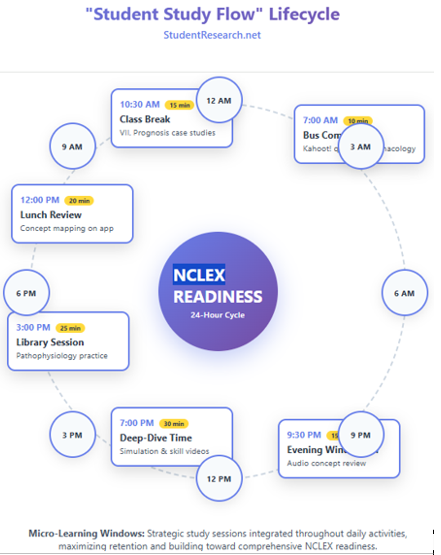
The biggest challenge for any nursing student is finding the time to fit extra activities into a packed schedule of clinicals and lectures. However, games for nursing students are designed to be “micro-learning” opportunities that can be accessed on the go. By strategically using five-minute windows throughout your day, you can turn dead time into productive study sessions.
Stop drowning in assignments! Are you struggling to balance clinical hours with complex essays? Let StudentResearch.net handle the heavy lifting. Our expert writers deliver high-quality, custom papers so you can focus on mastering your practical nursing skills.
Leveraging Mobile Technology
- Commute Learning: Use audio-based quiz games for nursing students while driving or taking the bus.
- Waiting Room Wins: Instead of scrolling social media, complete one case in VII. Prognosis: Your Diagnosis.
- Night Shift Prep: Use simulation games to stay sharp during quiet moments on clinical rotations.
Maximizing Retention with Simulation
- Repetition is Key: Play the same scenario multiple times to see how different choices affect the outcome.
- Review the Logs: Most digital games for nursing students provide a performance log; use these to identify your weak spots.
- Follow the Examples: Study the examples provided in the game’s “wrong answer” explanations to avoid repeating mistakes in real life.
Real-World Impact: From Screen to Bedside
At the end of the day, the goal of using games for nursing students is to become a safer, more competent healthcare provider. The skills practiced in a virtual environment—such as prioritizing tasks and recognizing deteriorating vitals—translate directly to the hospital floor. This section looks at the long-term professional benefits of a gamified education.
Enhancing Clinical Judgment
- Pattern Recognition: Frequent gaming helps students recognize “red flag” symptoms faster than reading a list.
- Confidence Building: Entering a clinical site feels less daunting when you have already “managed” a similar patient virtually.
- Safety First: Practicing medication administration via games significantly reduces the likelihood of real-world errors.
Evidence-Based Outcomes
- Exam Performance: Students who use interactive tools often see a 15-20% increase in test scores.
- Long-term Retention: Information learned through play is stored in long-term memory more effectively than rote memorization.
- Student Research Insights: Current student research highlights that gamification is the preferred method of learning for Gen Z and Millennial nursing cohorts.
Bridging the Gap: Games and Next-Gen NCLEX (NGN) Correlation
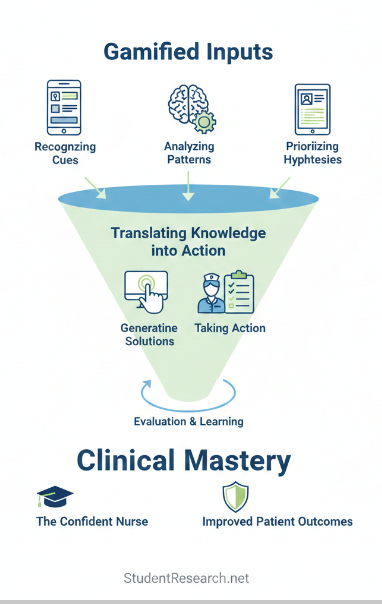
The April 2023 launch of the Next-Generation NCLEX marked a shift from simple knowledge recall to the rigorous evaluation of clinical judgment. Modern games for nursing students are specifically designed to mirror the NGN’s “unfolding case study” format, where a patient’s condition evolves based on the student’s decisions. By engaging with these digital tools, students practice the six layers of the NCSBN Clinical Judgment Measurement Model (CJMM) in a way that static textbooks cannot replicate.
- Recognizing and Analyzing Cues: Games like IV. vSim for Nursing present virtual patient records and bedside monitors, requiring students to identify “red flag” symptoms—a direct preparation for NGN “Highlighting” and “Matrix” items.
- Prioritizing Hypotheses: Interactive platforms often use “Drag-and-Drop” or “Drop-Down Cloze” mechanics, which force students to rank nursing diagnoses or predict the most likely complication, just like the “Bowtie” and “Trend” questions found on the NGN.
- Generating Solutions and Taking Action: Digital simulations require students to select interventions from a list of possibilities. According to recent student research, this “deliberate practice” helps learners master the partial-credit scoring logic (such as +/- scoring) used in NGN “Select All That Apply” (SATA) and “Extended Multiple Response” questions.
- Evaluating Outcomes: High-fidelity games for nursing students provide immediate feedback loops. If a virtual patient’s oxygen saturation drops after a wrong move, the student must evaluate the outcome and pivot—mimicking the real-world decision-making process tested in NGN unfolding cases.
Mastering the NGN Question Formats
To achieve mastery of the new exam, students must be comfortable with more than just the content; they must master the interface. Many games for nursing students incorporate exact replicas of the NGN user interface. Using these tools provides examples of how to navigate split-screen case studies where the electronic health record (EHR) is on one side and the question is on the other.
- Matrix/Grid Items: Practiced through games that require sorting symptoms into categories (e.g., “Anticipated” vs. “Contraindicated”).
- Bowtie Questions: Simulated in advanced gaming templates where students must identify a central problem along with two supporting actions and two outcomes.
- Rationale Items: Developed by games that ask “The nurse should perform [X] because of [Y],” strengthening the student’s ability to link interventions to pathophysiology.
Want to boost your GPA? Transform your academic performance with professional assistance from StudentResearch.net. We provide impeccably researched nursing papers and case studies that meet the highest clinical standards. Achieve the grades you deserve without the midnight stress!
Conclusion: Leveling Up Your Nursing Career
Mastering the vast amount of information required for a nursing degree doesn’t have to be a grueling process of isolation and flashcards. By embracing games for nursing students, you are choosing a path of active learning, critical thinking, and professional excellence. Start with one of the top 10 tools mentioned above, use the provided templates, and watch your skills reach new heights of mastery.
Meta Description: Games for nursing students offer a fun way to gain mastery and skills. Explore our top 10 examples to ace your clinicals and exams!

