

Mastering the art of rapid, accurate decision-making is the heartbeat of modern healthcare, transforming a standard caregiver into an elite practitioner. While textbooks provide the foundational “what,” engaging in fun critical thinking activities for nursing students builds the essential “how” of clinical reasoning without the burnout of traditional lectures. By stepping away from the desk and into these interactive challenges, you can sharpen your diagnostic intuition while keeping your passion for the profession vibrant and energized.
Gamifying Clinical Judgment: Why Fun Critical Thinking Activities for Nursing Students Matter
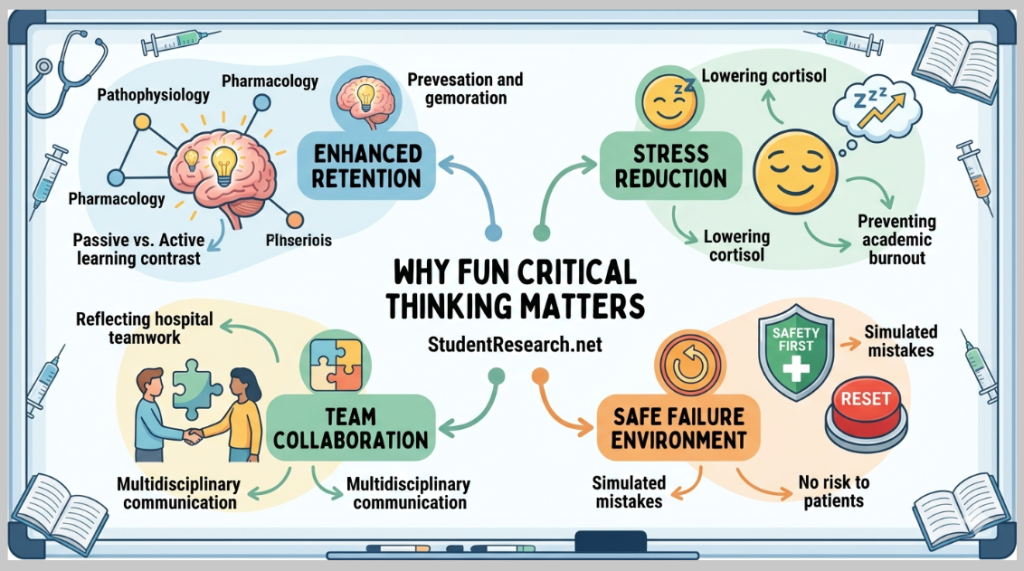
Clinical judgment is not a static trait but a dynamic skill that requires constant refinement through varied and stimulating practice. Integrating fun critical thinking activities for nursing students into your study routine helps bridge the gap between theoretical knowledge and the high-pressure reality of the hospital floor. These exercises are designed to reduce academic stress while simultaneously hardwiring the neural pathways responsible for prioritized patient care and safety.
Benefits of Interactive Learning in Nursing Education
- Enhanced Information Retention: Active engagement through play ensures complex medical concepts stick longer than passive reading.
- Stress Reduction: Gamified elements lower cortisol levels, making it easier to process and store new clinical data.
- Team Collaboration: Many interactive tasks mirror the multidisciplinary communication required in real-world hospital settings.
Psychological Advantages of Play-Based Learning
- Dopamine Release: Achieving goals in a game setting triggers a reward response that boosts motivation for difficult subjects like pharmacology.
- Safe Failure Environment: Simulated “mistakes” in a game provide a learning opportunity without any risk to actual patient safety.
Top 23 Fun Critical Thinking Activities for Nursing Students to Boost Reasoning
Expanding your mental toolkit requires a diverse range of challenges that touch on everything from medication math to ethical dilemmas. This list of fun critical thinking activities for nursing students focuses on practical application, ensuring you remain agile when faced with unexpected patient outcomes. From solo digital puzzles to group role-playing, these 23 activities are curated to elevate your clinical competence through pure engagement.
Case Study “Escape Rooms” and Digital Simulations
- The Virtual Sepsis Room: A digital race against time where students must identify early warning signs to “unlock” the next level of treatment.
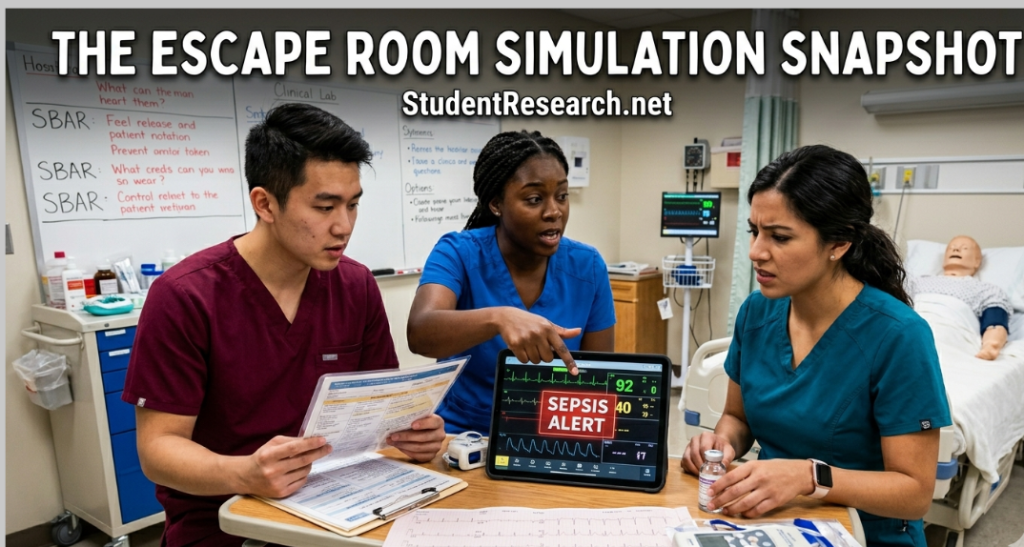
- Diagnostic Pictionary: Drawing symptoms for peers to guess, reinforcing the visual identification of clinical presentations.
- Pathophysiology Scavenger Hunt: Finding specific lab values or symptoms hidden within a complex patient chart to solve a medical mystery.
Struggling to balance clinical rotations with complex research papers? Let the professionals at StudentResearch.net handle the heavy lifting. Our specialized nursing writers deliver high-quality, evidence-based academic papers tailored to your specific rubric requirements and deadlines.
High-Stakes Skill Challenges
- The “Med-Surg” Relay: Teams compete to correctly set up IV pumps or sterile fields under a friendly, timed countdown.
- Priority Sorting Cards: Rapid-fire sorting of “patients” based on triage urgency, forcing instant prioritization.
Collaborative Strategy: Group-Based Critical Thinking Exercises
Nursing is rarely a solo sport, making group-based fun critical thinking activities for nursing students an invaluable part of your professional development. Working with peers allows you to see different perspectives on the same clinical problem, highlighting that there is often more than one “right” way to reach a solution. These collaborative sessions foster leadership skills and help you learn how to articulate your clinical reasoning clearly to others.
Ethical Debate Circles and Role-Playing Scenarios
- The Ethics Hot Seat: One student defends a difficult clinical decision while others provide evidence-based counterpoints.
- Family Conflict Role-Play: Acting out a scenario where a patient’s family disagrees with the care plan to practice soft skills and de-escalation.
- The “What If” Round Robin: Each student adds a new complication to a base case study, forcing the next person to adapt their care plan.
Multidisciplinary Simulation Tasks
- The SBAR Telephone Game: Passing patient handoff information through a line of students to see how much critical data is lost or altered.
- Interprofessional Huddle Sim: Simulating a quick 5-minute meeting between a “doctor,” “nurse,” and “pharmacist” to resolve a medication conflict.
Individual Brain Teasers for Sharp Clinical Observation
When you are studying alone, you can still utilize fun critical thinking activities for nursing students to keep your mind sharp and observant. These individual tasks focus on the “detective work” of nursing, training your eyes and ears to pick up on the subtle cues that others might miss. Consistency is key, and spending just fifteen minutes a day on these mental exercises can significantly improve your NCLEX readiness and bedside performance.
Visual Diagnosis Puzzles and Chart Analysis
- Spot the Error Charts: Reviewing intentionally flawed patient charts to find documentation errors or contraindications.
- ECG Rhythm Matching: A fast-paced matching game connecting rhythm strips to their corresponding cardiac interventions.
- Pharmacology Mnemonics Art: Creating visual posters or digital art that links drug classes to their primary side effects.
Mental Mapping Techniques
- Concept Map Speed Runs: Drawing a full pathophysiology map for a condition like Heart Failure in under three minutes.
- Reflective Journaling Prompts: Using specific “What went right/wrong?” prompts after clinical shifts to analyze decision-making patterns.
Technology-Driven Critical Thinking Tools for Modern Nurses
In the digital age, fun critical thinking activities for nursing students have evolved to include sophisticated apps and VR platforms that offer hyper-realistic training. Embracing these tech-driven resources allows you to practice rare or high-risk procedures as many times as needed to achieve mastery. These tools often provide instant feedback, which is crucial for correcting misconceptions before they become habits in your clinical practice.
Mobile Apps and Virtual Reality Simulations
- NCLEX Question Apps with Streaks: Gamifying daily practice questions by maintaining a “knowledge streak” against friends.
- VR Disaster Triage: Using headsets to enter a simulated mass-casualty event and practice rapid-fire triage protocols.
- Anatomy AR Models: Using augmented reality to “walk through” a 3D heart or lung to visualize disease progression.
Interactive Webinars and Online Forums
- Live Case Study Polls: Participating in real-time online voting for the “next best step” in a live-streamed clinical case.
- Digital Peer-Review Groups: Sharing care plans on secure platforms to receive constructive “critical thinking” feedback from global peers.
Implementing These Activities into Your Nursing Study Routine
Knowing the best fun critical thinking activities for nursing students is only half the battle; the real progress happens when you integrate them into a consistent schedule. You don’t need hours of extra time; rather, you should look for ways to swap out dry reading sessions for these more active, high-impact methods. By making these exercises a regular habit, you ensure that your clinical judgment remains sharp, agile, and ready for the complexities of the 2026 healthcare landscape.
Setting Weekly Critical Thinking Goals
- The 15-Minute Daily Challenge: Dedicate the first fifteen minutes of every study block to one “brain teaser” activity.
- Peer Study Swap: Meet once a week with a partner specifically to run through one “Escape Room” or role-play scenario.
- Reward-Based Milestones: Treat yourself after completing a difficult set of prioritized case studies or a high-score simulation.
Tracking Your Growth and Competence
- Simulation Logbooks: Keeping a record of your “Aha!” moments during these activities to see how your logic has evolved.
- Skill Checklists: Using a physical list of clinical skills to mark off as you master them through gamified practice.
Want to boost your GPA without losing sleep over citations? StudentResearch.net provides expert assistance for all your nursing essays and capstone projects. Don’t let a difficult assignment hold you back; order the relevant academic writing service you require today!
Conclusion: Elevating Your Nursing Career Through Interactive Growth
As you transition from the classroom to the clinic, the ability to think on your feet will be your greatest asset in providing safe, high-quality patient care. These fun critical thinking activities for nursing students are more than just games; they are the building blocks of a resilient and perceptive professional identity. By prioritizing engagement and active learning today, you are ensuring that your future patients receive the most thoughtful and effective care possible.
Enhance your clinical skills using fun critical thinking activities for nursing students to master complex scenarios and improve patient outcomes.
Meta Description: Enhance your clinical skills using fun critical thinking activities for nursing students to master complex scenarios and improve patient outcomes.

