

Understanding Clinical Goals for Nursing Students
Entering the clinical environment is a pivotal moment in a nurse’s education, marking the transition from theoretical knowledge to hands-on patient care. Setting specific clinical goals for nursing students is essential to navigate this high-stakes environment with confidence and purpose. Through diligent student research, learners can identify the core competencies required to provide safe and effective care in diverse healthcare settings. By engaging in deep student research regarding their specific placements, students can tailor their objectives to meet the unique needs of their patient populations. Understanding the “how” and “why” of these objectives is the first step in recognizing why is goal setting important for nursing success?
Why Is Goal Setting Important for Nursing Success?
- Provides Direction: Offers a clear roadmap for what needs to be achieved during a clinical rotation.
- Enhances Motivation: Keeps students engaged by providing measurable milestones of progress.
- Increases Accountability: Encourages students to take ownership of their learning and professional development.
- Improves Patient Safety: Ensures that students are focused on mastering critical safety protocols.
- Builds Confidence: Achieving small goals builds the self-assurance needed to handle complex clinical situations.
- Facilitates Evaluation: Provides a framework for clinical instructors to offer specific, constructive feedback.
Definition of SMART Clinical Objectives
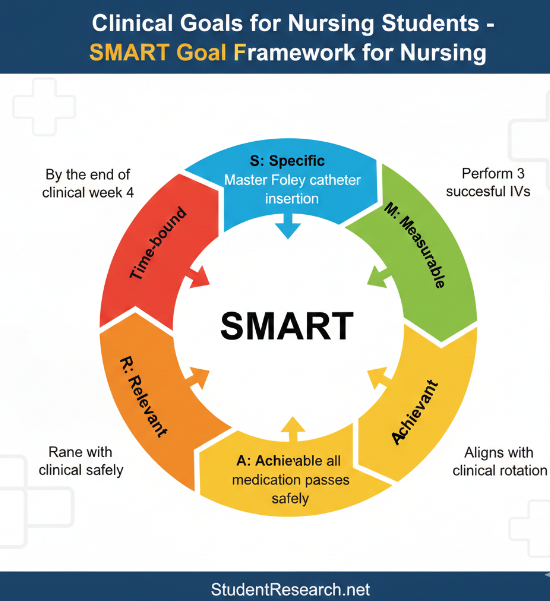
- Specific: Clearly defined targets (e.g., “Master subcutaneous injections”).
- Measurable: Objectives that can be quantified or observed.
- Achievable: Realistic goals based on the student’s current level of training.
- Relevant: Goals that align with clinical course objectives and professional standards.
- Time-bound: Set within a specific timeframe, such as by the end of a shift or rotation.
Ways to Master Foundational Patient Care
Mastering foundational care is the bedrock of nursing practice, as it establishes the trust and safety necessary for more complex interventions. Students must focus on perfecting basic skills to ensure they can provide holistic support that addresses both the physical and emotional needs of their patients. Developing these core competencies early allows for a smoother transition into advanced clinical responsibilities.
- Practice Active Listening: Engage fully with patients to understand their concerns and preferences.
- Prioritize Patient Privacy: Always use curtains and drapes to maintain dignity during care.
- Maintain Hand Hygiene: Adhere to strict washing protocols before and after every patient contact.
- Master Body Mechanics: Use proper techniques when lifting or moving patients to prevent injury.
- Coordinate Care: Effective patient care begins with a thorough physical assessment.
It is vital for every nursing student to learn how to perform a comprehensive head-to-toe assessment.
How to Perform a Comprehensive Head-to-Toe Assessment
A systematic head-to-toe assessment ensures that no clinical detail is overlooked during the initial patient encounter. This process allows the nursing student to establish a baseline and identify any immediate changes in a patient’s condition.
- Neurological Status: Assess orientation to person, place, and time, and check pupil reactivity.
- Vital Signs: Record temperature, pulse, respirations, blood pressure, and oxygen saturation.
- Skin Integrity: Check for color, warmth, moisture, and any signs of breakdown.
- Cardiovascular and Respiratory: Auscultate heart sounds and lung fields in all lobes.
- Abdominal and GI: Inspect, auscultate, and palpate the abdomen, noting bowel sounds.
- Musculoskeletal: Evaluate range of motion and strength in all extremities.
Steps to Ensure Patient Safety and Comfort
- Perform Bedside Shift Reports: Include the patient in the handoff to ensure they are aware of the plan.
- Maintain a Clear Environment: Keep the patient’s room free of clutter and trip hazards.
- Utilize Bed Alarms: Ensure alarms are active and set correctly for patients at high risk of falls.
- Ensure Proper Bed Height: Keep the bed in the lowest position when not at the bedside.
- Verify Patient Identification: Always check the wristband and ask for two identifiers before any intervention.
Best Practices for Patient Hygiene and Mobility
- Encourage Early Ambulation: Assist patients in moving as soon as it is clinically safe.
- Provide Oral Care: Offer mouth care at least twice daily, especially for NPO patients.
- Perform Skin Care during Baths: Use the opportunity of a bath to perform a detailed skin inspection.
- Implement Turning Schedules: Reposition immobile patients every two hours to prevent pressure injuries.
- Assist with ADLs: Help patients with grooming and dressing to promote a sense of well-being.
5 Examples of Foundational Care Goals
- Goal 1: Perform a complete head-to-toe assessment independently on two patients.
- Goal 2: Demonstrate 100% compliance with hand hygiene and PPE protocols throughout the shift.
- Goal 3: Correctively position and turn three immobile patients according to protocol.
- Goal 4: Conduct three safe patient transfers from bed to chair using appropriate assistive devices.
- Goal 5: Maintain a clean and organized patient environment for all assigned patients.
Guide to Excellence in Clinical Technical Skills
Developing proficiency in technical skills is a core objective that requires a blend of manual dexterity and theoretical understanding. As students move beyond basic care, they must focus on the precision required for invasive procedures. Mastering these tasks leads students to ask, how do I improve procedural competence?
How Do I Improve Procedural Competence?
- Utilize Simulation Labs: Practice high-risk skills in a controlled environment.
- Review Hospital Policies: Always check the specific facility’s manual for current procedures.
- Seek Supervision: Always ask a clinical instructor or preceptor to observe your first few attempts.
- Visualize the Steps: Mentally rehearse the procedure from start to finish.
- Reflect on Performance: Analyze what went well and what could be improved after every intervention.
Steps to Successful IV and Phlebotomy Insertion
- Gather All Supplies: Prepare your start kit, extension set, and saline flush beforehand.
- Select the Best Site: Look for a straight, bouncy vein, typically starting distally.
- Ensure Proper Stabilization: Use your non-dominant hand to anchor the vein.
- Observe for Blood Return: Watch for the “flash” in the chamber before advancing the catheter.
- Secure the Site: Use a transparent dressing to allow for continuous monitoring.
Understanding Wound Care Management and Dressing Types
- Assess the Wound Bed: Document the color, size, and any presence of drainage.
- Maintain Sterile Technique: Follow strict aseptic protocols for surgical or deep wounds.
- Identify Dressing Types: Learn when to use hydrocolloids versus alginates.
- Cleanse Properly: Use ordered solutions to irrigate the wound from clean to dirty areas.
- Educate the Patient: Explain the signs of infection, such as increased redness or odor.
5 Examples of Technical Skill Goals
- Goal 6: Successfully initiate two peripheral IV lines under the supervision of a preceptor.
- Goal 7: Demonstrate the correct sterile technique while performing a complex dressing change.
- Goal 8: Correctively identify and name five different types of wound dressings and their indications.
- Goal 9: Independently set up and prime a secondary (piggyback) IV medication line.
- Goal 10: Perform a successful phlebotomy draw on the first attempt during a clinical shift.
Ways to Improve Medication Administration and Safety
Medication administration is one of the most critical responsibilities a nurse carries, requiring absolute focus. Students must move beyond simply following orders to understanding the risks associated with every dose. This safety process begins with asking, what is the six rights protocol in nursing?
What Is the Six Rights Protocol in Nursing?
The Six Rights Protocol is a standardized safety framework designed to prevent medication errors.
- Right Patient: Confirm the patient’s identity using at least two identifiers.
- Right Medication: Verify the drug label against the MAR three times.
- Right Dose: Double-check the dosage calculations against the provider’s order.
- Right Route: Ensure the medication is administered via the correct path specified.
- Right Time: Administer the medication within the approved facility timeframe.
- Right Documentation: Record the administration immediately after the patient has taken the medication.
How to Educate Patients on Medication Side Effects
- Use Simple Language: Avoid medical jargon when explaining side effects.
- Identify Common Reactions: Inform the patient about frequent side effects like drowsiness.
- Highlight “Red Flag” Symptoms: List severe symptoms that require immediate notification.
- Provide Written Materials: Give the patient a printed handout to refer to later.
- Use the “Teach-Back” Method: Ask the patient to explain back how they should take the medication.
Steps to Prevent Medication Errors in High-Stakes Environments
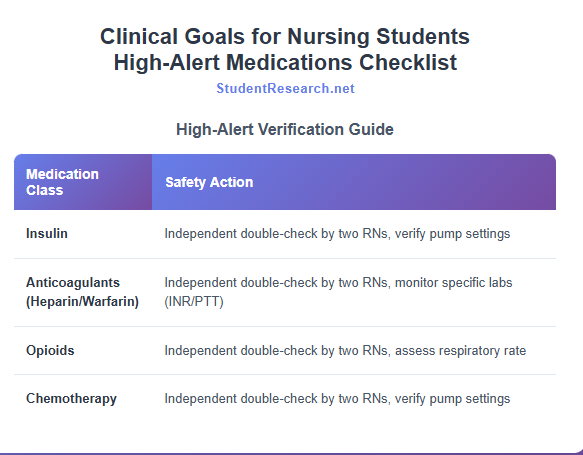
- Minimize Distractions: Establish a “no-interruption zone” while preparing medications.
- Verify High-Alert Medications: Have a second licensed nurse double-check high-risk doses.
- Check for Allergies: Re-verify allergies on the MAR and wristband before administration.
- Scan the Barcode: Utilize eMAR scanning technology for every single dose.
- Question Unclear Orders: Never assume an order is correct if it seems inappropriate.
5 Examples of Medication Administration Goals
- Goal 11: Administer all scheduled medications for two patients using the “Six Rights” protocol.
- Goal 12: Successfully perform and verify three different drug dosage calculations.
- Goal 13: Conduct a full medication education session for a patient on a new anticoagulant.
- Goal 14: Identify the mechanism of action and side effects for every medication administered.
- Goal 15: Consistently document the patient’s response to PRN pain medications within 60 minutes.
Steps to Developing Critical Thinking and Prioritization
Critical thinking is the ability to process complex data and make informed clinical decisions under pressure. Students must learn to prioritize patient needs based on clinical stability. A key starting point is learning how to organize a nursing shift for maximum efficiency.
How to Organize a Nursing Shift for Maximum Efficiency
- Start with a “Brain Sheet”: Track vitals, meds, and tasks for all assigned patients.
- Perform Immediate Bedside Rounds: Check on every patient at the start of the shift.
- Categorize Tasks: Use a “Must Do” and “Should Do” system to manage time.
- Cluster Care: Group activities to minimize room entries and save time.
- Anticipate Needs: Prepare supplies for scheduled procedures ahead of time.
Reasons for Recognizing Early Signs of Patient Decline
- Prevents Adverse Events: Early intervention can stop a minor issue from escalating.
- Reduces Length of Stay: Promptly addressing complications leads to faster recovery.
- Improves Patient Outcomes: Recognizing subtle changes like tachypnea saves lives.
- Facilitates Timely Escalation: Provides the physician with actionable data before a crisis.
Ways to Delegate Tasks to the Interprofessional Team
- Assess the Scope of Practice: Only delegate tasks within the team member’s capability.
- Provide Clear Instructions: Communicate exactly what needs to be done and the timeframe.
- Follow Up: Check in to ensure the task was completed correctly.
- Retain Accountability: Remember that you are ultimately responsible for the outcome of delegated care.
5 Examples of Critical Thinking Goals
- Goal 16: Prioritize care for a three-patient assignment independently based on acuity.
- Goal 17: Identify three subtle clinical indicators of patient decline and report them.
- Goal 18: Successfully cluster care for a complex patient to improve time management.
- Goal 19: Participate in a “Rapid Response” or mock code to observe critical thinking.
- Goal 20: Delegate at least two appropriate tasks to a CNA and evaluate completion.
Struggling to translate clinical theory into a high-distinction paper? Let StudentResearch.net help. Our team consists of degree-holding professionals with advanced qualifications, ensuring every assignment meets the highest standards of subject matter expertise and academic rigor.
Benefits of Interprofessional Communication and Collaboration
Effective communication is the glue that holds the healthcare team together and ensures patient safety. When nursing students collaborate, they contribute to a culture of clinical excellence.
- Reduces Medical Errors: Clear communication prevents misunderstandings regarding orders.
- Enhances Patient Satisfaction: Patients feel secure when they see a unified care team.
- Shortens Recovery Times: Collaborative planning ensures all aspects of health are addressed.
- Promotes Shared Knowledge: Working with specialists provides a broader perspective on care.
Standardizing this communication is vital for patient safety, specifically understanding what does the SBAR method mean for patient handoffs?
What Does the SBAR Method Mean for Patient Handoffs?
SBAR (Situation, Background, Assessment, Recommendation) provides a structured framework for clinical communication.
How to Communicate Effectively with Physicians and Families
- Prepare Before Calling: Have the patient’s chart and latest vitals ready before calling.
- Use Active Listening with Families: Acknowledge their emotions and provide clear updates.
- Be Concise and Direct: State the purpose of your communication immediately.
Improving Clinical Accuracy Through Professional Documentation
- Document in Real-Time: Chart interventions immediately to ensure accuracy.
- Be Objective: Focus on observable facts and direct quotes.
- Follow Documentation Rules: Ensure every assessment and intervention is recorded.
5 Examples of Communication Goals
- Goal 21: Use the SBAR format to provide a comprehensive shift handoff for two patients.
- Goal 22: Participate in interdisciplinary rounds and contribute one clinical observation.
- Goal 23: Demonstrate therapeutic communication techniques with a concerned family member.
- Goal 24: Document a complete head-to-toe assessment without the need for corrections.
- Goal 25: Call a physician to report a change in status using the SBAR framework.
Worried about the integrity of your next nursing essay? At StudentResearch.net, we guarantee 100% original content written from scratch. We provide comprehensive plagiarism reports with every order, ensuring your work upholds the strictest standards of academic honesty.
Learning Professionalism and Emotional Intelligence
Professionalism involves maintaining high ethical standards and managing emotions in stressful situations. Developing emotional intelligence allows students to remain effective when clinical environments become chaotic. This resilience is key to a long career, prompting the question: why is emotional resilience important in nursing?
Why Is Emotional Resilience Important in Nursing?
- Prevents Burnout: Helps students cope with the daily stressors of practice.
- Maintains Focus: Allows the nurse to stay concentrated during high-pressure events.
- Supports Ethical Decisions: Keeps emotions from clouding clinical judgment.
- Encourages Career Success: Builds the mental stamina needed for a lifelong journey.
Ways to Maintain Professional Boundaries with Patients
- Avoid Sharing Personal Details: Keep the focus on the patient’s health.
- Refuse Gifts or Tips: Politely decline any gifts to maintain a professional relationship.
- Monitor Social Media Use: Never post about patients or clinical experiences online.
How to Seek and Implement Constructive Clinical Feedback
- Ask Proactively: Request feedback from your instructor after a complex task.
- Listen Without Defensiveness: View feedback as a tool for professional growth.
- Create an Action Plan: Write down specific steps to address areas for improvement.
5 Examples of Professionalism Goals
- Goal 26: Arrive at every clinical shift 15 minutes early and fully prepared.
- Goal 27: Solicit feedback from a preceptor after a medication pass and document one improvement.
- Goal 28: Maintain a professional demeanor during a high-stress interaction.
- Goal 29: Adhere to all facility policies regarding uniform and electronic device use.
- Goal 30: Complete one reflective journal entry after each clinical day.
Conclusion: Transforming Clinical Goals into a Nursing Career
Setting and achieving clinical goals for nursing students is the foundation upon which a successful healthcare career is built. By consistently applying these objectives, students transform from observers into active, competent members of the care team. Embracing this structured approach ensures that every shift is an opportunity for professional advancement.. Subsquently, this resource helps you to discover clinical goals for nursing students with 30 examples. Learn how to master skills, understand protocols, and achieve professional excellence.
Steps to Reflective Practice and Continuous Improvement
- Analyze Daily Experiences: Reflect on what went well and what could be handled differently.
- Keep a Clinical Journal: Document unique cases or skills learned to track evolution.
- Participate in Debriefings: Engage in discussions after clinical events to learn from peers.
Final Tips for Achieving Your Clinical Objectives
- Be Patient with Yourself: Mastery takes time; focus on steady progress.
- Stay Curious: Ask “why” behind every intervention to deepen understanding.
- Lean on Your Mentors: Use the expertise of your instructors and preceptors for support.

