

Meta Description: Discover 19 essential areas for improvement nursing student success requires. Master clinical skills and empathy to excel in your healthcare career.
The Heartbeat of Healthcare: Mastering Your Path as a Nursing Student
Stepping into the ward for the first time feels like trying to read a map in a whirlwind, where every beep of a monitor and every patient’s sigh carries weight. Identifying specific areas for improvement nursing student cohorts often struggle with is the first step toward transforming from a nervous trainee into a confident clinician. This guide provides 19 actionable pillars to help you navigate the rigors of clinical practice and student research with precision and grace.
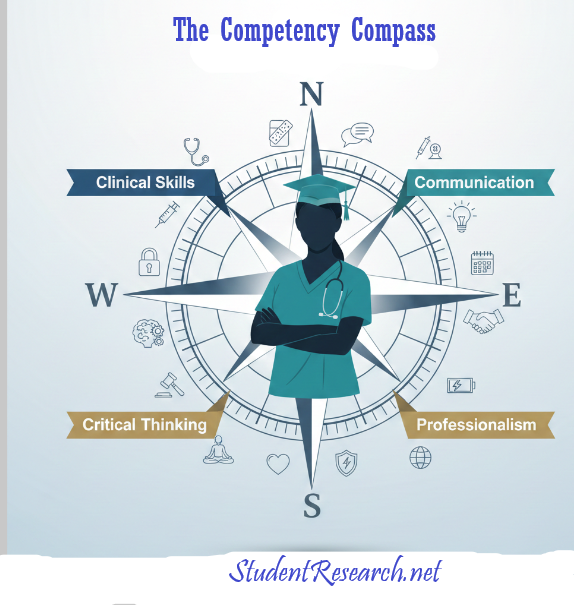
Refining Clinical Technical Proficiency
Technical skills are the foundation of safe patient care and require constant, deliberate practice to master. Transitioning from a lab mannequin to a living, breathing patient involves a significant learning curve in manual dexterity. Focused attention on these areas for improvement nursing student professionals encounter will ensure you provide high-quality, safe interventions.
#1 Mastering Medication Administration
- The Five Rights: Consistently verifying the right patient, drug, dose, route, and time.
- Pharmacological Knowledge: Understanding the “why” behind the medication, including side effects and contraindications.
- IV Pump Management: Gaining fluency in programming infusion pumps and troubleshooting occlusions.
#2 Precision in Wound Care and Aseptic Technique
- Sterile Field Maintenance: Ensuring no contamination occurs during complex dressing changes.
- Wound Assessment: Learning to accurately document tunneling, undermining, and exudate types.
- Patient Education: Explaining the healing process to patients to encourage compliance with care plans.
Elevating Communication and Interpersonal Skills
Effective communication is the glue that holds the healthcare team together and ensures patient safety. Many students find that while they know the science, conveying it to a grieving family or a busy surgeon is a distinct challenge. Improving these soft skills is just as vital as mastering any physical procedure in your nursing journey.
#3 Developing Professional SBAR Reporting
The Situation-Background-Assessment-Recommendation (SBAR) framework is the gold standard for clinical communication, designed to prevent medical errors caused by vague reporting. As a student, mastering this isn’t just about memorizing the acronym; it’s about learning to filter through a mountain of data to find the “nuggets” that a physician or senior nurse needs to make a decision.
The Anatomy of a High-Quality SBAR
- Situation: Identify yourself, the unit, the patient, and the immediate concern. “I am calling about Mr. Jones in Room 402 who is experiencing sudden shortness of breath.”
- Background: Provide the clinical context. Mention admission diagnosis, mental status, current vital signs, and pertinent medications. “He was admitted yesterday for heart failure. His O2 saturation has dropped from 95% to 88% on room air.”
- Assessment: State what you think the problem is. This requires clinical judgment. “I believe he is experiencing pulmonary edema or fluid overload.”
- Recommendation: Be specific about what you need. “I recommend starting him on 2L of oxygen via nasal cannula and requesting a stat chest X-ray.”
Refining Your Delivery
- Preparation: Always have the patient’s chart, latest vitals, and MAR (Medication Administration Record) in front of you before making a call.
- The “So What?” Factor: Before speaking, ask yourself if the information you’re sharing directly impacts the current crisis.
- Closed-Loop Communication: Always repeat back any orders given to ensure there was no misunderstanding in the verbal exchange.
#4 Enhancing Therapeutic Communication
- Active Listening: Giving patients undivided attention to uncover underlying emotional needs.
- Empathy vs. Sympathy: Learning to support patients’ feelings without becoming emotionally overwhelmed.
- Non-Verbal Cues: Being mindful of body language, eye contact, and tone during stressful interactions.
Strengthening Critical Thinking and Clinical Judgment
Critical thinking allows a nurse to see the “big picture” and anticipate complications before they become emergencies. As a student, you are moving away from simply following orders to understanding the physiological rationale behind them. This transition is one of the most intellectually demanding areas for improvement nursing student learners face.
#5 Prioritizing Patient Care (The ABCs)
- Airway, Breathing, and Circulation: Always addressing life-threatening issues first.
- Triage Skills: Learning to manage a full patient load by identifying who needs immediate intervention.
- Delegation: Understanding which tasks can be safely assigned to nursing assistants to optimize time.
#6 Connecting Theory to Practice
- Pathophysiology Application: Using student research to understand how a diagnosis manifests in your specific patient.
- Interpreting Lab Values: Moving beyond “normal/abnormal” to understand what a trending potassium level means for heart rhythm.
- Anticipatory Care: Preparing for potential “what-if” scenarios based on the patient’s current trajectory.
Struggling to bridge the gap between clinical practice and your written assignments? Let StudentResearch.net handle the heavy lifting. Our expert writers deliver high-quality, evidence-based nursing papers that guarantee academic excellence while you focus on your patients.
Organizational and Time Management Strategies
The hospital environment is fast-paced, and losing track of time can lead to missed medications or incomplete documentation. Learning to “work smart” is a hallmark of an experienced nurse that students must strive to emulate. Developing a personal “brain sheet” system is a transformative way to manage the chaos of a 12-hour shift.
#7 Developing an Effective “Brain Sheet”
- Systematic Organization: Categorizing tasks by hour to ensure timely completion.
- Consistent Notetaking: Recording vital signs and assessments immediately to avoid memory errors.
- Flexibility: Learning to reorganize your schedule when an unexpected admission or discharge occurs.
#8 Balancing Documentation and Bedside Care
- Real-Time Charting: Aiming to document assessments as soon as they are performed.
- Concise Narrative Notes: Writing clear, factual notes that capture the patient’s status without redundant information.
- End-of-Shift Efficiency: Ensuring all tasks are closed out early to allow for a smooth handoff to the next shift.
Professionalism and Ethics in the Clinical Setting
Nursing is a profession built on trust, and maintaining high ethical standards is non-negotiable for every student. This involves not only how you treat patients but how you conduct yourself within the multidisciplinary team. Growth in this area ensures you are viewed as a reliable and respected member of the healthcare community.
#9 Upholding Patient Confidentiality (HIPAA)
- Digital Security: Never discussing patient details on social media or in public hospital spaces.
- Need-to-Know Basis: Accessing only the charts of patients directly under your care.
- Family Boundaries: Learning how to tactfully withhold information from relatives when a patient hasn’t given consent.
#10 Demonstrating Accountability and Integrity
- Admitting Mistakes: Reporting medication errors or near-misses immediately to ensure patient safety.
- Punctuality: Arriving early for pre-conference to be fully prepared for the shift.
- Professional Attire: Adhering to school and hospital dress codes to maintain a professional image.
Utilizing Evidence-Based Practice and Research
Evidence-based practice (EBP) ensures that the care you provide is grounded in the latest scientific findings rather than “how it’s always been done.” Engaging with student research allows you to advocate for better patient outcomes through proven methodologies. It is essential to bridge the gap between the library and the bedside to become a truly modern nurse.
#11 Integrating Research into Bedside Care
One of the most vital areas for improvement nursing student practitioners must embrace is the transition from task-oriented care to evidence-based practice. This is where student research becomes a living tool rather than a library assignment. The PICO(T) process is the systematic method used to search for the best clinical evidence to support patient care.
The Step-by-Step PICO(T) Framework
- P – Population/Patient: Define the specific group. Instead of “elderly patients,” use “patients over 65 with Type 2 Diabetes.”
- I – Intervention: What is the new treatment or action you are considering? For example, “the use of honey-impregnated dressings.”
- C – Comparison: What is the current “standard of care” or alternative? For example, “traditional saline-soaked gauze.”
- O – Outcome: What do you hope to achieve? “Reduction in wound healing time over 14 days.”
- T – Time (Optional): The timeframe for the study or observation.
Applying the Process in the Clinical Setting
Once you have formulated your PICO question, the next step in student research is to search databases like CINAHL or PubMed for peer-reviewed studies. You aren’t just looking for “an article”; you are looking for a hierarchy of evidence, with Meta-Analyses and Systematic Reviews at the top.
Drowning in data for your next EBP project? At StudentResearch.net, we specialize in high-level nursing research and PICO(T) formulations. Secure a top-tier grade and save hours of library time with our professional, custom-tailored academic writing services today
Turning Data into Advocacy
- Critically Appraise: Don’t take every study at face value. Look at the sample size and whether the results are statistically significant.
- Institutional Alignment: Check your hospital’s policy. If your student research suggests a better way to prevent catheter-associated UTIs, bring that evidence to your clinical instructor or the unit’s Nurse Educator.
- Continuous Evaluation: After implementing a change based on evidence, monitor your patient’s progress. Evidence-based practice is a cycle, not a one-time event.
Comparison of Clinical Evidence Levels
| Evidence Level | Source Type | Strength of Recommendation |
| Level I | Systematic Reviews / Meta-Analysis | Highest – Basis for hospital policy |
| Level II | Randomized Controlled Trials (RCTs) | Strong – Reliable for specific treatments |
| Level III | Controlled Trials without Randomization | Moderate – Useful for nursing interventions |
| Level IV | Case-Control or Cohort Studies | Emerging – Good for identifying trends |
| Level V | Expert Opinion / Quality Improvement | Foundational – Good for niche student research |
#12 Participation in Quality Improvement
- Data Collection: Assisting in audits regarding hand hygiene or fall rates on the unit.
- Root Cause Analysis: Understanding why a specific error occurred to prevent its recurrence.
- Lifelong Learning: Committing to staying updated on new protocols through continuing education.
Comparative Review of Learning Methods
| Learning Method | Practical Application | Level of Retention | Focus on Research |
| Traditional Lecture | Low | 20-30% | Theoretical only |
| Simulation Lab | Medium | 75% | Practical/Guided |
| Clinical Placement | High | 90% | Real-world application |
| Student Research | High | 85% | Evidence-based focus |
Self-Care and Emotional Resilience
You cannot pour from an empty cup, and nursing school is notorious for causing burnout if self-care is neglected. Developing emotional resilience is one of the most overlooked areas for improvement nursing student individuals need to prioritize. Learning to manage stress now will ensure you have a long, healthy career in the future.
#13 Stress Management Techniques
- Mindfulness and Breathing: Using short breaks to recenter yourself during a hectic shift.
- Physical Health: Prioritizing sleep, hydration, and nutrition despite a demanding schedule.
- Setting Boundaries: Learning to say no to extra shifts or social commitments when you need rest.
#14 Seeking Mentorship and Feedback
- Proactive Feedback: Asking preceptors for specific ways to improve after every procedure.
- Peer Support: Building a network of fellow students to share experiences and study tips.
- Reflective Journaling: Writing about difficult shifts to process emotions and identify learning moments.
Comparison of Student Coping Mechanisms
| Productive Coping | Unproductive Coping |
| Regular exercise and sleep | Excessive caffeine or sugar intake |
| Reflective journaling | Suppressing emotions/avoidance |
| Seeking guidance from mentors | Over-extending social commitments |
| Peer study groups | Isolated “cramming” sessions |
Cultural Competence and Patient Advocacy
In a globalized world, nurses must be prepared to care for patients from diverse backgrounds with varying beliefs. Being a patient advocate means standing up for their rights and ensuring their cultural needs are respected within the healthcare system. This area of growth requires humility and a willingness to learn from your patients.
#15 Developing Cultural Humility
- Assessing Beliefs: Asking patients about their cultural or religious preferences regarding diet and care.
- Language Access: Utilizing professional interpreters rather than relying on family members for medical translation.
- Awareness of Bias: Identifying your own unconscious biases to ensure equitable care for all.
#16 Acting as a Patient Advocate
- Clarifying Consent: Ensuring a patient fully understands a procedure before they sign the form.
- Pain Management: Advocating for the patient’s reported pain level even when it isn’t visible.
- End-of-Life Wishes: Respecting and communicating the patient’s advance directives to the medical team.
Conclusion: Embracing the Journey to Excellence
Mastering these 19 essential skills requires patience, dedication, and a commitment to lifelong learning. By focusing on these areas for improvement nursing student success becomes a tangible goal rather than a distant dream. As you move forward, remember that every challenge is an opportunity to refine your practice and become the nurse your future patients deserve. Discover 19 essential areas for improvement nursing student success requires. Master clinical skills and empathy to excel in your healthcare career.

