

Every nursing student faces the same challenge on their first clinical day. You need quick access to vital information while maintaining professionalism. A specialized nursing student clipboard becomes your essential companion throughout training. This tool organizes patient data, reference materials, and supplies in one portable workspace. Unlike standard clipboards, nursing versions include medical charts and secure storage compartments. They help you stay organized during fast-paced shifts. This guide covers everything you need to know about selecting the right clipboard. You’ll learn key features, selection criteria, and best practices for clinical success. We’ll explore common mistakes and how to avoid them. Your clipboard choice impacts your efficiency and professional image during rotations.
What is a Nursing Student Clipboard and Why Do You Need One?
Definition and Purpose
A nursing student clipboard is a specialized organizational tool designed specifically for healthcare education and clinical practice. It serves as a portable workspace that combines writing surface, storage compartments, and medical reference materials into one essential clinical companion.
Core Functions
- Portable workspace – Provides a stable writing surface during clinical rotations and patient assessments
- Storage solution – Keeps essential reference materials, forms, and documentation organized in one location
- Organization tool – Helps manage patient information efficiently while maintaining HIPAA compliance standards
- Professional enhancement – Projects a prepared, competent image to instructors, nurses, and patients
- Time-saver – Reduces time spent searching for supplies or reference information during busy shifts
- Learning support – Offers quick access to medical charts, conversion tables, and clinical guidelines
Key Differences from Standard Clipboards
Specialized Features for Healthcare Settings
| Feature | Standard Clipboard | Nursing Student Clipboard |
| Reference Materials | None included | Built-in medical charts, vital signs ranges, conversion tables |
| Storage Capacity | Minimal or none | Multiple compartments for pens, tape, scissors, supplies |
| Privacy Protection | Open design | HIPAA-compliant covers and secure closures |
| Durability | Basic materials | Hospital-grade materials for frequent sanitization |
| Size & Portability | One standard size | Optimized for lab coat pockets and nursing bags |
| Surface Material | Standard plastic/wood | Non-porous, easy-to-disinfect medical-grade materials |
| Professional Design | Generic appearance | Clinical aesthetic meeting healthcare facility standards |
| Accessibility | Single writing surface | Quick-flip reference cards and multi-access compartments |
Essential Features to Look for in a Nursing Student Clipboard
Size and Portability
Standard Dimensions
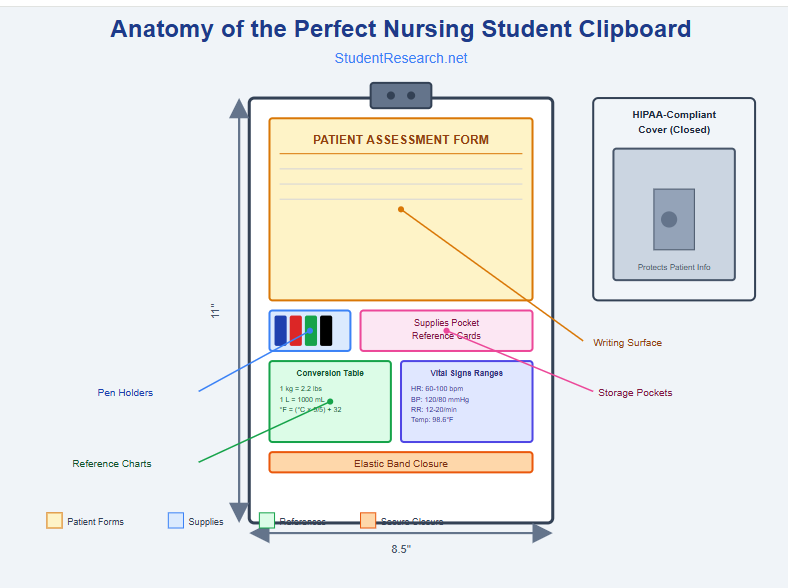
- Letter size (8.5″ x 11″) – Most common option, fits standard forms and documentation perfectly
- Legal size (8.5″ x 14″) – Accommodates longer assessment forms but less portable for pocket storage
- Folding designs – Compact when closed, typically fold to half size for easy transport
- Single-panel options – Lightweight and slim, ideal for minimalist students who prioritize pocket fit
- Weight considerations – Range from 8-16 ounces; lighter models reduce fatigue during 12-hour shifts
- Pocket compatibility – Measure your lab coat pockets before purchasing to ensure proper fit
Storage Capacity
Organizational Compartments
- Pen holders – Dedicated slots for multiple pens, highlighters, and markers prevent loss
- Supply pockets – Interior compartments store alcohol wipes, tape, and small medical supplies
- Document storage – Separate sections organize blank forms, reference cards, and patient worksheets
- Reference card slots – Clear plastic sleeves display quick-reference materials without removing them
- Secure closures – Elastic bands, zippers, or magnetic clasps keep contents protected during movement
- Interior vs exterior pockets – Balance between quick access and HIPAA-compliant privacy protection
Material and Durability
Construction Quality
- Aluminum options – Lightweight, professional appearance, resistant to cracks and breaks over time
- Plastic construction – More affordable, variety of colors available, adequate for most nursing programs
- Water-resistant properties – Protects documents from spills, moisture, and accidental fluid exposure in clinical settings
- Easy-to-clean surfaces – Smooth materials wipe down quickly with hospital-grade disinfectants between patients
- Longevity expectations – Quality clipboards last 2-4 years through entire nursing programs and beyond
- Wear indicators – Check hinges, closures, and corners for reinforcement in high-stress areas
Reference Materials and Quick-Access Tools
Built-in Resources
- Medical conversion charts – Metric to imperial conversions, temperature scales, weight calculations
- Normal vital signs ranges – Age-specific parameters for blood pressure, heart rate, respiratory rate, temperature
- Common medication dosages – Quick reference for frequently administered drugs and standard dosing
- Assessment checklists – Head-to-toe assessment guides, pain scales, and neurological checks
How to Choose the Right Nursing Student Clipboard for Your Needs
Assessing Your Clinical Rotation Requirements
Program-Specific Considerations
- Specialty rotations – Pediatrics may need growth charts while ICU rotations require hemodynamic monitoring references
- Hospital policy compliance – Some facilities restrict clipboard types, colors, or require transparent storage compartments
- Instructor preferences – Check syllabus or ask instructors about recommended clipboard features and brands
- Clinical site restrictions – Outpatient clinics may prefer compact designs while hospital floors accommodate larger models
- Documentation requirements – Programs with extensive paperwork need more storage than electronic documentation systems
- Rotation frequency – Students rotating weekly between sites benefit from lightweight, portable options
Budget Considerations
Price Ranges and Value
- Entry-level options ($10-$20) – Basic plastic clipboards with minimal storage, suitable for budget-conscious students
- Mid-range quality ($20-$40) – Aluminum construction, multiple compartments, built-in references, best value category
- Premium professional models ($40+) – Extensive features, superior durability, often include bonus accessories and supplies
- Cost vs features analysis – Evaluate how many built-in references and compartments justify higher prices
- Long-term investment – Higher-quality clipboards last through nursing school and into first nursing positions
- Used options – Consider gently used clipboards from graduating students at discounted prices
Popular Brands and Models
Top Options in the Market
- WhiteCoat Clipboard – Industry leader, aluminum construction, rotating reference panel, medical professionals’ choice
- Nursing Clipboard Folios – Zippered cases with extensive storage, professional appearance, multiple color options
- StoreSMART Clipboards – Affordable plastic holders with good storage capacity, students’ budget-friendly favorite
- Custom-designed options – Personalized clipboards with name engraving, school logos, or specialized reference materials
- Student-recommended choices – Check nursing student forums and reviews for real-world performance feedback
- Brand comparison – Research warranty coverage, customer service reputation, and replacement part availability
Need expert help with challenging nursing coursework? Your paper is crafted by subject-matter experts at StudentResearch.net holding Masters and Ph.D. degrees in nursing and healthcare disciplines. Experience quality writing that meets rigorous academic standards.
How to Organize and Use Your Nursing Student Clipboard Effectively
Setting Up Your Clipboard for Success
Essential Items to Include
- Reference materials priority – Include only most-used charts; remove outdated or rarely referenced materials
- Supply checklist – Stock two black pens, one red pen, highlighter, small roll of tape, alcohol wipes
- Patient care documentation – Keep 5-10 blank assessment forms, vital signs sheets, and intake/output records
- Quick reference cards – Laminate frequently used conversion charts, lab value ranges, and medication guides
- Emergency information – Code blue protocols, crash cart medication dosages, rapid response activation procedures
- Personal items – Small notepad for personal notes, sticky notes for reminders, hand sanitizer
Best Practices for Clinical Rotations
Maintaining Organization During Shifts
- Color-coding systems – Assign colors for different patients or types of documentation to speed retrieval
- Paper management strategies – Immediately file completed forms, discard unnecessary papers during downtime
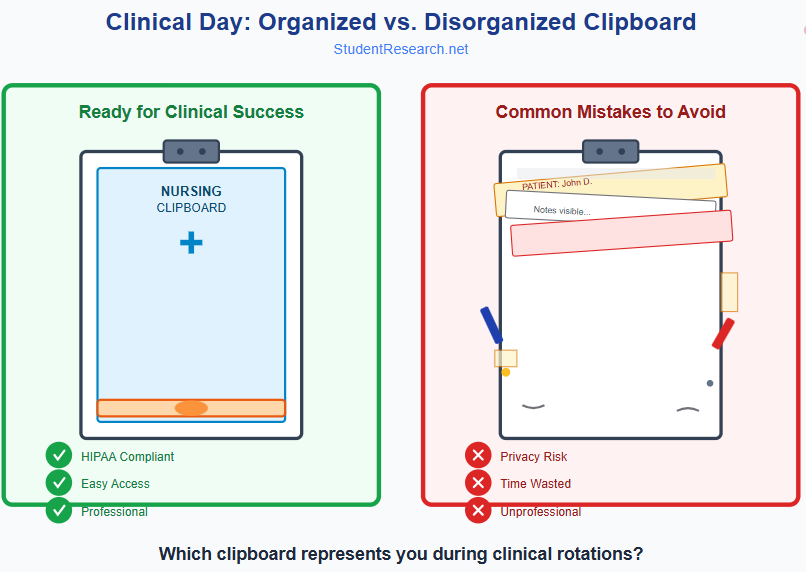
- HIPAA compliance protocols – Never leave clipboard unattended, keep covers closed, shred patient information properly
- End-of-shift cleanup routine – Remove all patient information, restock supplies, sanitize all surfaces thoroughly
- Weekly organization check – Replace worn supplies, update reference materials, reorganize compartments for efficiency
- Pre-shift preparation – Arrive early to set up clipboard, review reference materials, ensure adequate supplies
Care and Maintenance Tips
Extending Your Clipboard’s Lifespan
- Regular cleaning procedures – Wipe down with hospital-approved disinfectants after each clinical day
- Disinfection protocols – Use alcohol-based wipes for quick cleaning, bleach solutions for deep cleaning weekly
- Replacement schedule – Change worn elastic bands immediately, replace cracked plastic sleeves, update faded references
- Storage recommendations – Keep in cool, dry place away from direct sunlight when not in use
- Hinge and closure care – Apply light lubricant to metal hinges, check magnetic clasps for debris
- Inspection routine – Monthly checks for wear, loose components, or damaged storage compartments
Struggling with complex nursing assignments? Talk directly to your Ph.D. writer at StudentResearch.net—no middlemen. Clarify instructions instantly and track progress in real-time. Get papers that perfectly match your specific academic requirements every time.
Common Mistakes to Avoid with Your Nursing Student Clipboard
HIPAA and Privacy Concerns
Patient Information Security
- Never leave unattended – Keep clipboard with you at all times or secure in locked areas
- Proper disposal required – Shred all patient notes immediately after transferring information to official records
- Avoid identifiable information – Use patient initials or room numbers instead of full names on worksheets
- Secure transport essential – Keep clipboard closed and covered when moving between patient rooms or units
- No photography allowed – Never photograph clipboard contents even for study purposes with patient information
- Facility exit protocols – Remove all patient documents before leaving clinical site each day
Worried about accidental plagiarism in your papers? StudentResearch.net delivers 100% originality guaranteed. Every order includes a free, credible plagiarism report (Turnitin-friendly) for complete peace of mind. Submit confidently knowing your nursing papers are authentically yours.
Overloading and Disorganization
Keeping Your System Simple
- Avoid excessive paperwork – Limit to current shift documentation only, remove outdated materials immediately
- Regular purging schedule – Clean out clipboard weekly, discard old reference sheets and unused supplies
- Prioritize most-used references – Keep only 3-5 essential reference cards, store additional materials elsewhere
- Maintain professional appearance – Overstuffed clipboards appear disorganized and unprofessional to instructors and staff
- Digital alternatives consideration – Use phone apps for some references to reduce physical paper clutter
- Streamline supply storage – Carry only essential supplies daily, restock from locker or bag as needed
Conclusion
Learning how to choose the perfect nursing student clipboard significantly impacts your clinical success. This guide provided expert tips on features, brands, organization, and HIPAA-compliant usage strategies. Your clipboard serves as a portable office, organizing essential information and supplies throughout demanding rotations. Consider your program requirements, budget constraints, and personal organizational preferences when making your choice. Quality clipboards provide durability through years of nursing education and beyond. Remember to maintain HIPAA compliance, keep your system organized, and clean your clipboard regularly. The investment in a proper nursing student clipboard pays dividends in efficiency and professionalism. Start your clinical rotations prepared with the right tools for success. Share your clipboard tips and experiences in the comments below to help fellow nursing students.

