


The journey to becoming an OB/GYN—a doctor dedicated to caring for women through every stage of life—is long, competitive, and truly rewarding. If you’re a high school student with this goal, you already have the vision. But how do you stand out among the thousands of future applicants? The answer is simple: you start now. The secret to success in medical school, residency, and beyond lies in developing a foundational understanding of research early. We’re talking about more than just good grades; we’re talking about building the skills that make obgyn research for medical students achievable and impactful when you get there.
Setting the Stage for OB/GYN Research for Medical Students
Why OB/GYN Research is Your First Step to Mastering the Field
Choosing the OB/GYN path means committing to compassionate care and continuous learning in a field that impacts half the population. This essential medical career offers:
- Unique Dual Role: An OB/GYN is simultaneously a primary care physician, a skilled surgeon, and an obstetrician, offering comprehensive care throughout a woman’s life.
- Life-Changing Impact: You are present for profound moments, from performing complex, life-saving surgeries (like for endometriosis) to guiding patients through the delivery of a new baby.
- Essential Skillset: The career demands a perfect balance of razor-sharp technical skill, clinical judgment, and deep, unwavering empathy for your patients.
- Leadership in Care: You serve as a committed leader and counselor in a vital medical field, ensuring the best outcomes for women at every age and stage.
Your Early Advantage: Elevate Medical Students Research Now
The competition for spots in top-tier undergraduate pre-med programs and, eventually, medical school is intense. Excellent grades are the standard; research is the differentiator. Starting in high school gives you an unbeatable edge.
- The Ultimate Goal: Every early step you take now is scaffolding for future obgyn research for medical students. Medical schools want applicants who already understand how to ask questions and seek evidence.
- Show, Don’t Tell: Instead of simply writing about your “passion” for medicine, early research allows you to demonstrate critical thinking, intellectual curiosity, and long-term commitment.
- Skill Mastery: You’ll learn valuable skills like analyzing data, synthesizing complex literature, and professional communication—all before you even step onto a college campus.
- Competitive Edge: This dedication translates into stronger college applications, better letters of recommendation, and readiness for collegiate-level research.
How to Define OB/GYN Research at Your Level
As a high school student, “research” doesn’t necessarily mean running complex genetic sequencing experiments in a lab. It means engaging in structured inquiry—developing the habits of a critical thinker.
- Literature Reviews: Systematically reading and synthesizing existing medical studies on an OB/GYN topic (e.g., HPV vaccination rates).
- Observational Studies: Conducting simple surveys or gathering publicly available data (like local birth statistics) to analyze trends.
- Clinical Shadowing: Observing a physician and meticulously documenting clinical practices or patient flow, identifying a gap or question you could later study.
- School Science Fairs: Designing and executing a self-contained, structured project that follows the scientific method, even if it’s on a basic health science topic.
Safety First: Mastering Ethics in Medical Students Research
As you explore medical research, remember that patient safety and privacy are paramount—even for high school students. Always follow these rules:
- No Direct Patient Interaction: Do not conduct any surveys, interviews, or observations involving human subjects without direct, high-level supervision from a principal investigator and ethical approval (IRB).
- HIPAA Compliance: Never access, share, or document any form of protected health information (PHI). Focus only on public data, published literature, or de-identified data provided by a supervisor.
- Adult Guidance: All projects, especially those touching clinical topics, must be done under the explicit guidance of a qualified mentor.
Save precious hours! Don’t waste time on tedious research and editing. Studentresearch.net provides expert writing, giving you back time for what matters. Unlock your schedule with our efficient service.
Mapping the Research Mysteries: Subspecialties of OB/GYN Research
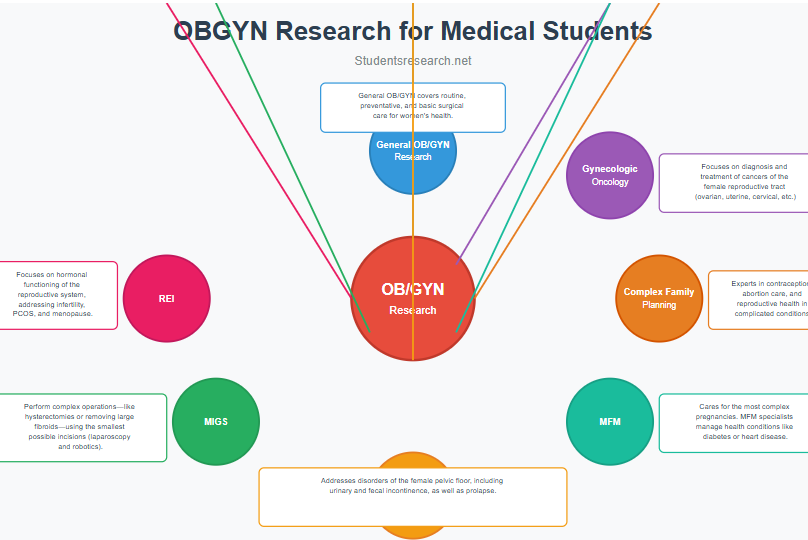
To truly excel in obgyn research for medical students, you need to know the landscape. The field is vast, ranging from routine care to highly specialized, life-saving procedures. Understanding these seven key subspecialties will help you target your reading, shadowing, and early research questions. This section provides a compass to navigate the incredible breadth of the specialty.
General OB/GYN Research: How to Master Foundational Questions
The core of the specialty, General OB/GYN covers routine, preventative, and basic surgical care. This area offers a chance to explore a wide range of topics before specializing.
- Focus: Routine health screenings, prenatal care, childbirth, basic infertility workups, and management of common gynecological issues like fibroids or abnormal bleeding.
- Early Research Focus: Studies on community health, patient education methods, improving HPV vaccine uptake, or analyzing trends in local birth rates.
- Why it Matters: It’s the foundational gateway to understanding lifelong women’s health issues and is highly patient-facing.
Gynecologic Oncology: Mastering Advanced Medical Students Research
This highly specialized field focuses on the diagnosis and treatment of cancers of the female reproductive tract (ovarian, uterine, cervical, etc.). It combines complex surgery, chemotherapy, and palliative care.
- Focus: Advanced surgical techniques, understanding cancer genetics, clinical trials for new drugs, and quality of life for cancer survivors.
- Early Research Focus: The efficacy of screening methods, the role of genetics in specific gynecologic cancers, or the psychological impact of diagnosis.
- Why it Matters: A demanding but impactful area for students interested in surgical complexity and longitudinal patient relationships during critical times.
Complex Family Planning: Excelling in Public Health OB/GYN Research
This subspecialty focuses on reproductive health care for complex cases. These doctors are experts in contraception, abortion care, and managing reproductive health in the context of complicated medical conditions.
- Focus: Counseling on difficult contraceptive choices, managing pregnancy in patients with chronic illness, and advanced surgical techniques related to reproductive autonomy.
- Early Research Focus: Analyzing accessibility of reproductive services in different communities, studying patient decision-making around contraception, or synthesizing laws and policies affecting care.
- Why it Matters: A dynamic area blending clinical medicine, public health policy, and social advocacy.
MFM: How to Master High-Stakes OB/GYN Research Questions
Known as MFM, this specialty cares for the most complex pregnancies. MFM specialists manage health conditions in the mother (like diabetes or heart disease) that complicate pregnancy or treat fetuses with developmental issues.
- Focus: Fetal surgery, advanced ultrasound imaging, genetic counseling, and intensive care management for both mother and baby.
- Early Research Focus: Trends in preterm birth, the effectiveness of lifestyle interventions for gestational diabetes, or the impact of maternal chronic disease on fetal development.
- Why it Matters: For those fascinated by physiology and high-stakes clinical decision-making, MFM offers incredible challenges and rewards.
Urogynecology: Mastering Surgical Outcomes Medical Students Research
Urogynecology addresses disorders of the female pelvic floor, including urinary and fecal incontinence, as well as prolapse (when organs drop from their normal position). It is a highly surgical subspecialty.
- Focus: Advanced surgical repair of pelvic floor defects, minimally invasive surgical techniques, and long-term rehabilitation strategies.
- Early Research Focus: Factors influencing post-surgical patient recovery, non-surgical treatment effectiveness (e.g., physical therapy), or analyzing quality of life after reconstructive surgery.
- Why it Matters: Combines surgical precision with improving patients’ daily comfort and function, offering tangible improvements in quality of life.
MIGS: How to Ace Tech-Focused OB/GYN Research
MIGS specialists perform complex operations—like hysterectomies or removing large fibroids—using the smallest possible incisions (laparoscopy and robotics). This leads to faster recovery for patients.
- Focus: Robotics and advanced instrumentation, treating endometriosis, developing techniques for complex laparoscopic surgery, and pain management.
- Early Research Focus: Comparing patient outcomes (pain, hospital stay) between traditional open surgery and robotic methods, or developing surgical training simulations.
- Why it Matters: Ideal for students passionate about surgical technology and engineering-based solutions to complex medical problems.
REI: Mastering Hormonal and Lab-Based Medical Students Research
REI focuses on the hormonal functioning of the reproductive system, addressing issues like infertility, polycystic ovary syndrome (PCOS), and menopause management. It often involves advanced laboratory work.
- Focus: In vitro fertilization (IVF), fertility preservation for cancer patients, hormonal therapy, and understanding the genetics of reproductive disorders.
- Early Research Focus: Analyzing success rates of different IVF protocols, studying the impact of environmental factors on fertility, or synthesizing new diagnostic methods for hormonal imbalances.
- Why it Matters: A mix of clinical patient care, intricate procedural work, and deep, exciting laboratory science.
Practical Steps: How to Master Your OB/GYN Research Journey
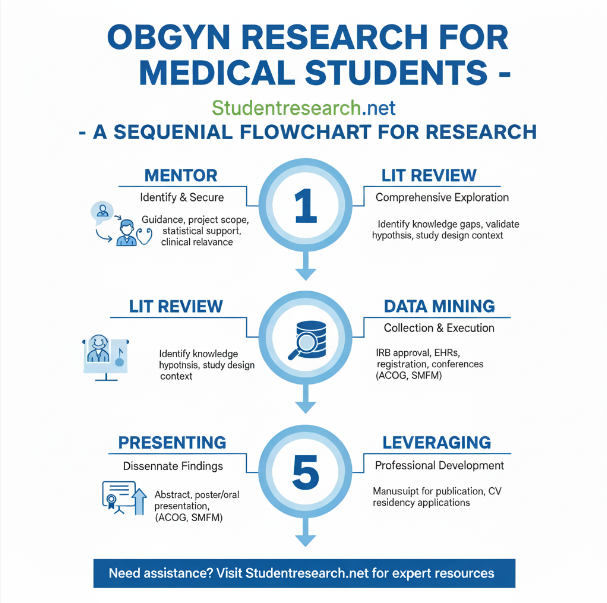
This section provides the actionable How to guide. Following these specific steps will transform your interest into credible, résumé-building experience for your college and pre-med applications, ensuring you are well ahead of the curve for future obgyn research for medical students opportunities.
How to Master Finding Your First OB/GYN Research Mentor
Mentorship is the secret weapon in early obgyn research for medical students. Your first mentor might not be a medical doctor; it could be a science teacher, a college professor (if you live near a university), or a graduate student.
- Be Prepared: Approach them with a clear, specific ask (e.g., “Can you guide my first literature review on local birth rates?”).
- Respect Time: Keep emails concise and professional. Offer to assist with non-clinical tasks like organizing data or citations.
- Value Guidance: Your mentor’s primary role is to ensure your project is ethical, structured, and realistic for your skill level.
Mastering the Literature Review for Medical Students Research
Before you generate new data, you must master the art of summarizing old data. A Literature Review is where you synthesize existing knowledge—the bedrock of true obgyn research for medical students.
- Start Simple: Use Google Scholar or your school library’s databases. Search for your subspecialty area (e.g., “PCOS diagnosis in adolescents”).
- Read Abstract First: Don’t try to read entire dense papers. Focus on the abstract (summary) and conclusion to grasp the main findings and research gap.
- Synthesize: Don’t just list findings. Group similar studies together to show trends or disagreements in the field. This demonstrates critical thought and advanced analytical skills.
How to Master Data Mining for OB/GYN Research
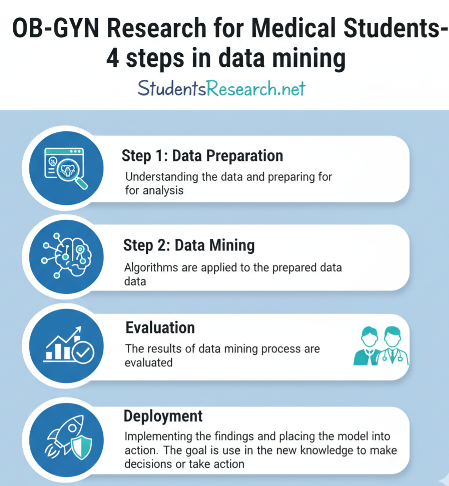
While clinical data is off-limits (see Section I.4), plenty of public data exists for impactful early research. Learning to analyze it is vital for future obgyn research for medical students.
- Public Data Power: Explore sources like CDC (Centers for Disease Control) reports, state health department websites, or WHO (World Health Organization) statistics on reproductive health.
- Simple Analysis: Focus on analyzing trends, percentages, and basic correlations. For example, correlate income levels (public data) with local prenatal care access (also public data).
- Use Spreadsheets: Learn to use Google Sheets or Excel to organize, visualize data, and perform basic calculations. A well-organized table is powerful.
Developing Presentation Skills in Medical Students Research
The final, crucial step is communication. Being able to present your work solidifies your position as a serious candidate for future obgyn research for medical students.
- School Platforms: Submit your work to school science fairs, academic clubs, or local junior college symposiums.
- Visual Impact: Design a clear, professional poster using simple charts and concise language.
- Practice Your Pitch: Be ready to explain your project’s question, methods, and conclusion in under two minutes—a skill critical for future interviews.
How to Master Leveraging OB/GYN Research for Applications
Research is gold for applications. It provides concrete proof of your commitment, intellectual maturity, and preparation for rigorous undergraduate pre-med studies, setting you up for success when applying for obgyn research for medical students slots later on.
Overwhelmed? Studentresearch.net reduces academic stress by handling your research workload. Focus on exams, work, or your personal life. Get the support you need to succeed without the burnout. Breathe easier today!
The Final Edge: Unlocking Unbeatable OB/GYN Research Secrets
You now have a map of the field and a series of practical steps. Your final advantage comes from identifying a question that truly excites you and turning it into a structured, executable project.
25+ OB/GYN Research Questions to Kickstart Your Project
Use these focused ideas to begin your literature review or data mining project right away:
- General OB/GYN: Analyzing the impact of school-based health clinics on teen pregnancy rates.
- General OB/GYN: Surveying local knowledge gaps regarding the HPV vaccine.
- General OB/GYN: Reviewing media representation of female reproductive health issues.
- REI: Correlating high school athlete training regimens with menstrual cycle changes.
- REI: Literature review on the dietary management of Polycystic Ovary Syndrome (PCOS).
- REI: Ethical discussion: The future of germline gene editing in reproductive medicine.
- MFM: Analyzing trends in C-section rates in a specific hospital over 10 years (using public data).
- MFM: The impact of local air quality indices on preterm birth rates (literature synthesis).
- MFM: Reviewing the effectiveness of different gestational diabetes screening protocols.
- Gyn Onc: Researching the development of new, non-invasive ovarian cancer screening tools.
- Gyn Onc: The history and evolution of the Pap smear and its public health impact.
- Gyn Onc: Literature review on cancer risks associated with hormonal therapy.
- Urogynecology: Comparing public awareness of stress incontinence vs. overactive bladder.
- Urogynecology: Reviewing the biomechanics of different pelvic floor exercises
- .Urogynecology: Researching the development of absorbable surgical materials for pelvic reconstruction.MIGS: Comparison of recovery times for robotic vs. traditional hysterectomy (literature review).
- MIGS: Ethical debate: Cost-effectiveness of specialized minimally invasive surgery.
- MIGS: Analyzing patient reported outcomes (PROs) after hysteroscopic procedures.
- CFP: Reviewing the efficacy of state-level policies designed to increase access to long-acting reversible contraceptives (LARCs)
- .CFP: Surveying peer knowledge and misconceptions about emergency contraception.
- CFP: Literature synthesis on the psychological impact of abortion restriction laws.
- General OB/GYN: Investigating patient barriers to obtaining routine cervical cancer screenings.General OB/GYN: The role of nutrition in preventing severe morning sickness.
- REI: Public education project on the age-related decline in female fertility.
- MFM: Researching cultural practices surrounding childbirth and their influence on medical care.
- General OB/GYN: Analysis of local resources available for survivors of domestic violence seeking medical care.
- Urogynecology: The impact of high-intensity sports on pelvic floor health in young women.
- Gyn Onc: Review of vaccine development for non-HPV related cervical cancer.
- MFM: The use of remote monitoring technology (telehealth) in high-risk pregnancies.
The Ultimate Secret to Mastering Your Medical Students Research Future
This is your blueprint. Apply these strategies, and you will secure your advantage. Remember the ultimate secret: OB/GYN research for medical students starts here. Learn 10 unbeatable secrets on how to master your pre-med journey & gain the competitive edge now.
Save precious hours! Don’t waste time on tedious research and editing. Studentresearch.net provides expert writing, giving you back time for what matters. Unlock your schedule with our efficient service.

