

#1. Student Nurse Assistant: The Gateway to Your Clinical Career
Becoming a student nurse assistant is more than just a part-time job; it is a foundational step into the healthcare world. This role provides unparalleled exposure to patient care dynamics while you complete your formal education. By stepping into this position, you gain a competitive edge that classroom learning alone cannot provide.
Why Start Your Journey as a Student Nurse Assistant?
- Direct Patient Contact: Develop comfort in bedside manners and basic clinical procedures early on.
- Networking Opportunities: Build relationships with registered nurses and hospital administrators.
- Resume Enhancement: Show future employers that you have hands-on experience in high-pressure environments.
#2. Comprehensive Guide to Choosing the Right Work Environment
Choosing where to practice as a student nurse assistant significantly impacts your long-term specialty interests. Different facilities offer varying paces, patient demographics, and learning opportunities. Researching these environments ensures you find a placement that aligns with your academic schedule and career goals.
Top Work Settings for Nursing Students
- Acute Care Hospitals: High-intensity learning with a variety of medical cases.
- Long-Term Care Facilities: Focuses on geriatric care and chronic disease management.
- Specialized Clinics: Ideal for those interested in specific fields like pediatrics or oncology.
Comparing Facility Types for Your Role
| Feature | Acute Care Hospital | Long-Term Care (LTC) |
| Pace | Fast-paced/Urgent | Consistent/Routine |
| Skill Variety | High (Emergency/Surgical) | Moderate (Maintenance/Rehab) |
| Patient Turnover | Rapid | Slow (Resident-based) |
#3. Essential Skills and Certifications for Success
To excel as a student nurse assistant, you must master both technical skills and the “soft skills” of empathy and communication. While your school provides the theory, the workplace is where you refine your ability to multitask effectively. Professional certification often acts as the bridge between being a student and a valued healthcare team member.
Technical Competencies to Master
- Vital Sign Monitoring: Accuracy in recording blood pressure, pulse, and oxygen levels.
- Patient Mobility: Safe techniques for transferring patients to prevent injury.
- Documentation: Clear and concise reporting of patient status changes in digital charts.
Advanced Documentation Standards
- Accuracy: Double-checking numerical values before entry.
- Timeliness: Recording data immediately after care is provided.
- Objectivity: Using factual observations rather than personal opinions.
#4. Navigating the Challenges of School and Work
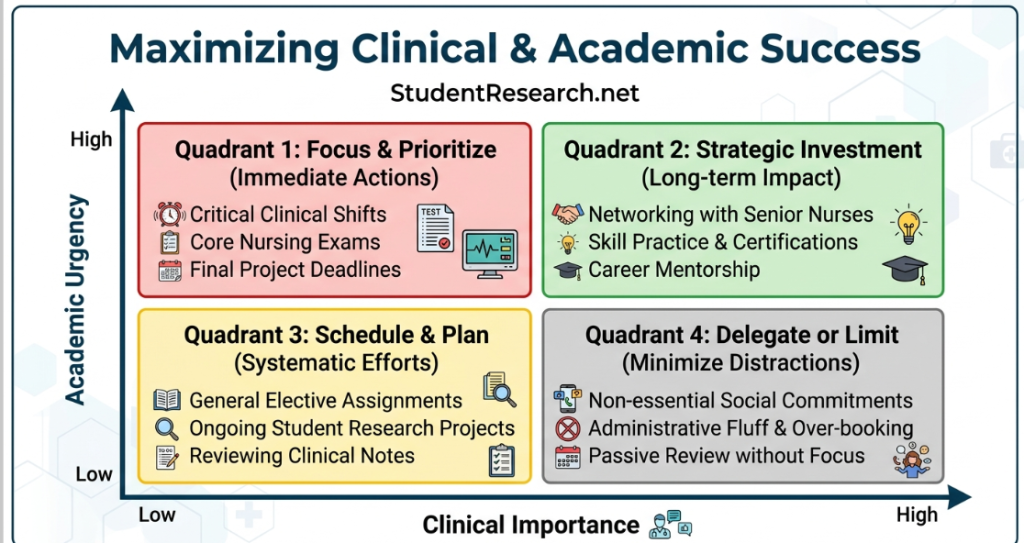
Balancing your duties as a student nurse assistant with a rigorous nursing curriculum requires elite time management. Many students find that their work shifts actually reinforce their studies, making student research and exam prep more intuitive. However, avoiding burnout is critical to maintaining your mental and physical health during this transition.
Strategies for Peak Productivity
- Block Scheduling: Dedicate specific hours for work, study, and rest.
- Peer Support: Join study groups to share notes and clinical experiences.
- Employer Flexibility: Seek facilities that offer “PRN” or per-diem shifts for students.
Struggling to balance clinical shifts with your essays? Let the experts at StudentResearch.net handle your heavy workload. We provide high-quality, evidence-based academic writing tailored to nursing students. Get the grades you deserve without the burnout today!
Work-Study Efficiency Statistics
| Metric | Impact on Performance |
| Hours per Week | 16–24 hours is the “sweet spot” for most students. |
| GPA Correlation | Students in clinical roles often see a 10% rise in practical exam scores. |
| Retention Rate | 85% of nursing students stay in the field if they worked while in school. |
#5. Building Your Professional Portfolio for Future Growth
The experience you gain as a student nurse assistant serves as the primary evidence of your professional growth. You should actively document your achievements and the complex cases you’ve assisted with to build a robust portfolio. Utilizing student research to stay updated on the latest evidence-based practices will further set you apart from other applicants.
Portfolio Essentials for Nursing Students
- Clinical Log: A summary of hours worked and departments visited.
- Letters of Recommendation: Testimonials from charge nurses or clinical educators.
- Certificates: Copies of BLS, ACLS, or other specialized training.
Optimizing Your Digital Resume
- Keywords: Use terms like “patient advocacy” and “interdisciplinary collaboration.”
- Quantifiable Results: Mention the number of patients cared for per shift.
- Professional Links: Include links to your LinkedIn or professional blog.
Conclusion: Starting Your Journey Today
In summary, becoming a student nurse assistant is the most effective way to bridge the gap between theory and practice. By following this guide, you can choose the right path and develop the skills necessary for a lifelong nursing career. Remember that your student research and dedication now will pay off when you transition to a Registered Nurse role.
Meta Description:
Master your role as a student nurse assistant with these 5 tips. This guide helps you choose the best path for your nursing career. Gain success.
Ready to ace your nursing degree with ease? Trust StudentResearch.net for flawless nursing papers and case studies. Our professional writers ensure your success while you focus on your clinical skills. Order your custom-written paper now!

