

Imagine standing at the medication cart, the hum of the hospital surrounding you, and a preceptor watching your every move. Your heart races as you try to recall the peak action time of IV Furosemide, but the information feels locked away. This is the moment where nursing student medication cards transform from simple study tools into a high-stakes clinical lifeline.
In 2026, the complexity of pharmacology continues to grow, making it nearly impossible to rely on memory alone during a 12-hour shift. These specialized flashcards provide a structured, rapid-fire way to digest contraindications, adverse effects, and nursing considerations. This comprehensive guide will navigate the sea of options to ensure you invest in tools that actually stick.
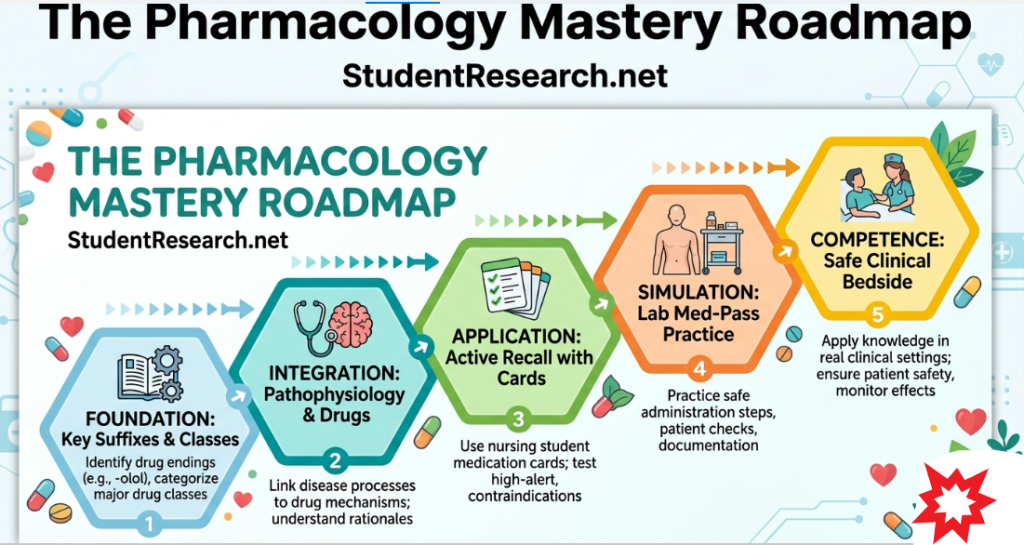
Why Pharmacy Mastery Starts with High-Quality Medication Cards
Pharmacology remains one of the most significant hurdles for students, often cited as the primary reason for stress during clinical rotations. High-quality nursing student medication cards act as a cognitive bridge, translating dense textbook chapters into actionable bedside knowledge. By using these tools, you aren’t just memorizing; you are building a foundation for safe patient care.
- Active Recall Benefits:
- Forces the brain to retrieve information rather than just recognizing it.
- Strengthens neural pathways for long-term retention.
- Reduces “recognition bias” where students think they know a drug because it looks familiar.
- Portability and Accessibility:
- Fits easily into scrub pockets for “on-the-go” study sessions.
- Allows for quick verification during clinical “post-conference” or pre-medication checks.
- Eliminates the need to carry a 5-pound drug manual through the hallways.
The 2026 Market Analysis: Comparing Top-Tier Features
The landscape of study aids has evolved, with 2026 seeing a blend of traditional paper and enhanced digital integration. When selecting your nursing student medication cards, you must weigh the durability of the physical product against the depth of the pharmacological data provided. Our research indicates that the most successful students utilize a hybrid approach to maximize their learning efficiency.
| Feature Category | Traditional Printed Cards | Digital Integrated Sets |
| Tactile Experience | High; great for kinesthetic learners. | Low; limited to screen interaction. |
| Update Frequency | Requires new purchase for latest drugs. | Instant cloud updates for new FDA data. |
| Searchability | Manual flipping through indexes. | Keywords and search bar functionality. |
| Clinical Utility | Safe for use in areas with no Wi-Fi. | Dependent on device battery and signal. |
Ranking the Top 15 Nursing Student Medication Cards in 2026
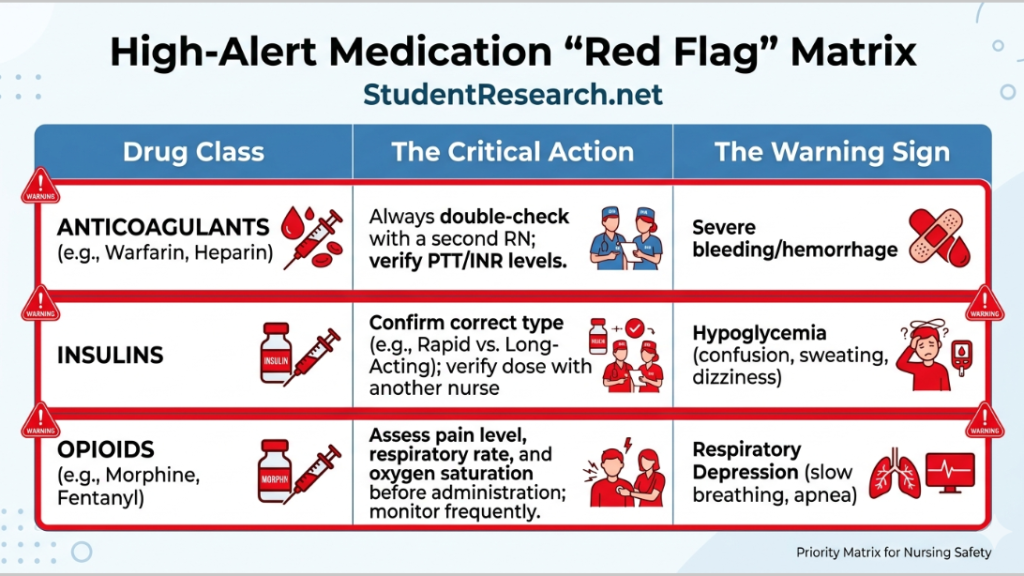
Choosing the right set requires looking at more than just the brand name; you need to evaluate the “Nursing Brain” logic used in the card layout. The following list represents the gold standard for nursing student medication cards based on student research into curriculum alignment and NCLEX-RN passing rates. Each of these sets has been vetted for accuracy, clarity, and the inclusion of “high-alert” medication warnings.
#1. Pharm-Master Pro: The Gold Standard
- Comprehensive Drug Profiles: Includes over 600 high-frequency medications.
- Detailed Mechanism of Action: Explains exactly how the drug interacts at the cellular level.
- Specific Pediatric and Geriatric Dosing: Provides weight-based calculations and age-related precautions.
- Color-coded Classifications: Organized by body system (e.g., Respiratory, Cardiovascular) for rapid retrieval.
- Integrated “Black Box Warning” Icons: Highlights life-threatening complications in bold red borders.
- Student Research Edge: Voted the most durable card set for 12-hour clinical shifts.
#2. Clinical Confidence Deck (CC-15)
- Pre-administration Assessment Steps: Lists vital signs and lab values to check before dosing.
- Evaluation of Therapeutic Effects: Tells you exactly what “success” looks like for the patient.
- IV Flow Rate Cheat Sheets: Includes common drip rates and titration guidelines.
- Antidote Quick-Reference: Direct mapping of drugs to their specific reversal agents.
- Patient Education Scripts: Provides simple language to explain side effects to patients.
- Compact Ring-Bound Design: Fits easily onto a scrub loop for hands-free access.
#3. The Med-Surg Speed Set
- Focus on the Top 200 Prescribed Medications: Filters out “fluff” to focus on common floor drugs.
- Rapid-Response Nursing Actions: Step-by-step instructions for adverse reaction management.
- Generic vs. Brand Name Index: Large-print headings to avoid medication naming errors.
- Drug-Drug Interaction Matrix: Highlights common “red flag” combinations on every card.
- Laminated Spill-Proof Finish: Designed to survive coffee spills and hospital disinfectants.
- Pharmacokinetics Summary: Lists onset, peak, and duration for every entry.
#4. Pediatric Pharmacology Pocket Pals
- Weight-Based Calculation Formulas: Simplifies the most stressful part of pediatric nursing.
- Developmental Stage Tips: Advice on how to administer meds to toddlers vs. adolescents.
- Safe Range Highlights: Clearly marked maximum doses to prevent pediatric toxicity.
- Flavoring and Administration Hacks: Creative ways to improve medication compliance in kids.
- Immunization Schedule Integration: Includes the latest 2026 CDC vaccine guidelines.
- Visual Dosing Aids: Images of common oral syringes and measuring tools for accuracy.
#5. Critical Care “Stat” Cards
- Vasoactive Drip Titration: Detailed guides for Levophed, Dopamine, and Dobutamine.
- ACLS Algorithm Integration: Maps medications directly to cardiac arrest protocols.
- Ventilator Sedation Scales: Includes RASS and CPOT scoring for sedated patients.
- Compatibility Charts: Rapid-check grid for Y-site IV compatibility.
- Lab Value Correlation: Links drugs to ABGs, Electrolytes, and Coagulation panels.
- High-Alert Identification: Distinctive marking for insulin, heparin, and opioids.
#6. Maternal-Newborn Med Flash
- Pregnancy Category Updates: Features the latest 2026 FDA fetal risk classifications.
- Tocolytic and Oxytocic Protocols: Specific timing for labor induction and suppression.
- Newborn Prophylaxis Guides: Vitamin K and Erythromycin administration steps.
- Breastfeeding Safety Ratings: Data on drug excretion in human milk.
- Postpartum Hemorrhage Meds: Quick-action cards for Fundal tone management.
- Neonatal Resuscitation Drugs: Pre-calculated doses for the “Golden Minute.”
#7. The Visual Learner’s Drug Guide
- Custom Illustrations: Hand-drawn diagrams representing drug mechanisms.
- Icon-Based Side Effects: Uses symbols (e.g., an ear for ototoxicity) for fast recall.
- Pathophysiology Overlays: Shows which organ system is being targeted by the med.
- Memory Palace Layout: Consistent design that helps students “place” info mentally.
- Color-Coded Therapeutic Classes: Visual cues that distinguish NSAIDs from Opioids instantly.
- Quick-Scan Bullet Points: Minimal text with maximum visual impact.
#8. NCLEX-Focus Flashcard Series
- “Select All That Apply” Prep: Highlights groups of side effects commonly tested.
- Safety and Prioritization Tips: Focuses on the “Nurse’s First Action” for every drug.
- Delegation Guidelines: Notes on which tasks can be assigned to LPNs or UAPs.
- Next-Gen NCLEX (NGN) Case Clues: Identifies keywords found in NGN case studies.
- Pharma-Math Practice: Small calculation problems on the back of each card.
- Testing Strategies: Specific advice on how to eliminate wrong pharmacology answers.
#9. Psychotropic Specialty Deck
- EPS and Neuroleptic Malignant Syndrome: Detailed monitoring for antipsychotic risks.
- Therapeutic Blood Level Windows: Monitoring requirements for Lithium and Clozapine.
- Dietary Restriction Lists: Specific MAOI food-drug interaction tables.
- Crisis Intervention Steps: Nursing actions for acute behavioral escalations.
- Patient Compliance Strategies: Tips for addressing “pilling” and medication refusal.
- Long-Acting Injectable (LAI) Dosing: Schedules for depot antipsychotics.
#10. IV Compatibility & Fluid Cards
- Crystalloid vs. Colloid Guides: Breakdown of Isotonic, Hypotonic, and Hypertonic fluids.
- Osmolarity Reference: Prevents phlebitis by identifying high-osmolarity meds.
- Central Line vs. Peripheral Access: Notes on which drugs require a PICC or CVC.
- Incompatibility “Red Zones”: Highlights drugs that “precipitate” when mixed.
- Tubing Change Protocols: 2026 standards for primary and secondary line changes.
- Vesicant Management: Immediate steps for extravasation of harsh medications.
#11. Holistic Nursing Herbal Cards
- Common Herbal-Drug Interactions: Focuses on St. John’s Wort, Ginkgo, and Garlic.
- Pre-Operative Risk Assessment: Lists supplements that increase bleeding risk.
- Evidence-Based Use Cases: Cites student research on supplement efficacy.
- Patient Interview Prompts: How to ask patients about “natural” remedies non-judgmentally.
- Safe Dosage Ranges: Standardized dosing for the most common 50 supplements.
- Regulation Status: Explains the lack of FDA oversight for herbal products.
#12. The “No-Fluff” Pharmacology Basics
- Simplified Classification Groups: Groups 10 drugs under one “Prototype” drug.
- Essential Suffix Lists: Teaches students to recognize drugs by their endings (e.g., -olol).
- Core Concepts Only: Strips away rare side effects to focus on what happens 90% of the time.
- Large Print Formatting: Easy to read during high-stress testing environments.
- Lightweight Cardstock: The most portable and “flippable” set on the market.
- Introductory Math Guide: Covers the basic “Desired over Have” formula.
#13. Advanced Patho-Pharm Integrated Cards
- Disease Process Context: Explains why a drug is given for a specific condition.
- Laboratory Monitoring: Lists which “Labs to Draw” (e.g., BUN/Creatinine for nephrotoxins).
- Comorbidity Alerts: Precautions for patients with renal or hepatic failure.
- Complex Interaction Maps: Shows how multiple meds interact in a polypharmacy patient.
- Genetic Considerations: Notes on how certain ethnicities metabolize specific drugs.
- Advanced Assessment: Includes auscultation and percussion tips related to meds.
#14. The Emergency Room Rapid Deck
- Push Rate Guidelines: Specific seconds/minutes for “IV Push” medications.
- Sedation and Intubation Meds: Rapid-fire info for the “RSI” (Rapid Sequence Intubation).
- Triage Prioritization: Helps decide which patient gets the “Stat” med first.
- Snake Bite and Poison Antidotes: High-level emergency protocols.
- Trauma Fluid Resuscitation: Massive transfusion protocol (MTP) medication steps.
- Burn Care Medications: Topical and systemic drugs for acute burn management.
#15. Community Health & Vaccine Cards
- Public Health Dosing: Guidelines for TB treatments and mass prophylaxis.
- Vaccine Storage and Handling: Detailed “Cold Chain” management instructions.
- Home Health Safety: Assessing the patient’s environment for medication safety.
- Medication Reconciliation Tips: How to manage 20+ meds in a home setting.
- Sliding Scale Insulin Education: Teaching patients how to self-administer.
- Social Determinants of Health: Notes on medication cost and pharmacy access.
Essential Statistics: Student Success and Card Usage
To understand the true value of these resources, one must look at the quantitative data surrounding study habits. Student research consistently shows a direct correlation between the frequency of card usage and the reduction in medication errors during simulation labs. The following data highlights why these cards remain a staple in modern medical education.
Table 1: 2026 Pharmacology Resource Impact Study
| Resource Type | Avg. Exam Score Improvement | User Retention Rate (6 Months) | Avg. Cost (USD) |
| :— | :— | :— | :— |
| Physical Medication Cards | 18% | 74% | $35 – $60 |
| Standard Textbooks | 5% | 32% | $120 – $200 |
| Mobile Study Apps | 14% | 61% | $10/month |
| Student-Made Flashcards | 22% | 81% | < $10 |
Critical Evaluation: What to Look for in a Premium Deck
Not all nursing student medication cards are created equal, and purchasing a subpar set can lead to dangerous gaps in knowledge. A premium deck should offer more than just a drug name and a dosage; it should explain the why behind the intervention. Based on current student research, the most effective cards prioritize the “Nursing Consideration” section above all else.
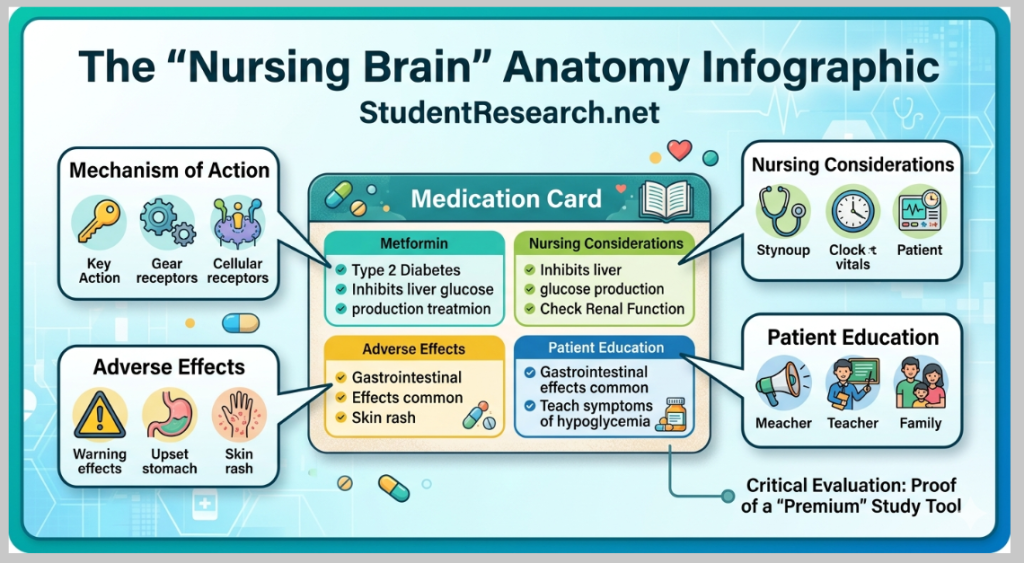
- Accuracy and Reference Sources:
- Check for citations from the USP or recent FDA bulletins.
- Ensure the deck is updated within the last 12–18 months.
- Look for “Nursing-Specific” tips rather than just pharmacist-level data.
- Physical Durability and Design:
- Laminated surfaces to prevent damage from hospital spills.
- Large, legible fonts to reduce eye strain during late-night study.
- Pre-punched holes for easy organization on a binder ring.
Struggling with complex pharmacology assignments? Master your coursework with ease! StudentResearch.net provides expert academic writing services tailored for nursing students. Ensure your research papers and clinical reports meet the highest professional standards with our specialized assistance today.
How to Maximize Retention Using Your New Flashcards
Owning the best nursing student medication cards is only half the battle; the other half is how you incorporate them into your daily routine. Many students make the mistake of reading through the cards passively, which mimics the boredom of a textbook. To truly master pharmacology, you must treat your cards as an interactive game and a constant clinical companion.
- Spaced Repetition Systems (SRS):
- Review difficult drugs every 24 hours.
- Review mastered drugs once a week to prevent decay.
- Categorize cards into “Know,” “Learning,” and “Hard” piles.
- Clinical Integration Strategy:
- Select 5 cards every morning that match your assigned patient’s medications.
- Review the “Nursing Considerations” during your commute.
- Quiz your peers during lunch breaks to reinforce collective knowledge.
Common Pitfalls When Buying Study Materials
It is easy to get swayed by aesthetic packaging or low prices when shopping for nursing student medication cards. However, cutting corners on your pharmacology education can lead to academic struggles or, worse, clinical errors. Professional student research suggests avoiding generic, unbranded decks often found on discount marketplaces that lack peer review.
- Information Overload:
- Avoid cards that cram too much text into a small space.
- Ensure there is white space for you to add your own clinical notes.
- Prioritize clarity over the sheer number of drugs included.
- Outdated Information:
- Beware of “hand-me-down” decks that may have old dosage guidelines.
- Verify that the classifications (like pregnancy categories) follow current standards.
- Discard any cards for drugs that have been withdrawn from the market.
Conclusion: Securing Your Future as a Competent Nurse
Investing in high-quality nursing student medication cards is a commitment to your professional growth and patient safety. By selecting one of the top 15 sets for 2026, you are equipping yourself with the precision and confidence required to excel in the classroom and on the hospital floor. Remember, the goal isn’t just to pass the exam, but to become a nurse who can be trusted at the bedside.
Meta Description: Master pharmacology with nursing student medication cards. This 2026 guide reviews the top 15 sets to boost your clinical confidence and grades.
Drowning in nursing care plans and drug profiles? Stop stressing and start succeeding! Let StudentResearch.net handle the heavy lifting of your academic workload. Secure your grades by ordering a custom-written paper from our professional medical writers right now!

