

Starting your journey in healthcare feels like trying to drink from a high-pressure fire hose of information, clinical jargon, and high-stakes procedures. However, what if you could turn your commute, gym session, or laundry time into a powerhouse of passive learning? By integrating nursing podcasts for students into your daily routine, you can bridge the gap between dry textbook theory and the fast-paced reality of the hospital floor.
This guide explores the best auditory resources to help you master complex pathophysiology and ace your NCLEX. At Student Research, we prioritize finding the most efficient ways to help you succeed without burning out.
Why Audio Learning is a Game-Changer for Modern Nursing Education
Traditional studying often tethers you to a desk, but nursing education requires a more mobile and flexible approach. Auditory learning allows students to digest complex medical concepts while multitasking, which significantly reduces the cognitive load during intense exam seasons. By listening to expert discussions, you develop a “clinical ear” for how professionals communicate in real-world scenarios.
Benefits of Integrating Podcasts into Your Study Routine
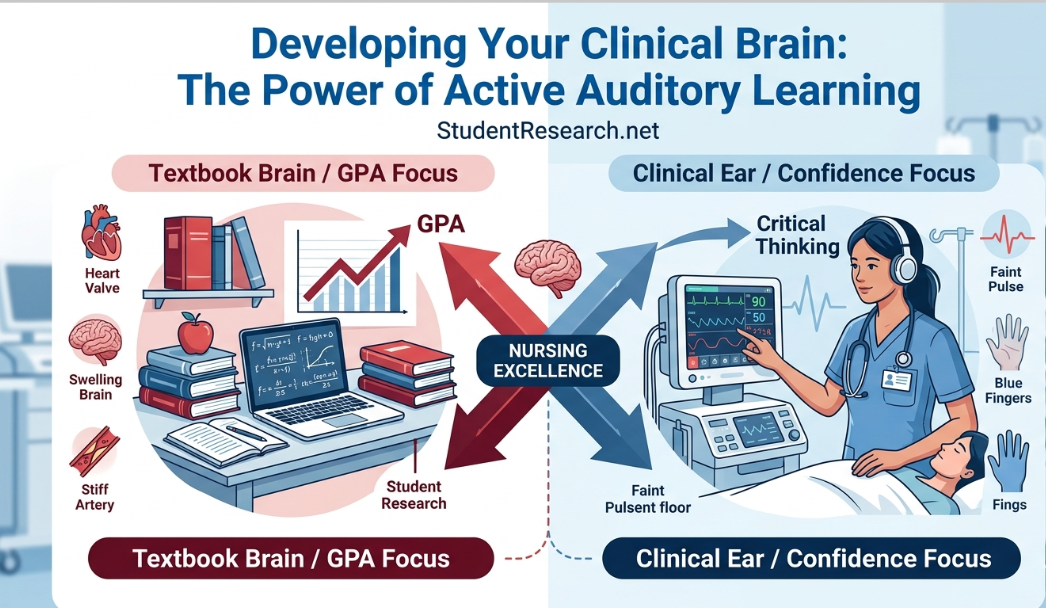
- Enhanced Retention through Spaced Repetition: Listening to a topic multiple times reinforces memory.
- Accessibility and Flexibility: You can study while commuting, exercising, or performing chores.
- Exposure to Clinical Nuance: Podcasts often share “pearls of wisdom” not found in standard textbooks.
- Reduced Screen Fatigue: Giving your eyes a break from digital textbooks helps prevent burnout.
Maximizing Your Listening Sessions
- Take Voice Memos: Record quick thoughts on your phone while listening to key podcast segments.
- Use 1.5x Speed: Increase playback speed for familiar topics to cover more ground in less time.
- Follow Along with Transcripts: Use written notes to verify the spelling of new medications or conditions.
- The “Pause and Reflect” Method: Stop the audio every ten minutes to summarize the main point out loud.
Tired of drowning in complex nursing assignments? Let the experts at StudentResearch.net handle the heavy lifting. We provide top-tier, evidence-based academic support tailored to your specific curriculum, ensuring your clinical papers are professional, accurate, and submitted on time.
Top 6 Nursing Podcasts for Students to Master Clinical Skills
Selecting the right audio resource is crucial because the quality of clinical information varies across platforms. The following nursing podcasts for students have been vetted for their accuracy, engagement level, and relevance to the current nursing curriculum. Whether you need help with pharmacology or emotional support, these shows provide a 360-degree view of the profession.
| # | Podcast Name | Primary Focus | Best For |
| 1 | Straight A Nursing | Academic Concepts | Pre-Nursing & Core Basics |
| 2 | NRSNG (Nursing.com) | NCLEX Prep | Test Strategies & Content |
| 3 | Real Talk Nursing | Mental Health/Lifestyle | Burnout Prevention |
| 4 | FreshRN | New Grad Transition | Clinical Orientation |
| 5 | The Curbsiders | Internal Medicine | Advanced Pathophysiology |
| 6 | Nursing Uncensored | Professional Culture | Ethics & Humor |
#1 Straight A Nursing – Mastering the Fundamentals
- Clear Concept Breakdown: Nurse Mo excels at simplifying “scary” topics like ABG interpretation.
- DRY (Don’t Repeat Yourself) Method: Focuses on the “must-know” info for exams.
- Latest Episode (475): What “Widening Pulse Pressure” Means.
Key Episodes to Stream First
- The Sepsis Protocol: A deep dive into early recognition and intervention.
- Electrolyte Imbalances: Understanding the “why” behind sodium and potassium shifts.
- The Fluids & Electrolytes Guide: Mastering the differences between isotonic, hypotonic, and hypertonic solutions.
#2 NRSNG Podcast – Targeted NCLEX Review
- Micro-Learning Format: Many episodes are under 10 minutes, perfect for quick review.
- Focus on High-Yield Facts: Directly targets the categories tested in the Next-Gen NCLEX.
- Latest Episode: Pass Any Nursing School Exam With Ease (Replay).
#3 FreshRN – Transitioning to Clinical Practice
- Orientation Success: Provides tips for the first week on the floor.
- Interprofessional Communication: Advice on how to speak with physicians and respiratory therapists.
- Latest Episode: How Virtual Nursing Is Redefining Bedside Care.
#4 The Curbsiders – Advanced Clinical Pathophysiology
- Internal Medicine Depth: High-level discussions on chronic and acute conditions.
- Evidence-Based Practice: Heavily sourced from current medical literature.
- Latest Episode (518): Cardiology Meets Longevity.
#5 Nursing Uncensored – Ethics and Professional Culture
- Realistic Expectations: Discussions on the emotional labor of nursing.
- Workplace Advocacy: Tips on navigating hospital politics and safe staffing.
- Latest Episode: I Burned Out and Logged Off: Leaving Bedside Pt 1.
#6 Real Talk Nursing – Mental Health and Longevity
- Burnout Prevention: Strategies for maintaining mental health during school.
- Real Stories: Interviews with nurses who have navigated traumatic events.
- Latest Episode: S3E35: An Egregious Error.
Deep Dive Cheat Sheets: Widening Pulse Pressure and Sepsis Protocols
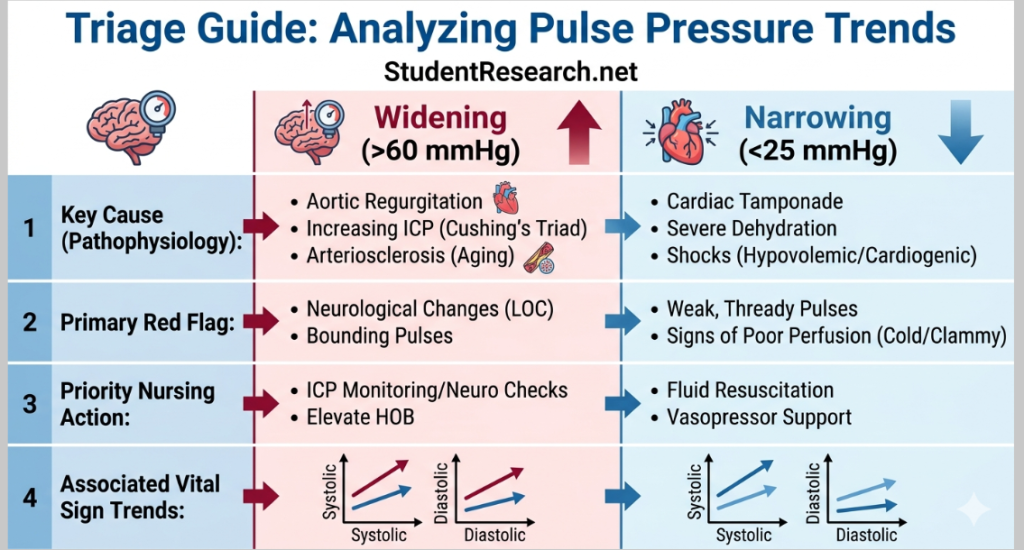
To illustrate how nursing podcasts for students deliver high-value content, we have synthesized two critical topics frequently discussed in recent episodes. These “Cheat Sheets” help you convert auditory information into clinical action. Mastering these two areas is essential for anyone entering a critical care or emergency rotation.
Cheat Sheet 1: Widening Pulse Pressure (WPP)
- Definition: The difference between Systolic (SBP) and Diastolic (DBP) blood pressure. A “wide” pressure is generally > 60 mmHg.
- Clinical Red Flag: Often indicates rising Intracranial Pressure (ICP) if accompanied by bradycardia.
- Arterial Stiffness: In older adults, it signifies loss of aortic elasticity.
Nursing Interventions for WPP
- Neurological Checks: Monitor for changes in Level of Consciousness (LOC).
- Cardiac Assessment: Auscultate for murmurs, specifically aortic regurgitation.
- Vital Sign Trends: Always look at the pulse pressure gap, not just the SBP.
Cheat Sheet 2: 2026 Sepsis Protocols & Hour-1 Bundle
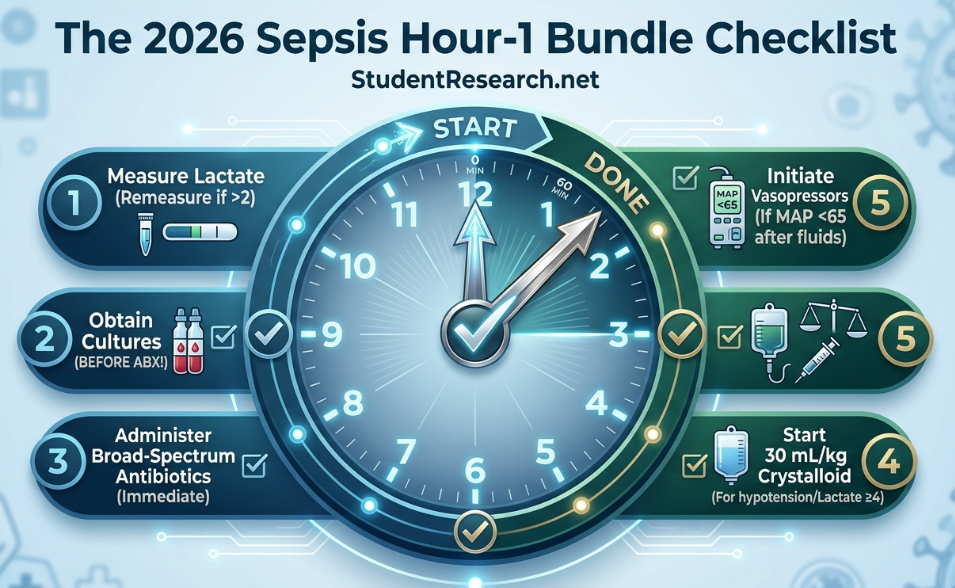
- Lactate Levels: Measure lactate immediately; remeasure if > 2 mmol/L.
- Blood Cultures: Must be drawn before the administration of broad-spectrum antibiotics.
- Fluid Resuscitation: Administer 30 mL/kg of crystalloid for hypotension.
Comparing Sepsis Screening Tools
- qSOFA: Uses RR ≥ 22, Altered Mentality, and SBP ≤ 100 as quick bedside markers.
- SOFA Score: A complex ICU-based tool calculating organ failure across six systems.
- SIRS Criteria: Temperature, Heart Rate, and White Blood Cell counts (used as early warning).
Comparing Top-Rated Audio Resources for Nursing Students
Not all podcasts serve the same purpose; some are strictly academic, while others focus on the “soft skills” of the profession. When evaluating nursing podcasts for students, it is helpful to look at the delivery style and the depth of the medical content provided. Using a comparison approach helps you decide which show fits your current semester’s specific challenges.
| Feature | Widening Pulse Pressure (> 60 mmHg) | Narrowing Pulse Pressure (< 25% of SBP) |
| Primary Meaning | High Stroke Volume or Stiff Arteries | Low Stroke Volume or High Resistance |
| Key Causes | Aortic Regurgitation, Rising ICP, Aging | Cardiac Tamponade, Severe Dehydration, Shock |
| Nursing Priority | Neuro Assessment (Cushing’s Triad) | Volume Status & Perfusion Assessment |
| Pulse Quality | Bounding Pulses | Weak, Thready Pulses |
Academic Rigor vs. Student Support
- The Curbsiders: Offers the highest level of technical depth for advanced students.
- Straight A Nursing: Perfect for those needing a bridge between basic theory and clinical application.
- FreshRN: Focuses heavily on the social and emotional transition into professional life.
How to Use Student Research to Complement Your Podcast Learning
Podcasts provide the “what” and the “how,” but finding credible sources to back up that information is the next vital step. At Student Research, we encourage you to cross-reference podcast “pearls” with peer-reviewed journals and clinical guidelines. This habit ensures that the information you share during clinical rounds is evidence-based and up to date.
Fact-Checking and Evidence-Based Practice
- Verify Drug Dosages: Never rely solely on audio for specific medication math; always check a formulary.
- Consult Updated Guidelines: Podcasts may have older episodes; always check for the latest CDC or AHA updates.
- Use Clinical Roadmaps: Combine your audio learning with visual flowcharts to solidify the concepts.
Organizing Your Research Findings
- Keep a Clinical Notebook: Jot down one “unforgettable fact” from every podcast episode you finish.
- Compare Sources: Check if the podcast’s recommendation aligns with your specific hospital’s policy.
- Annotate Your Textbooks: Add podcast insights into the margins of your relevant textbook chapters.
Practical Tips for Managing Information Overload
Listening to too many nursing podcasts for students at once can lead to “brain fog” and a sense of overwhelm. It is better to master one or two shows that align with your current course (e.g., Med-Surg or Pediatrics) than to listen to everything sporadically. Curating your feed allows you to focus your mental energy on the topics that will appear on your next exam.
Building a Sustainable Listening Habit
- The “One Episode a Day” Rule: Consistency beats intensity when it comes to long-term memory.
- Active Listening Techniques: Occasionally pause the audio and summarize the last five minutes out loud.
- Curate Your Playlist: Use the “Play Next” feature to stack episodes relevant to your current clinical rotation.
The Auditory Study Schedule
- Monday: Core Pathophysiology (Straight A Nursing).
- Tuesday: NCLEX Quick Hits (NRSNG).
- Wednesday: High-Level Medicine (The Curbsiders).
- Thursday: Career & Soft Skills (FreshRN).
- Friday: Reflection & Ethics (Nursing Uncensored).
Conclusion: Elevating Your Education Through Audio
Embracing nursing podcasts for students is a proactive step toward becoming a more confident and competent clinician. By utilizing these six high-quality resources, you are not just studying for a grade; you are preparing for the real-world responsibility of patient care. Mastering the art of auditory learning will keep you ahead of the curve as you transition from the classroom to the bedside.
Level up your clinical knowledge by streaming nursing podcasts for students today. These top 6 shows empower your study sessions and boost grades.
Ready to transform your grades into clinical excellence? Experience the professional difference at StudentResearch.net. Our specialized team is standing by to help you succeed—visit us today to order for specific academic writing services and secure your nursing future.

