

Your Clinical Career Starts in Charm City
Stepping into the professional healthcare landscape requires more than just a degree; it demands hands-on experience in high-stakes environments. For those seeking student nurse jobs Baltimore offers a unique ecosystem of world-class hospitals and community clinics. This guide serves as your roadmap to navigating these opportunities while balancing your rigorous academic schedule.
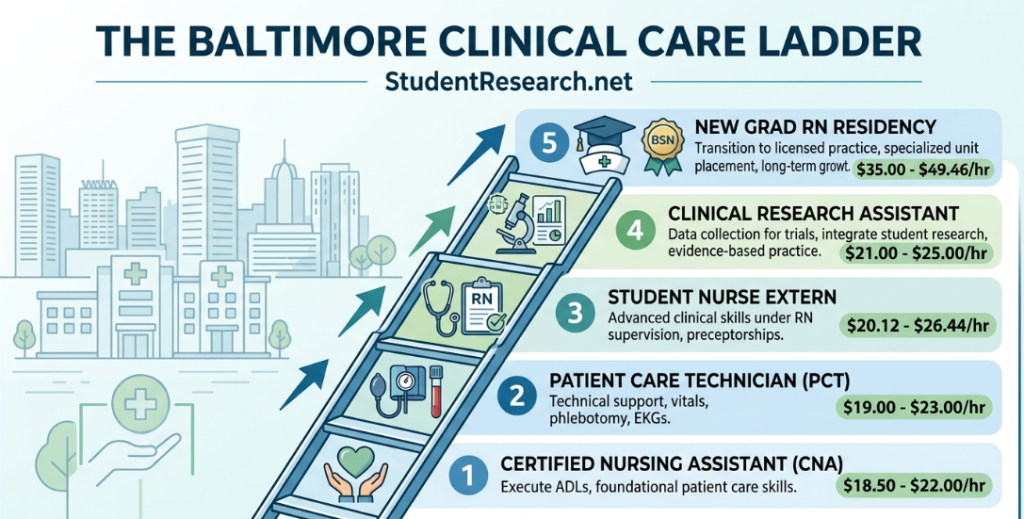
- The Baltimore Advantage: Why Maryland’s largest city is a hub for nursing excellence.
- Bridging the Gap: How early employment enhances clinical judgment.
- Strategic Growth: Leveraging entry-level roles for long-term career success.
2. Navigating the Landscape of Student Nurse Jobs Baltimore
The Baltimore healthcare market is diverse, ranging from prestigious university-affiliated systems to specialized pediatric centers. Finding the right fit for student nurse jobs Baltimore involves understanding the different tiers of care and the specific patient demographics each facility serves. Success in these roles often hinges on your ability to integrate student research findings into daily patient interactions.
- Major Healthcare Systems in Baltimore
- Johns Hopkins Medicine
- University of Maryland Medical System (UMMS)
- MedStar Health Facilities
- Mercy Medical Center
- Employment Comparison: Acute Care vs. Long-Term Care
| Feature | Acute Care (Hospitals) | Long-Term Care (Rehab/Nursing Homes) |
| Pace | High-intensity, fast-moving | Consistent, relationship-based |
| Skill Focus | Emergency response & technology | Chronic disease management |
| Shift Variety | 12-hour rotations common | Flexible 4, 8, or 12-hour shifts |
3. Top 16 Student Nurse Jobs Baltimore: Clinical Roles
Selecting the right position is the first step in your Comprehensive Guide to Choosing a path that aligns with your specialty interests. These roles focus on direct patient support, technical monitoring, and foundational clinical skills within the Baltimore metropolitan area. Engaging in student nurse jobs Baltimore allows you to see the “why” behind the “how” in your textbooks while contributing to student research initiatives in clinical settings.
- #1. Student Nurse Extern
- Clinical Supervision: Work directly under an RN preceptor to perform advanced skills like IV insertion and catheterization.
- Educational Integration: Apply classroom knowledge to real-time patient assessments in acute care units.
- Career Pipeline: Gain “internal candidate” status for competitive New Grad Residency programs at Baltimore hospitals.
- Flexible Scheduling: Most Maryland facilities offer per-diem “PRN” tiers to accommodate heavy nursing school exam weeks.
- Key Benefits of Externships
- Higher pay scales ($20.12 – $26.44/hr) compared to entry-level tech roles.
- Direct mentorship from specialized nursing staff.
- Opportunities to shadow in the ICU or OR during downtime.
- Key Benefits of Externships
- #2. Patient Care Technician (PCT)
- Technical Assistance: Perform phlebotomy, EKG leads, and sterile dressing changes under nursing direction.
- Vital Monitoring: Act as the “eyes and ears” of the unit by recording frequent vital signs and reporting deviations.
- Patient Mobility: Assist with safe patient transfers and ambulation using specialized lift equipment.
- Direct Care: Manage basic hygiene, nutrition, and comfort measures for a dedicated group of patients.
- #3. Certified Nursing Assistant (CNA)
- Foundational Skills: Execute ADLs (Activities of Daily Living) that form the core of patient-centered care.
- Documentation: Utilize Electronic Health Records (EHR) to track intake, output, and patient behavioral changes.
- Team Collaboration: Work closely with the multidisciplinary team to ensure a clean and safe healing environment.
- State Certification: Requires an active license from the Maryland Board of Nursing, often obtained after the first semester.
- #4. Emergency Room Technician
- High-Acuity Exposure: Assist in trauma bays with wound irrigation, splinting, and basic life support.
- Rapid Assessment: Learn to prioritize care based on triage levels in a fast-paced urban ER setting.
- Equipment Management: Set up specialized equipment for intubations, chest tubes, and cardiac monitoring.
- Communication: Coordinate with EMS and paramedics during patient hand-offs and admissions.
- #5. Surgical Services Aide
- OR Prep: Assist in the preparation and breakdown of sterile operating rooms between procedures.
- Patient Transport: Safely move patients from pre-op to the OR and eventually to the PACU (Recovery).
- Aseptic Technique: Gain a deep understanding of sterile fields and infection control protocols in surgery.
- Instrument Handling: Learn the nomenclature of surgical tools and basic anesthesia equipment.
- #6. Pediatric Care Assistant
- Family-Centered Care: Provide emotional and clinical support to both the pediatric patient and their guardians.
- Developmental Monitoring: Tailor care approaches based on the child’s age and developmental milestones.
- Safety Protocols: Maintain strict “crib-side” safety and specialized pediatric vital sign ranges.
- Child Life Support: Assist Child Life Specialists in reducing patient anxiety through therapeutic play.
- #7. Psychiatric Nursing Assistant
- Behavioral Health: Assist in de-escalation techniques and therapeutic communication for patients in crisis.
- Safety Rounds: Conduct frequent 15-minute safety checks to ensure a secure environment for all patients.
- Group Support: Help facilitate community meetings and therapeutic activities within the behavioral health unit.
- Crisis Management: Participate in code-green or behavioral emergency responses under RN leadership.
- #8. Home Health Aide (Student Nurse Track)
- Autonomous Practice: Provide 1-on-1 care in the patient’s home, fostering independence and long-term recovery.
- Medication Reminders: Ensure patients adhere to their prescribed medication schedules as part of clinical compliance.
- Community Insight: Gain a unique perspective on the socioeconomic factors affecting health in Baltimore.
- Documentation: Report subtle changes in home-based patient conditions to the supervising Case Manager.
- #9. Nurse Intern (Specialty Units)
- Focused Learning: Immerse yourself in specific departments like Oncology, Cardiology, or Neurology.
- Advanced Assessment: Learn the nuances of specialized physical exams related to your assigned unit.
- Policy Review: Analyze hospital-specific protocols and how they compare to national clinical standards.
- Patient Education: Assist the RN in teaching patients about post-discharge care and new diagnoses.
- #10. Clinical Research Assistant
- Data Integrity: Collect and record data for ongoing medical trials at academic institutions like Johns Hopkins.
- Protocol Adherence: Ensure all clinical interactions strictly follow the IRB-approved research guidelines.
- Participant Screening: Assist in the recruitment and screening process for new study participants.
- Scientific Writing: Contribute to the drafting of abstracts or posters for local student research symposiums.
- #11. Telemetry Technician
- Rhythm Analysis: Monitor continuous EKG strips for multiple patients and identify lethal arrhythmias.
- Alarm Management: Distinguish between artifact and true cardiac events to reduce “alarm fatigue.”
- Provider Notification: Immediately alert the RN or physician of any significant changes in heart rhythm.
- Technical Maintenance: Troubleshoot telemetry boxes and lead placement for high-quality signal transmission.
- #12. Labor and Delivery Support Staff
- Maternal Support: Provide comfort measures and coaching to laboring patients and their partners.
- Post-Partum Care: Assist in the initial assessment and care of the newborn and the recovering mother.
- Unit Readiness: Prepare delivery rooms with the necessary kits for vaginal and Cesarean births.
- Vital Trends: Monitor maternal blood pressure and fetal heart rate patterns under the RN’s guidance.
- #13. Oncology Support Assistant
- Immunocompromised Care: Follow strict neutropenic precautions to protect vulnerable cancer patients.
- Symptom Management: Provide palliative comfort for side effects like nausea, pain, and fatigue.
- Infusion Support: Assist the chemotherapy-certified RN with non-medication tasks during infusion sessions.
- Emotional Support: Offer a compassionate presence for patients navigating long-term illness.
- #14. Community Health Outreach Worker
- Public Health: Participate in Baltimore health fairs, vaccine clinics, and blood pressure screenings.
- Resource Connection: Help residents navigate local social services, food banks, and housing assistance.
- Health Literacy: Translate complex medical jargon into actionable advice for underserved populations.
- Grant Support: Assist in gathering demographic data to support funding for community student research projects.
- #15. Hospice Care Student Aide
- End-of-Life Care: Focus on dignity, comfort, and quality of life for patients in their final stages.
- Bereavement Support: Provide resources and presence to families during the grieving process.
- Pain Observation: Monitor for non-verbal signs of distress and report findings to the hospice nurse.
- Holistic Approach: Address the spiritual and psychological needs of the patient alongside physical care.
- #16. School Health Assistant (Seasonal)
- Student Wellness: Manage minor injuries and illness screenings for K-12 students in Baltimore schools.
- Immunization Records: Assist the school nurse in auditing student health files for state compliance.
- Chronic Condition Support: Help monitor students with asthma, allergies, or diabetes during school hours.
- Health Education: Deliver presentations to classrooms on hygiene, nutrition, and mental health awareness.
“Drowning in citations and complex research papers?” Let the experts at StudentResearch.net handle the heavy lifting. Our professional writers deliver high-quality, plagiarism-free academic content tailored to your specific nursing curriculum. Boost your grades while you focus on clinicals!
4. Essential Requirements for Employment in Maryland
Securing student nurse jobs Baltimore requires meeting specific state-mandated certifications and academic benchmarks. The Maryland Board of Nursing (MBON) has strict guidelines for students working in clinical capacities to ensure patient safety and professional accountability. Understanding these legal and institutional requirements is a vital part of this Comprehensive Guide to Choosing your first healthcare employer within the state.
- Required Documentation for Applicants
- Active CNA/GNA License: Most Baltimore hospitals require students to hold a Certified Nursing Assistant license.
- Official Transcripts: Evidence of current enrollment in an accredited program with a minimum GPA (usually 3.0).
- BLS/CPR Certification: A current Basic Life Support card for Healthcare Providers from the AHA.
- Background Clearances: Successful completion of Maryland state criminal background checks.
- Baltimore Market Statistics: Student Nurse Employment
| Metric | Average Statistic (Baltimore, MD) | Trend Analysis |
| Average Hourly Pay | $19.55 – $26.44 | Increasing due to local demand |
| Shift Differentials | +$2.00 to $5.00 | Higher for weekend/night rotations |
| Job Growth Rate | 12% increase annually | Driven by Baltimore’s aging population |
| Tuition Reimbursement | Available at 70% of facilities | Often requires a post-grad commitment |
5. Maximizing Your Application Success
To stand out when applying for student nurse jobs Baltimore, your application must highlight both your academic prowess and your soft skills. Baltimore recruiters look for candidates who demonstrate a commitment to the local community and a hunger for professional development. Highlighting your interest in student research can often give you a competitive edge in academic medical centers that value evidence-based practice.
- Resume Tips for Student Nurses
- Graduation Timeline: Clearly state your expected graduation date and current semester standing at the top.
- Clinical Hours: Detail specific rotations (e.g., “120 hours in Med-Surg at Mercy”) to show hands-on experience.
- Technical Skills: List proficiency in specific Electronic Health Record (EHR) systems like Epic or Cerner.
- Academic Projects: Mention any student research posters to showcase your analytical thinking.
- Interview Strategies
- The STAR Method: Prepare specific examples of how you handled conflict or prioritized tasks during clinicals.
- Facility Research: Mention specific hospital values to show genuine interest in the institution.
- Ask Insightful Questions: Inquire about the nurse-to-tech ratios and the availability of preceptors.
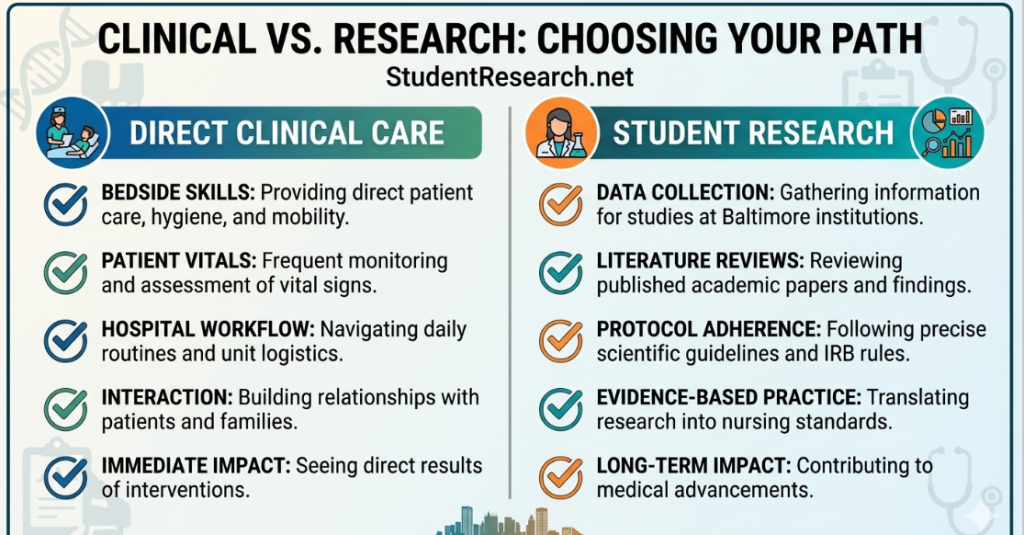
6. Balancing Work and Nursing School
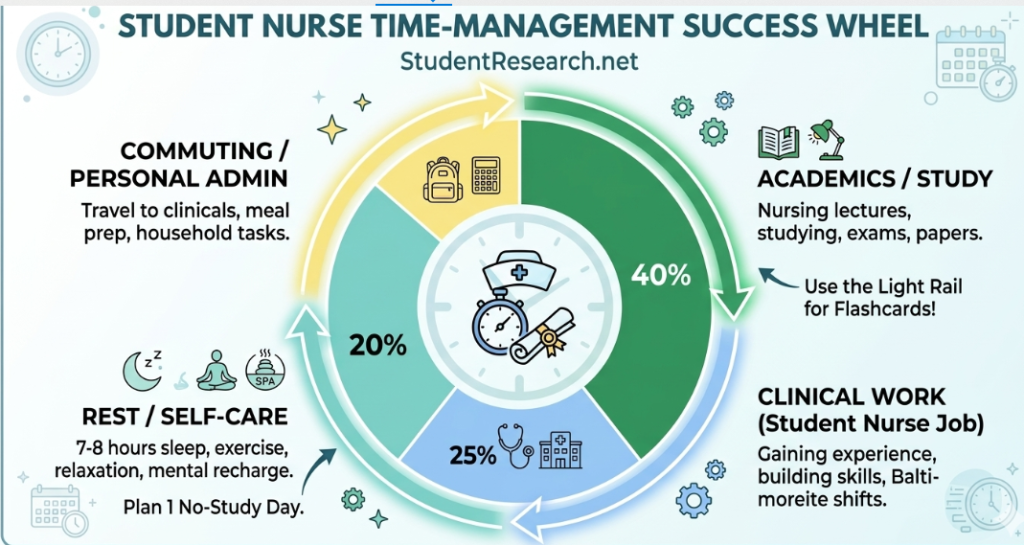
Successfully managing student nurse jobs Baltimore while maintaining a high GPA requires meticulous time management and clear boundaries. Many students find that working 12–24 hours a week provides the perfect balance of income and experience without causing academic burnout. Use this Comprehensive Guide to Choosing a work-study balance that prioritizes your degree while building your clinical resume.
- Time Management Techniques
- Block Scheduling: Dedicate specific days to “school only” and “work only” to prevent mental fatigue.
- Proactive Communication: Share your academic calendar and exam dates with your manager early in the semester.
- Utilize Commutes: Use the Baltimore Light Rail transit time to review flashcards or listen to podcasts.
- Leverage Peer Support: Connect with other student nurses in your unit to trade shifts when papers are due.
- Avoiding Burnout
- Mandatory Rest: Schedule at least one full “no-study, no-work” day per week to recharge.
- Physical Wellness: Prioritize consistent sleep patterns and meal prep to stay fueled for 12-hour shifts.
- Mental Health Resources: Utilize the employee assistance programs (EAP) provided by large Baltimore systems.
“Struggling to balance 12-hour shifts and looming deadlines?” Reclaim your time with StudentResearch.net. We provide custom academic writing support, from research outlines to full essays, ensuring you never miss a submission. Achieve excellence in both work and school today!
7. Transitioning from Student to Professional RN
The ultimate goal of pursuing student nurse jobs Baltimore is to ease the transition from a learner to a licensed practitioner. Students who work in the city often find themselves better prepared for the rigors of a New Grad Residency than those who focus solely on academics. This final phase involves leveraging your work history into a high-paying, full-time nursing career in the Charm City.
- The Residency Advantage
- Internal Hiring: Many Baltimore hospitals offer “early-access” windows for current student employees.
- Unit Familiarity: Transitioning to an RN role on a unit where you previously worked reduces orientation anxiety.
- Professional Reputation: You have established trust with the nursing leadership and multidisciplinary team.
- Advanced Placement: Some facilities allow former externs to bypass certain introductory orientation modules.
- Comparison: Student Role vs. New Grad RN
| Feature | Student Nurse Roles | New Grad RN Role |
| Responsibility | Delegated tasks under supervision | Primary accountability for outcomes |
| Scope of Practice | Limited (No meds/assessments) | Full legal scope of MD RN license |
| Average Pay (MD) | $19.55 – $26.44/hr | $35.00 – $49.46/hr |
| Expectation | Learning and assistance | Critical thinking and decision-making |
8. Conclusion: Your Future in Baltimore Healthcare
Finding the right student nurse jobs Baltimore is a pivotal step in your journey toward becoming a licensed professional. By choosing a role that challenges you and supports your learning, you set a foundation for a lifelong career in nursing. Remember to use this guide as your baseline for clinical success and professional growth in the vibrant city of Baltimore. Whether you are assisting in a trauma bay or contributing to student research in a lab, every hour spent in the field brings you closer to your goals.

