

.
#1 The Gateway to Your Professional Identity
Walking into a clinical placement for the first time is a monumental milestone in any medical career. Your student nurse uniform is more than just a set of scrubs; it is a symbol of trust, a mark of your dedication, and the first visual cue to patients that they are in capable hands. Mastering the presentation of this attire is the first step toward transitioning from a learner to a seasoned healthcare provider.
The Psychology of the Clinical Image
- Trust and Authority: Patients often feel vulnerable, and a crisp, clean uniform provides a sense of psychological security and professional reliability.
- Team Integration: Wearing the designated colors of your institution fosters a sense of belonging among the multidisciplinary healthcare team.
- Mindset Shift: Donning your uniform acts as a mental “on-switch,” transitioning you from your personal life into a focused, clinical mindset.
#2 Selecting the Right Fit for Functionality
The physical demands of nursing are rigorous, requiring you to move, lift, and reach throughout a twelve-hour shift. Choosing a student nurse uniform that prioritizes ergonomics and fabric quality ensures that you aren’t distracted by discomfort while performing critical tasks. When selecting your gear, consider how the fabric handles the high-intensity environment of a modern hospital ward.
Fabric and Durability Essentials
- Breathability: Look for cotton-poly blends that allow for airflow during high-stress situations or long rounds.
- Moisture-Wicking: Fabrics that pull sweat away from the body help maintain a professional appearance even during physical exertion.
- Stain Resistance: Advanced textiles now offer barriers against fluids, which is essential for maintaining hygiene in a clinical setting.
H4: Key Fabric Types to Consider
- Poplin: Known for being lightweight and easy to iron, keeping you looking sharp for morning rounds.
- Spandex Blends: These provide the necessary “give” for bending and reaching without the risk of tearing.
- Antimicrobial Treatments: Some uniforms are treated to reduce the growth of bacteria, adding an extra layer of safety.
Struggling to balance long clinical shifts with complex essays?” Let StudentResearch.net handle the heavy lifting. Our expert writers deliver high-quality, plagiarism-free nursing papers, giving you more time to master your practical skills and excel in your healthcare career.
#3 Organizing Your Essential Clinical Tools
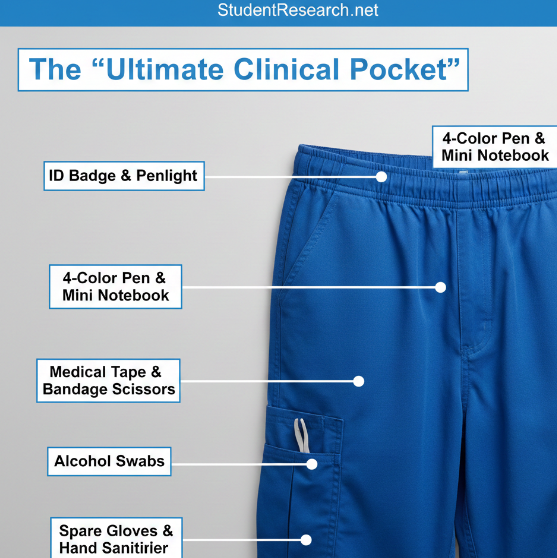
A student nurse uniform is essentially a wearable workstation, and how you utilize your pockets can dictate your efficiency for the day. Being a comprehensive student means having your tools ready at a moment’s notice, from your stethoscope to your penlight. Strategic organization prevents the frantic search for supplies during a patient assessment.
Must-Have Pocket Fillers
- Assessment Tools: Your stethoscope, bandage scissors, and a reliable penlight are non-negotiable for daily tasks.
- Documentation Supplies: Always carry a four-color pen and a small notepad for taking quick vitals or noting doctor’s orders.
- Personal PPE: Keep a spare pair of gloves and a mask in a dedicated pocket for immediate access in isolation rooms.
H4: Strategic Tool Placement
- Dominant Side Pockets: Reserve these for the items you use most frequently, like your primary writing instrument.
- Chest Pockets: Ideal for lightweight items like ID badges or a small cheat sheet for common drug calculations.
- Cargo Pockets: Use these for bulkier items like rolls of medical tape or your smartphone (if permitted for clinical apps).
#4 Hygiene and Maintenance Standards
Maintaining your nursing student attire requires a strict laundry regimen to ensure both aesthetic professionalism and infection control. Because you are often in contact with pathogens, your cleaning routine must be more rigorous than that of your standard wardrobe. Adhering to these standards protects both you and your household from cross-contamination.
Decontamination and Care Protocols
- High-Temperature Washing: Use the warmest setting recommended for the fabric to effectively kill lingering bacteria and viruses.
- Separate Loads: Never wash your clinical scrubs with your regular clothes or towels to prevent the spread of hospital-acquired germs.
- Ironing for Impact: A wrinkle-free appearance signals attention to detail, a trait highly valued in patient care and student research initiatives.
| Aspect | Best Practice | What to Avoid |
| Laundering | Use heavy-duty detergent and hot water. | Using fabric softeners that degrade moisture-wicking properties. |
| Stain Removal | Pre-treat blood or chemical stains immediately. | Letting stains set in the dryer’s high heat. |
| Footwear | Wipe down clinical shoes with disinfectant wipes daily. | Wearing your clinical shoes inside your home. |
#5 Professional Grooming and Accessory Guidelines
The nursing trainee outfit is only one part of your overall presentation; grooming plays a secondary but equally vital role in your professional image. Most clinical sites have strict policies regarding jewelry, hair, and scent to ensure patient safety and minimize distractions. A polished look reflects a disciplined mind, which reassures patients that your care will be equally precise.
Grooming for Safety and Professionalism
- Hair Management: Keep hair pulled back and off the collar to prevent it from interfering with sterile fields or patient contact.
- Jewelry Limitations: Stick to simple stud earrings and a plain wedding band to reduce the risk of harboring bacteria or scratching a patient.
- Scent-Free Environment: Avoid perfumes or strong colognes, as many patients have respiratory sensitivities or nausea.
H4: Footwear Requirements
- Closed-Toe Design: Essential for protecting your feet from dropped sharps or spilled biohazardous fluids.
- Non-Slip Soles: Critical for maintaining stability on hospital floors that may be wet or waxed.
- Arch Support: Investing in high-quality insoles will prevent chronic back and leg pain during your clinical journey.
#6 Integrating Academic Knowledge with Practice
While the trainee nurse scrubs signify your role in the hospital, your actions must be backed by the latest evidence-based findings. Engaging in student research allows you to understand the “why” behind the clinical protocols you perform while in uniform. This intellectual rigor ensures that your professional appearance is matched by a high level of clinical competence.
Bridge the Gap Between Theory and Practice
- Evidence-Based Care: Use your clinical hours to observe how the theories you study in class are applied in real-time patient scenarios.
- Critical Thinking: Always ask questions (at appropriate times) to deepen your understanding of the care plans you are implementing.
- Policy Compliance: Ensure your uniform and actions always align with the specific hospital’s “Standard Operating Procedures.”
“Want to submit a paper that truly stands out?” Elevate your academic performance with professional assistance from StudentResearch.net. We specialize in evidence-based nursing reports and comprehensive case studies designed to help you secure the top grades you deserve.
#7 Navigating Different Clinical Environments
Depending on your rotation, your student nurse uniform may need to adapt to specific department requirements, such as the Operating Room or Pediatrics. Being versatile and prepared for these changes shows your adaptability as a future healthcare leader. Whether you are in standard scrubs or specialized “theatre blues,” the core principles of cleanliness and readiness remain the same.
Adaptation Strategies for Rotations
- The Operating Room: Be prepared to swap your standard uniform for hospital-issued sterile scrubs and head covers.
- Pediatrics: Sometimes a more “friendly” approach is allowed, such as colorful badge reels, to help reduce “white coat syndrome” in children.
- Community Health: In some settings, you may wear a polo shirt and slacks, but the focus on a neat, identifiable appearance never wavers.
H4: Sequential Tips for Success
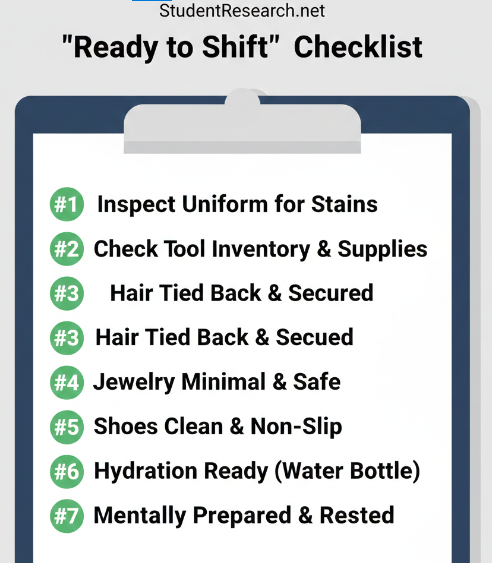
- #1 Prepare: Lay out your uniform and tools the night before your shift.
- #2 Inspect: Check for loose threads, missing buttons, or stains before leaving the house.
- #3 Hydrate: Carry a water bottle, but keep it in designated break areas to maintain a professional bedside.
- #4 Observe: Watch how experienced nurses carry themselves and mirror their professional posture.
- #5 Reflect: At the end of the day, consider how your professional image influenced your interactions.
- #6 Sanitize: Wash your hands and your gear immediately upon returning home.
- #7 Rest: A well-rested nurse is a safe nurse; your uniform looks best on a focused professional.
Conclusion: Embodying the Profession
Mastering the nuances of the student nurse uniform is a vital part of your journey toward becoming a registered professional. By following these guidelines, you ensure that you are not only dressed for the part but are also mentally and physically prepared for the challenges of the healthcare field. Remember, your appearance is the first chapter of the story you tell your patients about the quality of care they are about to receive.
Meta Description: Discover how the student nurse uniform builds professionalism. This comprehensive guide covers 7 tips to be confident, prepared, and clinical

