

Have you ever imagined yourself trading the familiar hum of your local ward for a bustling community clinic in the heart of the Amazon or a high-tech facility in Tokyo? Navigating student nurse placements abroad is more than just a travel adventure; it is a profound professional pivot that challenges your clinical instincts and broadens your cultural humility. In this guide, we dive deep into how you can bridge the gap between classroom theory and global health reality while gaining an edge in the competitive healthcare job market.
The Global Landscape of Nursing Internships
The world of international healthcare education is vast and offers a spectrum of experiences ranging from observing advanced surgical techniques to supporting under-resourced rural clinics. Whether you are looking for a summer elective or a full-semester practicum, student nurse placements abroad provide the unique clinical exposure that domestic rotations simply cannot replicate. These programs are meticulously designed to ensure that you remain within your scope of practice while pushing the boundaries of your comfort zone.
Understanding Internship Categories
- Clinical Shadowing: Observation Techniques
- Observe local doctors and registered nurses during ward rounds.
- Gain insight into diagnostic processes in different healthcare systems.
- Compare patient-care protocols between your home country and host site.
- Community Health Outreaches: Public Health Engagement
- Participate in mobile clinics providing vaccinations or basic screenings.
- Engage in health education workshops for local schools or villages.
- Learn about preventative medicine in diverse socioeconomic contexts.
- Specialized Placements: Clinical Specializations
- Focus on specific areas like Midwifery, Pediatrics, or Mental Health.
- Work in specialized units such as Tropical Medicine or Infectious Diseases.
- Experience traditional healing practices integrated with modern nursing.
The Role of Academic Credit
- University-Affiliated Programs: Curricular Integration
- Direct partnerships between your nursing school and an overseas hospital.
- Pre-approved clinical hours that count toward your graduation requirements.
- On-site faculty supervision often included for safety and assessment.
- Independent Third-Party Providers: Private Placement Support
- Greater flexibility in destination and start dates for your elective.
- Personalized support including housing, airport transfers, and 24/7 help.
- Requires prior coordination with your university to ensure hour recognition.
Spanning the 7 Continents: Where to Find Your Placement
Finding the right location for student nurse placements abroad requires balancing your clinical interests with the geographical diversity of our world. From the icy research stations of the south to the vibrant urban centers of Europe, every continent offers a distinct set of healthcare challenges and learning opportunities. We have mapped out the global opportunities to help you identify the perfect setting for your next professional milestone.
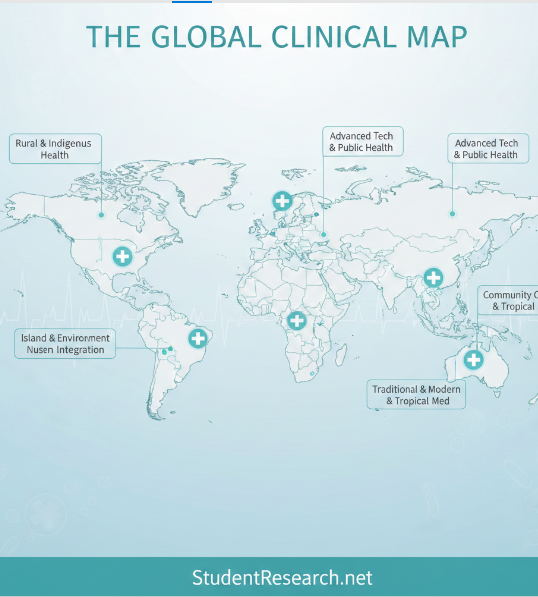
Placement Locations by Continent
| Continent | Typical Placement Type | Top Destinations |
| Africa | Community health & tropical medicine | Kenya, Tanzania, Ghana |
| Asia | High-volume urban clinics & traditional medicine | India, Vietnam, Nepal, South Korea |
| Europe | Advanced technology & public health systems | Spain, UK, Norway, Germany |
| North America | Rural medicine & indigenous health | Mexico, Costa Rica, Guatemala |
| South America | Maternal health & remote village clinics | Peru, Ecuador, Argentina |
| Oceania | Public health & remote nursing | Australia, Fiji, Samoa |
| Antarctica | #1. Remote Research Medicine | Antarctic Research Stations |
Navigating Continent-Specific Challenges
- #2. Africa: Resource Management
- Focus on managing limited resources in rural health centers.
- Exposure to diseases like Malaria, TB, and HIV/AIDS management.
- Opportunities for student research regarding community-led health interventions.
- #3. Asia: Cultural Medicine
- Witnessing the intersection of Eastern and Western medical practices.
- Participating in high-patient-turnover environments in mega-cities.
- Learning about geriatric care in countries with aging populations.
- #4. Europe: Technological Integration
- Observing universal healthcare models and advanced medical technology.
- Participating in specialized surgical and rehabilitation rotations.
- Engaging in peer-to-peer learning with international nursing students.
How to Strategically Search for the Best Placements
Securing high-quality student nurse placements abroad is a process that begins at least six to twelve months before your intended departure date. You must be proactive in your search, utilizing a combination of academic resources, professional networks, and online specialized databases. By being methodical, you can ensure your placement aligns with your career goals and university requirements.
Search Strategies and Resources
- University International Offices: Academic Networks
- Check for established exchange agreements like Erasmus+ or Global Health tracks.
- Ask for a list of hospitals that have previously hosted students from your school.
- Consult with your nursing tutor about “elective” periods in your curriculum.
- Specialized Placement Agencies: External Provider Evaluation
- Research reputable providers like Projects Abroad, IVHQ, or Work the World.
- Read verified student reviews on platforms like GoAbroad or GoOverseas.
- Compare the level of clinical supervision and support services offered.
Verification and Compliance
- #5. Professional Accreditation: Legal Requirements
- Verify if the host facility is recognized by local health authorities.
- Ensure the program complies with the nursing board standards of your home country.
- Confirm that your indemnity insurance covers international clinical practice.
- #6. Mentorship Opportunities: Educational Oversight
- Identify if you will have a dedicated clinical mentor on-site.
- Ask about the possibility of conducting a student research project during your stay.
- Request a copy of the clinical learning objectives provided by the placement.
Financial Planning and Pricing for Your Trip
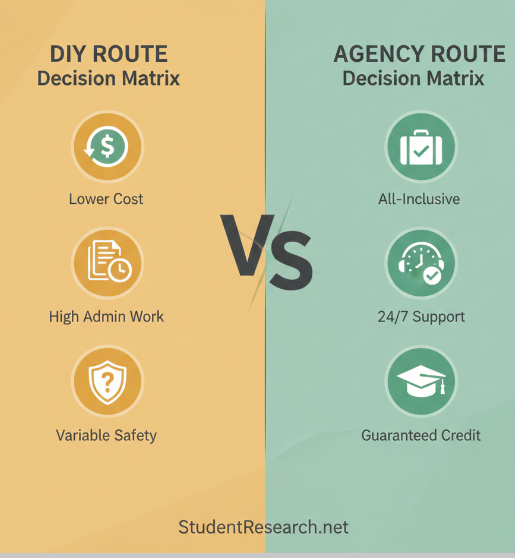
The cost of student nurse placements abroad can vary significantly depending on the destination, duration, and the level of support provided. While some independent arrangements might seem cheaper upfront, all-inclusive packages often provide better value by covering housing, meals, and hospital administration fees. It is essential to create a comprehensive budget to avoid unexpected expenses during your clinical rotation.
Breakdown of Typical Costs
| Expense Category | Independent DIY Costs (Est.) | Agency-Led Costs (Est.) |
| Registration/Admin | $100 – $300 | $300 – $600 |
| Weekly Placement Fee | $150 – $400 | $600 – $1,200 |
| Accommodation | Variable | Included |
| Local Supervision | Rarely included | Included |
Funding Your Global Rotation
- #7. Scholarships and Grants: Institutional Funding
- Apply for nursing-specific travel bursaries from organizations like the RCN or ANA.
- Check for university-funded “Global Experience” grants or merit scholarships.
- Look into local community or Rotary Club sponsorships for healthcare students.
- #8. Fundraising and Crowdfunding: Community Support
- Start a GoFundMe page detailing the community impact of your placement.
- Organize local events or “bake sales” to involve your community in your journey.
- Write to local medical supply companies for sponsorship in exchange for a blog feature.
Essential Packing List for Nursing Students
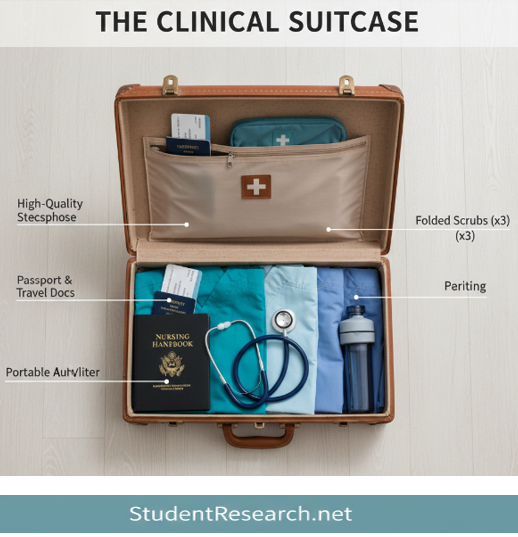
Packing for student nurse placements abroad requires a delicate balance between professional clinical gear and personal travel essentials. You need to be prepared for long shifts in diverse climates while keeping your luggage manageable for weekend explorations. Investing in high-quality, durable equipment will ensure you can focus on your patients rather than failing gear.
Clinical Gear Essentials
- Professional Attire: * #9. Multiple Scrub Sets: Uniform Selection
- Pack 3-5 sets of lightweight, quick-drying scrubs.
- Comfortable Footwear: Durable, closed-toe shoes designed for 12-hour shifts.
- Identification: A sturdy badge holder and several copies of your student ID.
- Medical Tools: Diagnostic Equipment
- Personal Stethoscope: A high-quality model (e.g., Littmann) that you trust.
- Diagnostic Tools: Penlight, nursing scissors, and a reliable wristwatch with a second hand.
- Reference Materials: A pocket-sized clinical handbook or a nursing drug guide.
Travel and Personal Health
- #10. Travel Documents: Essential Paperwork
- Valid passport (with at least 6 months validity) and necessary visas.
- Physical and digital copies of your immunization records and CPR certification.
- Comprehensive travel insurance policy detailing medical malpractice coverage.
- Health and Hygiene: Personal Wellness Kit
- Personalized first aid kit including basic meds for “traveler’s stomach.”
- Reusable water bottle with a built-in filtration system for remote areas.
- A small supply of PPE (masks and gloves) in case the facility runs low.
Advancing Your Career Through Student Research
One of the most overlooked benefits of student nurse placements abroad is the opportunity to engage in meaningful student research. By observing different healthcare delivery models, you can gather data and insights that contribute to the global body of nursing knowledge. This academic rigor not only benefits the host community but also significantly boosts your resume for future graduate school applications.
Research Themes for Global Nursing
- #11. Comparative Health Systems: Analytical Frameworks
- Analyze the efficacy of triage systems in resource-limited vs. high-tech settings.
- Study the impact of cultural beliefs on patient compliance with medications.
- Document the role of traditional birth attendants in maternal health outcomes.
- #12. Infectious Disease Control: Epidemiology in Practice
- Observe local protocols for managing outbreaks of endemic diseases.
- Survey community awareness levels regarding preventative hygiene practices.
- Collaborate with local staff to identify barriers to healthcare access in rural areas.
Documenting Your Findings
- Maintaining a Reflective Journal: Narrative Documentation
- Write daily entries on clinical cases that challenged your previous assumptions.
- Record cultural nuances that influenced your patient interactions.
- Note specific nursing techniques used by local staff that were new to you.
- Developing a Portfolio: Career Evidence
- Collect testimonials or letters of recommendation from your international mentors.
- Include photos (with patient consent) of community outreach initiatives.
- Prepare a final report or presentation to share with your home university.
Struggling to turn your clinical observations into a professional paper?” Let StudentResearch.net handle the heavy lifting. Our expert writers specialize in transforming your international nursing data into high-distinction research projects and reflective portfolios while you focus on your patients.
Maximizing Your Impact While Abroad
Your presence in student nurse placements abroad should be characterized by a spirit of reciprocity and humility. It is easy to fall into the trap of wanting to “fix” things, but the most successful students are those who listen more than they speak. By building genuine relationships with local staff and patients, you ensure that your experience is mutually beneficial and ethically sound.
Application and Inquiry Strategy
- Professional Inquiry Email Template:
- Subject: Inquiry Regarding Clinical Placement Opportunities – [Your Name] – [Your University]
- Dear [Name of Contact Person or Admissions Team],
- My name is [Your Name], and I am currently a [Year of Study] nursing student at [University Name]. I am writing to formally express my interest in pursuing student nurse placements abroad within your facility.
- I am particularly drawn to your program because of its reputation for [mention a specific detail]. I am seeking a placement for [Number] weeks, tentatively starting in [Month/Year]. I am also interested in the potential for student research during my time there.
- Regarding my candidacy, I have attached my CV and would appreciate information on the following:
- Clinical Supervision: The level of mentorship provided.
- Documentation: Specific requirements for temporary practice permits.
- Pricing and Logistics: A breakdown of fees and accommodation guidance.
Application Checklist
- Nursing Placement Application Checklist:
- H4: Required Attachments
- Updated CV/Resume highlighting clinical rotations.
- University Learning Objectives/Syllabus for the elective.
- Proof of Enrollment from your Nursing School.
- Immunization Records (Hep B, TB clearance, COVID-19, etc.).
- Criminal Background Check/DBS Certificate.
- Copy of Passport (Photo Page).
- Academic or Professional Letters of Recommendation.
- Basic Life Support (BLS) or CPR Certification.
“Want to secure the most competitive international clinical rotations?” First impressions matter. StudentResearch.net provides bespoke CV editing and personal statement drafting specifically for nursing students. We ensure your application stands out to global hospitals, guaranteeing you the placement of your dreams.
Conclusion: Your Journey to Global Nursing Starts Here
Embarking on student nurse placements abroad is a transformative journey that will redefine your understanding of what it means to be a healer. From the practical clinical skills you sharpen in a high-pressure ward in Africa to the deep cultural insights you gain in a South American village, these experiences build the resilience and empathy required for a lifelong nursing career. By following this guide—from choosing your continent to conducting your first student research project—you are stepping into a larger world of healthcare that needs your passion and dedication.
Meta Description: Explore 12 life-changing student nurse placements abroad. Learn how to find global nursing internships, manage costs, and pack for success.

