

Does a Nursing Student Get Paid? 10 Vital Things You Need to Know
The dream of wearing the white coat or scrubs often comes with a daunting question: how do I keep my bank account afloat while I study? For many, the burning question—does a nursing student get paid—is the deciding factor in choosing between an accelerated program or a traditional four-year degree. While the short answer is “usually no for clinical hours,” the long answer is filled with clever financial strategies and hidden opportunities that provide in-depth insights into the modern nursing education landscape.
Understanding the Financial Reality of Nursing Clinicals
Entering nursing school requires a shift in how you view “work” versus “training.” Most traditional programs treat clinical rotations as credit-bearing laboratory sessions rather than employment, meaning you are paying the university for the privilege of working in the hospital. However, as the nursing shortage intensifies, the landscape of how a nursing learner receives compensation is shifting toward more innovative, supportive financial models.
The Standard Unpaid Clinical Model
In the majority of BSN and ADN programs, students do not receive a paycheck for their required hours. This is because the primary goal is educational mastery rather than hospital productivity.
Why clinicals are generally unpaid
- Liability and Supervision: Students require a 1:1 or 1:8 ratio with an instructor, which is an expense for the school.
- Educational Credits: You are earning units toward licensure, which technically classifies you as a student rather than an employee.
- Regulatory Standards: State Boards of Nursing often mandate that clinical hours be strictly for learning to ensure patient safety.
Exceptions in Apprenticeships and Residencies
There are rare but growing instances where a nursing student receives a salary through dedicated apprenticeship models. These are often partnerships between specific hospitals and community colleges looking to fast-track employment.
How apprenticeships differ from standard rotations
- Contractual Agreements: You may be paid for your time in exchange for a “work commitment” after graduation.
- Hybrid Roles: Some programs allow you to work as a Nurse Aide while simultaneously checking off clinical competencies.
- Federal Funding: Certain government grants now fund “Earn While You Learn” initiatives to diversify the workforce.
10 Ways a Nursing Student Can Earn Income During School
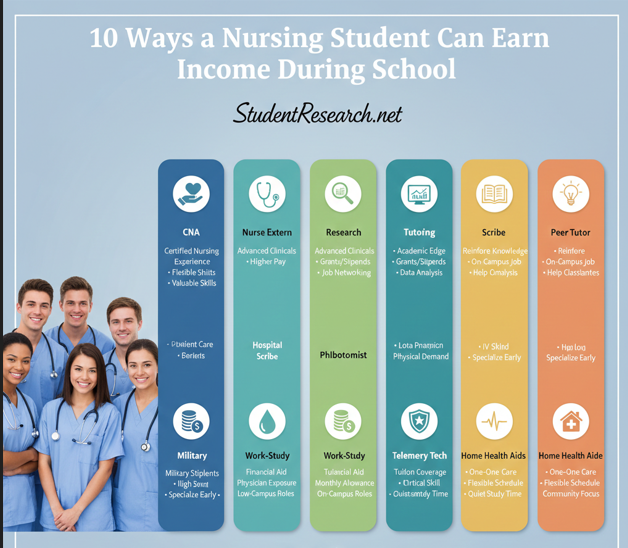
While your mandatory clinical hours might not put money in your pocket, there are ten distinct pathways to ensure a student nurse earns money while navigating their degree. From hospital-based roles to academic assistance, the modern healthcare system offers various “side doors” for those willing to work. These options provide in-depth insights into how to balance a rigorous study schedule with the necessity of a paycheck.
1. Working as a Certified Nursing Assistant (CNA)
Many students become CNAs before or during their first semester. This is the most common way a nursing student gets paid while gaining direct patient care experience that looks great on a resume.
- Flexibility: Many hospitals offer 12-hour weekend shifts, perfect for a weekday class schedule.
- Skill Building: You master basic skills like vitals and mobility early on.
2. Seeking a Nurse Externship
After your first year of clinicals, you become eligible for “Extern” roles. This is a premier example of how nursing students earn wages while performing advanced tasks under the supervision of a Registered Nurse.
- Higher Pay: Externs generally earn more than CNAs.
- Networking: It is essentially a long-term job interview for a future RN position.
3. Engaging in Student Research
Universities often have grants specifically for student research assistants. This role allows you to work closely with PhD faculty on clinical trials or healthcare data analysis.
- Academic Edge: This counts as professional development and pays an hourly wage.
- Controlled Environment: Usually involves office or lab work rather than heavy lifting on the floor.
Struggling with your nursing papers? See the difference quality makes! StudentResearch.net offers free samples of our exceptional academic writing. Browse our portfolio today to discover how our expertly crafted essays and research papers can help you achieve your academic goals. Make an informed decision with StudentResearch.net!
4. Peer Tutoring and Mentorship
If you excel in anatomy or pharmacology, your university’s learning center might hire you. Helping others understand the curriculum is a fantastic way to ensure a nursing student gets paid to study.
- Reinforces Knowledge: Teaching a concept is the best way to master it for your own boards.
- On-Campus Convenience: No commute between class and work.
5. Hospital Scribe Positions
Scribes assist physicians by documenting patient encounters in real-time. This provides in-depth insights into the diagnostic process while providing a steady income.
- Exposure: You learn medical terminology and charting at an elite level.
- Low Physical Demand: Unlike floor nursing, this is largely a clerical and observational role.
6. Phlebotomy Certification
Some students take a short course to become phlebotomists. This specific skill set ensures that a trainee nurse gets compensated for a highly technical hospital role.
- High Demand: Hospitals and blood banks are always looking for skilled sticks.
- Specialized Experience: You’ll be the “IV expert” by the time you reach your senior year.
7. Federal Work-Study Programs
Check your FAFSA status to see if you qualify for work-study. These roles are often reserved for students with financial need and can be placed within the nursing department.
- Guaranteed Hours: These roles are protected and designed around your exam schedule.
- Tax Benefits: Work-study earnings are sometimes treated differently for future financial aid calculations.
8. Military and ROTC Stipends
Joining the Nurse Candidate Program through the military is a significant way a nursing student gets paid a monthly allowance. In exchange, you commit to serving as a nurse in the Army, Navy, or Air Force after graduation.
- Full Tuition: Often covers the entire cost of the degree.
- Signing Bonuses: Some branches offer five-figure bonuses just for enrolling.
9. Telemetry Technician
With a bit of extra training in EKG rhythms, you can work in a monitoring room. This is a vital way for a nursing major to get a paycheck while learning to identify life-threatening cardiac events.
- Critical Skill: EKG interpretation is a major part of the NCLEX exam.
- Quiet Study Time: Depending on the unit, there may be “down-time” to review notes while watching monitors.
10. Home Health Aide (HHA)
Working in home health provides a one-on-one environment that is less chaotic than a hospital. This is a flexible path where a nursing student gets paid to provide personalized care.
- Autonomy: You learn how to manage care without the immediate backup of a massive team.
- Meaningful Connections: Great for students interested in geriatrics or hospice.
Navigating the Competitive Application Process

Once you identify the path that fits your schedule, the next step is securing the position. For many roles, especially the Nurse Externship, the application process is a professional bridge between your academic life and your future career. Success in this phase requires presenting your clinical hours and any student research experience as professional assets that make you a low-risk, high-reward hire for the hospital.
Crafting Your Application Strategy
A successful application is more than just a list of classes; it is a narrative of your growth. When hospitals ask, “does a nursing student get paid here?” they are looking for candidates who show they are ready to contribute to the unit’s workflow immediately.
- Customized Cover Letters: Address the specific needs of the unit you are applying to.
- Highlighting Clinical Hours: Clearly list your completed rotations and the skills you mastered in each.
Sample Cover Letter Template for Externships
[Your Name] [Your Address] | [Your Phone Number] [Your Email] | [Your LinkedIn Profile URL]
[Date]
[Hiring Manager Name] [Hospital/Facility Name] [Department Name, e.g., Cardiac Care Unit] [Address]
RE: Application for Nurse Externship Position
Dear [Hiring Manager Name],
As a dedicated nursing student currently enrolled in my [Junior/Senior] year at [University Name], I am writing to express my strong interest in the Nurse Externship position at [Hospital Name]. Having completed my initial clinical rotations in [mention specific departments, e.g., Medical-Surgical and Pediatrics], I have developed a foundational skill set that I am eager to apply within your fast-paced clinical team. My academic journey has been defined by a commitment to patient safety and a desire to gain in-depth insights into complex patient care management.
During my recent clinical experiences, I successfully managed a three-patient load under the supervision of my clinical instructor, where I honed my skills in vitals monitoring, wound care, and patient advocacy. I am particularly drawn to [Hospital Name] because of your reputation for [mention a specific hospital value, e.g., innovative cardiac care or community outreach]. I am eager to transition from a traditional student role into a position where I can provide tangible support to your nursing staff while continuing to refine my clinical judgment.
Beyond the bedside, I have also engaged in student research focusing on [mention a topic, or “evidence-based practice protocols”], which has strengthened my ability to interpret data and apply the latest healthcare standards to clinical settings. This experience has taught me the importance of meticulous documentation and the value of a collaborative healthcare team.
I am confident that my proactive attitude, combined with my clinical preparation, makes me an excellent candidate for this externship. I am eager to discuss how my background and my passion for nursing can contribute to the high standard of care provided at [Hospital Name]. Thank you for your time and for considering my application.
Sincerely,
[Your Signature]
[Your Printed Name]
Master the Interview Conversation
The interview is your chance to prove you have the “soft skills” necessary for patient care. It is also where you can clarify the specifics of how a nursing student earns wages at that particular facility, including shift differentials or holiday pay.
- Preparation: Study common behavioral questions.
- Body Language: Maintain eye contact and professional posture.
Common Interview Questions to Prepare
- “Tell us about a time you faced a difficult patient. How did you handle it?”
- “How do you prioritize your tasks when you have multiple patients with competing needs?”
- “Describe a situation where you realized you didn’t know how to perform a task and sought help.”
Maximizing Scholarships and Grants for “Passive” Pay
If working a job is too taxing for your GPA, you should look toward scholarships as a form of “delayed” payment. While it isn’t a weekly paycheck, receiving $5,000 for your tuition effectively means you don’t have to work 300 hours at a minimum-wage job. Exploring these avenues requires significant student research into local and national healthcare foundations.
HRSA Nurse Corps Scholarship Program
This federal program is a powerhouse for financial relief. It provides tuition, fees, and a monthly stipend in exchange for working at a Critical Access Hospital later.
Why this is better than a part-time job
- Monthly Living Expenses: You receive a set amount of cash for rent and food.
- Eliminates Debt: You graduate with zero loans.
- Career Placement: Your first job is essentially guaranteed.
Private Healthcare Foundation Grants
Many private organizations want to fund the future of nursing. Conduct thorough student research to find niche scholarships based on your background or intended specialty.
Where to look for hidden funds
- Specialty Associations: Groups like the Emergency Nurses Association (ENA) have student funds.
- Local Community Foundations: Smaller town organizations often have “homegrown” nursing grants.
- Hospital Foundations: If you volunteer at a hospital, check if their auxiliary board offers scholarships.
Navigating the Work-Study Balance Safely
While the question “does a nursing student get paid” usually leads to finding a job, you must be careful not to overwork. The rigor of nursing school is notorious for high burnout rates and difficult exams. Balancing a 20-hour work week with a 40-hour clinical and study schedule requires discipline and a realistic assessment of your mental health.
Signs You Are Working Too Much
Your grades are the ultimate priority because a failed class is the most expensive mistake you can make. If your “earning” is interfering with your “learning,” it is time to scale back.
- Chronic Fatigue: If you are falling asleep in clinicals, you are a safety risk.
- Declining Exam Scores: A “C” in pharmacology might mean you need to drop a shift.
- Social Isolation: Nursing school requires a support system; don’t work so much that you lose yours.
Scheduling Tips for the Working Student
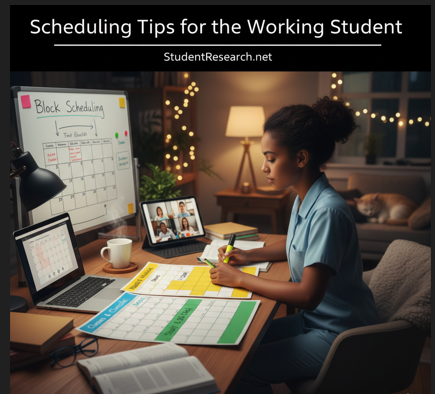
Most students find that “block scheduling” works best. Try to group your work hours together to leave large windows for deep study sessions.
- The Weekend Warrior: Working two 12s on Saturday/Sunday and focusing solely on school Monday-Friday.
- Per Diem Roles: Look for jobs that only require 2-4 shifts per month to keep your skills sharp without the burden.
- Utilize Breaks: Pick up extra shifts during winter and summer breaks to save up for the semester.
Conclusion: Taking Charge of Your Financial Nursing Future
In summary, while the direct answer to does a nursing student get paid for their clinical rotations is generally no, the opportunities surrounding the degree are vast. By leveraging externships, scholarships, and roles like student research assistants, you can significantly offset the costs of your education. Remember that your time is your most valuable asset, and choosing the right way to earn will set the stage for a successful career.
Meta Description: Does a nursing student get paid? Discover 10 essential ways to earn while learning, from clinical stipends to student research roles in this guide.
Feeling overwhelmed by academic writing? StudentResearch.net isn’t just a service; it’s your comprehensive academic partner! Access free writing tips, citation guides, and essential research resources that elevate your skills. Empower your learning journey beyond paid services with StudentResearch.net‘s valuable educational support!

